
Shortly before 12.48pm on Sunday, Miami Route Air Traffic Control received what initially appeared to be a routine request.
The Learjet crew reported “light, clear ice that is manageable” and said the nine people on board were experiencing “moderate turbulence.” Seeking smoother air, the two pilots asked air traffic control about finding “better rides.”
The pilots then requested permission to climb to 37,000 feet to avoid the turbulence. Miami ATC responded: “Roger. Climb and maintain.” But the crew would never reach a smoother flight path.
The aircraft began to climb briefly before suddenly plunging.
The Learjet descended at 8,000 feet per minute, with its rate of descent continuing to accelerate.
“Mayday, mayday!” one of the pilots shouted. “We’re descending 10,000 feet per minute!”
There was little ATC could do. The pilots reported that the aircraft was nosediving toward the ground, descending “in an over-speed condition” at 20,000 feet per minute.
“I’m here with you, talk to me,” the controller said, but it was already impossible to intervene.

At 12.50pm on Sunday, the plane plunged nose-first into a highway, bursting into an enormous fireball and killing all on board

Miraculously no one on the ground was harmed, but the images of the plane diving into the highway, recorded by cars passing by, are hard to forget
At 12.50pm the plane plunged nose-first into a highway, bursting into an enormous fireball and killing all on board immediately.
Blurry photos of the aircraft heading towards the moment of impact suggest that perhaps the horizontal stabilizer, which sits at 90 degrees to the tail fin, has been sheared off the plane – but without the full black box data recordings and subsequent National Transportation Safety Board (NTSB) report, it is not possible to know.
Miraculously no one on the ground was killed, but the images of the plane diving into the highway, recorded by cars passing by, are hard to forget. They will be seized on by investigators.
Of course the question on everyone’s minds is: How did this fatal crash happen and could it happen on a larger aircraft – even a commercial flight?
As a pilot with one of America’s largest airlines who has also flown Learjets, Julian Alarcon, 38, understands the challenges, and risks, of both types of aircraft. The founder of his own flight school, Aviator NYC, Alarcon said he didn’t want to ‘Monday morning quarterback’ the crash before publication of the full NTSB report, which usually takes over a year to compile and will provide specific details and allow full analysis.
But he said: ‘There is a classic saying in aviation: “There are old pilots, and bold pilots, but you never find an old, bold pilot.”‘
The plane, a Bombardier Learjet 60, took off from Austin, Texas, at 10.37am on Sunday, and headed to the island of North Eleuthera in the Bahamas.

Nathalia Filgueiras, 20, was flying the plane with Captain Jeff Gregory, 55

Jeff Gregory was the pilot in command of the Learjet headed to the Bahamas on Sunday
The captain of the flight, 55-year-old Jeff Gregory, an experienced pilot from Pennsylvania, and his co-pilot, 20-year-old Nathalia Filgueiras, were transporting Texan tech entrepreneur Adam Robinson, 44; his wife Helen Sharp, 40; their two children and nanny; and two friends.
Alarcon said Filgueiras’ age was not of concern: insurers would be more interested in confirming that she had the necessary hours of flying experience to handle a powerful plane like the Learjet.
According to Filgueiras’s mother, Camila Corteleti, she obtained her pilot’s license at the age of 17 and had logged more than 1,300 hours of flying time, significantly more than the 40-hour FAA minimum.
She had worked for the charter company Upper Jets for nine months and had experience flying Learjets, which Alarcon described as a sports car of a private jet, and often the plane of choice for deep-pocketed corporate executives because it’s fast and can transport its passengers much quicker than other planes.
The three-hour journey from Texas to the Bahamas was apparently progressing as planned until arriving above Florida and encountering storms.
Now, Our News Outlet has been told, that a terrifying ‘hidden’ thunderstorm rapidly grew into the jet’s flight path. According to meteorologist Ryan Hall, radar has revealed a quickly growing storm concealed beneath a broad canopy of cloud along the aircraft’s route.
Learjets can fly at altitudes of up to 51,000ft – significantly higher than the 39-41,000ft maximum of most commercial airlines. So the pilots might try and go above the storms, in a way that a commercial airline pilot could not. Indeed the plane had been cleared to climb shortly before its fatal descent.
Hall observed: ‘On the flight data it looks like a smooth, steady cruise. For about six minutes straight, the jet holds 35,000 feet within about 75 feet.’
But, Hall said, ‘waiting for it on the eastern side of the state’ was a cluster of thunderstorms gathering and breaking over Palm Beach County.
‘South Florida is loaded with moisture,’ he said. ‘And there was even a flood watch in effect. And that’s the kind of air where storms can just pop up, they shoot straight up, and they shoot up fast.’
A weather balloon over Miami captured data on Sunday morning showing storms could reach up to 44,000 feet putting them well within range of the beleaguered jet.
Alarcon said he explains to his students that flying through a storm is like experiencing a drop of water boil and evaporate. It rises, then cools, freezes, and drops down again. That shifting air creates turbulence – a rollercoaster effect, whereby passengers are flung up and down, side to side as the plane passes through the air pockets.
‘That is also part of why we, as airliners, stay away from it because it’s just too uncomfortable for passengers,’ he said.
‘Even with just a little bit of turbulence, people get really afraid. And one of the core principals at the airlines is caring and comfort, and it makes people very uncomfortable going through the storms.’

According to Filgueiras’s mother, Camila Corteleti, she obtained her pilot’s license at the age of 17 and had logged more than 1,300 hours of flying time, significantly more than the 40-hour FAA minimum
DON’T MISS: Othello Director Defends Ticket Prices After Denzel and Gyllenhaal’s Box Office Hit

Texan tech entrepreneur Adam Robinson, 45 was on his way to the Bahamas with his wife Helen Sharp, 40; their two children and nanny; and two friends
Charter and private jets nowadays have access to the same radar weather information as commercial airliners, Alarcon said – provided there was WiFi on the plane to receive the updates.
However, unlike commercial planes, on which ‘teams of thousands’ work around the clock – large numbers of ground crew, maintenance teams, dispatchers and analysts – private jets are reliant on a small number of people.
In addition, the data from the ground they’d be receiving would be delayed by about five to ten minutes: enough time, Alarcon said, for a storm to have significantly shifted in location and intensity – especially a ‘rapidly growing cell’ as Hall has suggested.
‘From inside of the clouds, there’s nothing out the window that tells you where [this storm] is,’ Hall said.
At about 12.48pm the co-pilot told ATC that there was ‘light clear ice’ and an outside temperature of -47F. ‘Ice crystals,’ Hall said, ‘are sneaky because they show up a lot weaker on radar than rain. Then the crew reports that they’re picking up precipitation and they ask to climb another 2,000 feet.’
That climb, Hall believes, would have taken the jet directly above the hidden storm’s strongest core. ‘The top of the storm grew straight up into the jet’s altitude in the same few minutes the jet was flying over it.’ By then, Hall estimated, the storm was rising at several thousand feet per minute.
The Learjet would by regulation be flying on autopilot at this point, Alarcon said, because it was in RVSM Airspace – Reduced Vertical Separation Minimum.
Highly congested skies operate RVSM Airspace, whereby the vertical separation between planes is halved, to allow more aircraft to traverse the area at once.
And yet once the plane got into difficulties, the cockpit would sound alarms, and the pilots would take over. Alarcon said it appears they lost control of the plane – although it is not possible, without the full NTSB report, to know precisely how.
Both Captain Gregory and his co-pilot Filgueiras would be ‘type rated’ – certified to fly that particular type of plane – and aware of all of the techniques needed in the event of an emergency.
‘One of the recovery techniques is autopilot off, auto throttle off,’ said Alarcon. ‘If we are in an upset situation, the manufacturer would have a specific recovery technique, and that’s something they would have learned when they were getting a type rating for that airplane.’
Prior to takeoff, the two pilots would study the route and weather conditions and confirm the correct weight limit and fuel requirements for the journey.
Charter jet pilots have a tougher time with this than commercial airline captains, because those paying tens of thousands of dollars for their trips are unamused at being told to leave their luggage behind. Airlines, by contrast, will frequently ask passengers to give up their seat and take a later flight if the plane is too heavy.
Airlines will also reroute or cancel flights if the conditions are too tricky. Charter and private jet pilots are under more pressure to make the journey happen.
‘There’s a reason why airliners sometimes cancel routes for bad weather,’ said Alarcon. ‘Passengers sometimes get really upset because the flight gets canceled, and are like, “Well, my grandma says the weather in the Bahamas is nice and clear.”‘
‘Yeah, you’re missing that we don’t have the same weather.
‘I can tell you that in my 20 years of flying, we may go around rain showers, but generally we avoid that stuff like there is no tomorrow.’
And once the worst has happened, and control has been lost: ‘It’s a really tough situation in the cockpit, whereby more data is coming in than the human can sort quickly, and it needs to be done in a timely fashion.
‘We are trained over and over that we have to recover the airplane,’ he said. ‘RVSM, and in non-RVSM. We have to push to get rid of the stall, level the wings to ensure that we have the maximum airflow over the wings, so we don’t get back into a stall. And then stabilize them.’

As a pilot with one of America’s largest airlines who has also flown Learjets, Julian Alarcon, 38, understands the challenges, and risks, of flying both Learjets and commercial aircraft
“We are banking 60 degrees.”
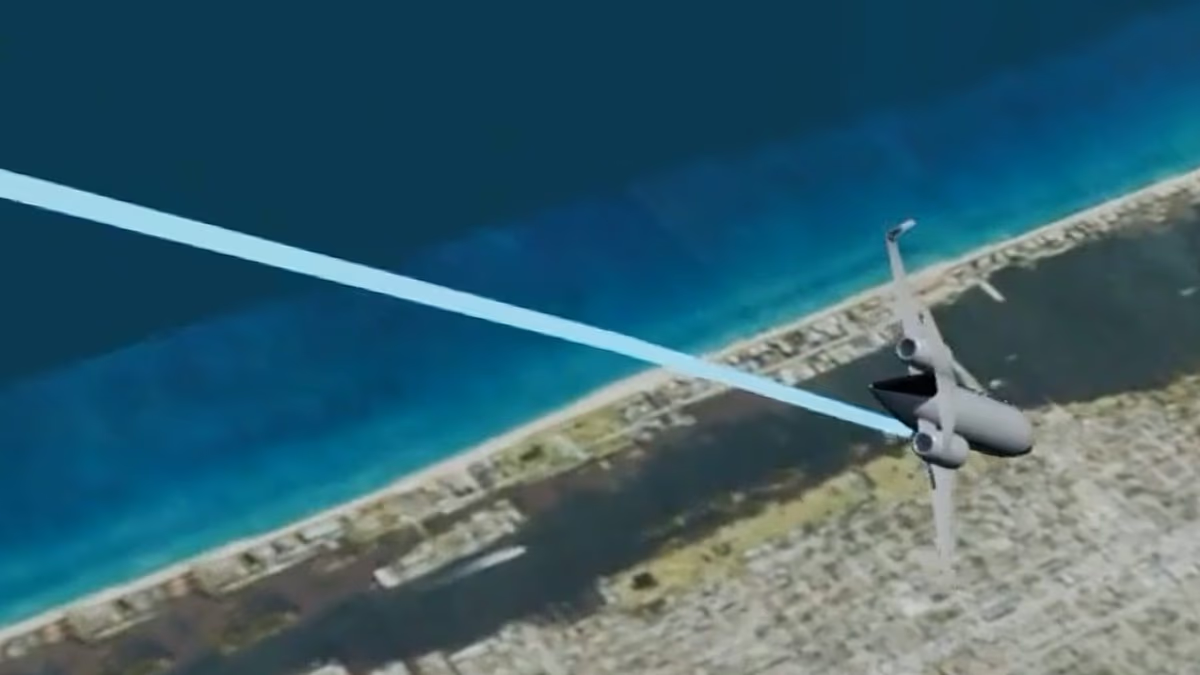
I built this Learjet 60 N722BD crash visualization using ADS-B flight tracks, altitude and ground-speed records, final ATC radio calls, aerial imagery and crash-site photos.
Radio-timed cockpit and exterior views put the descent into perspective,… pic.twitter.com/OkrPNpmVk3
— jonfredric (@thejonfredric) November 2, 2026
Alarcon teaches his students about the dangers of over-speeding – pushing the plane through the air too quickly – and of going too slowly, which starves the wings of the airflow they need to keep the airplane flying. Pilots call that a stall; the engines keep running.
Picking a path between cells on radar carries the same hidden risk, Alarcon said.
‘Think about it as if you’re driving along a highway in winter. You know there might be black ice. But before you know it, you’re skidding off the road.’
Some aviation experts have speculated that the Learjet entered what is known as ‘coffin corner’ – a terrifying position whereby the margin of error between going too fast and too slow is razor thin; frequently too thin for humans to manage.
It can be escaped, but it’s not easy.
If the stabilizer has been torn off, Alarcon said the plane would be ‘almost impossible to control.’
Once the pilots began dropping 22,000ft a minute, at a 60 degree angle – it would have been extremely hard to escape from, Alarcon said.
In the background, the captain was heard praying.
On board, the passengers would have likely been conscious, Alarcon said, because there is no evidence that the cabin depressurized, and the pilots were still able to speak.
The final confirmed words from the cockpit: ‘We’re out of time.’