
With that said, 28 Years Later is itself a bit of a throwback with the film recapturing some of the frantic editing and narrative propulsion that were hallmarks of Boyle’s films at the turn of the century, from the O.G. 28 Days Later to Trainspotting and Shallow Grave. The director acknowledges, too, that 28 Years Later partially seeks to recapture that zeal.
“We wanted to acknowledge the visceral storytelling in the first film, the visual look of that, but updated really because the technology is updated,” Boyle says. Which again meant for a movie that plays with some of the hyper-modernization of the seminal 2002 horror movie, yet also reconfigures itself for a more bucolic and medieval vision of the world.
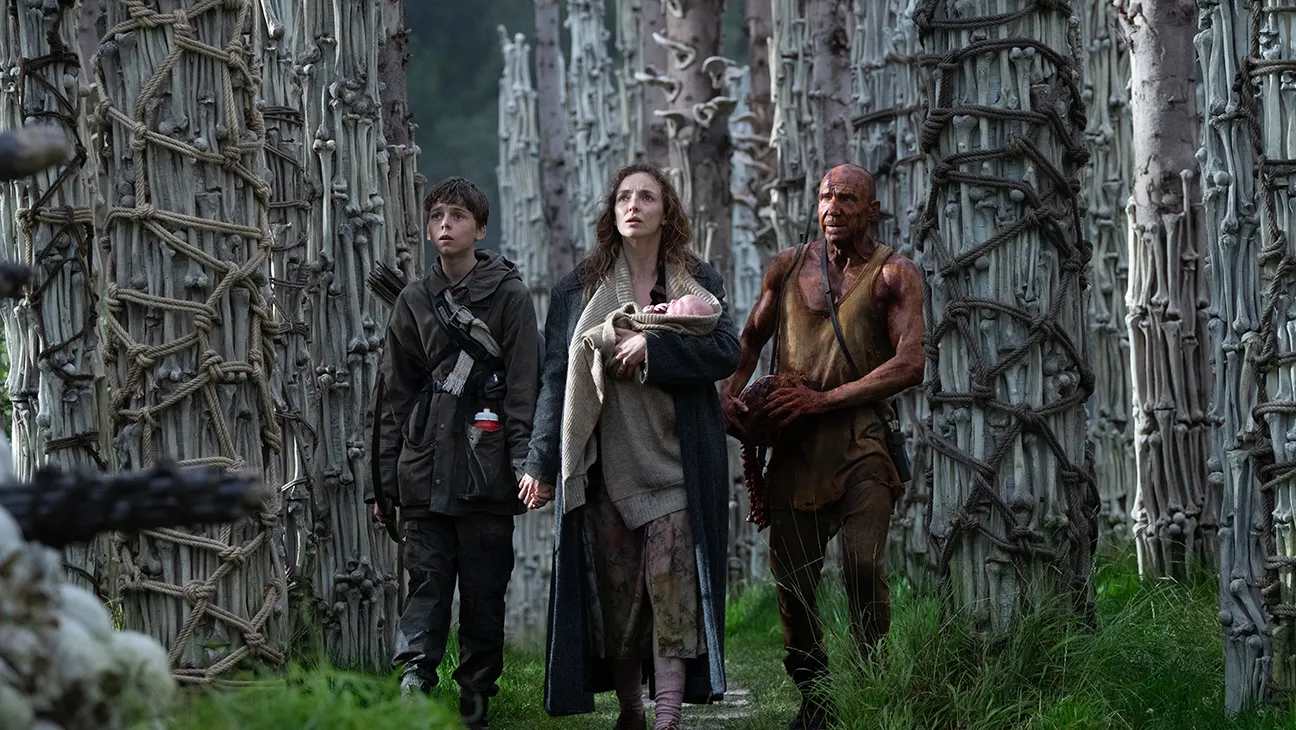
“We did it through a very widescreen format, the 2.76:1 format,” Boyle continues, “which is a beautiful landscape to look at nature, because our study was not going to be a deserted city; it was going to be how nature has returned. And that nature is beautiful to look at, so it’s shot beautifully. You have that sensual, beautiful appeal, a wonderful ingredient to have in any horror movie. It counterpoints the horror, if you like, but it also leads you to look at nature itself. What has happened to these people? How have they survived? And also the virus has evolved, and it is nature as well. It also responds to time passing—hence the different levels of infected you see.”
For the stars, it is a storied legacy to be a part of, especially for Taylor-Johnson who remembers seeing 28 Days Later back when he was about 12 years old.
“I was making films when I was 10,” says Taylor-Johnson, “so I definitely remember what the impact was like when that movie was made in British cinema, and seeing the visuals of Cillian Murphy walking down the streets of deserted London. That was just mind blowing at the time.” But in 28 Years Later, he plays a father who grew up deathly afraid of cities and population centers. Hence why his character has attempted to spread such dread for the world beyond their small community to his son.
“I am a parent, I’ve got four daughters,” Taylor-Johnson notes, “so I definitely came to this character with this paternal love in mind, but also to try and imagine what it must be like to raise kids in this post-apocalyptic world and feel like you want to teach them how to survive. So you put a lot of pressure on them, but then are you putting too much on them, projecting too much of your own fear? It’s always that interesting balance when you’re a parent.” And the balance between the past and present are taken to fatalistic extremes when a son’s rite of passage into manhood involves going onto the mainland and hunting “infected.”