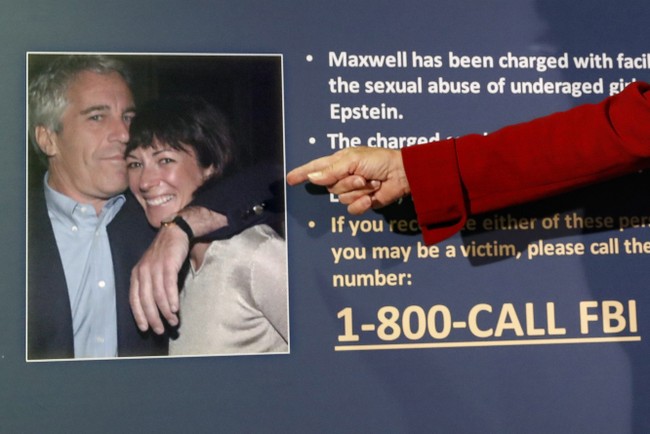


It’s been a bit like a ping-pong match, the back and forth in the courts over efforts by the Department of Justice (DOJ) to secure the unsealing and release of grand jury materials in the cases involving the late sexual predator, Jeffrey Epstein, and his accomplice, Ghislaine Maxwell. But following the passage by Congress of the Epstein Files Transparency Act (“the Act”) in November, the DOJ renewed its requests with courts in Florida and New York to unseal and release the materials pursuant to the Act.
On Friday, a Florida judge granted the DOJ’s requests to unseal grand jury transcripts related to Epstein and Maxwell.
READ MORE: Judge Grants DOJ’s Request to Unseal the Grand Jury Records From Epstein Sex Trafficking Case
On Tuesday, Southern District of New York Judge Paul Engelmayer followed suit and granted the DOJ’s request to unseal the grand jury materials in Maxwell’s case (the one in which she was ultimately convicted and for which she is now serving a 20-year prison sentence). Engelmayer also granted the DOJ’s request to modify a previously entered protective order to allow for the release of discovery materials provided to Maxwell’s counsel in connection with her 2021 trial.
In so ruling, Engelmayer determined that the Act “unambiguously applies to the discovery in this case,” and further, that while the Act does not explicitly reference grand jury materials, it nevertheless “textually covers” them, as it references Maxwell by name, covers “all unclassified records, documents, communications, andinvestigative materials in the possession of [DOJ], including . . . United States Attorneys’Offices, that relate to . . . Maxwell,” and does not exempt grand jury materials from disclosure.
Engelmayer further determined that despite the conflict between the Act and Federal Rule of Criminal Procedure 6(e) (regarding grand jury secrecy), “the Act implicitly reflects Congress’s intent to overcome grand jury secrecy.” Engelmayer explained:
A central purpose for the rule of secrecy, and one that continues to apply after a grand jury’s investigation has concluded, is “to protect . . . unindicted individuals from the anxiety and public castigation that may result from disclosure.” But Section 2(b)(1) of the Act expressly provides that the reputational interests of unindicted persons—including public figures who associated with Epstein and/or Maxwell—will not justify the withholding or redacting of records required to be made public by the Act. See Act § 2(b)(1) (“No record shall be withheld, delayed, or redacted on the basis of embarrassment, reputational harm, or political sensitivity, including to any governmental official, public figure, or foreign dignitary.”). By repudiating that central purpose for grand jury secrecy, Congress signaled its expectation that the Act would overcome grand jury secrecy.
(Citations omitted.)
Engelmayer also noted that an identical request remains pending before Judge Richard Berman in Epstein’s New York case. Berman has not yet issued his ruling, but we can likely expect one in short order, and probably along similar lines as what Engelmayer did here.
Now, whether and to what extent the newly unsealed and released materials bring notable revelations remains to be seen. Still, the DOJ is now one step closer to complying with the Act. We will, of course, continue to monitor the story and provide any updates as warranted.
Editor’s Note: Do you enjoy RedState’s conservative reporting that takes on the radical left and woke media? Support our work so that we can continue to bring you the truth.
Join RedState VIP and use the promo code FIGHT to get 60% off your VIP membership!