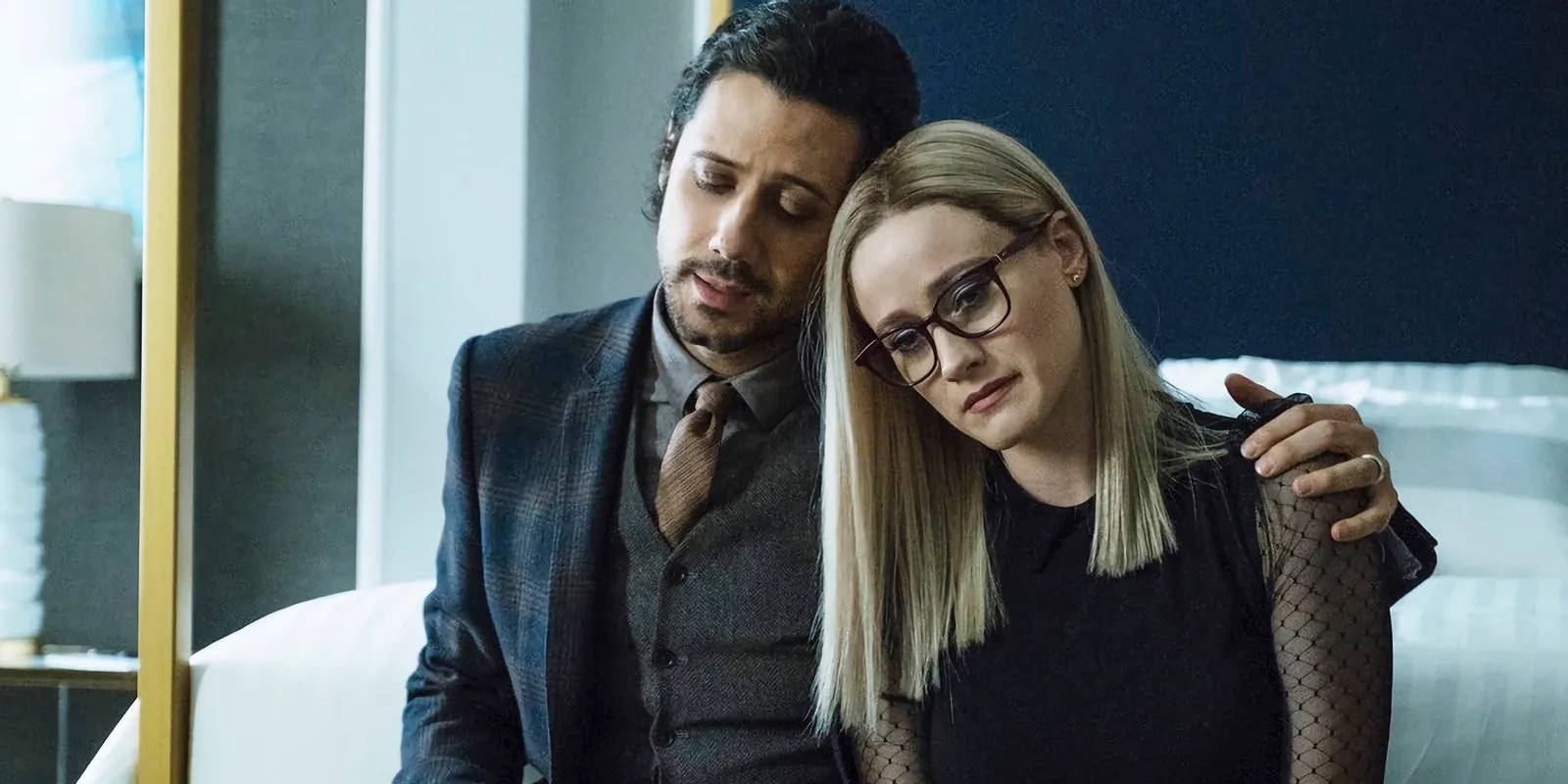

What if the students at Hogwarts graduated in their mid-twenties, swapped Butterbeer for recreational pharmaceuticals, and hosted so many orgies, it became a campus-wide health code hazard? That was the premise for Syfy’s The Magicians, a cheeky, ambitious, slightly unhinged spin on magical education that dared to ask: “What happens when you give power to people who are in desperate need of therapy?” Based on a series of new adult fantasy novels by Lev Grossman, the plot resembled a delightfully weird soap opera filled with choreographed spell work (seriously, Madonna would love this show) and existential panic, all set in Brakebills, (basically the Ivy League of this wizarding world) where the naturally gifted learn sorcery, battle monsters, and uncover the terrifying truth that the utopia of their favorite children’s story is real… and very much trying to kill them.
But slowly, it became something else. With every episodic swing and cliff-dangling finale, The Magicians found its footing – in its own story and in the larger TV landscape. Suddenly, this wasn’t some fantasy experiment reserved for adults who aged out of J. K. Rowling’s wizarding world; it was a blueprint for how to tackle the mystical and magical on the small-screen. And now, at last, the whole wild run has migrated back to a single home: Prime Video. All five seasons, every heist, musical number, god-killing scheme, and Fillory detour are sitting in one place, ready to sabotage your weekend plans. The series hasn’t mellowed over time, either. Its world is still strange, dangerous, and often absurd, but, after 10 years, it’s kind of earned the right to be that way.
From Party Kids to Power Players: The Misfits ‘The Magicians’ Magical
What’s most striking, watching The Magicians a decade later, is how clearly it was ahead of the curve. Long before prestige fantasy was smothered in glossy VFX that took a years-long hiatus to render and lore dumps that required spin-off and prequel viewing homework, this show was already doing something more interesting, and on a weekly release schedule too. The early seasons flirted with academia-set chaos – parties, bad decisions, magic that misbehaved depending on the size of the user’s hangover – but the story never drifted too far from its characters.
Quentin Coldwater (Jason Ralph), was the show’s de facto hero, a brilliant but chronically depressed grad student who struggled against his own lack of self-worth as he navigated Brakebills and its many secrets. While Quentin quickly acclimated to the new supernatural setting, his friend and fellow practitioner, Julia (Stella Maeve), was rejected from the school, sending her on a darker, morally complex path. Margo (Summer Bishil), a party kid with a sharp tongue and an oversized ego, was the show’s clearest example of its knack for transformation. She grew into a leader whose fury, compassion, and bedazzled eye-patch made her impossible not to like. Her best friend, Eliot (Hale Appleman), began as a soft-hearted hedonist who, through seasons of heartache and loss, became the soul of the series.

The “Adult” ‘Harry Potter’ Series Is Leaving Netflix in Three Weeks, So Now Is the Time To Binge
How fast can you binge 65 episodes?
Julia’s arc, meanwhile, cut in a different direction. Her journey from rejected applicant to hedge witch to survivor of an unthinkable trauma gave the show its creative center. Alice (Olivia Taylor Dudley), Penny (Arjun Gupta), and Kady (Jade Tailor), rounded out the main players, all charting paths that challenged them to grow, in their magic and as human beings. Alice’s niffin detour and ongoing struggle with guilt, Penny’s blend of cynical humor and accidental heroism, Kady’s stubborn pragmatism – each of them got material substantial enough to make fans rethink their potential with every passing season. That’s why The Magicians still feels energetic years later: its fantasy set pieces are fun, but it’s the characters who make this world worth returning to.
A Season-by-Season Guide to the Show’s Wildest Adventures
In terms of plot, its first season is the closest The Magicians ever gets to a traditional “magic school” setup, and even then, it immediately sidesteps expectations. You meet Quentin, a chosen one who seriously needs to up his antidepressants, and Brakebills quickly becomes a place where talent, insecurity, curiosity, and bad decisions collide. The students aren’t innocent; they’re capable, frustrated adults still figuring out who they are and what they want from their abilities. Julia carries the show’s most important (often frustrating) thread as she gets drawn into the world of hedge witches, where magic is improvised, volatile, and costly. By the finale, when a villain known as The Beast shows up and everything goes horribly sideways, you realize the show isn’t playing around.
Season 2 is where the show widens its scope and starts to feel more off-kilter and more confident. The shift to the magical realm of Fillory isn’t just a fun detour; it launches Eliot and Margo into a political leadership they’re hilariously unprepared for, and it lets the series explore responsibility and power from new angles. Quentin steps back a bit, which is a good thing as the story works better when the whole ensemble gets room to move. Meanwhile, Julia’s pursuit of vengeance against the god responsible for her trauma is ethically thorny in a way fantasy rarely allows. The season keeps juggling its signature brand of humor and seriousness without losing sight of the emotional consequences, and by the end, when the magic of the entire world sputters out, it feels like a cliffhanger that’s earned.
Season 3, arguably the series’ best, refines the show’s rhythm, giving the ensemble more room to shine, experimenting with time-bending storytelling, and balancing humor with genuine emotional stakes. The show embraces its otherness via musical interludes, time loops, and episodic experiments that never feel like gimmicks because the characters always remain the focus. Eliot and Quentin’s relationship deepens in ways that are moving and surprising, culminating in a quiet, devastating detour that celebrates everything the show is capable of. It’s the most creative season, the easiest to binge, and the one people always talk about when they say they love The Magicians.
By the time you get to Seasons 4 and 5, the show knows exactly what it is. Margo becomes a standout; her combination of competence, anger, and loyalty gives the seasons their backbone. Eliot’s possession arc brings both horror and heartbreaking introspection. The show continues telling risky, ambitious stories while still letting the ensemble bounce off each other. Come Season 5, the storytelling is quieter, more reflective, and surprisingly honest. It’s about what happens after a tragedy. The show scales its stakes back up, but it never forgets what kept fans invested in the first place.
Why Adult Fantasy Fans Should Binge ‘The Magicians’ Now

Re-watching The Magicians now, with all five seasons in one place, you’re reminded just how fearless it always was. The show never aimed for the safe choice. It didn’t always succeed, but the sheer ambition is part of the fun in watching. Its humor only sharpens as the seasons go on, and its characters evolve in ways that are surprising, but still hard-won. Brakebills and Fillory still feel like real, untamed places, full of history, tension, wonder, and delightful nonsense. And unlike many modern fantasy series that rely on spectacle to compensate for thin storytelling, The Magicians trusted character first. The chaos wasn’t decorative; it was purposeful and deeply human.
A decade on, the show remains a standout in adult fantasy, carving out its own unruly corner in the TV landscape and committing to it. Revisiting it now isn’t just a nostalgia trip; it’s a reminder of how inventive, emotionally curious, and boundary-pushing genre TV can be when it isn’t trying to imitate anything else. If you missed it, this is the moment to catch up. If you watched it once, it’s even better the second time.