
This morning’s Gospel reading is Matthew 1:18–24:
This is how the birth of Jesus Christ came about. When his mother Mary was betrothed to Joseph, but before they lived together, she was found with child through the Holy Spirit. Joseph her husband, since he was a righteous man, yet unwilling to expose her to shame, decided to divorce her quietly. Such was his intention when, behold, the angel of the Lord appeared to him in a dream and said, “Joseph, son of David, do not be afraid to take Mary your wife into your home. For it is through the Holy Spirit that this child has been conceived in her. She will bear a son and you are to name him Jesus, because he will save his people from their sins.” All this took place to fulfill what the Lord had said through the prophet: Behold, the virgin shall conceive and bear a son, and they shall name him Emmanuel, which means “God is with us.” When Joseph awoke, he did as the angel of the Lord had commanded him and took his wife into his home.
On Friday, I finally got around to doing something I’ve meant to do since the start of Advent: go to confession. I went for the same reason every other red-blooded Catholic man goes … his wife told him to do it. So I did. (If you’re married, you know.)
My resistance to this does not relate to a sense of non-necessity. I understand my sins and feel them, although perhaps not nearly as keenly as I should. It’s not even related to the normal sense of embarrassment and shame I have in putting them before the Lord and my priest. It’s not even the fact that the embarrassment is heightened by the fact that I’m still confessing the same sins, at least at their root, as I have confessed in the past. It’s not even the sense of futility I feel when having to deal with the preparation for the sacrament.
The resistance comes from this: the sense that I should not be forgiven, and maybe cannot be forgiven in the sense of justice being combined with mercy.
Intellectually and theologically, I know this is not the case. Jesus came once and sacrificed all for our sins so that anyone who follows in His name will be forgiven and welcomed as a child of God. Spiritually, though, this is nearly impossible to reconcile with knowledge of sin, of good and evil, and with recognition of the pain of the fallen world to which those sins contribute. In a sense, it adds more resonance to the exit of Adam and Eve from Eden in Genesis, when the knowledge they gained in their rebellion to the Lord cost them their embrace within His divinity, and forced them to see themselves as they truly were.
This is what causes resistance to true repentance and sacrifice. I withdraw out of a sense of unworthiness, of shame, and perhaps a childish rejection of what I expect to reject me. I don’t stop going to church or working in ministries, but I feel less connected to them and through them. The act of worship becomes, at the edges at least, an act of avoidance. My sins return and continue, which creates the cycle of distance, acedia, and spiritual drift.
How do we bridge the gap between the love we know on an intellectual and theological basis, and the love we are unable to embrace on a spiritual basis? For Catholics, the sacrament of reconciliation (confession) plays a key role in every part of the liturgical calendar, and not just Advent. For other ecclesial communities, other processes exist for the same purpose: a formal and complete declaration of sinfulness, followed by repentance and atonement. We are called to reconciliation when we commit serious sin so that we may remain in full communion with the body of Christ. That also calls on us to trust in Jesus’ promise that salvation and forgiveness are always at hand for those who truly confess their sins and repent of them.
Jesus taught this directly in the parable of the tax collector and the Pharisee in Luke 18:9-14.
“Two men went up to the temple to pray, one a Pharisee and the other a tax collector. 11 The Pharisee stood by himself and prayed: ‘God, I thank you that I am not like other people—robbers, evildoers, adulterers—or even like this tax collector. 12 I fast twice a week and give a tenth of all I get.’
13 “But the tax collector stood at a distance. He would not even look up to heaven, but beat his breast and said, ‘God, have mercy on me, a sinner.’
14 “I tell you that this man, rather than the other, went home justified before God. For all those who exalt themselves will be humbled, and those who humble themselves will be exalted.”
However, Advent provides us a specific invitation to put aside shame, regret, and despair. In Advent, we prepare for the Lord to enter into time and space to dwell with His people as one of us. That preparation requires us to rethink our lives and our assumptions, just as the angel called upon Joseph to do in today’s Gospel passage. Consider what the angel asked of Joseph, a Judean living in an ancient culture of family honor and strict literal adherence to the Law. His betrothed had become pregnant without him while unmarried, which would have been a disgrace in their community. The Lord called upon Joseph to put all that aside and to trust in His plan for them as well as to prepare for the child savior to come.
As our responsorial psalm today proclaims, the message was: Let the Lord enter; He is the King of glory.
That is our Advent mission as well. We are called to let the Lord enter, not just through the celebration of the Nativity but also for each of us, personally. This is how we reconcile what we know with what we feel and put shame aside. We let the Lord enter, and trust in His love and salvation.
Am I worthy of it? No. But did Jesus promise it? Yes. The real question for us, at Advent or at the confessional or anywhere where doubt and shame paralyze us, is this: Do we trust in Jesus enough to let the Lord enter? We have spent the four weeks of Advent preparing ourselves for this final, crucial question. Do we shut the Lord out because we cannot put our faith in His love, or do we come to the temple as the taxpayer did – to confess our sins and bring our lives to Him?
The Lord comes to save us all. Let the Lord enter, for He is the king of glory, as well as the One who comes to bring us home.
Previous reflections on these readings:
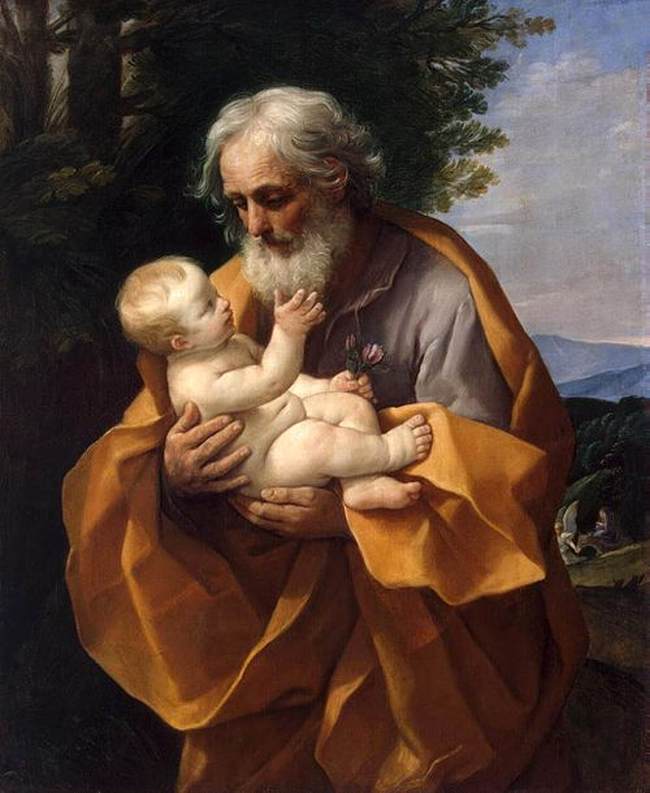
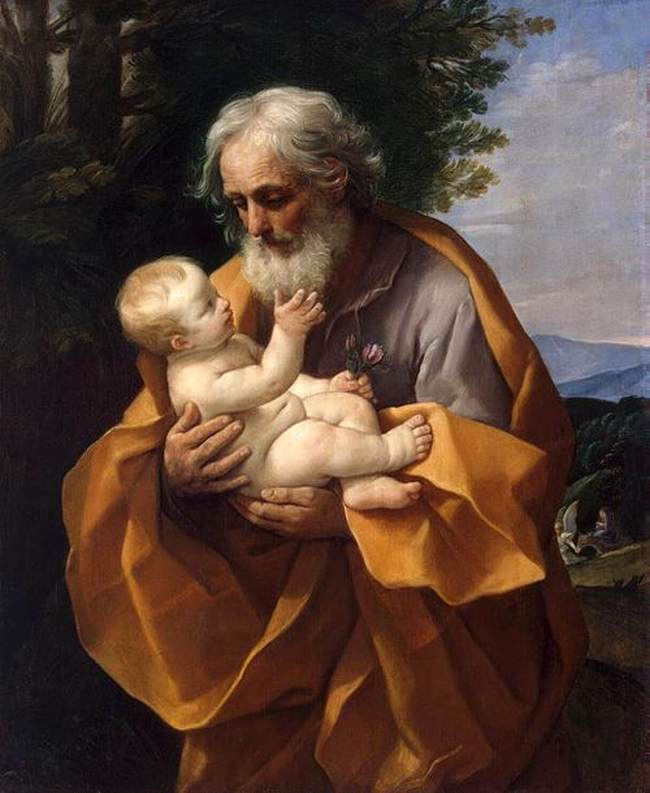
The front page image is “St. Joseph With Infant Christ In His Arms” by Guido Reni, c.1620. On display at the Hermitage Museum. Via Wikimedia Commons.
“Sunday Reflection” is a regular feature that looks at the specific readings used in today’s Mass in Catholic parishes around the world. The reflection represents only my own point of view, intended to help prepare myself for the Lord’s day and perhaps spark a meaningful discussion. Previous Sunday Reflections can be found here.
Editor’s note: My Sunday Reflections are always free to access, but we have plenty of exclusive material for our VIP, VIP Gold, and VIP Platinum members. Join Hot Air VIP and use promo code MERRY to get 74% off your membership!