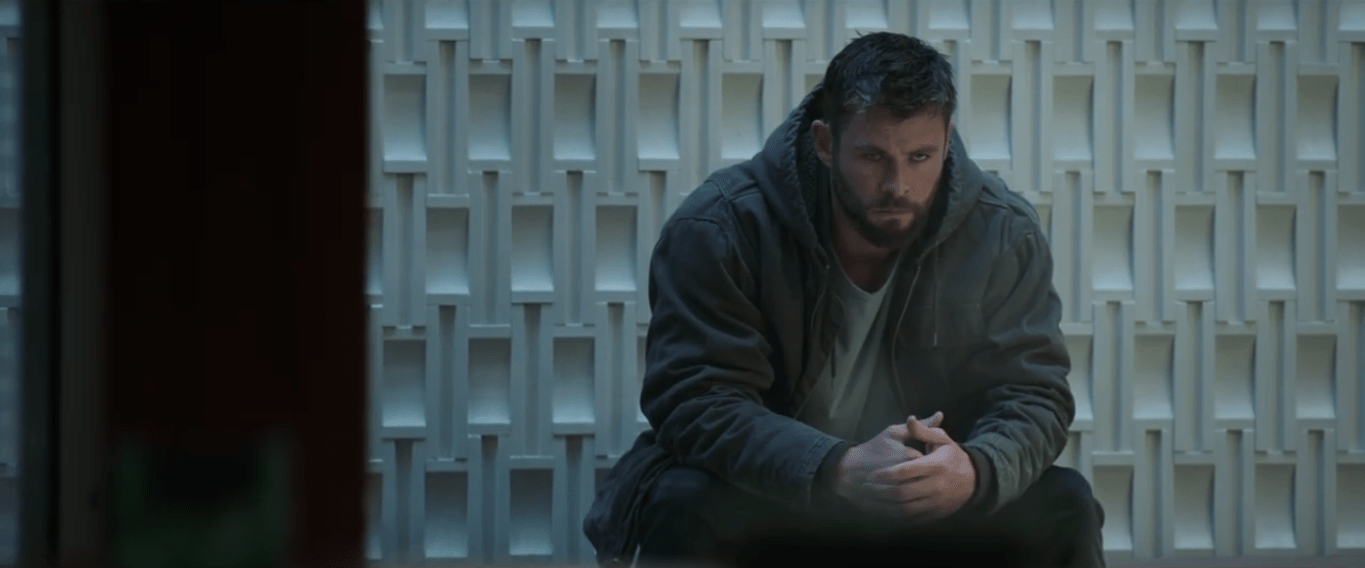

However, the most profound close to Thor’s story came in Avengers: Infinity War and Endgame. Infinity War begins with Thor, who had just learned in Ragnarok that his thunder powers were independent from the destroyed Mjolnir, failing to stop Thanos from destroying the Asgardians. He then goes on a mission to build Stormbreaker and channel his powers, only to fail to kill Thanos, aiming for the chest instead of the head. He gets his revenge in Endgame, finally lopping off the Mad Titan’s head, but it’s not enough. Throughout Endgame, Thor’s depressed and refuses to acknolwedge it.
Thor’s character arc comes to an end when he visits the events of The Dark World during the time heist portion of Endgame. When he reunites with his mother Freya, Thor learns a lesson he never could have accepted before, not even during The Dark World. He learns that even when he uses his power for good, his value does not come from power. When he reaches out and receives Mjolnir again, Thor realizes that he’s worthy, even after failing, even as an emotional and physical wreck.
To be sure, Love and Thunder builds off of that point, sending Thor to find something new instead of simply recreating the Avengers with the Guardians of the Galaxy or trying to replace Asgard. Furthermore, it is possible to give a character a second, satisfying arc; just look at Tony Stark, who had ceased being the selfish person he first was by the end of Iron Man 3, and yet found a new arc when he started worrying about a “suit of armor around the world” in Age of Ultron.
But it seems unlikely that Hemsworth will commit to two more Thor movies, especially given the lackluster response to Love and Thunder and the extreme change in tone that will come with Waititi’s departure. So rather than letting a founding Avenger twiddle his thumbs in the background, it’s time to let Thor go to Valhalla. His story is done.
Avengers: Doomsday arrives on December 18, 2026.