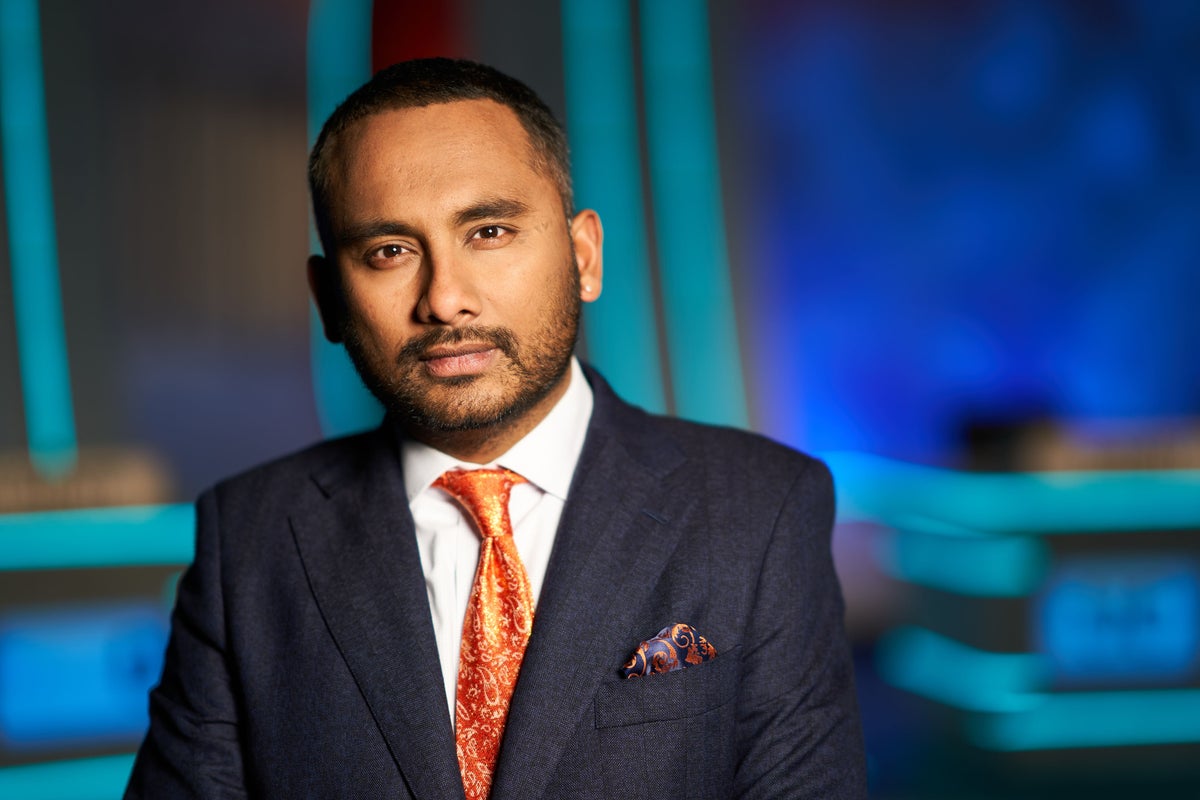

After five years in one of the BBC’s top jobs, Amol Rajan has decided that “the pips have sounded, and it’s time to get my coat”. On Thursday, the broadcaster announced that he would be stepping down from his role as the host of Radio 4’s Today programme, a decision he admitted “might be mad”, in order to “jump into the great digital Narnia of the creator economy, and build my own company”. He would, he added, be channelling his childhood hero, Del Boy from Only Fools and Horses, in order to “unleash my inner entrepreneur”.
The 42-year-old was keen to stress that he is “very much not leaving the BBC”, which he hailed as “Britain’s noblest cultural institution”, and he’ll continue to present University Challenge and his podcast, Radical with Amol Rajan.
His big news was met on social media with a blend of praise (“you have breathed new life into the Beeb,” one fan wrote on Instagram, while another echoed the same sentiments, hailing him as “a breath of fresh air”) and snark about his accent (“Maybe get some elocution lessons and stop speaking like a common market trader first?” read one snobbish comment on X/Twitter). It was pretty representative, then, of how Rajan divided Today listeners from the start; while his warmth, relatability and enthusiasm have won over many, there has always been a vocal core of detractors ready to critique his more informal, often colloquial style.
Since joining the BBC as its first media editor in 2016, after a stint as the youngest ever editor of The Independent, Rajan has become one of the broadcaster’s most prominent personalities. He’s hosted documentaries about the royal family and the British class system, filled in as a DJ on Radio 2, headlined his own interview series and chatted to celebrities on The One Show’s green sofa. In fact, you have to wonder whether he’s stepping down from Today because, well, he’s simply knackered.
In 2021, he joined the Today lineup, his most prestigious gig yet, and snagged another plum Beeb role when he took over from Jeremy Paxman as the quizmaster on University Challenge two years later. He’s also cropped up as a critic on MasterChef and as a host of Radio 4 shows like Start the Week and Any Answers?. Little surprise then that last summer, the BBC’s annual top earners list revealed his salary to be somewhere between £315,000 and £319,999, putting him just below his former Today colleague Mishal Husain and just above Sara Cox.
And yet despite all this ubiquity (or, let’s face it, perhaps because of it), Rajan still divided opinion. For every fan who’d praise his open, down-to-earth style and puppyish enthusiasm as being a breath of fresh air, you could find someone who is turned off by precisely that; they’d claim to find him over-familiar, over-matey and lacking the old-fashioned broadcasting gravitas synonymous with old school Radio 4.
He was even taken to task on air by politicians for his straight-talking manner. In 2024, Jeremy Hunt got riled up when Rajan referred to him as a “fiscal drag queen” and described some of his planned policies as “Soviet”; the then-chancellor bristled that the remarks were “unworthy of the BBC” and “unworthy of you, Amol”.
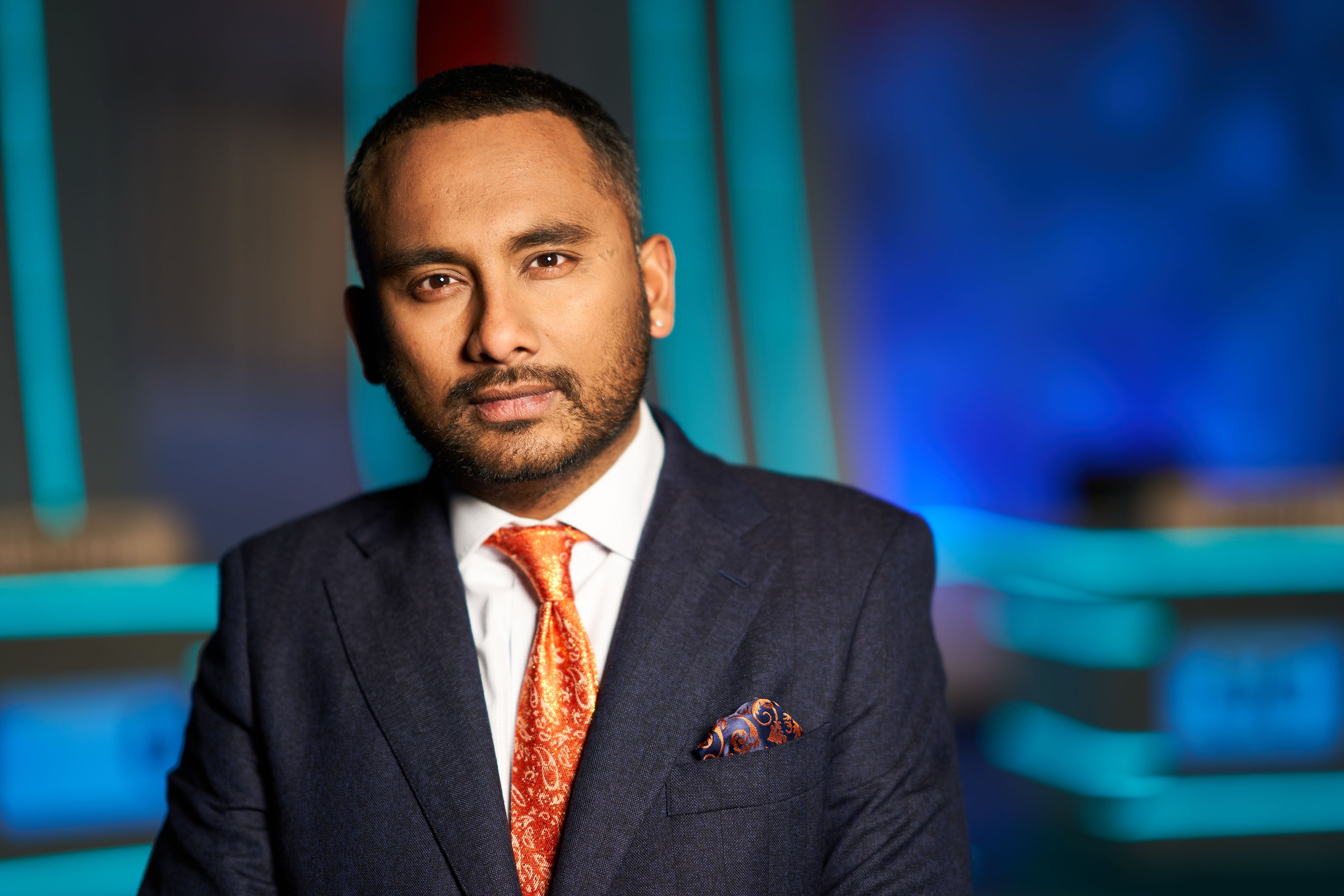
Was he helping to modernise the BBC’s image and tone and draw in a new generation of listeners, or is he playing fast and loose with the traditions that Today’s devotees love? It seemed that the TV-watching and radio-listening public couldn’t reach a consensus.
What isn’t in dispute, however, is Rajan’s impressive rise. Born in Kolkata, India, in 1983, he and his family moved to Tooting in south London when he was three years old. He attended a local state school before heading to Downing College, Cambridge, to study English.
He ended up editing the student paper, Varsity, and later landed a job as an audience researcher and “mic boy” on Channel 5’s The Wright Stuff. He feared that his career in TV might be over before it had started when he was caught up in an on-air gaffe, offering the mic to an audience member who turned out to be a prankster from the hidden-camera comedy Balls of Steel, but clearly that wasn’t to be the case.
In 2007, he joined The Independent as a news reporter, then wrote columns and served as the editor of the Voices section and landed the top job of editor in 2013 at the age of 29, becoming the first non-white editor of a British national newspaper in over a century. Three successful years later, he made the jump to the BBC.
It is clear that Rajan is passionate about working for the broadcaster he has called “a noble institution”. In an endearingly earnest Instagram post shared last summer, he revealed that he touches the feet of a statue of George Orwell outside BBC HQ every time he heads into work in the early hours. “The security guys used to think it eccentric,” he wrote. “But now they give me a knowing glance of approval each time.”
When Rajan was unveiled as the latest member of the Today lineup, he said: “I’ve no intention of trying to reinvent news, and think the best thing is to keep it simple. Be fair, get to the truth, and don’t screw up.”
Shortly after his first broadcast, he revealed that he’d had “a full-on panic attack” and “worked myself up into a frenzy, catastrophising” the night before – and admitted he’d necked “three massive rums” in an attempt to soothe his nerves. His candour was met with a positive response, with many appreciating the honesty of a top-tier broadcaster getting real about just how nerve-wracking going live can be.
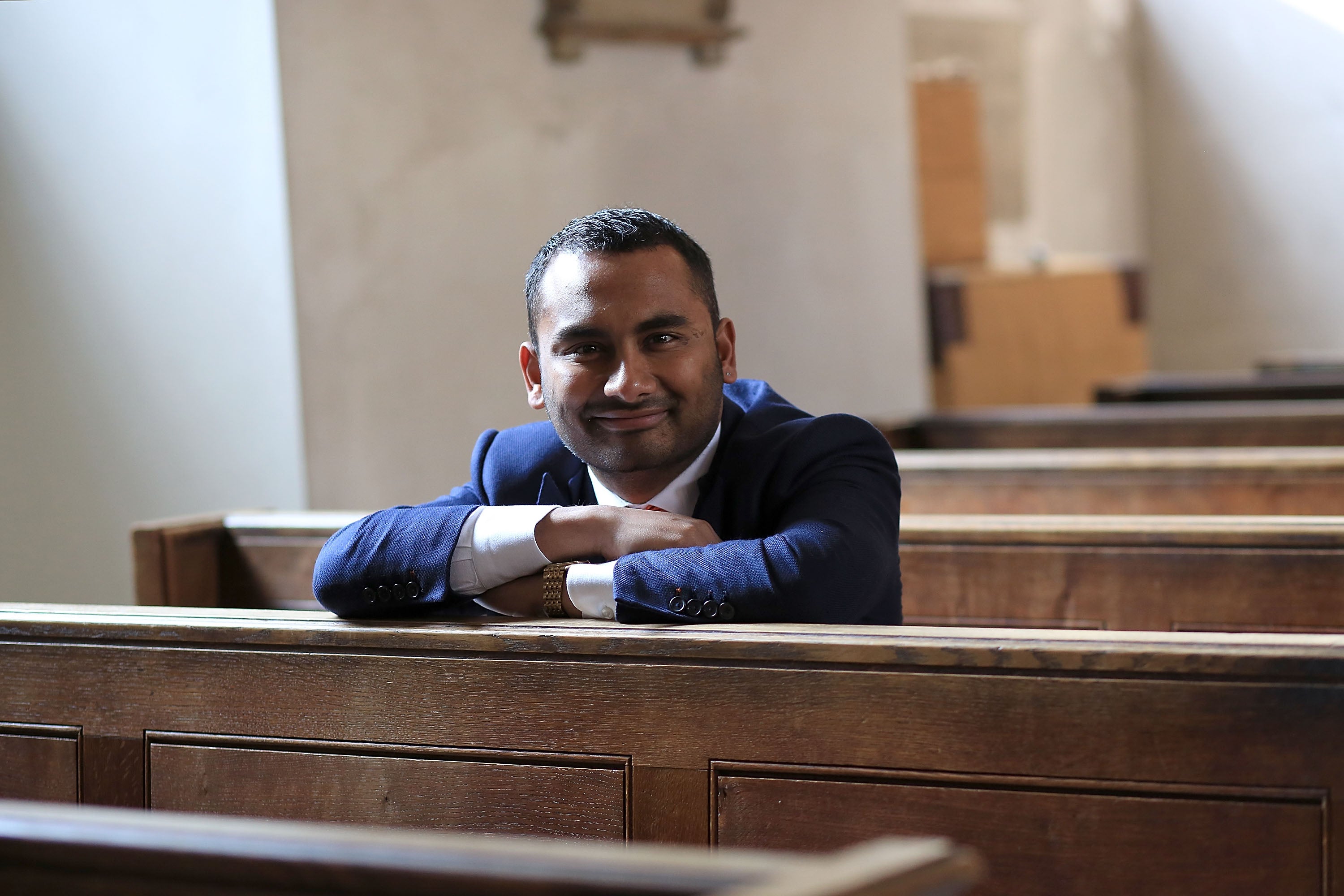
It wouldn’t be the last time that Rajan would open up about his mental health. He’s since spoken out about his and his wife Charlotte Faircloth’s “hellish” and “exhausting” IVF journey (the couple now have four children) and has been bracingly honest about the devastating grief he faced after the death of his father in 2022.
But he is also more than happy to embrace his less serious side on social media, too. He often shares video clips showing him bopping along to rap (like Public Enemy’s “Fight the Power” or KRS-One’s “Sound of da Police”) during his early morning cab rides. “3.45am. Used to be just warming up at raves around about now. Yesterday and today I’m heading to work,” read one recent post. Elsewhere on his account, he bemoans the University Challenge sartorial decisions he regrets (”Not me or my colour at all,” he wrote of one offending purple tie) and regularly shares sweet tales from his childhood, like his early obsession with the Tube map. It’s hard to imagine another presenter of a flagship BBC news show having so much fun on Instagram.
His willingness to share personal stories puts him at the forefront of a new generation of BBC broadcasters who are ditching the stiff upper lip attitude in favour of something more relatable and empathetic. It also makes sense why he now might want to build Brand Amol on his own terms.
Much of the criticisms leveled at Rajan have been shot through with a certain classism, which feels out of step with the public mood, The Spectator’s James Delingpole once branded him “someone who drops his aitches and pronounces ‘h’ where it should be aspirated and landed a mere 2:2 from hearty, insufficiently medieval Downing [College]”, a list of infractions so riddled with cartoonish snobbery that it sounded like an Evelyn Waugh parody. Accent bias is something that Rajan has himself explored in a 2022 documentary about the “class ceiling”; at an Edinburgh TV Festival event that year, he took the BBC’s then-director general Tim Davie to task about the lack of presenters with “working-class” voices.
Much of the disapproval levelled at Rajan’s presenting manner does reek of an old-fashioned, even archaic obsession with broadcasting etiquette. Did it really matter that, as commentator Christopher Hart pointed out in a 2023 takedown of Rajan’s style, that sometimes he would introduce himself first on air, rather than namechecking his on-air colleague, in defiance of the traditional “protocol”?
Comments from former Today host Mishal Husain, however, put forward an interesting potential counterpoint. Speaking to Vogue in April 2025, she suggested that “personality-focused journalism doesn’t have to be bombastic” and “doesn’t have to be about presenters centring themselves”. “What was true to me was that I would very rarely use the word ‘I’, actually, on air,” she added. Was Husain alluding to Rajan and newer colleagues like Emma Barnett? Wisely, she would not name names or be drawn on the subject.
But perhaps this is simply the way things are going. As Amol Rajan says, he wants a piece of the creator economy pie, which suggests that he has sniffed the air and come to the conclusion that talent and personal brand building have the potential to become bigger than the “show”.
When Rajan first joined Radio 4, a New Statesman report claimed, he rather sweetly used to place a handwritten note on his desk as a reminder to pace himself. It apparently read: “Slow the f**k down”. Whatever your thoughts on his Today presenting style, everyone can surely agree that Rajan’s career shows absolutely no signs of doing so.