
To Bluely Go
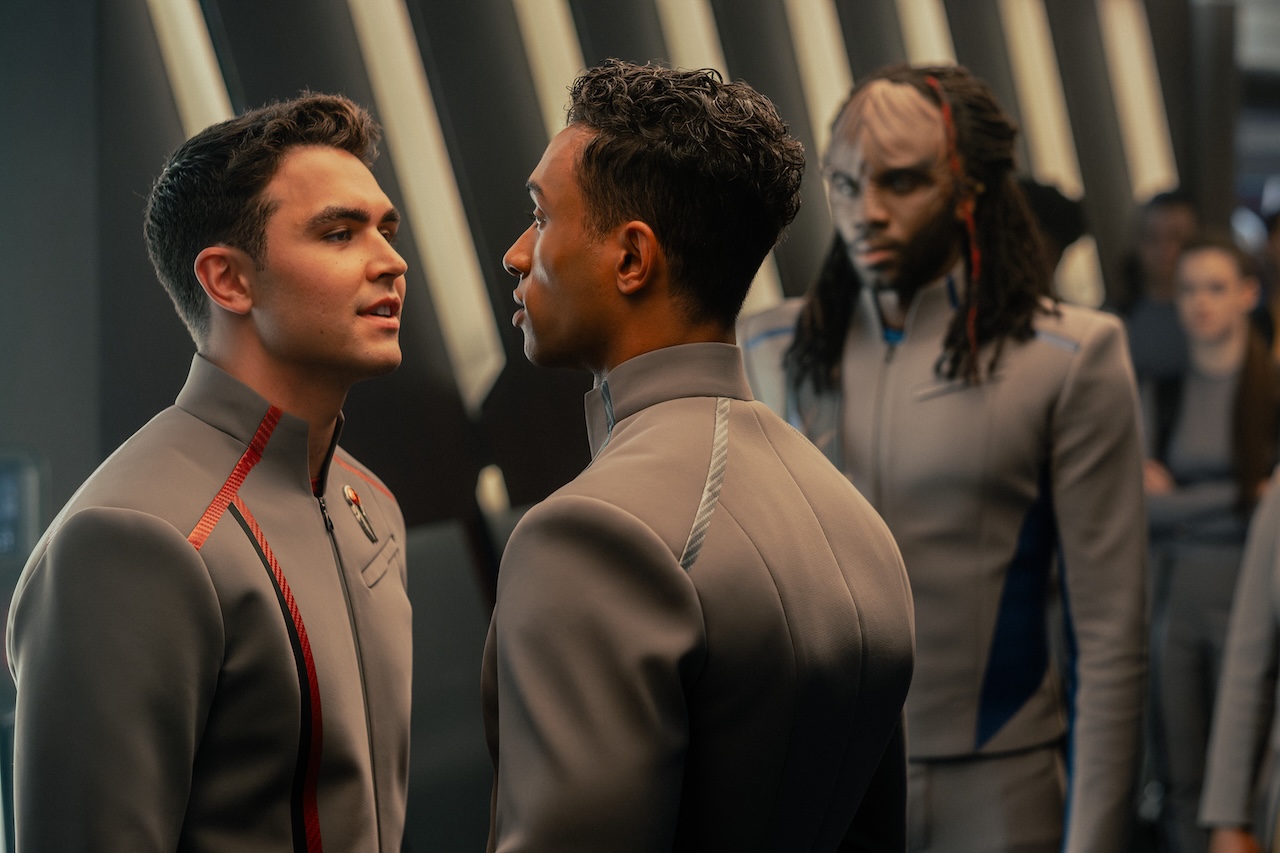
“Khionian, bitch,” gets repeated once more in the episode, and it’s not the only instance of profanity in the Starfleet Academy premiere. Holly Hunter’s Captain Nahla Ake and Paul Giamatti’s pirate Nus Braka trade curses at one another with as much gusto as the kids. Which makes a certain amount of sense—Starfleet Academy is a teen drama with a Star Trek backdrop, which requires the show to make certain concessions to the genre.
But Starfleet Academy is hardly alone in embracing what Kirk and Spock called “colorful metaphors.” In fact, it happens fairly often in new Star Trek shows. Admiral Clancy of Picard rebukes the titular captain for his “sheer fucking hubris,” a f-bomb drop proceeded by Tilly and Stamets’ foul-mouthed praise of Starfleet in episode five of Discovery‘s first season. And we can’t even begin to count the times Mariner and her fellow members of the Cerritos delivered bleeped out cuss words in Lower Decks.
Pedants will point out that the entire colorful metaphor conversation in The Voyage Home came up because Spock was shocked to hear Kirk curse so much. Spock’s confusion, Kirk’s explanation that it’s just how people talk in 1984 San Fransisco, and especially Kirk’s awkward usage (“double dumbass on you!”) suggests that when humanity grew out of its infancy, it did away with naughty words at the same time it abandoned racism, sexism, and capitalism.
But even bigger pedants know that swearing has always been part of Star Trek, even on the Original Series, in the final line of “City on the Edge of Forever” (“Let’s get the hell out of here”). And that doesn’t include curses in other languages, such as Picard saying “merde” in the Next Generation episode “The Last Outpost.” It’s not that people stopped cursing before the 24th century. It’s that they used it differently.
Too Familiar Language
Too often, nu-Trek employs cursing as a type of slang, a way to appeal to a modern audience instead of presenting a reality centuries in the future. The phrasing in Starfleet Academy is particularly egregious, as it sounds like something the Juggernaut said in the 2000s, not something a cool kid would say eleven hundred years from now. But the same is true of those early f-bombs. Admiral Clancy uses it to take Picard down a couple of notches, to show that he’s not some beloved, wizened figure, but someone worthy of mockery. Tilly and Stamets swore in order to praise Starfleet, but they did so in the most juvenile way, prescribing awe instead of building it in the viewer.
Taken by itself, these missteps are forgivable. Star Trek has always tried to be of its time (see: TOS miniskirts, TNG’s beige, “Faith of the Heart” in Enterprise) and it hasn’t always worked. We can forgive the pandering if it becomes part of the mythos (miniskirts, beige) or if the cheese finally wins us over (“Faith of the Heart”). But the swearing in nu-Trek is so faux-edgy, so desperate to be taken serious and cool, that we can’t imagine getting used to it.