
Dear Bel,
I never imagined I’d write to an advice column, but I don’t know who else to turn to.
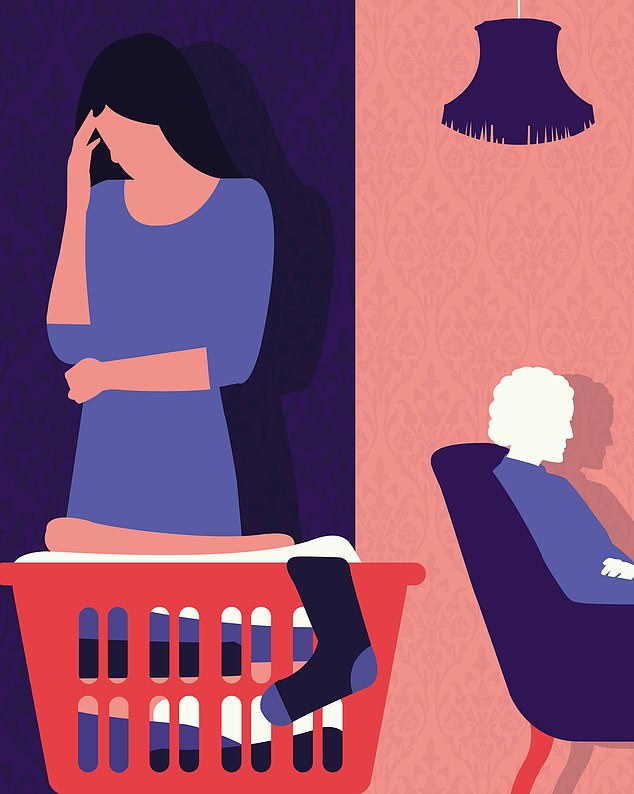
I’m an only child in my mid-50s, unmarried and caring for my ageing mum, who is struggling. I handle the shopping, appointments, paperwork – everything she can’t. I do my duty. I don’t have a choice. But inside I feel awful about what I don’t feel.
My mum was never warm. She was sharp with words and quick to criticise. Nothing was ever good enough. I left school early, got a job and learned not to expect love or closeness from her. We weren’t close and I accepted that long ago. I learned to make my own way in life with little or no support.
Now she needs me – in fact, she can’t do without me. Suddenly she talks like we had a lovely relationship. When she tells people how lucky she is to have such a good daughter I feel a knot in my stomach. I do the right thing, but don’t feel the love others think I display. Nor do I feel what society tells me I should feel. Sometimes I feel resentful, then ashamed for feeling that way.
I’ve tried to confide in a couple of friends, but they seem to brush me aside. They suggest I should just forget the past, and that I need to remind myself that she’s old and scared, and she’s still my mum. I know they’re right in my head, but every visit to her leaves me drained.
I feel guilty for not being more patient or loving. I didn’t grow up with much affection, and feelings weren’t ever talked about. You just kept quiet about anything that made you unhappy and just got on with it. Now I’m scared that admitting how I feel to you makes me a bad daughter, but pretending everything’s fine is exhausting.
I don’t want praise. I just want to know how to carry on without feeling so resentful.
SHARON

‘Caring’ can be a burden and ‘love’ can be challenged by it, according to BEL MOONEY
Who teaches us how to be a child? Then who leads us patiently though the ‘how to’ book on caring, being kind, learning the give-and-take of family life?
Our parents, of course. That is, if we are lucky.
Sadly, good parenting is a lottery and over the years I’ve had so many sad letters from men and women telling me of loveless lives with parents who weren’t necessarily cruel but had no idea how to nurture children. I’m afraid there’s a lot of it about. All you have to do is put the words, ‘This Be The Verse by Philip Larkin’ in a search engine and you will read a famous poem telling one melancholy truth: ‘Man hands on misery to man.’
Yes, indifferent parenting is certainly handed down the generations. Not inevitably, of course, but very often. In one sense that fact could mitigate responsibility – because how can people understand what they have never been taught?
You say nothing about your father, which is interesting. I somehow suspect he died when you were much younger, and that you got little love from him. In some families a pair of selfish parents can become almost a sort of bulwark against their offspring.
But here you are – just one case history. With no children yourself, you are struggling with the guilt of not knowing how to be a truly loving ‘child’ – because nobody ever gave you an example.
That’s one aspect of this problem, but it must also be said that being a carer can be utterly draining. For example, I just had a letter from a Mrs B who is looking after her sick and querulous husband, and finding it much harder than she ever thought possible.
She simply has no time at all for herself, and it is wearing her out. Her exhaustion is even causing her to question her feelings for the man she married 40 years ago.
‘Caring’ can be a burden and ‘love’ can be challenged by it. These are difficult truths.
You, Sharon, are not a ‘bad daughter,’ you are an honest one, working hard to be the best daughter she can possibly be – that is, within the limitations she was taught.
Read that sentence again – and take it on board, to help drive away some of your guilt.
Your friends are right in what they say – not ‘brushing you aside’ but simply trying to encourage you in the fulfilment of your duty. And what is so wrong about duty without love?
You can’t manufacture deep feelings of affection, but you can buckle down to fulfil all the necessary tasks that help make somebody’s life better. That’s a noble aim.
What can you do about feelings of resentment? For a start, I think you should try embracing that praise which your mother and others give you.
You say you ‘don’t want’ it, yet it’s undoubtedly yours. I know what it’s like to feel, from time to time, resentful about shouldering a family burden and yet I genuinely found that knowing it was The Right Thing To Do was actually helpful.
It’s old advice, but when you feel impatient you must take deep, deep breaths. Try the exercise of ‘square breathing’ (look it up) to steady your mood and increase tolerance.
Make sure you give yourself treats – whether its small presents, or going for a facial or whatever. You deserve it.
Remember this time is finite – and you are doing really well.
Should I fret about a wedding snub?
Dear Bel,
My great-niece is getting married later this year. I consider myself to be the matriarch of my side of the family, as I am the only one left out of five siblings.
Our parents died years ago, and I experienced the sad deaths of all my brothers and sisters. So my role in the family matters to me.
I was so looking forward to this wedding but now find I have been invited to the evening ‘do’ only – and feel hurt that I haven’t been invited to the all-day affair.
To be fair, I haven’t seen the bride for much of her life and have never met the groom. But shouldn’t I be invited as the family ‘elder’?
Part of me thinks I won’t go, but then I’d miss seeing other family members who have been there all day. Please can you give me your thoughts on this dilemma?
ELEANOR
Another year, and another wedding season – which generally brings with it a confetti of sad or cross letters from family members with hurt feelings.
Before I go any further I want you to know I do understand why you say you are ‘hurt’. The more you think of this, the more you will be bothered by what you see as a slight to how you value your position within the extended family.
Those feelings mustn’t fester, so you must deal with them right now. You see, sympathising with your feelings as an older woman does not mean I am sympathetic to the conclusion you have drawn.
I remember from my own daughter’s wedding, in 2009, just how hard it is deciding on invitations. We found ourselves more or less ‘coerced’ into inviting quite a lot of people my daughter didn’t care about at all, and since I was paying half (with my ex-husband) I felt quite annoyed.
It was needlessly stressful – as it must have been for your great-niece, her fiance and their parents. The mischievous Wedding Demon seems to decree it must be horribly problematic when two families are involved, with their in-laws, distant cousins, old friends, plus-ones, great-aunts and so on. Nightmare.
Can I suggest gently that your role within the family may not be seen in quite the same way by others? Recently, a man I know, once a government minister and international businessman, told me sadly: ‘When you get old nobody wants to know what you think any more.’ He added: ‘And nobody wants to invite you to anything, as they once did.’
He wasn’t self-pitying, just wry. I’m afraid you and I both have to recognise the painful reality within his words, even if it puts a dent in our pride. It’s easy to say that, out of respect, you ‘should’ have been invited for the day – presumably a sit-down meal with speeches and then a larger bash in the evening.
On the other hand, you’re honest about not really knowing the bride, let alone her husband-to-be, and you can’t have any idea about how many close relatives and friends they need/want to invite.
Those long drawn-out wedding days can be exhausting. Perhaps they thought it might be too much for you. Perhaps they just didn’t have room. Perhaps the bride and groom shook their heads and whispered: ‘But we don’t even know this old lady.’ Who knows what conversations went on?
Whatever happened, you now have a lovely invitation to the evening party where you will see people you know and have the chance to catch up.
You can dress elegantly and look benevolent as you sip your wine and wish the young couple a wonderful future together. As you bless them with joy. Isn’t that what matters? Isn’t it really the only thing that matters?
Don’t choose to be hurt, Eleanor.
Nothing can take away your position as The Wise Elder of the tribe who carries within her genes the essence of all the people who have gone before – your parents and your siblings; the past generations who will sing out their congratulations and love in every breath you take.
That is your silent function, you know. That’s what families are for – how they continue. Not attending this wedding is not an option. But then, you knew that all along, didn’t you?
And finally… Ron Weasley is a Moaning Myrtle!
Oh Rupert Grint! Jolly little redhead Ron Weasley in the films of J.K. Rowling’s Harry Potter books grew up to be a Moaning Myrtle.
In an interview with an American magazine he says the birth of his first child left him feeling fearful and isolated and describes the overall experience as ‘terrifying’ and ‘traumatising’. Can you imagine anything more awful in the whole world?
Yes, it’s easy to make fun of this nonsense. I know that new fatherhood can be an alarming experience (those stinky nappies!), although we might whisper that new motherhood might be just a teensy bit worse.
When I had my first child in 1974 I felt quite gloomy, even though I adored my baby boy, because I realised that my days of freedom were well and truly over. Such feelings about change are quite normal.
But I’m driven increasingly mad by the way people use extreme terms to describe perfectly common emotions. A regular new dad in his 30s might say to his mates: ‘Holy moly, who knew they could scream so much? And where does all that poo come from?’
Then swig his pint and go home to his adored new babe. Why do so-called celebrities and influencers and wimps from Generation Y (and younger) have to talk in terms of ‘anxiety’, ‘stress’ and ‘trauma’?
Mr Grint, ‘trauma’ is losing both your legs beneath the knee while on duty in Iraq, as my granddaughter’s godfather did. It’s breaking your back in a car accident at the age of 19 and never walking again, like my late brother. And many of you reading this will have your own examples.
The number of people in our society who claim to have ‘mental health issues’ has become a pernicious social contagion. And these self-indulgent ‘celebrities’ set a terrible example.