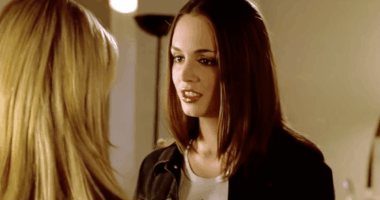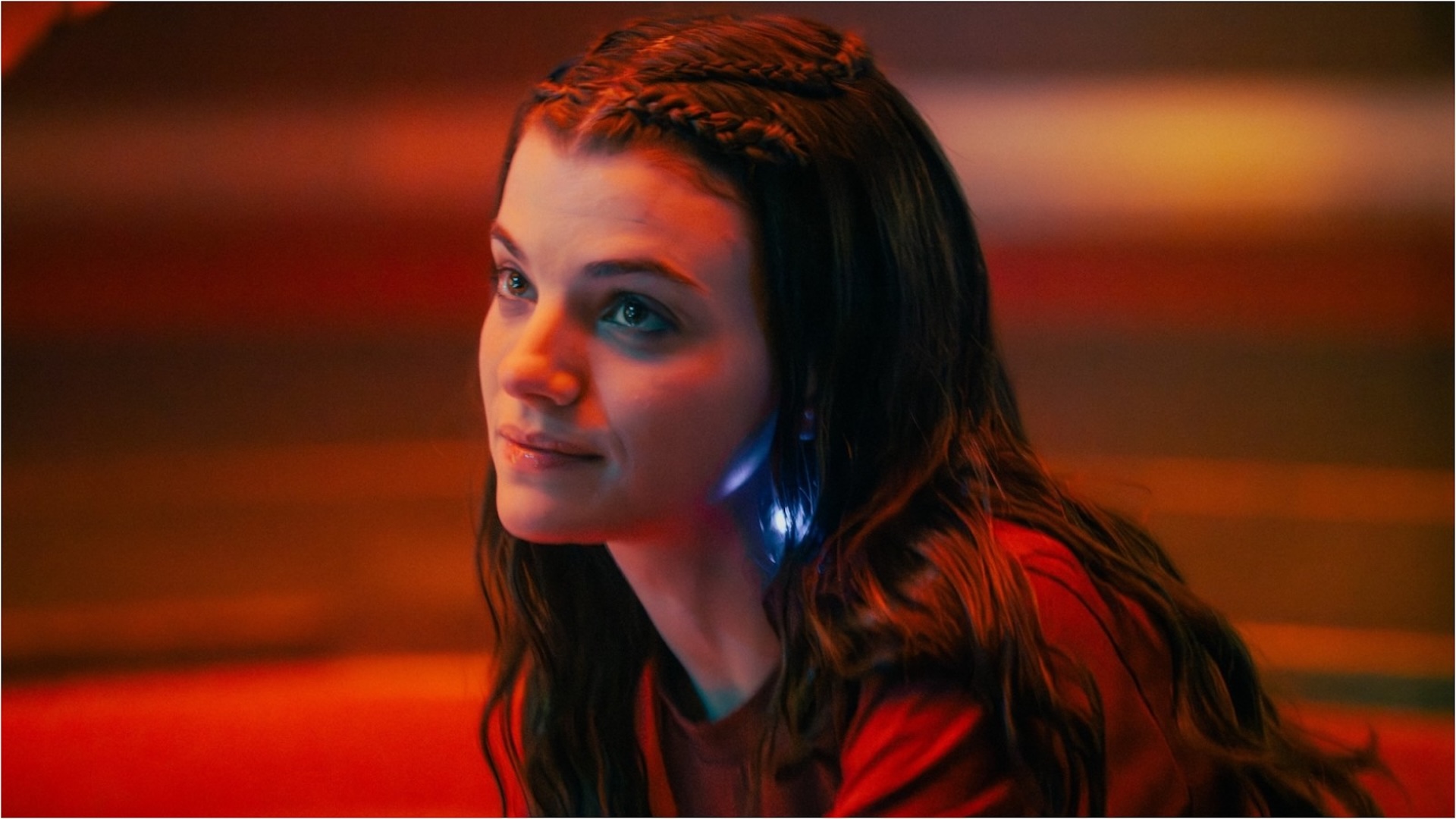

Wilder’s classic is a bizarrely perfect fit for this moment, a story that wrestles with themes of existential dread, fear of death, the inevitability of change, and the importance of appreciating life while we’re living it. The episode itself adopts a quasi-Our Town framing, opening and closing in darkness, with both the Doctor and Ake playing the role of the Stage Manager who exists outside of both time and the play’s main story. Fitting — and bittersweet — since they’re both functionally immortal, with lives that will extend well beyond any of the cadets they’re so desperately trying to help at this moment.
The hour deftly draws parallels between various elements of the play and the experiences of the Starfleet cadets and staff, allowing Tarima to find a kind of camaraderie with Wilder’s Emily in her fear of losing herself and Sam to be charmed by the hopeful resilience at the core of his take on village life. Even the hour’s B-plot, which sees Ake and the Doctor escort Sam to her homeworld of Kasq in the hope that her Makers will be able to fix the debilitating glitching still impacting her, reflects the larger themes of this central work. Kasq is rendered in black and white, a greyscale planet that lacks the emotional context that Wilder insists both colors (literally) and gives meaning to living. (The Kasqs, being holograms, do not see the world that way.)
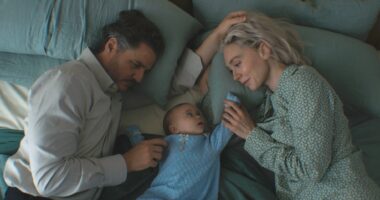
It is the Doctor who ultimately changes that. Longtime fans will particularly enjoy the way this plot ties back to the Voyager episode “Real Life,” in which the Doctor creates a holographic family of his own and must watch his young daughter die. His still-present grief from that loss is the reason he’s been so rude and standoffish toward Sam ever since her arrival at the Academy, fearing what it might mean to experience that kind of emotional connection and eventual heartbreak once more.
“The only thing that allows me to bear my infinity is not having to love anyone,” the Doctor says. “You mean not having to love anyone again,” Ake replies, she herself one of a scant handful of people who actually have personal experience in this kind of thing. (If we do not get some sort of broader Ake backstory episode this season, I’m going to lose my mind.)
But to save Sam’s life, the Doctor, like Tarima, must find a way to become part of the story of his own life again. He essentially ends up becoming Sam’s father, raising a new version of her from childhood that will have the learned resilience to process the trauma her teenage self has faced without her programming breaking down. (This is possible thanks to the way time works on Kasq, where seventeen years is the equivalent of about two Earth weeks.) The last eight minutes of the episode are a montage of the rebooted Sam growing up from infancy, interspersed with shots of the Starfleet cadets’ impromptu performance of Our Town. Set to a voiceover of Tarima’s brother Ocam reading the Stage Manager’s lines, we follow Sam’s growth from a baby to a young woman, and see joy return to the eyes of our formerly miserable cadets.
It’s a surprisingly moving sequence for many reasons, not the least of which being that Sam’s “birth” is the act that brings color to the Kasquian landscape. Gone is the greyscale when life steps onto the stage, in a physical manifestation of an internal transformation that reflects the emotion of the choice the Doctor has made. As he himself said earlier in the hour, a moment is just a moment. It is when a moment becomes a memory — infused with context, emotion, nostalgia, regret, and joy — that it becomes something larger than itself. He is, quite literally, making memories. And they are beautiful to watch unfold.