Within hours of the United States and Israel launching coordinated strikes against multiple targets inside Iran overnight Friday, Democrats were publicly split over both the legality and the wisdom of the operation.
While Republican leadership largely rallied behind President Donald Trump’s decision, Democratic responses fractured along two primary lines: those warning of escalation and demanding an immediate congressional vote under the War Powers Resolution, and a smaller but vocal group expressing support for the strikes while still calling for oversight briefings.
The divide underscores long‑running tensions inside the Democratic Party over national security, Israel policy, and executive war authority.
The War Powers Wing: “Congress Must Decide”
The dominant Democratic response Saturday morning centered on process and constitutional authority.
Several Senate Democrats argued that Congress must reconvene immediately to debate and vote on military authorization. Their concern was less about defending the Iranian regime and more about preventing what they described as an open‑ended conflict without legislative approval.
Sen. Tim Kaine (D‑Va.) reiterated his longstanding position that military action against Iran requires explicit congressional authorization. Other Democrats, including Sen. Andy Kim (D‑N.J.) and Sen. Mark Warner (D‑Va.), publicly signaled support for forcing a War Powers vote.
My statement regarding President Trump’s illegal war with Iran: pic.twitter.com/Fb5Lr4eZrM
— Senator Tim Kaine (@SenTimKaine) February 28, 2026
House Democrats moved in a similar direction. Minority Leader Hakeem Jeffries indicated that House Democrats would push for a vote when members return to Washington. Rep. Jim Himes (D‑Conn.), the ranking member on the House Intelligence Committee, warned that military operations without a clearly defined strategic endgame risk spiraling into broader conflict.
The language from this faction has been consistent: avoid escalation, demand clarity on objectives, and reassert Congress’ constitutional role.
Donald Trump promised to keep America out of costly and endless foreign wars.
He is now doing the exact opposite in the Middle East.
Congress must vote on a War Powers resolution immediately. pic.twitter.com/MLrFZa5wtP
— Hakeem Jeffries (@RepJeffries) February 28, 2026
Notably, these statements have largely focused on process rather than offering any defense of Iran’s leadership. The criticism centers on executive authority and the risk of a prolonged regional war.
The Pro‑Strike Democrats: Support With Caveats
A smaller but consequential group of Democrats publicly backed the strikes, aligning themselves more closely with Republican national‑security hawks on the substance of confronting Iran.
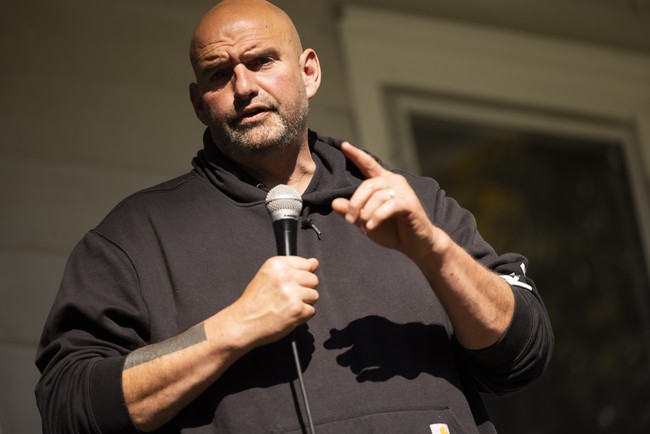
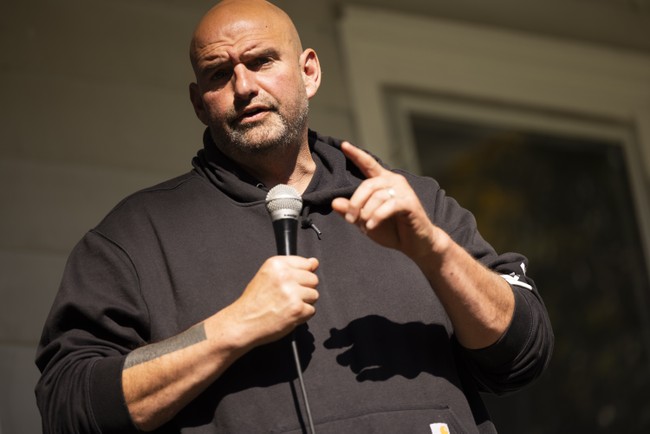
Sen. John Fetterman (D‑Pa.) expressed clear support for the operation, praising the decision to act against what he characterized as a hostile regime. His remarks were among the most forceful endorsements from a Democratic senator.
Fetterman on Fox on supporting Trump’s strikes on Iran: It’s just about country over party, but it’s also at peace, about peace over just empty kinds of treating and those kinds of negotiations that never worked since 1979.
— Chad Pergram (@ChadPergram) February 28, 2026
Rep. Josh Gottheimer (D‑N.J.), a prominent pro‑Israel Democrat, also applauded what he described as decisive action against Iranian military infrastructure. At the same time, he called for immediate classified briefings and said he expects the administration to comply with the War Powers Act.
Rep. Greg Landsman (D‑Ohio.) previously signaled openness to targeted strikes on Iranian military assets if warranted, while similarly emphasizing the importance of congressional consultation.
Dem OH Rep Landsman: The U.S. is destroying Iran’s missiles and bombs to stop them from taking more lives.
These strikes are targeting military infrastructure – with warnings to Iranian civilians to take shelter away from these military targets.
If it wasn’t for the regime,…
— Chad Pergram (@ChadPergram) February 28, 2026
This faction’s position can be summarized as: support the action itself, stand firmly with Israel, but insist on oversight.
The existence of this group complicates any attempt by Democratic leadership to present a unified front.
A Familiar Fault Line
The split mirrors earlier Democratic divisions over Middle East policy and executive authority. Since the post‑9/11 era, the party has housed both intervention‑skeptical members wary of “forever wars” and national‑security Democrats who take a more hawkish posture toward Iran.
The difference now is timing and political context. With Trump back in office and the operation framed as coordinated with Israel, Democrats face cross‑pressures from their increasingly anti-Israel base, from pro‑Israel constituencies, and from swing‑district political realities.
Progressive members and constitutional hawks inside the party are pressing hardest for immediate constraints. Centrist and pro‑Israel Democrats appear more cautious about opposing military action outright.