
Navigating workplace dynamics can be tricky, especially when personal boundaries are repeatedly crossed. What starts as seemingly harmless jokes or casual comments can quickly escalate into behavior that feels targeted, humiliating, or even bullying. For employees who have experienced past trauma, these situations can be especially distressing.
This is the reality today’s Original Poster (OP) faced with a colleague whose repeated jokes about her personal life went beyond simple teasing. Unable to effectively stand for herself, the ongoing teasing left her in tears and wondering how to navigate it all.
More info: Reddit
What one person may just be joking about can feel very different to the person on the receiving end, especially when the comments are repeated or target something personal

Image credits: freepik / Freepik (not the actual photo)
The author shared that she had a charismatic colleague with a sharp sense of humor, and that during a work trip they initially got along well
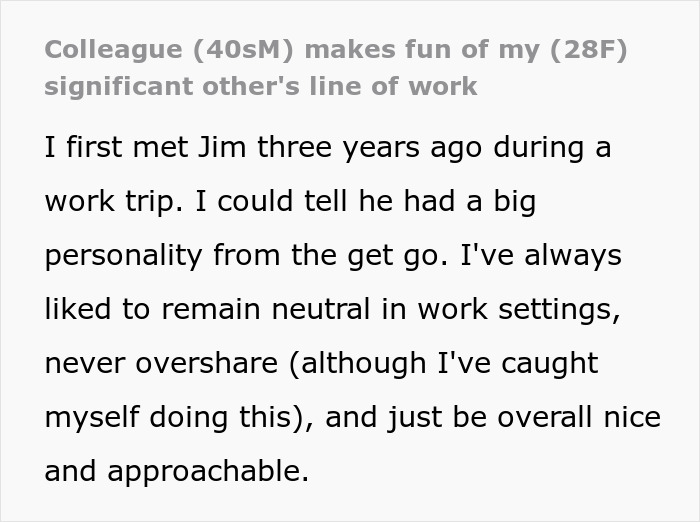
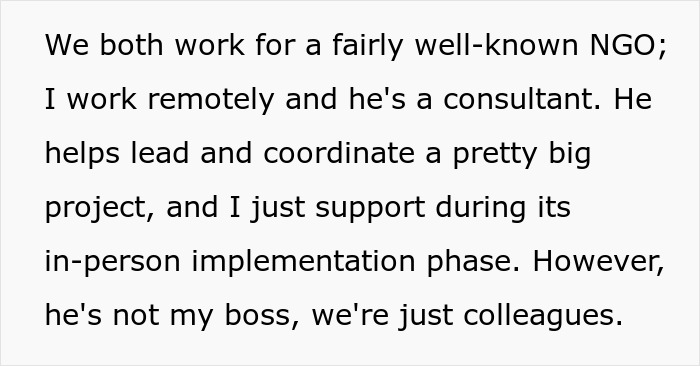
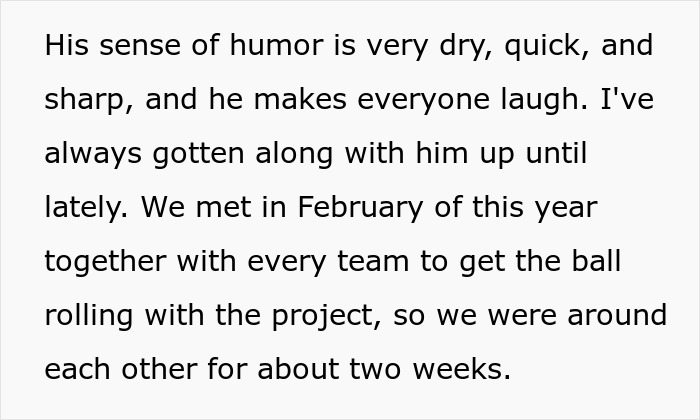

Image credits: freepik / Freepik (not the actual photo)
During a lunch with another colleague, the coworker who she got along with began making jokes ridiculing her boyfriend’s blue-collar job, which continued over time



Image credits: krakenimages.com / Freepik (not the actual photo)
She then also discovered that the worker had also made fun of her boyfriend behind her back to her boss and a colleague
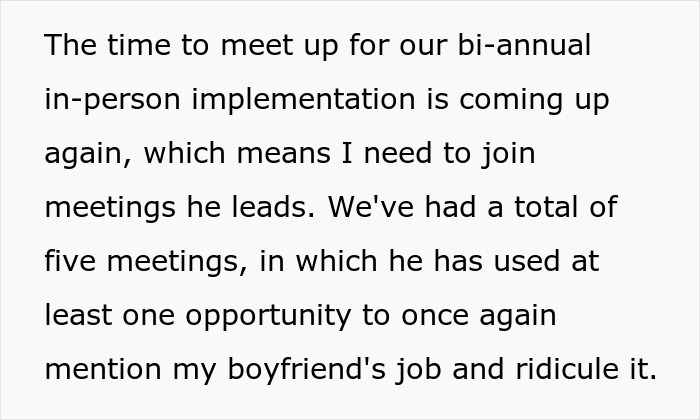
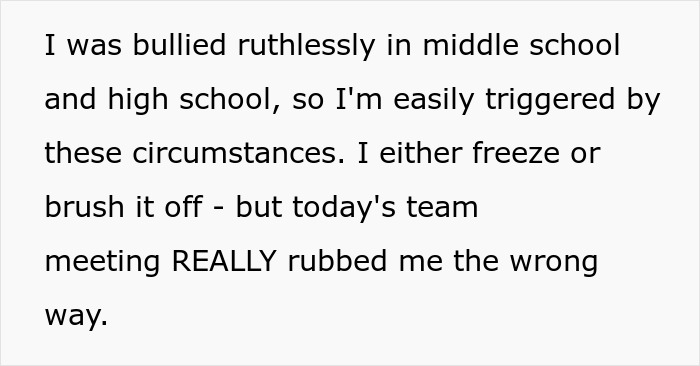
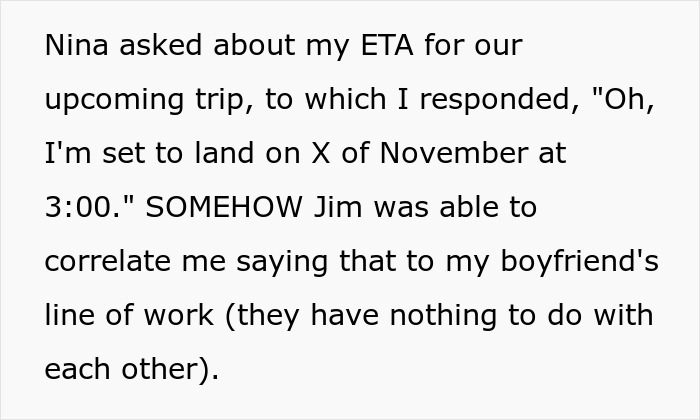

Image credits: bokodi / Freepik (not the actual photo)
In recent meetings, he continued targeting her partner, even drawing unrelated work details into the ridicule which left her in tears
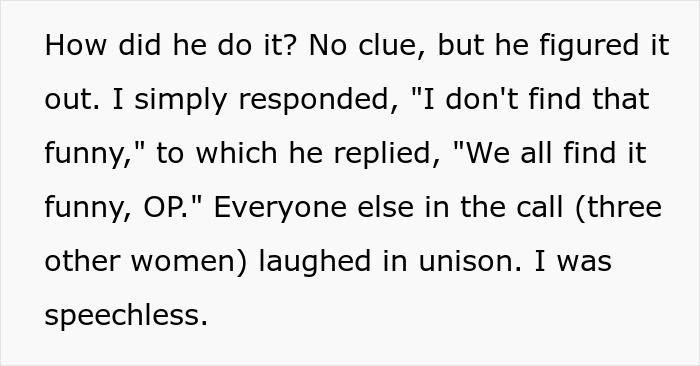
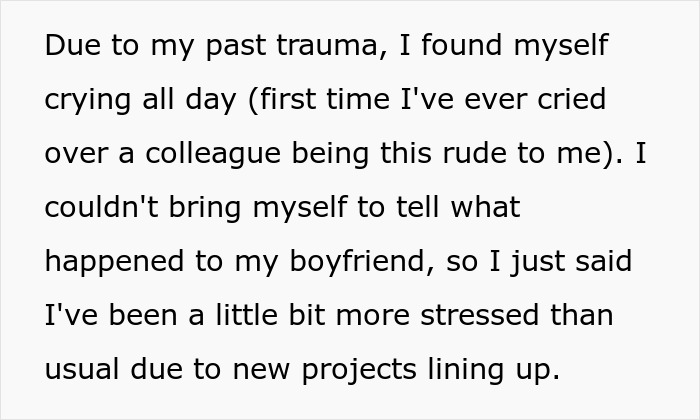
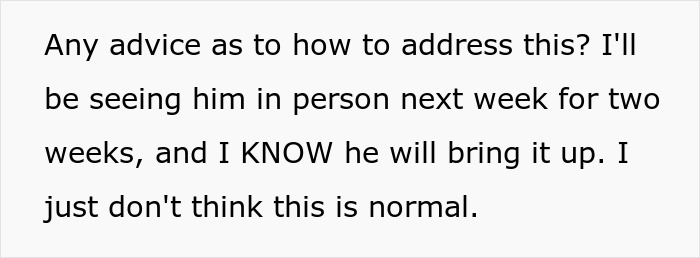
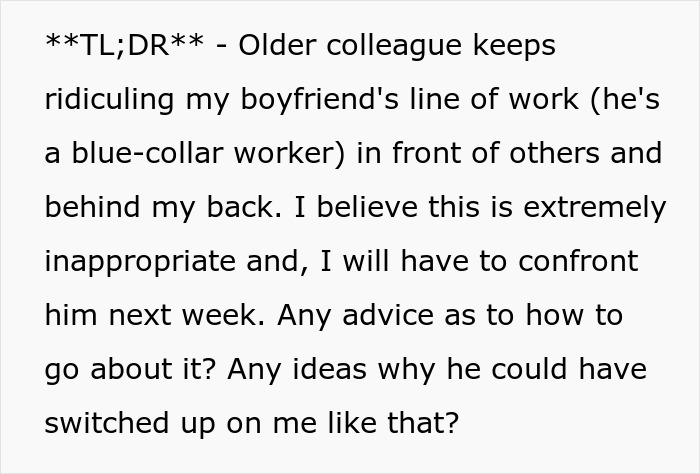
Image credits: Brief-Opposite8185
With another two-week in-person project approaching, she was left anxious about facing the coworker again and was unsure how to respond or protect herself
The OP first met her colleague years ago during a work trip for a large project run by the NGO they both work with. She noted that he had a sharp sense of humor, and that his jokes were dry and fast, and they often made coworkers laugh. For a while, things between them felt completely normal. However, one day at lunch during their work trip, another coworker asked the OP about her new relationship.
When the other colleague asked what her boyfriend did for work, she explained that he worked in a very specific blue-collar job, one she was proud of, especially because he was doing well for himself. Instead of simply moving on, the colleague began making jokes about it. At first she tried to brush them off politely, explaining that while the job might sound unusual to some, her boyfriend was successful and she admired his work.
Over time, the colleague kept bringing up the boyfriend’s job whenever an opportunity appeared, making sarcastic remarks about it. Months later, the OP discovered something that the colleague and the boss also laughed about it together during a dinner, and this left her deeply upset. At another point during a team meeting about an upcoming trip, the situation reached a breaking point.
The colleague once again managed to bring up her boyfriend’s job, and made another joke about it in front of the group. This time, she pushed back slightly, saying she didn’t find it funny, however, the colleague responded by saying that everyone else did. Indeed, others laughed about it, leaving her stunned, silent, and in tears for the rest of the day.

Image credits: jet-po / Freepik (not the actual photo)
Workplace bullying is a surprisingly common issue, affecting around 30% of employees at some point in their careers, according to surveys cited by Help Guide. It often begins subtly, with repeated jokes, snide remarks, or exclusionary comments that may seem minor at first. Over time, these behaviors can escalate into overt targeting, like isolating an employee, undermining their contributions, or publicly belittling them.
Part of what makes this kind of bullying so insidious is the way humor is used as a shield. As Work Logic explains, employees perceived as “funny” often evade accountability because their ridicule is framed as jokes. Bullies can mask humiliation or aggression, making it difficult for victims to speak up without being labeled overly sensitive.
Experts also stress that addressing workplace bullying requires proactive steps rather than hoping it will stop on its own. According to Trainual, documenting incidents, setting clear personal boundaries, and involving HR are essential strategies. Keeping a record of bullying provides evidence if escalation is needed, while clearly communicating boundaries signals what behavior is unacceptable.
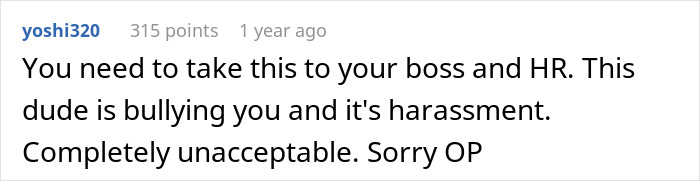
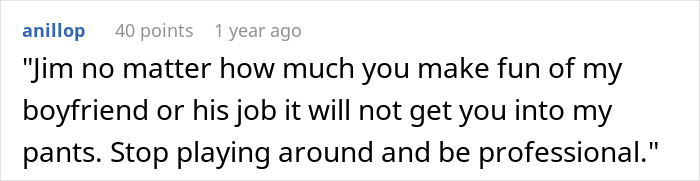
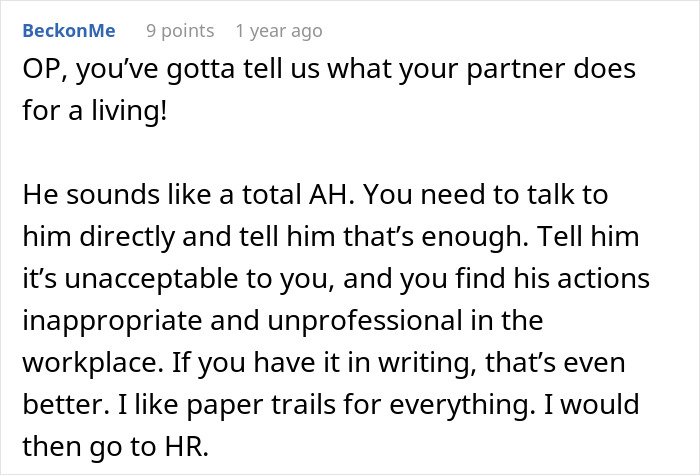
Netizens expressed strong support for the OP and were quick to label the colleague’s behavior as workplace bullying that should be formally addressed, emphasizing that repeated jokes at someone’s expense cross the line into harassment. What would you do if you were in OP’s shoes? Would you confront the person directly or go straight to HR? We would love to know your thoughts!
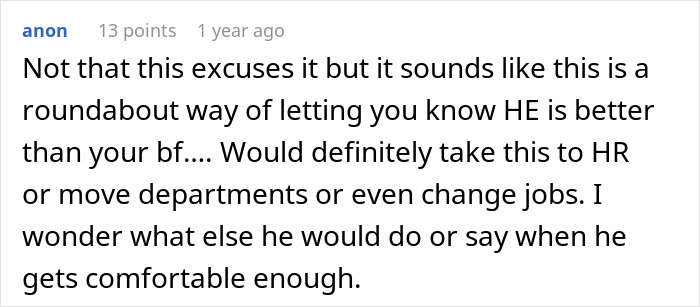
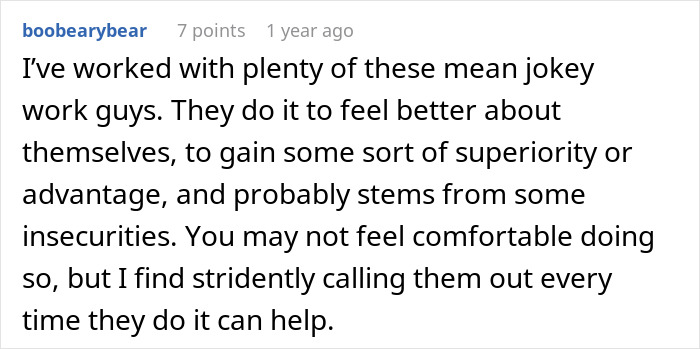
Netizens insisted the coworker’s behavior might stem from insecurity or jealousy, but emphasized that the author should not tolerate repeated ridicule disguised as humor