
Watching the Nightmare on Elm Street movies back-to-back reveals several fascinating features from the iconic horror franchise. What began in 1984 as a genuinely terrifying supernatural slasher slowly transforms into something much stranger, funnier, and more self-aware as the sequels pile up. Looking back across the entire saga highlights some surprising truths about Freddy and his ever-changing nightmare world.
Rewatching the Nightmare on Elm Street timeline becomes a fascinating record of audience expectations, slasher trends, and character evolution. As Freddy became a pop culture icon, the films leaned harder into the qualities that fans loved most about him, expanding his personality and mythology. Revisiting the series in order makes these patterns and shifts much more noticeable.
Freddy Doesn’t Get Funny Until A Nightmare On Elm Street 3: Dream Warriors

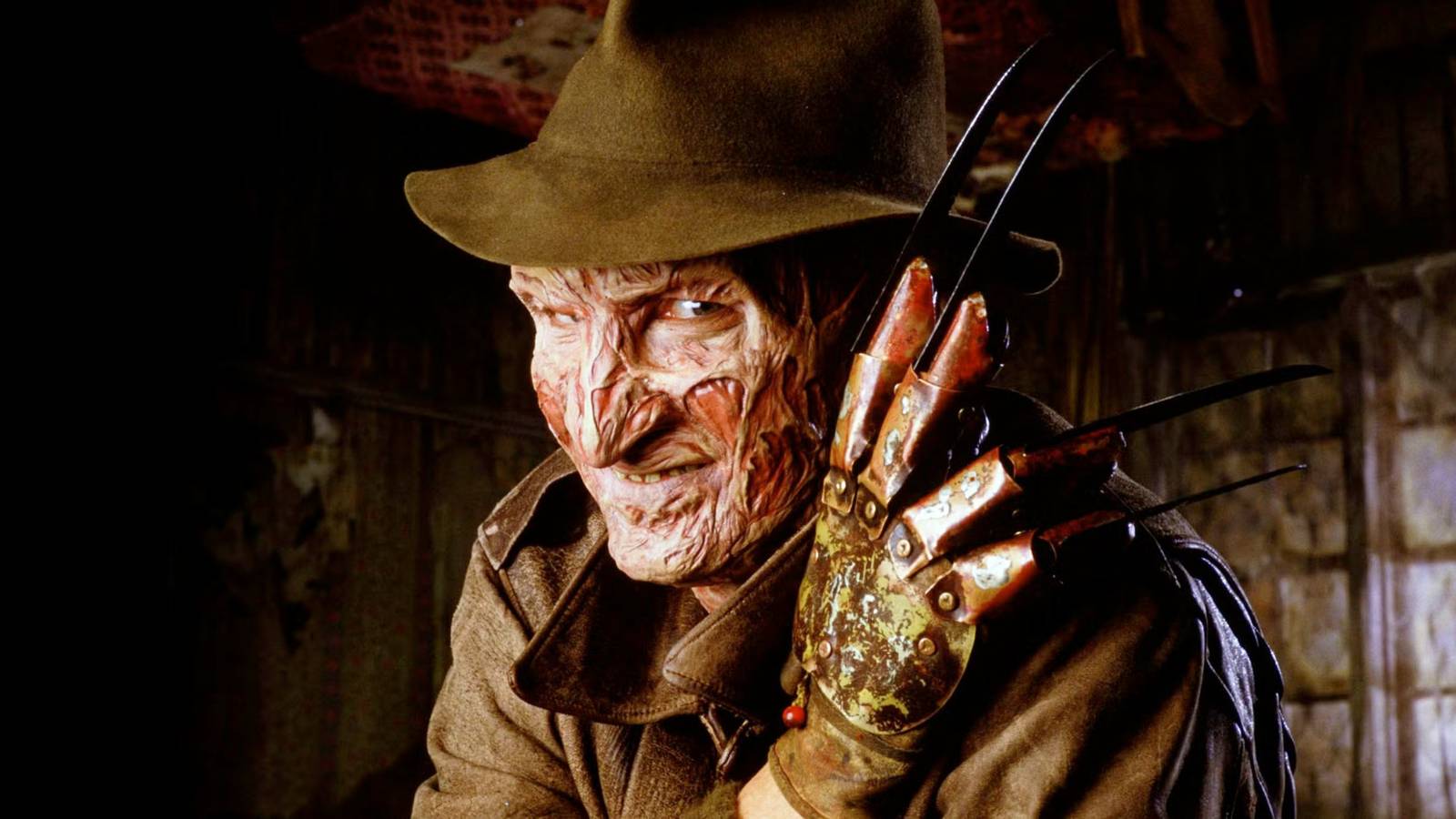
Freddy Krueger is remembered as one of horror’s greatest wisecracking villains, but rewatching the early films shows that reputation didn’t fully form until the third movie. In the original A Nightmare on Elm Street, Freddy is largely played straight. He has a few creepy one-liners and dark jokes, but he’s primarily portrayed as a terrifying presence stalking teenagers.
A Nightmare on Elm Street 2: Freddy’s Revenge keeps his personality relatively restrained compared to what audiences now associate with the character. Everything changes with Dream Warriors. This is the film where Freddy truly becomes the flamboyant, wise-cracking villain viewers love.
Freddy’s kills are imaginative and theatrical, and his dialogue becomes far more memorable. Because Freddy isn’t just a silent figure behind a mask like many other slashers, giving him a louder personality instantly elevates him into the franchise’s centerpiece. From this point on, the movies lean heavily into Freddy’s humor, transforming him from nightmare monster into a twisted entertainer.
Freddy’s Backstory Is Quietly Altered As He Became More Popular

In Wes Craven’s original concept for the character, Freddy was explicitly written as a child molester who had been murdered by vengeful parents. However, due to real-life child abuse scandals making headlines at the time, the filmmakers chose to soften the characterization. He became a child murderer instead.
As the series progressed and Freddy became a pop culture icon, the films made him more palatable. Rather than just being a monster, he was given tragic and bizarre elements to his history. A Nightmare on Elm Street 5: Dream Child reveals he is the “son of a thousand maniacs.”
Freddy was conceived when a nun was assaulted by scores of inmates in a mental institution. Freddy’s Dead: The Final Nightmare adds that he suffered abuse from his alcoholic adoptive father (played by Alice Cooper). These additions transform Freddy from a boogeyman into a twisted product of trauma and violence.
Robert Englund Wasn’t Considered The Star Until Very Late

Today, it’s impossible to imagine the Nightmare on Elm Street series without Robert Englund at the center of it. His performance as Freddy Krueger is so iconic that it defines the entire franchise. Rewatching the franchise suggests that Englund wasn’t initially recognized as the star.
In the original films, Englund is listed far down in the credits, often appearing last rather than receiving top billing. The marketing also focused primarily on the teenage protagonists rather than Freddy himself. At the time, the films were still structured like traditional slashers where the victims were meant to be the central characters.
As the sequels progressed, however, it became obvious that audiences were showing up for Freddy. Englund’s performance was the most entertaining and memorable element of every installment. By the later films, he had moved to top billing and became the face of the franchise.
Each Nightmare On Elm Street Has Its Own Distinct Identity

Watching the entire Nightmare on Elm Street franchise in sequence also highlights how each film is slightly different in tone. Beneath the usual nightmarish trappings and Freddy antics, the series experiments with tone and style in almost every installment. The original film is pure supernatural horror, establishing Freddy as a terrifying dream stalker.
Freddy’s Revenge takes a surprisingly subtext-heavy direction that many viewers now interpret through a strong LGBTQ+ reading. Dream Warriors then becomes the fan-favorite fantasy-horror entry with imaginative dream powers. A Nightmare on Elm Street 4: The Dream Master reflects highly-stylized late-1980s MTV aesthetics. The Dream Child notably leans into gothic horror imagery.

9 Biggest Things You Learn Rewatching All The Friday The 13th Movies In Order
Revisiting the Friday the 13th franchise reveals certain aspects that many might not know if they saw the iconic slasher movies out of order.
Freddy’s Dead goes even further with bizarre comedy and a 3D climax. The crossover with Jason Voorhees in Freddy Vs Jason transforms Freddy into part of an action-driven monster showdown. Finally, the 2010 reboot attempts a darker, more grounded reinterpretation. It’s likely this subtle reinvention that kept the franchise going for so long.
A Nightmare On Elm Street 3: Dream Warriors Is The Best In The Franchise

The original Nightmare on Elm Street is undeniably a classic. However, rewatching the series in order makes it clear why Dream Warriors is often considered the franchise’s high point. The first film may be groundbreaking, but the third entry perfectly captures everything audiences love about Freddy Krueger.
It strikes the ideal balance between horror, dark comedy, and wildly imaginative dream sequences. Unlike Freddy’s Revenge, which takes the series in a new direction, Dream Warriors is an expansion of the original story. It brings back Nancy, builds on the mythology, and introduces the idea that dreamers can fight back using powers shaped by their imaginations.
This leads to some of the most memorable nightmare sequences in the entire franchise. Freddy’s personality is also fully formed here. He’s menacing, theatrical, and funny without completely undermining the horror. The film may not be as revolutionary as the original, but it’s the quintessential Nightmare on Elm Street experience.
It’s Going To Be Near-Impossible To Replace Robert Englund

Rewatching the Nightmare on Elm Street series makes one thing incredibly clear: Freddy Krueger is inseparable from Robert Englund. Many slasher icons have been played by multiple actors over the years, but Freddy is uniquely tied to the performer who brought him to life. Part of the reason is the character itself.
Unlike masked villains like Jason or the Scream franchise’s Ghostface, Freddy isn’t interchangable. His face, voice, and personality are central to the role. Englund infused the character with theatricality, dark humor, and a mischievous energy that turned Freddy into one of horror’s most entertaining villains. Because of that, replacing him has always been a huge challenge.
The 2010 remake attempted to introduce a new version of Freddy played by Jackie Earle Haley, but the darker rendition failed to resonate with audiences. Englund’s performance is so distinctive that any future reboot will face the same challenge: honoring what made Freddy iconic without simply trying to imitate something that may be impossible to replicate.
How Many Major A-List Stars Started In A Nightmare On Elm Street

Over the years, several performers who would later become major Hollywood names passed through Freddy’s nightmare world. The most famous example is Johnny Depp, whose very first film role came in the original movie as Glen. His unforgettable death scene (where a geyser of blood erupts from his bed) remains one of the most iconic moments in the entire franchise.
Character actor Lin Shaye also appeared in the first film as a teacher, years before becoming a horror mainstay in movies like the Insidious franchise. Dream Warriors later introduced audiences to future Oscar winner Patricia Arquette. The Matrix’s Laurence Fishburne also appeared as a hospital orderly in Dream Warriors.
Breckin Meyer starred in Freddy’s Dead. This was years before his breakout roles in late 1990s teen comedies. For a horror franchise about dreams, it unintentionally became a launching pad for several future stars.
Nancy Was Always The Best Final Girl

Across the entire Nightmare on Elm Street franchise, several heroes step up to fight Freddy Krueger. Yet none ever quite match the impact of Nancy Thompson. Rewatching the movies only reinforces how compelling she is compared to the other protagonists.
Introduced in the original film, Nancy stands out because she refuses to remain a passive victim. Instead of simply trying to survive, she studies Freddy, sets traps, and actively fights back. Her intelligence and determination make her one of the most proactive final girls in horror history.
Nancy’s return in Dream Warriors strengthens her legacy even further. Rather than being sidelined like many horror survivors, Nancy becomes a mentor figure helping a new generation of teenagers face Freddy in their dreams. While Patricia Arquette’s Kristen Parker is a strong contender, Nancy still feels like the franchise’s true hero.
The Dream Logic Evolved Significantly Across The Franchise

In the original Nightmare on Elm Street, dreams are frightening but relatively grounded. Freddy invades nightmares that resemble warped versions of reality, creating tension through the uncertainty of when characters begin to dream. As the series continues, the dream world becomes far more fantastical.
The dreams become elaborate set pieces that quickly cannot be mistaken for reality. In Dream Warriors, characters develop dream powers, creating elaborate supernatural battles rather than simple stalking scenarios. Later films push the concept even further.
Freddy is transformed into a malevolent force created by dream demons. One of these dream demons would later use Freddy’s form to come into the real world in Wes Craven’s New Nightmare. What begins in A Nightmare on Elm Street as intimate psychological horror eventually becomes a surreal fantasy battlefield where imagination itself becomes the ultimate weapon.