
Many of today’s best thrillers have been heavily influenced by thrillers of yesteryear. The classic thrillers have provided us with so many brilliant twists and turns through action, mystery, and extraordinary stories. These masterpieces are so influential that they remain a major part of our cinematic history.
We’re here to celebrate ten classic titles that have earned masterpiece status and continue to hold it today. From visionary directors to prolific stars, these thriller masterpieces have aged like fine wine. Though some have been colorized over time, many of these black-and-white thrillers still yearn for the classics.
‘Pyscho’ (1960)

There is simply no film like Psycho. And it all started with the star billing. But first, let’s set up the Alfred Hitchcock masterpiece. Inspired by the novel by Robert Bloch, Psycho tells the story of the chance encounter between on-the-run embezzler Marion Crane (Janet Leigh) and shy motel proprietor Norman Bates (Anthony Perkins). When Marion goes missing, private investigator Milton Arbogast (Martin Balsam), Marion’s lover Sam Loomis (John Gavin), and her sister Lila Crane (Vera Miles) investigate her disappearance.
Known for the early murder and the most disturbing mother-son relationship you’ll ever see, Psycho is the gold standard of horror. A departure from other Hitchcock films at the time, Psycho was more than just a shocking story, instantly influencing filmmakers seeking to replicate the magic Hitchcock captured. The film may have been divisive, but everyone can agree that its influence outweighs any pushback it ever received. We’ve seen some truly remarkable horror scenes, but the shower murder is unmatched. Leigh was the star of the film, so to kill her off in such glorious fashion shocked the world, giving future filmmakers the freedom to shock audiences in the same way.
‘M’ (1931)

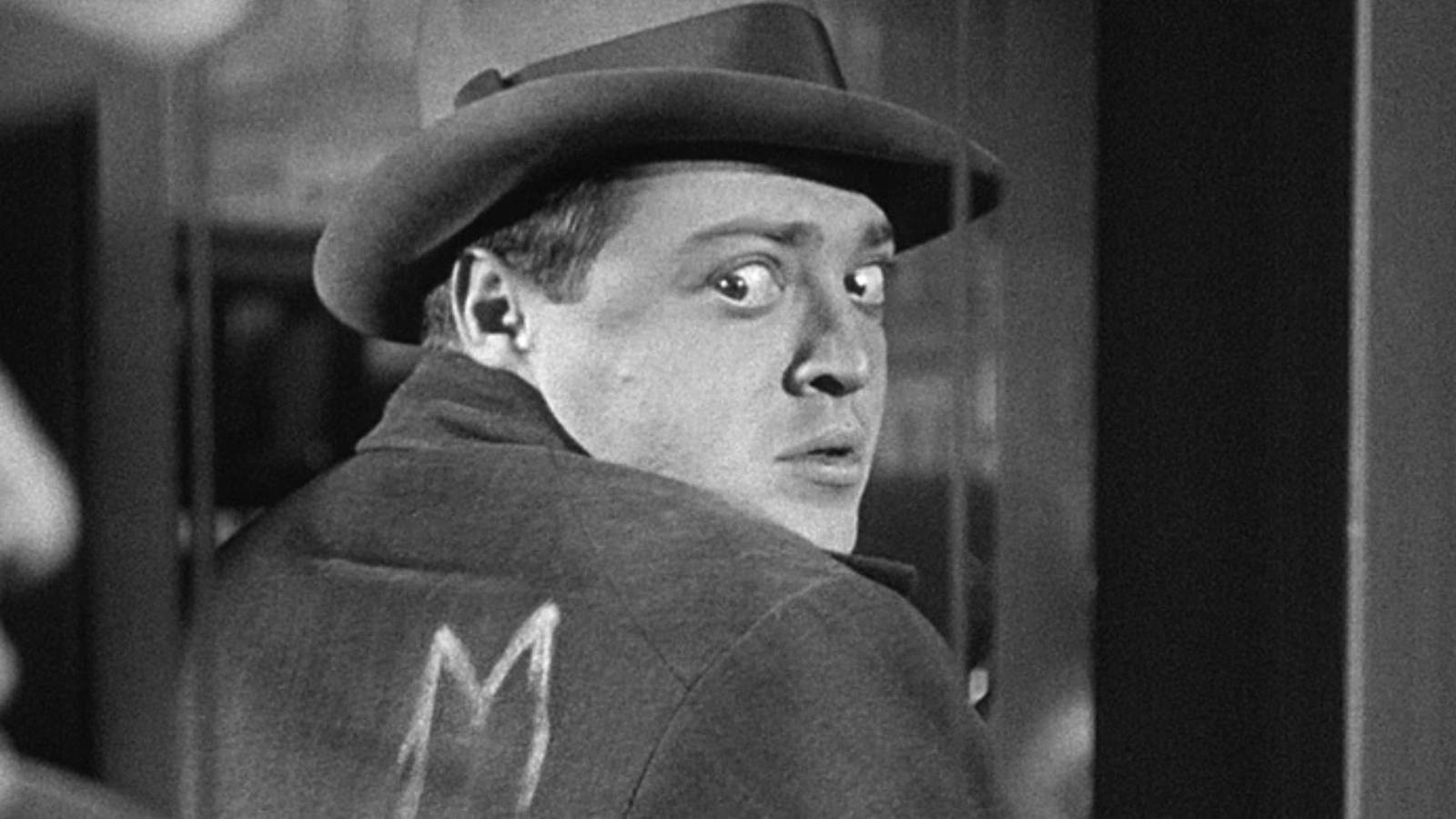
One of the first procedural dramas to reach cinemas was 1931’s M. Directed by Fritz Lang in his first sound film, M tells the story of Hans Beckert (Peter Lorre), a serial killer who preys on children. Becoming the prime focus of a Berlin manhunt with an M marked on his back, his despicable crimes earn the ire of the city, and he is soon targeted by others in the seedy underworld. On the run from both cops and criminals, Beckert rushes into a tense, panicked attempt to escape justice.
Inspired by the real-life “Vampire of Düsseldorf” case from 1929, M reflected the era’s social anxiety. The film revolutionized filmmaking, introducing sophisticated sound techniques and establishing the language of the modern thriller. For Lang, it served as a departure from his previous films, focusing on sound, silence, and visual storytelling to create intense psychological suspense, a major departure from the dialogue-heavy talkies. One of the most brilliant aspects was the usage of a musical leitmotif to identify our killer, using the evocative “In the Hall of the Mountain King.” Through German expressionism and societal commentary, M was a film leagues ahead of its time, establishing how thrillers would be made.
‘The Maltese Falcon’ (1941)

When it comes to noir thrillers, there’s no classic quite like The Maltese Falcon. Directed by John Huston, this film served as a blueprint for every noir thriller that followed. Adapted from Dashiell Hammett‘s novel, the film follows the hard-boiled private eye Sam Spade (Humphrey Bogart) as he becomes entangled in a web of murder, greed, and betrayal while searching for a priceless, jewel-encrusted falcon statuette. Along the way, he meets an array of characters who covet the legendary artifact, including his mysterious femme fatale client, Brigid O’Shaughnessy (Mary Astor), and the villainous “Fat Man,” Kasper Gutman (Sydney Greenstreet). When his partner, Miles Archer (Jerome Cowan), is murdered, Spade navigates lies and double-crosses as he unlocks the truth about the falcon and the lengths the shady individuals will go to possess it.
The Maltese Falcon truly is “the stuff that dreams are made of.” Sharply directed with an evocative, moody atmosphere, it drops you directly into the action. Through a claustrophobic, shadowy approach, Arthur Edeson‘s cinematography became a character in and of itself. Bogart is one of the greatest actors in cinema history, but this film helped shape his entire career. Surrounding him were many other flawed individuals, but they balanced each other out throughout the story. Thanks to Astor, we discovered the allure of a femme fatale. The Maltese Falcon is a triumphant film that satisfied the desire for noir thrillers.
‘Rear Window’ (1954)

If there’s one thing we learned from Rear Window, be wary of those who live nearby! A Hitchcock masterpiece, Rear Window tells the story of professional photographer L.B. “Jeff” Jefferies (James Stewart), who, stuck in his wheelchair with a broken leg, becomes obsessed with watching his neighbors in the apartment courtyard across the way. During a summer heatwave, he suspects his neighbor, Lars Thorwald (Raymond Burr), of murdering his wife and enlists his socialite girlfriend, Lisa (Grace Kelly), to help investigate the suspicious events unfolding in the courtyard.
Filmed almost entirely within Jeff’s apartment, the film is voyeurism at its finest. Through a distinct single-set and a wheelchair-bound protagonist, Hitchcock meticulously directs this thriller to feel hauntingly intimate. Stewart and Kelly are at the top of their game, contributing to the brilliance of the story. The precision with which Hitchcock keeps viewers on edge is why he’s the master of suspense. A dangerous game that ends in a shocking twist, Rear Window serves as a cautionary tale. Rear Window may be simple in concept, but it’s extraordinary in execution.
‘North by Northwest’ (1959)
We could easily make this list of Hitchcock masterpieces, but we’ll spread the wealth out a bit; that said, here’s another Hitchcock thriller. North by Northwest stars Cary Grant as Roger Thornhill, an advertising executive, who, after being kidnapped and framed for murder, is mistaken for a government agent named George Kaplan. Pursued across the US by foreign spies led by Phillip Vandamm (James Mason), he meets a mysterious woman named Eve Kendall (Eva Marie Saint) and tries to clear his name.
Involving iconic scenes at the UN and Mount Rushmore, North by Northwest is just one of those films that is littered with iconic moments. By no means is it a slow-burning, suspenseful film; it’s actually a fast-paced thriller that utilizes extraordinary directorial and cinematic techniques that pull you straight into the action. Through kinetic camera movement and dramatic, high-angle shots, the evocative imagery elevates it to a top-tier level in the spy genre. From the art auction to the crop-duster chase in an open field, North by Northwest is one of those films you can identify simply by image. Though some may disagree, the blend of glamour, danger, and foreign locales truly influenced James Bond and every iconic spy movie that followed.
‘The Manchurian Candidate’ (1962)

If there’s one film that continues to spook us to this day, look no further than The Manchurian Candidate. Directed by John Frankenheimer, based on Richard Condon’s novel, the Cold War thriller is about a U.S. Army platoon brainwashed by Communists during the Korean War. Sergeant Raymond Shaw (Laurence Harvey), who is part of a prominent political family, is turned into an unwitting “sleeper assassin” designed to kill a presidential candidate, while Major Bennett Marco (Frank Sinatra) races against time to uncover the conspiracy.
Released at the height of the Cuban Missile Crisis, The Manchurian Candidate expertly tapped into the paranoia of the time through sharp satire and avant-garde filmmaking. By blending multiple realities through infamous dream sequences, the film’s ability to push a narrative against taking politics at face value is a thrill in itself. There’s a disorienting intensity that keeps the chaotic paranoia present. Part of why The Manchurian Candidate is a legendary film is the brilliance of its cast. From the raw, frazzled Sinatra and the cold, rigid Harvey all the way down to the undeniably unsettling performance of Angela Lansbury as the manipulative Eleanor Shaw, the ensemble shone brightly.
‘Cape Fear’ (1962)

While many are familiar with Martin Scorsese’s 1991 remake with Robert De Niro, we’re here to talk about the 1962 original. Directed by J. Lee Thompson, Cape Fear is a psychological thriller about Max Cady (Robert Mitchum), a sadistic ex-convict who, after serving time, stalks and terrorizes the family of Sam Bowden (Gregory Peck), the lawyer who testified against him and sent him to prison for eight years. An act of utter revenge, Cady legally systematically harasses the family, forcing them into a desperate, violent showdown on a houseboat.
Exposing the flaws in the legal system, Cape Fear is a dazzling depiction of terror. Mitchum’s terrifying, understated performance as Max Cady makes him one of classic cinema’s most dynamic villains. The calculated rage may be the most terrifying, villainous trait one could achieve. The psychological tension built through its moody atmosphere and chilling score made Cape Fear defy the norms and literally stick it to censorship. Earning itself amongst Hollywood’s scariest films, Cape Fear will forever be one of the greatest classic psychological thrillers.
‘What Ever Happened to Baby Jane’ (1962)

The feud between Bette Davis and Joan Crawford is a brilliant story in itself, but the context of that drama stems from What Ever Happened to Baby Jane. A camp cult classic, the psychological thriller tells the story of an aging, unstable former child star, Jane Hudson (Davis), who terrorizes her wheelchair-bound sister, Blanche (Craford), in their decaying Hollywood mansion. Directed by Robert Aldrich and based on Henry Farrell’s novel, What Ever Happened to Baby Jane is what happens when you expertly blend gothic melodrama, dark comedy, and a real-life rivalry.
Without Baby Jane, the rise of the “psycho-biddy” subgenre may have never come to be. Rich and profoundly authentic, the film’s ability to approach jealousy and torment through the dark side of fame is part of its crowning achievements. The film is rightly over-the-top to hammer home the ridiculous story, yet we still find it plausible. It’s all thanks to the dynamic between the two actresses. When you truly loathe someone, it comes out on screen! A claustrophobic pressure cooker of a film, perhaps we’ll never look at rats the same ever again.
‘Gaslight’ (1944)

Though you might believe the titular lexicon to be a modern idea, we were watching gaslighting happening all the way back in the 1944 thriller, Gaslight. Directed by George Cukor and drawing upon Patrick Hamilton’s play, the psychological thriller set in Victorian London follows a husband, Gregory Anton (Charles Boyer), who slowly manipulates his wife, Paula Alquist Anton (Ingrid Bergman), into believing she is losing her mind by dimming the gaslights, hiding objects, and telling her she is imagining things. Why? To hide his own criminal activities.
Sensationally drawing upon psychological torture, the film literally coined the term we still use today. Gaslight is a slow, methodical film that thrives through character development. Gregory is a treacherous individual, but you simply can’t deny his sway via his manipulation. It’s a chilling performance from Boyer that became a blueprint for the suave monster archetype. You feel for Paula as she transforms from a confident woman to a terrified, trembling victim, winning Bergman her first Oscar. There have been countless films that draw upon similar themes, but Gaslight essentially pioneered domestic emotional abuse in cinema.
‘Vertigo’ (1958)

It’s only fitting we end our journey with one more Hitchcock masterpiece. Based on the 1954 novel D’entre les morts by Boileau-Narcejac, Vertigo tells the story of John “Scottie” Ferguson (James Stewart), a retired detective with a crippling fear of heights and vertigo. He becomes obsessively fixated on a woman, Madeleine Elster (Kim Novak), whom he is hired to follow. Seemingly possessed by a suicidal ancestor, after failing to save her, he encounters a woman who looks exactly like her, triggering an intense, controlling obsession.
Rooted deeply through a dreamlike exploration of obsession and guilt via a haunting circular narrative, Vertigo will forever be synonymous with the famous dolly zoom. A brilliant film with some truly pioneering direction, Hitchcock’s use of a specific color palette, deliberate shots to capture acrophobia, and the intensity of its visual storytelling became a complete game-changer. With so many interpretations of what the true meaning of the film could be, Vertigo uses an offbeat romance to tackle a man’s obsession with control. Influencing movies, television, and music since 1958, Vertigo is a timeless classic that is simply masterful.