
From Botox and dermal fillers to buccal fat removal, anti-ageing treatments are more visible than ever. Yet experts warn that not every procedure delivers the youthful result people hope for.
Some cosmetic treatments and surgeries may even make signs of ageing more noticeable over time, particularly when they remove natural volume or alter the structure of the face.
That does not mean every aesthetic treatment should be ruled out. However, specialists say it is important to understand the possible risks and choose an experienced practitioner carefully.
Skin expert Joanne Evans said: ‘I am not against surgery at all. I have seen some extraordinary results achieved by highly skilled specialists.
‘My advice is always to research thoroughly, ask the right questions, view the surgeon’s portfolio and, most importantly, make sure you feel safe and comfortable with your choice.’
She added: ‘The aim should never be to look like someone else. It should be to become the best version of yourself at every stage of life.’
Here are 15 cosmetic procedures and surgeries that leading skin and aesthetic experts say they would personally avoid — and the reasons behind their decisions.

Clinical facialist and skin health expert Smita Ahluwalia shares the procedures she would never have done
Buccal fat removal
Buccal fat removal involves taking away some of the natural fat found inside the cheeks through a small surgical incision.
The procedure has become popular among celebrities and Hollywood figures, but it is the treatment most frequently rejected by the experts featured here.
Clinical facialist and skin health expert Smita Ahluwalia said: ‘As we age, it is normal to lose volume and fat in the face, which can create a hollower, older appearance. I would not want to accelerate that process.’
She continued: ‘Fuller cheeks can contribute to a more youthful appearance. Once buccal fat has been removed, it is gone permanently, so you could regret the decision later in life. I would rather retain my natural facial volume.’
Dr Arti Singh, a dental surgeon and aesthetic specialist, shares those concerns. She said: ‘Removing buccal fat too early can contribute to a prematurely aged appearance in the future.’
There are also important anatomical risks, Dr Singh explained: ‘The area is close to branches of the facial nerve and the parotid salivary duct. Surgery can potentially cause nerve weakness, paralysis or damage to the duct.’
Dermaplaning
Dermaplaning has become a major social media trend, with influencers promoting both professional treatments and at-home versions. Supporters claim it helps skincare products absorb more easily and creates a smoother base for makeup.
Smita, however, said it is not a treatment she would choose. ‘Dermaplaning removes fine facial hair and dead skin cells, leaving the complexion looking temporarily smooth and fresh. Personally, it is not something I favour,’ she said.
She explained: ‘We have fine facial hair for a reason. It offers a degree of protection, and I do not see the benefit of removing it simply for a short-term cosmetic effect.’
She added: ‘It is also a form of mechanical exfoliation. If it is carried out too aggressively or too often, it can weaken the skin barrier and lead to irritation, sensitivity and discomfort.’
Joanne Evans, founder of Skin-Matters, said: ‘I always question why we would permanently remove something that we naturally lose as we grow older.’
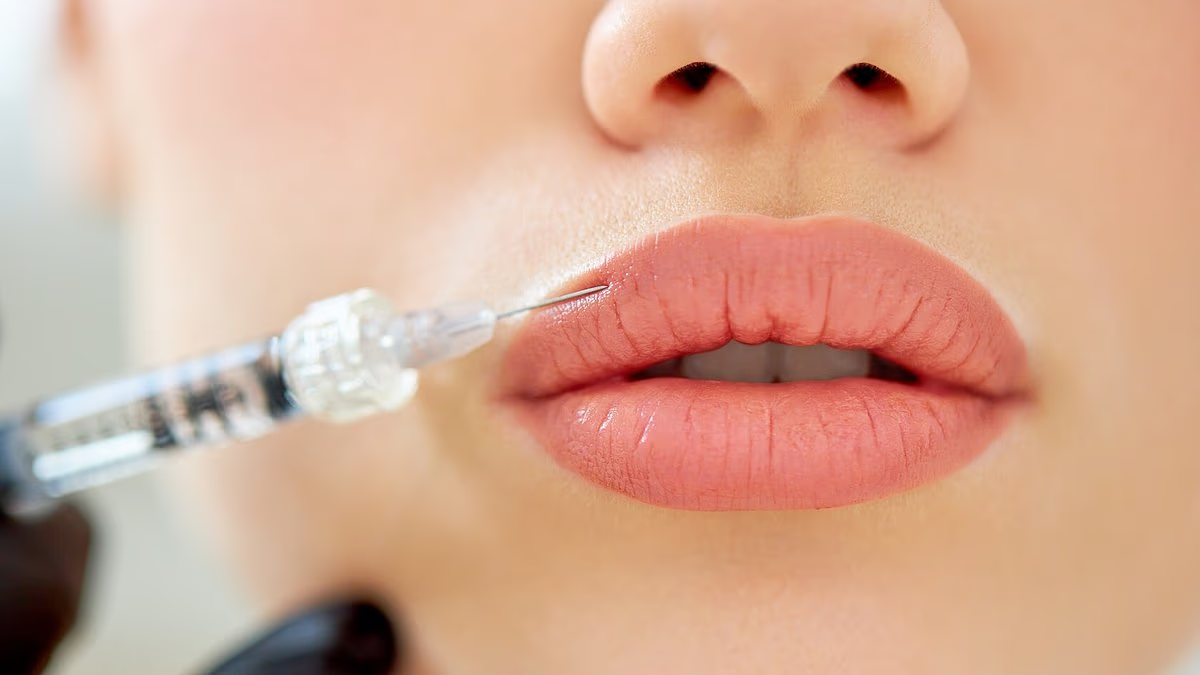
Lip filler
‘Fuller lips can be appealing, particularly because lips naturally lose volume and definition with age. But lip filler is not something I would personally have,’ Smita said.
She explained: ‘I have seen many lips that look overfilled or unnatural, and that is not the result I would want. Some practitioners create beautifully subtle enhancements, but in other cases it is immediately obvious that filler has been used.’
Smita also highlighted potential complications such as migration, lumps and unevenness. ‘In rare cases, filler can obstruct a blood vessel, which may lead to tissue damage,’ she said.

Lip injections can cause serious complications including tissue damage and lumps
Threads
‘The idea of inserting threads beneath my skin to pull it upwards does not appeal to me,’ Smita said.
‘The results are temporary, and the treatment can lead to puckering, unevenness, infection or threads becoming visible beneath the skin.
‘There is also a risk of distorting the surrounding tissue. As skin naturally loses collagen and elasticity over time, I would prefer to concentrate on improving its quality rather than physically pulling it into position.’
Botox
Although Botox is one of the best-known cosmetic procedures, it is not an option Smita would choose for herself.
She said: ‘What puts me off Botox is the possibility of losing natural facial movement. I have noticed people trying to express themselves while their noses scrunch because their foreheads are no longer moving normally.’
She is also concerned that treating one area could draw attention to another. ‘Baby Botox can create a subtler effect, but if I smoothed the lines on my forehead, I would probably become more aware of sagging around my jawline. Where would it end?’
Ultimately, she said: ‘I am not interested in putting something artificial into my body.’
Deep chemical peels
Smita regularly performs chemical peels in her clinic, but she draws a clear distinction between gentle treatments and deep chemical peels.
‘Deep peels can be extremely aggressive, and the recovery period can be significant while the skin heals,’ she said.
KEEP READING: Democrats Face Reality Check as Divided New Lawmakers Reach DC
Smita added: ‘Because I have darker skin, I am especially aware of the risks of hyperpigmentation, scarring and even permanent loss of pigmentation. I would rather choose a course of milder peels that gradually improve the complexion without the extended downtime and risks associated with deeper treatments.’
Filler
Dermal filler is widely used to restore volume and reshape the face, but Smita said she has seen too many results that appear ‘puffy and overfilled’.
She said: ‘My concern is that once you start filling one part of the face, you may begin to see other areas that you feel also need treatment.’
‘Filler can migrate, create lumps and remain in the face much longer than expected. There are also rare but serious complications, including blocked blood vessels. I would rather improve my skin quality and allow my face to age naturally than change its shape,’ Smita added.
24K gold facials
A 24K gold facial may look glamorous on social media, but Smita believes the treatment is unlikely to justify its luxury price tag.
She said: ‘I would not spend my money on a 24K gold facial. It sounds indulgent and looks impressive on Instagram, but where is the evidence behind it?
‘There is very little proof that applying gold to the skin stimulates collagen, reduces wrinkles or improves long-term skin health. Any glow or hydration is more likely to come from the other ingredients used in the facial. To me, it is more of a gimmick than a treatment backed by meaningful results, and I would rather invest in something with proven benefits.’
Laser hair removal on my face

While laser hair removal is a great solution for removing body hair, Smita says she wouldn’t use the treatment on her face for risk of stimulating more hair growth
Laser hair removal is often promoted as a way to eliminate unwanted facial hair, but Smita believes the treatment can carry particular risks when used on the face.
She said: ‘I would not have laser hair removal on my face, especially when treating fine, downy hair. One possible side effect is paradoxical hair growth, meaning the treatment may stimulate more hair instead of reducing it, particularly in people with hormonal concerns.’
She added: ‘Laser hair removal can be an excellent option for other parts of the body. For me, though, the potential risks of treating facial hair are not worth it.’
‘Turkey teeth’
Dr Singh described ‘Turkey teeth’ as a popular term for extensive dental treatment, often involving full-coverage crowns carried out overseas quickly and at a lower cost.
It is also an approach the dental surgeon said she would never undergo herself.
She explained: ‘To create a bright, uniform smile, healthy teeth may be filed down into small stumps before crowns are fitted. This is irreversible and can damage the nerve within the tooth, leading to pain, root canal treatment or tooth loss. If problems develop after the patient returns home, obtaining follow-up care can also be challenging.’
‘More conservative alternatives, including whitening, orthodontic treatment or minimally prepared veneers, can often produce excellent results while preserving the natural teeth,’ Dr Singh added.
Jaw shaving
‘V-line surgery, also known as jaw shaving, is particularly popular in South Korea. It reshapes the jaw and narrows the chin to transform a squarer face into a slimmer, tapered V shape,’ Dr Singh said.
It is a procedure she would avoid because of the potentially serious complications involved.
She said: ‘The lower jaw contains important nerves and blood vessels. Damage to the nerve supplying sensation to the lower lip, chin and teeth can cause lasting numbness, tingling or altered sensation. There is also a risk of injuring the nerves responsible for facial movement.
‘The jaw can also fracture. From an aesthetic perspective, removing the underlying support for the soft tissue may eventually contribute to sagging around the jawline and neck.’
‘Fox eye’
The ‘fox eye’ look became popular through social media. It is designed to create an almond-shaped eye, an upturned outer corner and a more elevated brow. The effect can be produced with thread lifts or surgery that cuts and repositions tissue and muscle.
Dr Singh said it is not a procedure she would choose. ‘The eyelids protect the eyes, and once tissue has been removed or repositioned, reversing the result can be extremely difficult. Surgery can create an unnatural expression and may affect functions such as blinking and fully closing the eyes.’
Dimpleplasty
Dimpleplasty creates artificial dimples by making small incisions inside the cheeks.
Dr Singh said the outcome can be difficult to predict: ‘The dimples may be uneven, placed incorrectly or made too deep.’
She added: ‘They may initially be visible even when the face is relaxed. In some patients, that does not settle, leaving a permanent indentation instead of a natural-looking dimple that appears only when smiling.’
Extreme rhinoplasty
Dr Arti Singh said: ‘The very small, scooped and upturned nose was a popular beauty ideal for many years, and a number of patients now seeking revision rhinoplasty had their original surgery during that period.’
She warned: ‘The cartilage of the nose acts as scaffolding to keep the airway open. If too much is removed, that support can collapse. Breathing may become more difficult, the bridge can develop a saddle-shaped appearance, the tip may become pinched and the nostrils can look uneven.
‘As the years pass and the skin contracts over an under-supported structure, these problems may become increasingly visible.’
Joanne Evans also cautioned that dramatically changing the nose can affect the balance of the entire face.
Joanne said: ‘The nose is central to facial harmony. I would be extremely cautious about significantly reducing or reshaping it simply to match a passing beauty trend.’
She added: ‘For me, balanced proportions are much more important than trying to achieve an idea of the perfect nose.’
Blepharoplasty
Joanne said: ‘Eyelid surgery can be highly effective, especially when excess skin begins to interfere with vision. However, I would be cautious about removing too much skin or fat.’
‘Overcorrection can alter the natural appearance of the eyes and may, in some cases, affect eyelid closure or cause dryness and irritation. I would always favour a conservative technique that respects each person’s natural eye shape,’ she added.