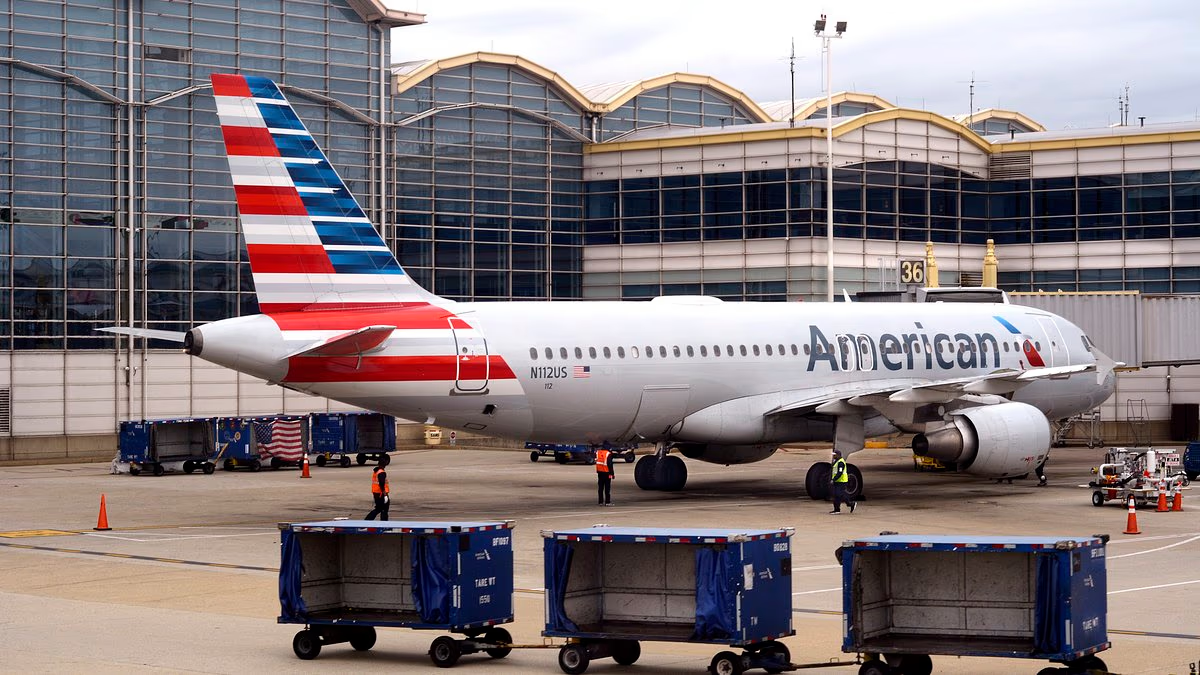

An American Airlines traveler believed she had secured a $650 payout after being removed from an oversold flight, but the airline later offered her far less than she says was promised at the gate.
Nicholle Acciarri was due to fly from New York to Cleveland when an American gate agent announced that the aircraft did not have enough seats for all ticketed passengers.
According to Acciarri, the agent offered either $650 or reimbursement for costs such as a rental car, another airline ticket or a hotel stay.
Acciarri made alternative travel arrangements and rented a car to return home. She was then angered when American sent her a $250 flight voucher instead.
The credit expired after one year, requiring her to book another journey with American if she wanted to use it.
The Ohio attorney refused to accept the outcome and pressed the airline to honor what she viewed as a clear promise.
In a letter to consumer advocate Christopher Elliott, Acciarri said American had offered several different explanations for why it would not pay the amount discussed at the airport.
The airline argued that she was not entitled to federally mandated denied-boarding compensation because the situation involved an “equipment downgrade”—a smaller aircraft being substituted for operational or safety reasons.

Acciarri believed American Airlines had agreed to pay $650 after she was unable to board her scheduled flight, but the airline later offered a different amount

Nicholle Acciarri was traveling from New York to Cleveland when she was told there was no available seat for her
At one point, a supervisor reportedly said the airline’s records indicated that Acciarri qualified for either a $353 payment or a $442 travel credit because of weight-related restrictions.
That figure was later withdrawn, with the airline describing the calculation as another administrative mistake.
“I am an attorney and I don’t like it when people don’t keep their word,” Acciarri told Elliott.
She maintained that American should have delivered the promised $650 or covered the full cost of the journey she arranged to get home.
The dispute illustrates a confusing aspect of airline overbooking, Elliott said: Being denied a seat does not automatically mean a passenger qualifies for compensation under federal rules.
US Department of Transportation regulations require airlines to compensate eligible passengers who are involuntarily denied boarding when a flight has been oversold.
There are, however, significant exceptions to that requirement.
Elliott explained that when an airline replaces an aircraft with a smaller plane for operational or safety reasons, passengers typically do not receive the same federally required compensation associated with standard overbooking.
American appeared to base its position in Acciarri’s case on that distinction.

The dispute emerged as American works to change how it handles one of air travel’s most unpopular situations. In September, the airline began requiring airport teams to seek volunteers before involuntarily removing passengers from oversold flights
YOU MAY ALSO READ: NYC Mother Says She’s in ‘Deep Pain’ After 27-Year-Old Son’s Arrest in Fatal Jogger Stabbing Case
Even so, Elliott argued that American had a responsibility to honor the offer made by its employee at the gate.
After intervening, the consumer advocate said an American representative confirmed that the gate agent had offered Acciarri either a check or travel credit.
The airline suggested that the $650 amount may have been intended for passengers who volunteered to surrender their seats before the situation became an involuntary denied-boarding case.
American ultimately agreed to add $192 to Acciarri’s travel credit, taking the total value of her compensation to $442.
Although the final amount remained below the $650 she believed had been promised, it was a substantial increase from the original $250 offer.
The incident offers a useful warning to passengers caught in an airport seating dispute: An offer made at the gate is not necessarily the same as compensation guaranteed by federal law.
Travelers should clarify whether they are voluntarily giving up their seat or being involuntarily denied boarding, since the difference can significantly affect their legal rights.
It is also wise to obtain the agreement in writing before leaving the airport. The documentation should state the payment amount, whether the compensation will come as cash, a check or a voucher, and any conditions attached.
Boarding passes, receipts and emails or other correspondence should also be preserved in case the airline later challenges the terms of the arrangement.

Under US Department of Transportation rules, eligible passengers involuntarily removed from an oversold flight may be entitled to compensation
Acciarri’s complaint comes as American Airlines attempts to reshape its handling of one of the most frustrating parts of commercial air travel.
In September, the airline announced a policy requiring airport employees to search for volunteers before involuntarily bumping travelers from oversold flights.
The change followed criticism of American’s record. The airline was responsible for roughly 60 percent of involuntary passenger bumpings in the United States last year.
Under the revised procedure, gate agents must keep the aircraft doors open until enough travelers agree to give up their seats, even when doing so delays the departure.
Airport managers must also attend oversold flights and may approve compensation above the airline’s standard limits without contacting headquarters.
American said early tests of new technology and procedures prevented involuntary bumpings at participating airports.
The carrier also reported an 85 percent year-over-year decline in involuntary denied boardings during the third quarter.
For travelers, the policy could lead to higher offers and fewer unpleasant surprises at the gate.
Still, Acciarri’s experience shows why passengers should confirm every detail before relying on an airline’s promise—especially when the carrier controls both the paperwork and the payment.