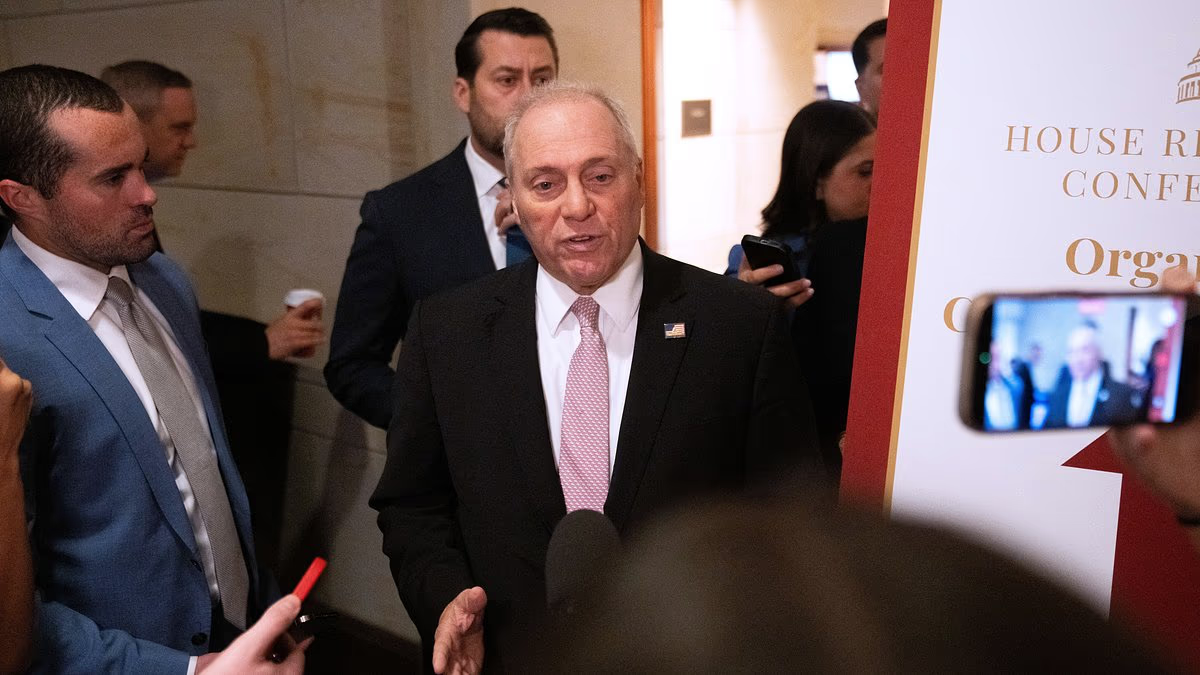

Ohio Congressman Jim Jordan was elected to lead House Republicans in the minority after Democrats delivered a decisive blow to the party in last week’s midterm elections.
His victory triggered an internal Republican battle as Jordan moved to defeat the establishment-backed candidate, current Majority Leader Steve Scalise, who was also competing for the leadership post.
Scalise is closely aligned with Speaker Mike Johnson, who chose not to seek another leadership position. But following the party’s heavy midterm losses, many lawmakers called for a change at the top.
Jordan prevailed with 106 votes, defeating Scalise by more than 33 votes in the secret-ballot election.
The Ohio congressman, who led the Republican counteroffensive during Democrats’ first two impeachment efforts against Trump, is expected to vigorously defend the president and his family against a likely wave of investigations.
With Democrats returning to power, Trump will spend the final two years of his second term confronting corruption investigations and legislative gridlock. He could also face a third impeachment crisis—hardly the way he hoped to conclude his time in office.
Jordan promised a “fight” during the closed-door meeting. Even some Scalise supporters privately acknowledged that his message appeared to be winning over lawmakers after the Republicans’ midterm defeat.
The Ohio firebrand has pursued a leadership role for years. He challenged former Speaker Kevin McCarthy in 2018 but lost after several rounds of voting. Jordan also ran for speaker in 2023, when he was defeated by Mike Johnson.

Jordan’s allies said he had 100 votes locked up, enough to put him over the threshold needed to win

The contest also drew attention because neither President Donald Trump nor outgoing Speaker Mike Johnson publicly endorsed a candidate

Representative Scott Fitzgerald publicly backed Jordan on Tuesday, saying, “I’m pulling for Jim Jordan, that’s no secret. I’ve been working with the chairman to garner the votes and help him fine tune his message to the members”
The contest became a test of whether Republicans wanted a fresh direction after their midterm rout or believed Scalise’s years of leadership experience gave the party its best chance of reclaiming the majority in 2028.
Before the vote, Scalise said he was “feeling really good” about his prospects.
“We’ve got a lot of work to do after today, but this is the start of our move to get the country back on track and to get the majority back,” Scalise said.
Jordan, however, appeared to be building momentum during the closed-door candidate forum, according to Punchbowl News.
He secured the support of several prominent Republicans.
CONTINUE READING: Christina Haack’s New Boyfriend’s Ex Shares Details of the Luxury Lifestyle She Enjoyed While Dating Him
Representative Mike Rulli publicly endorsed Jordan and, during the private meeting, allegedly stood up to ask what House GOP leaders intended to accomplish during the remainder of their time in the majority.
Rulli said voters in his district wanted Republicans to take more action than they had seen, remarks that reportedly drew cheers and approving responses from other lawmakers.
Representative Scott Fitzgerald announced his support Tuesday, saying, “You’re not going to find a better fighter and better communicator.”
Representative Andy Harris, chairman of the House Freedom Caucus, also backed Jordan, arguing that Republicans needed to “change the team.”
Scalise, meanwhile, had the backing of Republicans who viewed his experience at the top of the party as the safer option.
Representative Rick Allen said he would support the Louisiana Republican, declaring, “He should get the Medal of Honor. I mean, he has laid it all out there.”
Representatives Mike Kelly, Nathaniel Moran and Mario Diaz-Balart also endorsed Scalise.

Democrats taking control of the House creates a series of major headaches for Donald Trump during his final two years in the White House
Diaz-Balart argued that Scalise was best positioned to rebuild the party by refocusing Republicans on the economy and national security.
The leadership battle also attracted attention because neither President Donald Trump nor outgoing Speaker Johnson publicly endorsed a candidate.
Trump said last week that he intended to stay out of the contest.
Johnson likewise declined to state a preference, saying Republican lawmakers should make the decision themselves.
“I want the body, I want the members to make those decisions themselves,” he said. “I’m not weighing in here on the leadership elections.”
The vote had initially been scheduled for Tuesday morning, but a series of committee hearings pushed the leadership decision into the afternoon.
The newly elected leader will immediately confront a series of challenges, including how to respond to the Democratic Party’s plans to launch investigations into the Trump administration in January.