
Microsoft is battling to resolve a major outage that has disrupted Outlook and several other services for millions of people worldwide. The company acknowledged that its recovery efforts were “not taking as expected.”
Reports that Outlook was unavailable began arriving shortly after 1 p.m. Eastern time on Thursday.
More than 10 hours later, many users still could not access their inboxes or send emails.
Microsoft’s subscription-based services are used by more than 430 million people, although the company has not said how many customers were affected by the disruption.
Users also reported problems with Teams, Microsoft’s workplace messaging platform, its Copilot artificial intelligence assistant and other Microsoft 365 products.
On Thursday night, Microsoft said it was looking for “alternate workstreams that can be applied to increase capacity in the face of sustained traffic management imbalances” as it worked to restore service.
Earlier in the day, the company said infrastructure facing an “elevated load across multiple regions” was likely contributing to the connectivity problems.
Charles Lamanna, a Microsoft executive vice president, wrote on X on Thursday night: “For now I can confirm that there is no indication this is the result of malicious or cyber activity.”

Microsoft said Thursday night that its efforts to restore services after the widespread outage were “not taking as expected”

Millions of people worldwide were unable to access Outlook and other Microsoft services for much of the day
Microsoft previously said several servers had become “unexpectedly unavailable” after a problem caused them to fail during “automated health checks.”
The cause of that failure was not immediately known.
The company later said it was testing a solution and deploying an alternative way to bring the affected servers back online.
“We’re aggressively pursuing all pathways to reduce impact,” Microsoft’s 365 Status account posted on X.
Around noon, Microsoft said that “mitigative actions” had “successfully restored service health and functionality” in North America.
Users disputed that assessment, continuing to report problems as the outage disrupted the middle of the working day for many people.
Australian Home Affairs Minister Tony Burke said Microsoft had told him it did not believe the outage was the result of a cyberattack, Reuters reported.

Microsoft said earlier Thursday that infrastructure facing an “elevated load across multiple regions” was likely contributing to the widespread outage
CONTINUE READING: Lil’ Kim Lights Up Empire State Building for Debut LP’s 30th

OpenAI said the Microsoft outage left ChatGPT operating with “degraded performance” on Thursday
The Microsoft disruption also affected several other platforms.
OpenAI said Thursday afternoon that it was “investigating an issue with Microsoft connectors where new connections may be broken and tools are not working as expected.”
The company said ChatGPT was experiencing “degraded performance.”
Anthropic, another major artificial intelligence company, also said users were encountering problems linked to the Microsoft 365 service incident.
According to Anthropic, mail, calendar and search functions in its Microsoft 365 connector were failing for most requests.
The outage reached jails across the United States. The Arapahoe Sheriff’s Office in Colorado said on X Thursday evening that officials could not receive the email notifications required to process online bond payments.
People seeking immediate release on bond were therefore instructed to complete the process in person at the jail.
The New York City Department of Investigation said evictions scheduled for Friday had been suspended because of the outage.
Microsoft has said that more than 90 percent of Fortune 500 companies use Copilot, its AI assistant.

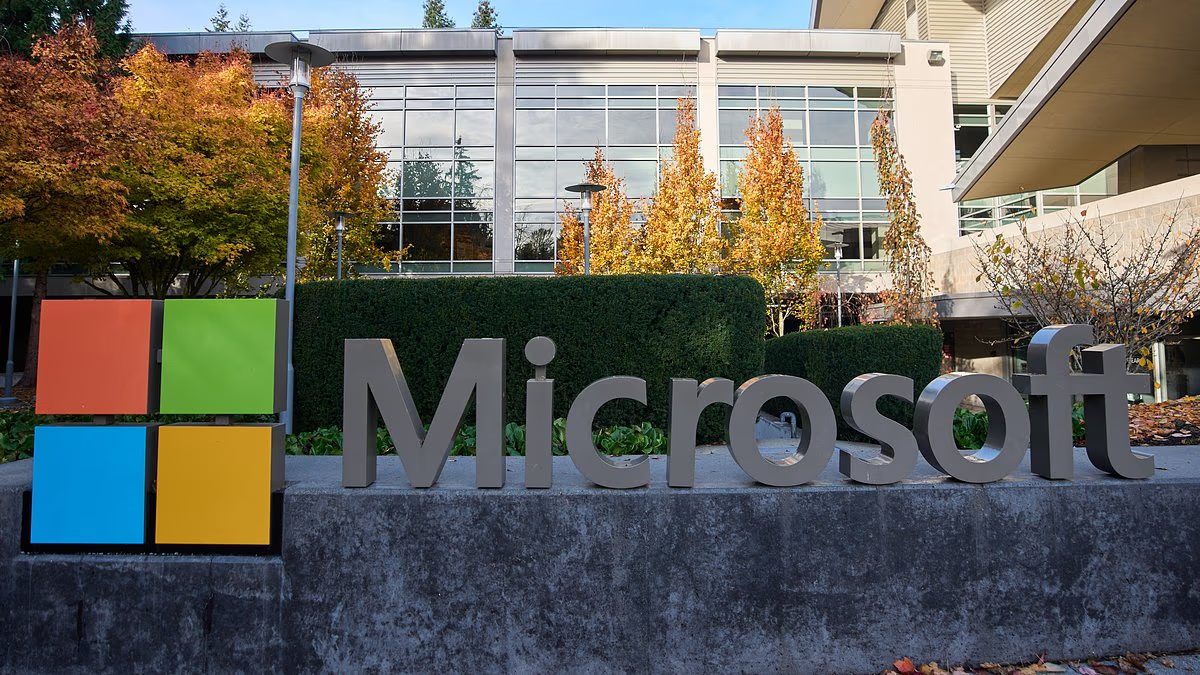
More than 430 million people use Microsoft’s subscription services (pictured: the Microsoft campus in Redmond, Washington)
The outage occurred during the same week Microsoft issued a security update for an unrelated vulnerability that could allow hackers to obtain sign-in information.
Attackers could use that information to impersonate victims and potentially gain access to accounts or workplace systems.
Microsoft released a fix on November 10 as part of its security updates, but affected computers remain exposed until the patch is installed.
To update, users should open an Office application such as Word, select File, then Account, choose Update Options and click Update Now.
In classic Outlook, the account menu may instead be labeled Office Account.
The vulnerability has already been exploited in real-world attacks.
Until the update has been applied, users should avoid opening unexpected attachments or message files, even when they appear to have been sent by someone they know.