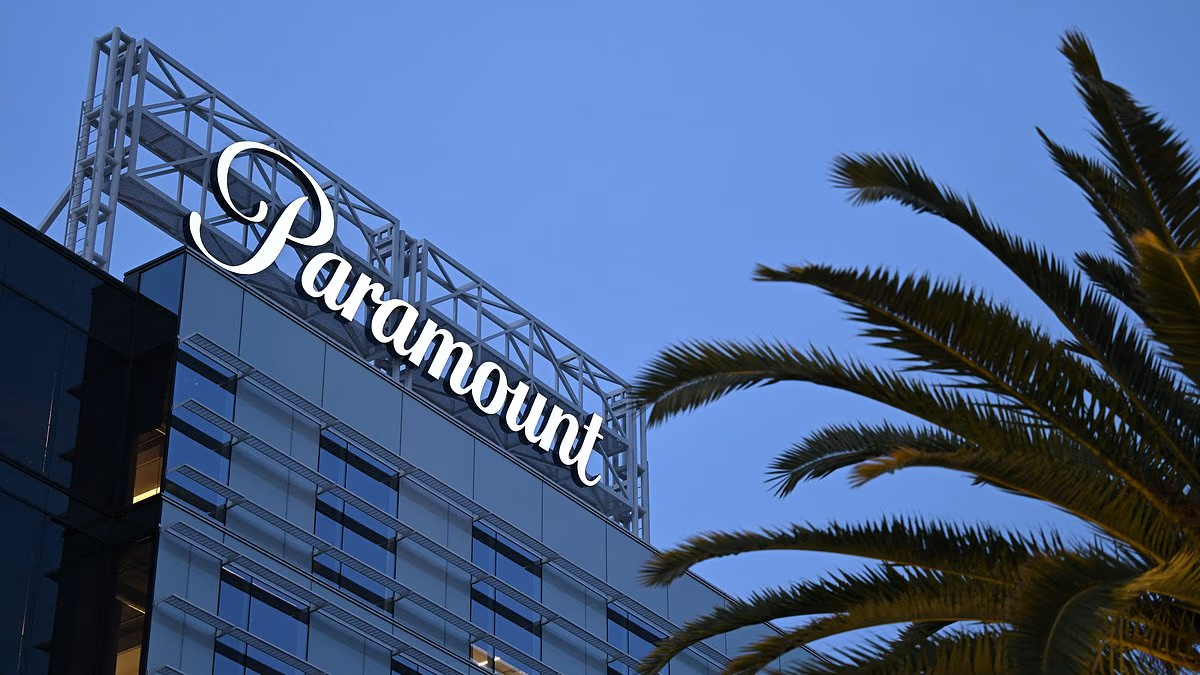

California officials have agreed to resolve their legal challenge against Paramount’s proposed $81 billion acquisition of Warner Bros., clearing a major obstacle as celebrities condemn the settlement as a “huge win for Trump.”
Attorney General Rob Bonta, who led the case alongside 11 other state attorneys general, and the Writers Guild of America announced settlements on Monday. The agreements effectively move the Paramount-Warner Bros. merger closer to completion.
The decision immediately triggered backlash across Hollywood. Marvel actor Mark Ruffalo, a frequent voice on political issues, criticized Governor Gavin Newsom in a post on X.
“Gavin Newsom hands huge win to Trump and his billionaire cronies,” Ruffalo wrote while responding to comments from Alvaro Bedoya, a senior adviser at the American Economic Liberties Project and former Federal Trade Commission commissioner.
“Today, billionaires have yet again bribed, censored, and bullied their way to the top,” Bedoya said. “Layoffs will follow. People from L.A. to Atlanta will lose their jobs, small businesses will lose their contracts, your cable bill and movie ticket will be even more expensive.”

California Attorney General Rob Bonta, pictured above, and 11 other state attorneys general have settled their lawsuit seeking to stop Paramount’s $81 billion merger with Warner Bros. Discovery.

Marvel star Mark Ruffalo criticized Governor Gavin Newsom, calling the settlement a “huge win” for President Donald Trump, whose family has ties to Paramount CEO David Ellison’s family.
Concerns Erupt Over Paramount-Warner Merger
Political controversy has followed Paramount’s pursuit of Warner Bros., particularly because of the relationship between President Donald Trump and the family of Paramount CEO David Ellison.
Ruffalo had previously urged Bonta to continue fighting rather than settle the case.
“Don’t you dare … do not cave. 5,670 filmmakers put their necks on the line for you to fight this merger. Another 75,000+ and counting have signed to tell you not to concede in just three weeks,” Ruffalo wrote.
The actor also warned that Bonta’s constituents would suffer if the “lousy deal filled with empty promises” were allowed to proceed.
The proposed combination would bring major news operations under one corporate umbrella, including CNN. The network has been barred from the White House by the Republican administration over what Trump has described as unfavorable coverage.
Newsom, by contrast, portrayed the agreement as a victory for California workers and the state’s entertainment industry.

Ellison welcomed the agreements reached Monday with the states and the Writers Guild of America, saying they provide “complete clearance” for the Warner merger and will help create “a stronger Hollywood.”

The merger would place major news networks, including CNN, under the same corporate umbrella. CNN was barred from the White House by the Republican administration over what Trump called unfavorable reporting.
Governor Newsom Hails Settlement
“It protects California jobs while putting a safeguard in place to help preserve editorial independence for two of America’s most important news organizations,” Newsom said.
Under Monday’s agreement, Paramount has pledged to expand film production in the United States, contribute millions of dollars to a fund supporting workers displaced by the merger and establish new oversight of editorial independence within its news operations.
The settlement must still receive final approval from a judge.
Ellison welcomed the terms agreed with the states and the Writers Guild, describing them as “complete clearance” for the transaction. He again argued that combining Paramount and Warner Bros. would help “build a stronger Hollywood.”
Opponents called the safeguards inadequate and accused state attorneys general of yielding to corporate pressure. Many had viewed the lawsuits as the final barrier preventing a unified Paramount-Warner company from taking shape.
Negotiations remained tense for months. Even after the companies offered additional remedies Monday, Bonta and the other state prosecutors said they continued to believe the merger was not in the public interest.

Negotiations remained difficult for months, and the state prosecutors said they still opposed the merger despite the additional remedies announced Monday.
State Settlement Enforces Binding Commitments
The states, including New York, filed suit in July to stop the deal, arguing that it would “extinguish competition” and reduce choices for consumers, particularly moviegoers and cable subscribers.
The agreement announced Monday includes several legally enforceable commitments from Paramount. The company has promised to spend at least $1.5 billion more on domestic film production over the next five years, equal to $300 million annually, and provide an additional $47.5 million for training and career support for workers affected by the merger.
Paramount must also release 30 films annually for the next two years, followed by 32 films per year during each of the subsequent three years.
If the company falls short, the states said it could be required to sell Miramax Studios and pay $30 million for every missed film into health care and retirement funds connected to the Writers Guild of America and other entertainment unions.
RELATED: Fitness Influencer Liam Fitzgerald Dies at 29 After Motorcycle Crash
For cable customers, the settlement requires Paramount to negotiate separate agreements for Paramount-owned and Warner-owned basic channels during the next five years. State officials said the measure is intended to limit upward pressure on consumer prices.
Paramount must also establish a “News Editorial Independence Board” to oversee news operations at CBS and CNN.
At a news conference in Los Angeles, Bonta said the settlement focused on “protecting people’s careers, the lives they’ve built here in California, the livelihoods their families rely on.” He emphasized that resolving the lawsuit did not amount to endorsing the merger.
The Writers Guild of America separately confirmed that it had settled its own July lawsuit, which argued that the deal would particularly harm screenwriters and the broader Hollywood workforce. The union said it could not afford to continue the complex litigation on its own.

Bonta said the settlement was intended to protect California workers and their families, while stressing that it should not be interpreted as support for the Paramount-Warner merger.

Opponents argued that the settlement did not go far enough and accused state attorneys general of surrendering to corporate pressure after treating the lawsuits as the last major obstacle to the merger.
WGA and State Officials Vow Continued Oversight
“We continue to believe the merger will cause damage to writers and the industry at large,” the WGA said. The union added that, as a nonprofit organization without government support, pursuing the case would have required millions of dollars.
New York Attorney General Letitia James, who helped obtain Paramount’s commitment to place $17.5 million into the Writers Guild health care fund, said her office would monitor the company to ensure it complies with the agreement and applicable law.
The settlement followed growing concern that Paramount could leave California if the legal dispute continued, potentially costing thousands of jobs and delivering a severe economic setback to the state.
Paramount had initially agreed to delay the transaction into next year to allow the legal challenges to proceed. The company later pushed for a settlement as the potential cost of acquiring Warner Bros. appeared likely to rise substantially.
Paramount had agreed to pay shareholders a “ticking” fee of $7 million for every day the transaction remained unfinished after September 30.
When outstanding debt is included, Paramount’s purchase of Warner Bros. is currently valued at approximately $111 billion.
Over the weekend, several lawmakers, including Democratic Senators Elizabeth Warren and Cory Booker, called on the states to continue challenging the agreement.
Other critics also attacked the merger Monday, warning that further consolidation could give too much power to a small number of companies controlling the entertainment industry.

Paramount had agreed to postpone the transaction into next year while the lawsuits moved through court, but later sought a settlement as the projected cost of acquiring Warner Bros. continued to climb.

The settlement came amid fears that Paramount could relocate its operations if the legal dispute dragged on, threatening thousands of jobs and causing significant economic damage to California.

Connecticut Attorney General William Tong said protecting the editorial independence of CNN and CBS News was his central objective and that he wanted the two news organizations fully separated from the merged company.
Federal Inaction Leaves States Fighting Alone for Editorial Independence
In a statement Monday, Ellison said the newly combined company would remain headquartered in Los Angeles.
“We aren’t going anywhere. Our history is here and this is where our future is being built,” he said.
Paramount had not publicly addressed speculation that it might leave California, and the settlement does not require the company to keep its headquarters in the state. During the summer, however, Tennessee officials sent Ellison a letter encouraging Paramount to move there.
Tong said his primary aim had been to protect the independence of CNN and CBS News, adding that he would have preferred the complete separation of both outlets from the merged company.
The Connecticut attorney general said Paramount rejected any guarantees concerning editorial independence just one week earlier.
“We wanted to save ethical and independent journalism and news,” Tong said.
Tong and other state officials said their efforts became significantly more difficult after the Trump administration chose not to intervene. In June, the U.S. Department of Justice issued an extensive statement backing the merger.
“The complete abdication of the federal government’s enforcement role in this fight left states with one arm tied behind our backs,” Tong said.
The Daily Mail contacted Governor Newsom’s Office, Paramount, Warner Bros., the Writers Guild of America, Attorney General Rob Bonta and Mark Ruffalo’s management team for comment.