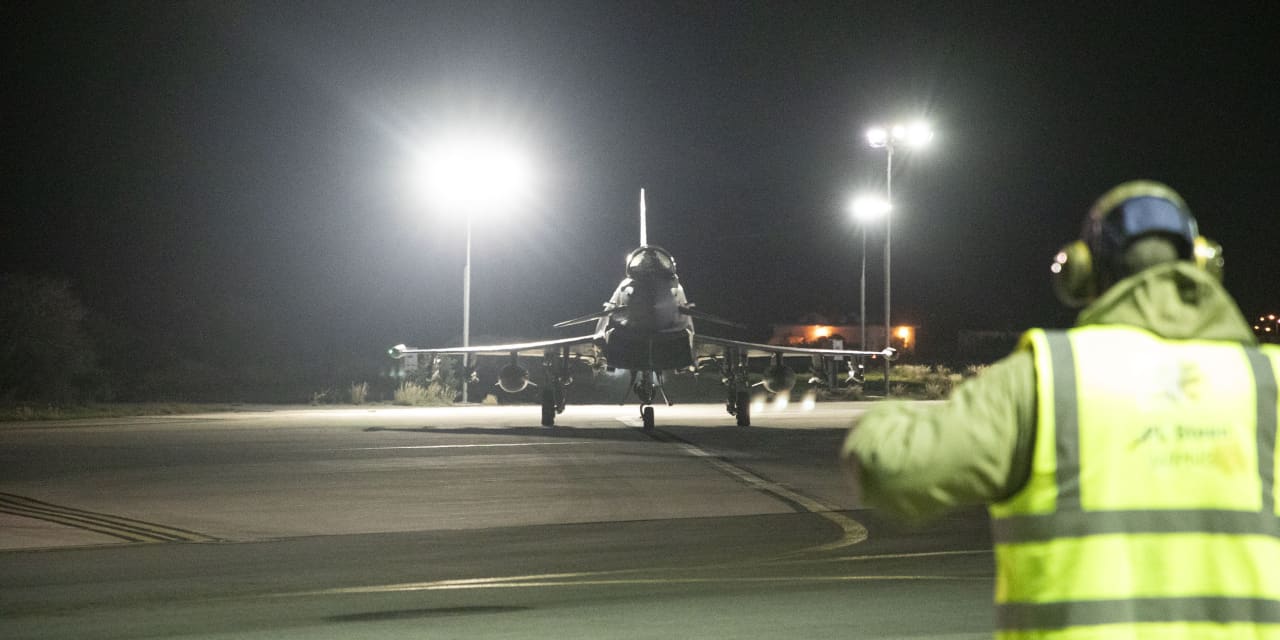

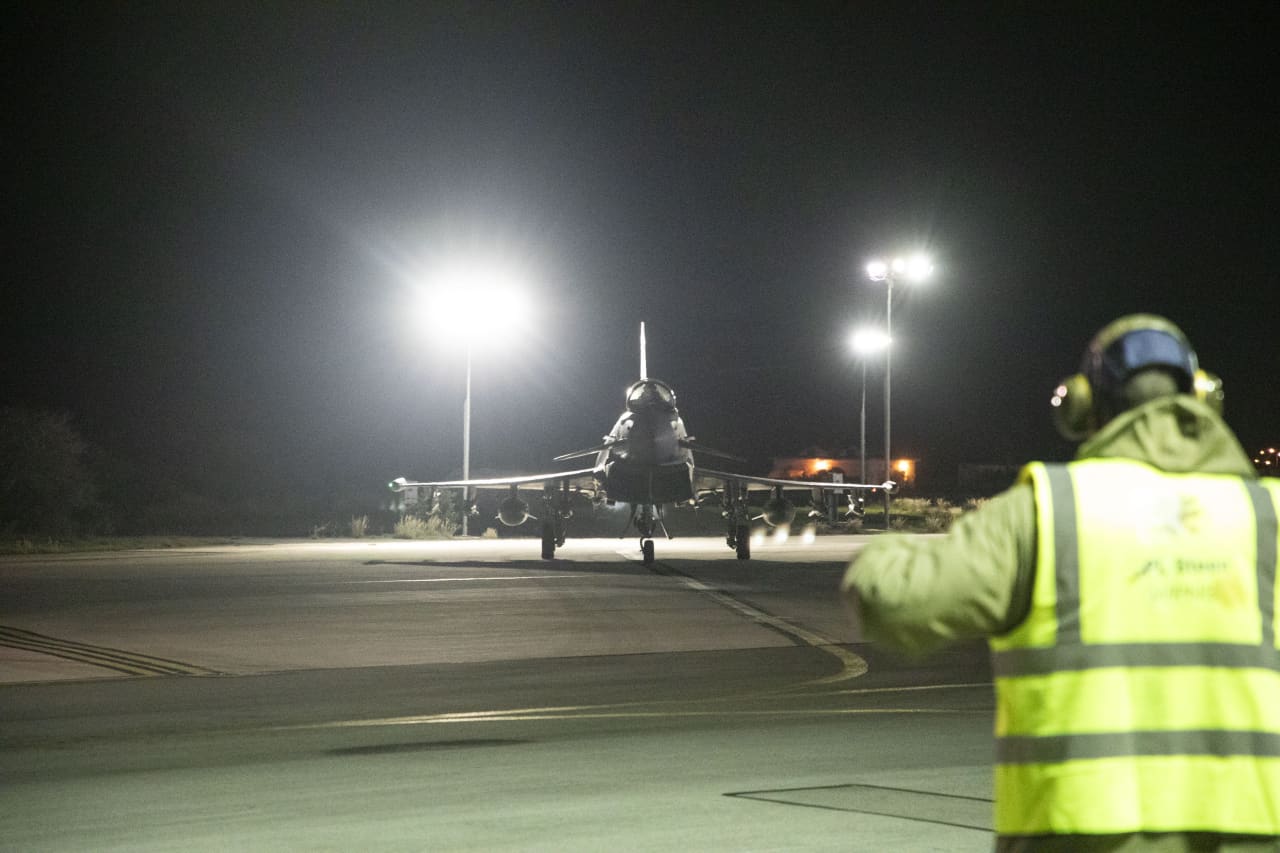
Oil futures moved higher on Monday, perking up after last week’s steep decline, as traders weighed support from risks to supplies after a series of retaliatory strikes on Iran-backed militants by a U.S.- and U.K.-led coalition over the weekend.
Some analysts, however, believe the markets remain unconvinced that conflict in the Middle East will expand in a way that threatens crude supplies, while traders are also keeping an eye on Chinese economic data amid concerns over the outlook for global crude demand.
Price moves
-
West Texas Intermediate crude for March delivery
CL00,
+1.27% CL.1,
+1.27% CLH24,
+1.27%
rose 82 cents, or 1.1%, to $73.10 a barrel on the New York Mercantile Exchange. -
April Brent crude
BRN00,
+1.18% BRNJ24,
+1.18% ,
the global benchmark, was up 74 cents, or 1%, at $78.07 a barrel on ICE Futures Europe. -
March gasoline
RBH24,
+2.46%
tacked on 2.4% to $2.1993 a gallon, while March heating oil
HOH24,
+2.27%
added 2% to $2.7143 a gallon. -
Natural gas for March delivery
NGH24,
-0.63%
traded at $2.07 per million British thermal units, down 0.4%.
Market drivers
The U.S. warned Iran and Iran-backed militias on Sunday that it will conduct more attacks if American forces in the Middle East continue to be targeted. At the same time, however, the U.S. has said it does not want an “open-ended military campaign” across the region.
“The bigger fear is a wider conflict, or Iran getting involved. which could seriously impact crude oil supply through the Strait of Hormuz,” Tariq Zahir, managing member at Tyche Capital Advisors, told MarketWatch.
Still, WTI dropped 7.4% and Brent lost 6.8% last week, with both grades finishing at three-week lows on Friday. Pressure was attributed in part to news reports indicating progress toward a cease-fire deal between Israel and Hamas.
The U.S. carried out strikes on dozens of Iranian paramilitaries and Tehran-backed militias late Friday in response to a drone attack that killed three U.S. service members in Jordan the previous weekend. The U.S. and U.K. also carried out strikes against Iran-backed Houthi militants in Yemen who have targeted shipping in the Red Sea with drone and missile attacks, resulting in a spike in shipping rates.
“While developments in the Red Sea are having an impact on some physical markets, on the whole, oil supply remains unaffected,” Ewa Manthey and Warren Patterson, strategists at ING, said in a note.
“Furthermore, the oil market is largely balanced in [the first quarter of 2024] and OPEC is sitting on a large amount of spare capacity, leaving the market fairly comfortable,” they wrote. “However, this could quickly change if tensions spread to other parts of the Middle East.”
In China, the Caixin/S&P Global services purchasing managers index for January fell to 52.7 from 52.9, according to news reports, remaining in expansion territory above 50.
“The absence of sufficiently positive data from China and the United States’ fear of an expansion of the ongoing wars that may threaten the interests of the current administration may put more pressure on oil markets.” Samer Hasn, market analyst at XS, said in emailed commentary.
Meanwhile, data released on Friday showed a greater-than-expected 353,000 rise in new U.S. jobs in January.
Oil prices had declined early Monday against that backdrop, though upbeat U.S. economic data can boost prospects for oil demand.
Signs of persistent economic strength, however, will make it difficult for the U.S. Federal Reserve to start cutting interest rates, StoneX’s Kansas City energy team, led by Alex Hodes, said in a Monday note. That provided support for the U.S. dollar
DXY,
pressuring prices for dollar-denominated commodities such as oil.
A reading Monday of U.S. business conditions at service-oriented companies was also upbeat, with the Institute for Supply Management’s survey climbing to 53.5% in January from 50.5% in the prior month.
The Associated press continued to this report.