
What was Amo Houghton’s net worth?
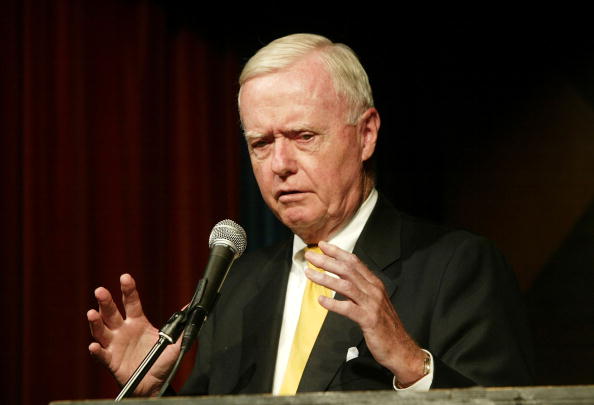
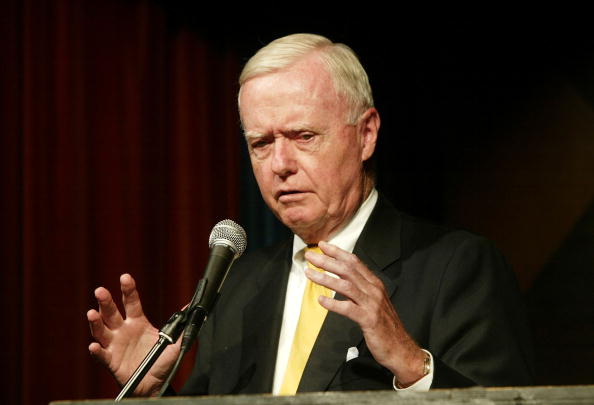
Amory “Amo” Houghton Jr. was an American business executive and a longtime congressman who had a net worth of $475 million at the time of his death in March 2020.
Amo Houghton became nationally known as a principled Republican moderate. He spent more than a decade leading Corning Glass Works, guiding the company through a difficult economic period while repositioning it for a technology-driven future. In the second act of his career, Houghton served nearly 20 years in the U.S. House of Representatives, representing upstate New York and frequently breaking with his party on issues such as war, impeachment, gun policy, abortion rights, campaign finance reform, and taxation.
At a time when American politics was becoming increasingly polarized, Houghton emerged as a rare figure willing to vote against his own leadership when conscience demanded it. He opposed the impeachment of President Bill Clinton, rejected the Bush-era tax cuts, and was one of only a handful of Republicans to vote against authorizing the Iraq War. Wealthy enough to be independent of political pressure, he used that independence to advocate for civility, bipartisanship, and what he viewed as pragmatic, common-sense governance. Though he often described himself as part of a “dying breed,” Houghton remained deeply optimistic about the country’s long-term future, even as he grew increasingly alarmed by rising partisanship late in life.
Early Life and Education
Amory Houghton Jr. was born on August 7, 1926, in Corning, New York, into a family whose name had been synonymous with American glassmaking for generations. His great-great-grandfather founded Corning Glass Works in 1851, and successive generations of Houghtons played central roles in shaping both the company and public life. His father, Amory Houghton Sr., later served as U.S. ambassador to France, while his grandfather, Alanson Bigelow Houghton, was a congressman and ambassador to both Germany and Britain.
Houghton served in the U.S. Marine Corps in 1945 and 1946 before attending Harvard University, where he earned both his undergraduate degree and an MBA. In 1952, he joined the family business, beginning a steady ascent through Corning’s executive ranks.
Leadership at Corning Glass Works
Houghton became chairman and chief executive of Corning Glass Works in the mid-1960s, making him the fifth generation of his family to lead the company. His tenure coincided with a challenging period for American manufacturing. Corning faced major setbacks during the economic downturn of the 1970s, as demand fell for traditional products such as cookware, fine crystal, and glass components for television tubes.
Under Houghton’s leadership, Corning embarked on a strategic pivot that would define its future. He pushed aggressively into research and development, steering the company toward optical fiber, specialty materials, and advanced glass technologies. That shift laid the groundwork for what later became Corning’s central role in telecommunications infrastructure, semiconductor manufacturing, and display glass for consumer electronics.
Despite his immense wealth, Houghton cultivated a reputation for personal modesty. While running Corning, he famously drove an aging Volkswagen and ate in the company cafeteria alongside employees, reinforcing a culture of accessibility and restraint.
Evan Agostini / Getty Images
Transition to Congress
In 1986, Houghton stepped away from corporate leadership to run for Congress, winning an open House seat representing a largely Republican district in upstate New York. He entered United States House of Representatives with deep business experience, global exposure, and a financial independence rare among elected officials.
Houghton went on to win eight reelection campaigns, serving from 1987 until his retirement in 2005. During that time, he was widely regarded as one of the wealthiest members of Congress, with Forbes estimating his fortune at roughly $420 million in the early 1990s. Yet his lifestyle in Washington remained deliberately low-key, including driving a Ford Taurus station wagon.
A Moderate Republican Voice
As the Republican Party moved sharply to the right in the 1990s and early 2000s, Houghton increasingly found himself at odds with party leadership. In 1998, he was among a small group of Republicans who voted against impeaching President Bill Clinton, arguing that the country needed healing rather than further division. He co-authored a proposed censure resolution that would have fined Clinton but avoided a Senate trial.
Houghton’s independence was even more visible during the presidency of George W. Bush. He was one of only six Republicans to vote against authorizing the Iraq War, expressing skepticism about claims of weapons of mass destruction and arguing that the United States should focus on combating terrorism first. He also voted against the Bush tax cuts and supported efforts to raise the minimum wage.
On social and governance issues, Houghton often broke with conservative orthodoxy. He generally supported abortion rights, backed campaign finance reform to eliminate soft money, and opposed a proposed constitutional amendment allowing organized prayer in public schools. Though a member of the National Rifle Association, he supported banning military-style assault weapons, stating they had no place in American cities.
After Republicans gained control of the House in 1994 under Newt Gingrich, partisan tensions intensified. In response, Houghton helped establish bipartisan retreats for members of Congress and their families, believing that personal relationships could help restore trust and cooperation.
In 1997, he founded the Republican Main Street Partnership, a policy organization aimed at supporting fiscally conservative but socially pragmatic Republicans. The group positioned itself as the governing wing of the party and became a refuge for moderates increasingly marginalized within Republican politics.
Later Years and Legacy
Houghton announced his retirement in 2004 at age 77, remarking that he was part of a shrinking cohort of moderate Republicans. In the years that followed, he remained an active commentator on national politics, frequently criticizing rising polarization and later becoming an outspoken critic of Donald Trump.
Despite his concerns, Houghton remained hopeful. In interviews late in life, he emphasized his belief that political extremes were cyclical and that the country would eventually find its way back toward cooperation and stability.
Amory Houghton Jr. died at his home in Corning, New York, on March 4, 2020, at the age of 93. He left behind a legacy that bridged American industry and public service, and a reputation for integrity, independence, and quiet conviction that continues to stand out in both business and political history.
All net worths are calculated using data drawn from public sources. When provided, we also incorporate private tips and feedback received from the celebrities or their representatives. While we work diligently to ensure that our numbers are as accurate as possible, unless otherwise indicated they are only estimates. We welcome all corrections and feedback using the button below.