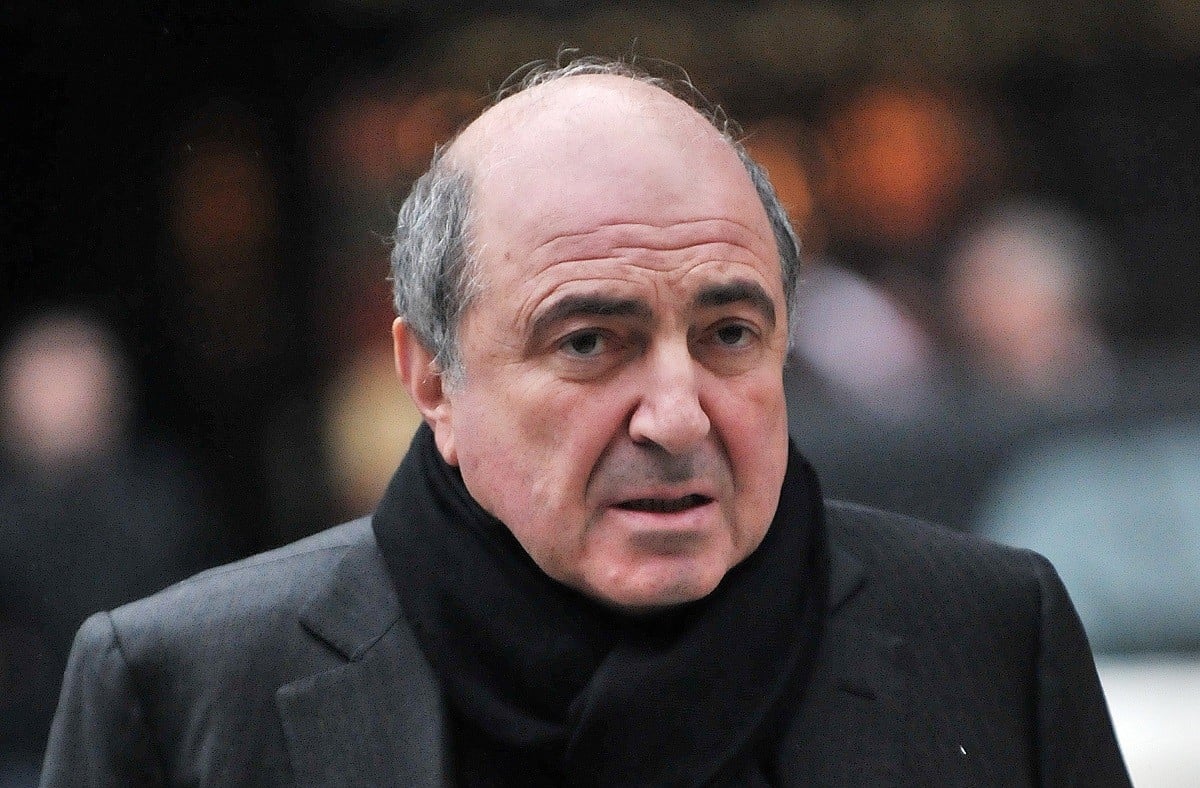

In the chaotic aftermath of the Soviet Union’s collapse, a mathematician-turned-entrepreneur named Boris Berezovsky didn’t just get rich. He helped design the system that would define modern Russia. He rose from academic obscurity to become one of the most powerful oligarchs in the country, wielding influence over media, politics, and the presidency itself. He helped engineer Boris Yeltsin’s re-election, manipulated public opinion through national television, and played a central role in elevating a relatively unknown bureaucrat named Vladimir Putin to power.
Then everything unraveled.
Within a few short years, Berezovsky went from kingmaker to exile, from billionaire insider to hunted dissident. His empire was dismantled, his allies turned into enemies, and his fortune evaporated through legal battles and political retaliation. By the time he was found dead in his English mansion in 2013 under mysterious circumstances, he was reportedly broke, isolated, and pleading for forgiveness from the very regime he helped create.
Today, more than a decade later, Berezovsky’s life reads less like a one-off tragedy and more like a blueprint. In the wake of Russia’s 2022 invasion of Ukraine, a pattern has emerged: oligarchs, executives, and critics falling from windows, dying in suspicious “suicides,” or being poisoned under murky circumstances. Berezovsky was not just an early casualty. He was Patient Zero.
The narrative of this one Russian businessman’s life is a cautionary tale of how powerful friends can quickly become deadly enemies.
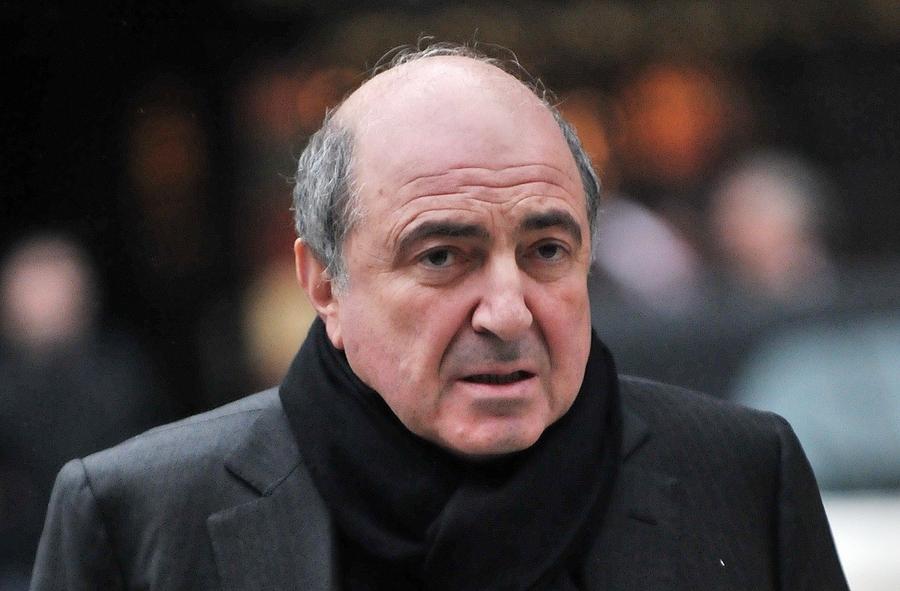
CARL DE SOUZA/AFP/Getty Images
A Mathematician Turned Opportunist
Boris Berezovsky was born in Moscow in 1946 into a Jewish family and built an early career in mathematics and engineering. He worked at the USSR Academy of Sciences, eventually rising to head a department at the Institute of Control Sciences. By the late 1980s, he had published numerous academic papers and books.
Then came perestroika.
As Mikhail Gorbachev loosened restrictions on private enterprise, Berezovsky pivoted aggressively into business. In 1989, he co-founded LogoVAZ with Badri Patarkatsishvili, exploiting the economic chaos of the collapsing Soviet Union. The company used hyperinflation to its advantage, delaying payments while the ruble rapidly lost value.
By 1994, LogoVAZ had become Russia’s largest car dealership, closely tied to AvtoVAZ, the manufacturer behind the Lada brand. It was a classic Berezovsky move: find instability, monetize it.
Three decades later, that same company would come full circle. After Western sanctions following the Ukraine invasion, AvtoVAZ was effectively re-nationalized, returning to Kremlin control after foreign partners like Renault exited Russia. The playground that made Berezovsky rich is now firmly back in state hands.
Surviving Assassination… And Entering Power
Berezovsky’s rise was not without danger. In 1994, he survived a brutal car bombing that killed his driver and nearly took his own life. The attack marked his arrival into Russia’s most dangerous circles.
Soon after, he leveraged connections to gain access to President Boris Yeltsin’s inner circle. By the mid-1990s, Berezovsky had expanded into media, taking control of ORT (Channel One), Russia’s most influential television network.
This gave him something even more valuable than money: narrative control.
The “Davos Pact” And The Birth Of Modern Media Manipulation
In 1996, Berezovsky joined a group of oligarchs in what became known as the “Davos Pact,” a coordinated effort to ensure Boris Yeltsin’s re-election.
Facing a serious challenge from communist opposition, the oligarchs deployed their media empires to reshape public perception. Television coverage was manipulated, opponents were smeared, and fear of a return to Soviet rule was amplified relentlessly.
The strategy worked.
Yeltsin won. The oligarchs tightened their grip on the country. And a template was created for state-influenced media that still defines Russia today.
The Creation Of Vladimir Putin
By the late 1990s, Berezovsky had become part of an elite inner circle known as “The Family,” tasked with securing a successor to Boris Yeltsin.
That successor was Vladimir Putin.
Berezovsky had known Putin since the early 1990s and actively supported his rise. In 1999, he helped persuade Putin to accept the role of prime minister. He then used his media network to promote Putin ahead of the 2000 presidential election.
ORT became, in effect, a propaganda machine.
Putin won.
And almost immediately, the relationship collapsed.
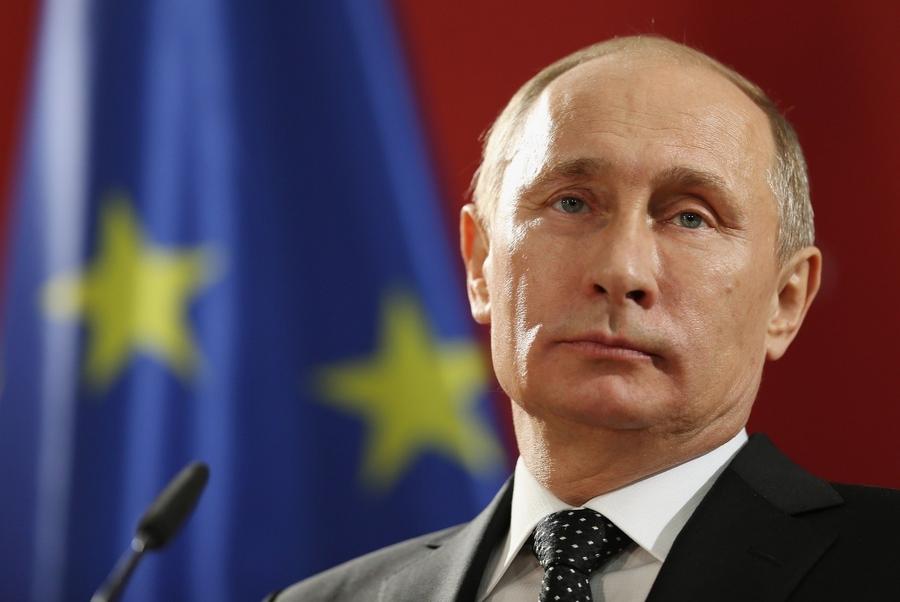
Sean Gallup/Getty Images
Fast Friends, Faster Enemies
Within weeks of Putin taking office, Berezovsky publicly criticized his policies. Within months, he resigned from government and began opposing what he saw as authoritarian consolidation.
Putin, who had campaigned on curbing oligarch power, moved swiftly.
Investigations into Berezovsky’s business dealings began. Criminal charges followed. By 2001, Berezovsky fled Russia, eventually settling in the United Kingdom, where he was granted political asylum.
His assets in Russia were dismantled or seized. His media empire was absorbed by the state. His influence evaporated.
Exile, Courtroom Wars, And Financial Collapse
From London, Berezovsky reinvented himself as one of Putin’s most vocal critics. But his power never recovered.
He sold major assets, including his stake in ORT to Roman Abramovich, who then handed control to the Kremlin. He also exited his position in oil giant Sibneft for $1.3 billion.
That deal later sparked one of the largest civil cases in British legal history. Berezovsky sued Abramovich for more than £3 billion, claiming he had been coerced into selling at a discount.
He lost.
The ruling in 2012 was devastating, both financially and reputationally. By then, his net worth had already dropped sharply from an estimated $3 billion peak in the late 1990s.
Meanwhile, Russian courts convicted him in absentia on multiple charges, including fraud and embezzlement.
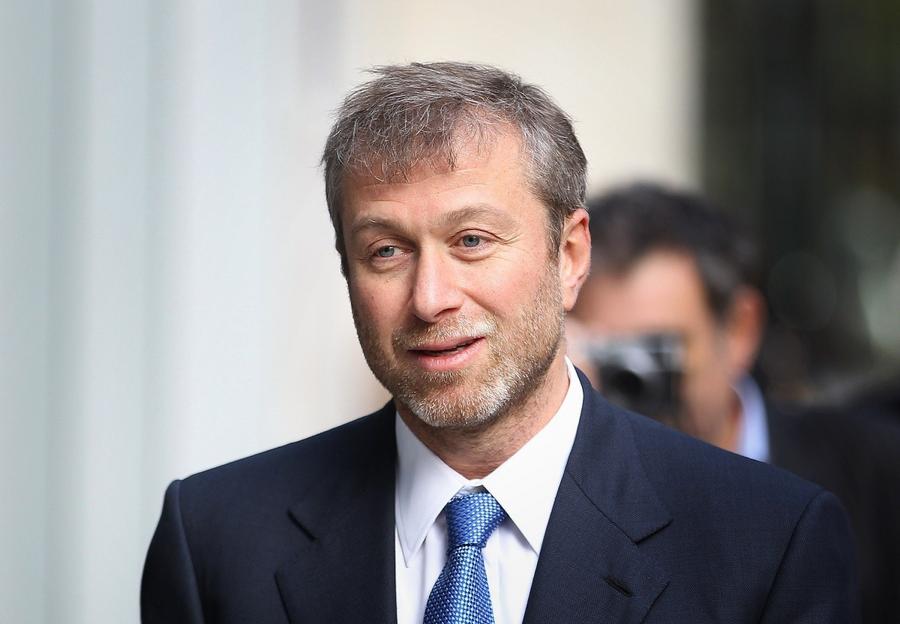
Roman Abramovich (Photo by Peter Macdiarmid/Getty Images)
The Litvinenko Connection
Berezovsky’s orbit was also marked by one of the most shocking assassinations of the modern era.
Alexander Litvinenko, a former FSB agent who had accused Russian security services of targeting Berezovsky, was poisoned with radioactive polonium in London in 2006.
At the time, suspicions pointed toward the Kremlin. Those suspicions were later formalized.
In 2016, a UK public inquiry concluded that the assassination was “probably approved” by Vladimir Putin and security chief Nikolai Patrushev. In 2021, the European Court of Human Rights ruled that Russia was responsible.
Litvinenko had been living in a property owned by Berezovsky at the time of his death.
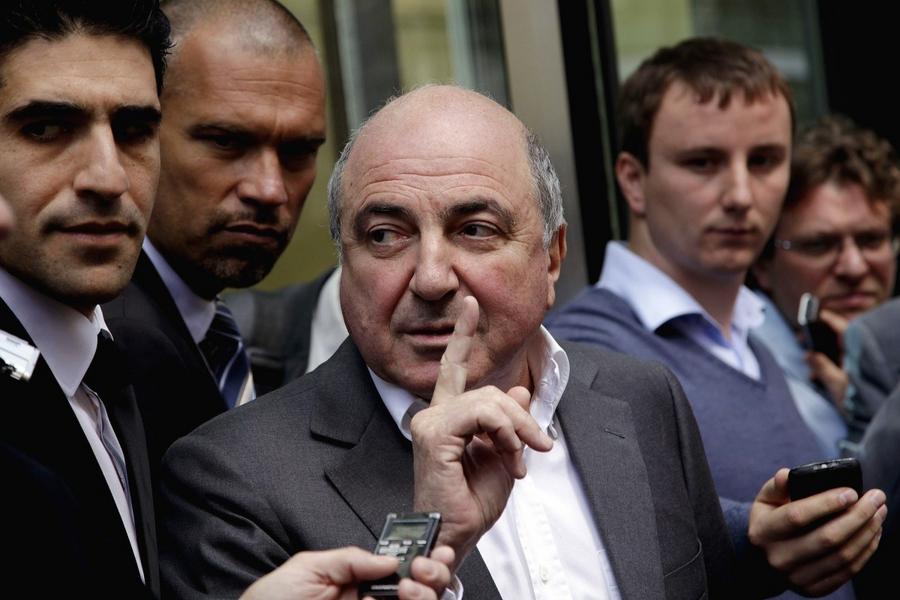
Warrick Page/Getty Images
The Final Collapse
By the early 2010s, Berezovsky was facing mounting legal bills, asset seizures, and personal turmoil. A massive divorce settlement further drained his finances.
Reports suggested that by 2013, he was effectively broke.
In March of that year, he was found dead in his Berkshire home with a ligature around his neck. A post-mortem indicated death consistent with hanging, but the official ruling was an open verdict.
Friends described him as depressed and isolated.
In the days before his death, he had reportedly attempted to sell personal belongings, including artwork.
There were also reports of a letter sent to Vladimir Putin, asking for forgiveness.
Many Western analysts believe that letter, if it existed at all, was amplified or fabricated by Kremlin-linked sources as a warning to others: oppose the state, and you will end up bankrupt, broken, and begging.
The Abramovich Irony
One of the most striking modern updates to Berezovsky’s story involves Roman Abramovich.
Once a protégé and later courtroom rival, Abramovich ultimately faced his own reckoning. Following the 2022 invasion of Ukraine, he was sanctioned by the UK and EU, forced to sell Chelsea Football Club, and saw billions in assets frozen.
He even suffered a suspected poisoning during early peace negotiations.
In many ways, Abramovich’s trajectory echoes Berezovsky’s arc, though with a different endpoint.
The Prototype
More than a decade after his death, Boris Berezovsky’s story has taken on a new meaning. He is no longer just a disgraced oligarch who lost everything. He is the prototype for a system that rewards loyalty, punishes dissent, and leaves no room for former allies who fall out of line.
The men who built modern Russia believed they controlled it. Berezovsky learned, too late, that the system they created would eventually control them instead.