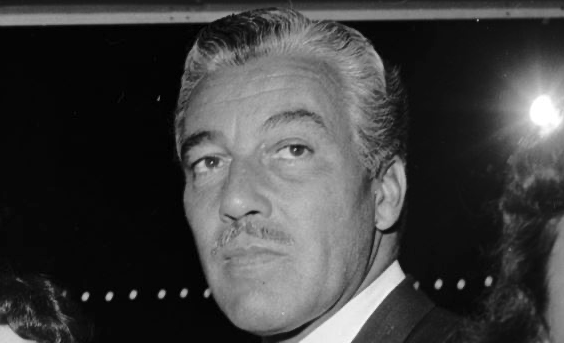

What was Cesar Romero’s net worth?
Cesar Romero was a Cuban-American actor, singer, dancer, and vocal artist who had a net worth equal to $2 million at the time of his death in 1994. That’s the same as around $5 million today after adjusting for inflation. Cesar Romero’s career spanned more than 60 years, making him one of the most durable faces of classic Hollywood and early television.
He first broke through in the 1930s as a charismatic leading man and light-comedy specialist, often cast as the debonair romantic foil or smooth-talking sophisticate in studio-era features. Over the next two decades he appeared in a long run of musicals, comedies, and adventures, becoming a familiar presence in theaters even when he was not the marquee name. As the film business evolved after World War II and the studio system loosened, Romero adjusted without losing momentum.
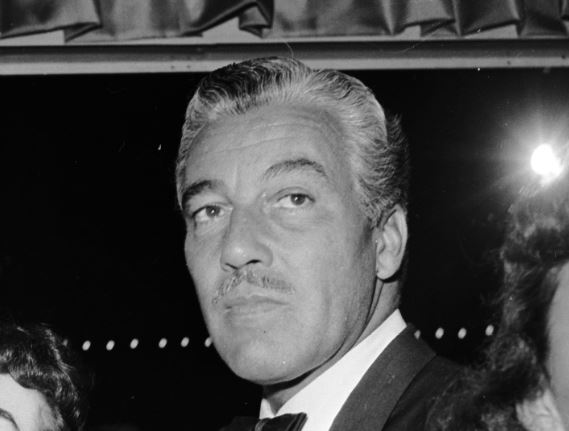
He shifted comfortably into character parts, then embraced television, where his polished, unflappable style made him a natural guest star. Romero’s most enduring pop culture role arrived in the 1960s when he played the Joker on the campy hit series “Batman.” The performance introduced him to a new generation and helped cement the Joker as a mainstream character. Known for his professionalism, charm, and trademark pencil-thin mustache, Romero’s longevity was the result of both talent and adaptability.
Early Life
Cesar Julio Romero Jr. was born on February 15, 1907, in New York City. His father was Cuban-born and worked in commerce, and Romero grew up in a well-to-do household with strong ties to both American and Cuban culture. He attended private schools and briefly studied business, but his social ease and natural stage presence pulled him toward entertainment. After traveling to California in the late 1920s, he found opportunities in the growing film industry and soon signed with a major studio, beginning what would become an unusually long screen career.
Film Career
Romero established himself during the 1930s as a reliable, stylish performer in romantic comedies and musicals. His screen persona leaned suave and playful, which made him a natural fit for studio pictures built around glamorous settings, dance numbers, and breezy dialogue. He worked steadily through the 1940s, appearing in numerous films and often playing the sophisticated charmer, the romantic rival, or the comic supporting lead. Some of his best-known films include “Week-End in Havana,” “Tall, Dark and Handsome,” “Springtime in the Rockies,” and later “Ocean’s Eleven.”
While Hollywood frequently slotted him into “Latin lover” typecasting that limited the range of roles offered to many actors of his background, Romero was skilled at bringing warmth and wit to parts that could otherwise feel generic. His steady output made him a familiar face across the Golden Age, even as audience tastes shifted and genres rose and fell.
World War II Service
During World War II, Romero enlisted in the United States Coast Guard and served aboard the USS Cavalier, a transport ship that supported operations in the Pacific. His military service interrupted his acting career at a time when he was well established on screen, and he was widely respected for serving without leaning on celebrity privilege. After the war, he returned to Hollywood and resumed acting, though the industry he came back to was changing rapidly.
Television and “Batman”
By the 1950s, Romero, like many studio-era stars, increasingly found opportunity on television. He became a prolific guest star, turning up on a wide range of popular series and anthology programs. That visibility set the stage for his most famous late-career role: the Joker on the 1966–1968 TV series “Batman,” which starred Adam West as Batman and Burt Ward as Robin, with Yvonne Craig as Batgirl and Burgess Meredith, Frank Gorshin, and Julie Newmar forming a rotating gallery of colorful villains.
Romero’s Joker was flamboyant, mischievous, and gleefully theatrical, perfectly matched to the show’s bold, tongue-in-cheek tone. His performance leaned heavily into exaggerated facial expressions, broad comedy, and playful menace, helping define the series’ camp sensibility. One of the most famous details of his portrayal is that he refused to shave his mustache, so the production simply applied white makeup over it. The result is still instantly recognizable and has become part of the show’s enduring visual lore. For many viewers, Romero was the definitive Joker long before later film interpretations reimagined the role.
Getty
Later Years and Legacy
Romero continued acting for decades after “Batman,” appearing in films and television well into his later years. He was also a familiar presence in Hollywood social circles, known for his impeccable style, upbeat demeanor, and old-school professionalism. He never married and kept his private life largely out of the press, a choice that helped him maintain a controlled public image in an industry that often trades in personal exposure.
Cesar Romero died on January 1, 1994, at the age of 86. His legacy is defined by longevity and reinvention: a Golden Age film star who successfully crossed into television and remained culturally relevant late into his career. While the Joker is now his most enduring pop culture imprint, his wider body of work reflects a performer who stayed in demand by being consistently charming, dependable, and adaptable.
All net worths are calculated using data drawn from public sources. When provided, we also incorporate private tips and feedback received from the celebrities or their representatives. While we work diligently to ensure that our numbers are as accurate as possible, unless otherwise indicated they are only estimates. We welcome all corrections and feedback using the button below.