
What is Dawn Harper’s net worth?
Dawn Harper is an American track and field athlete who has a net worth of $2 million.
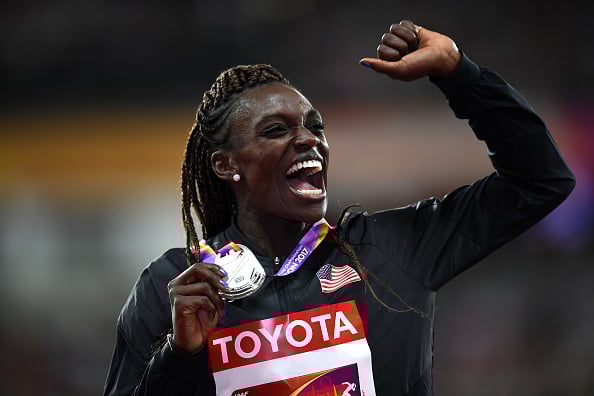
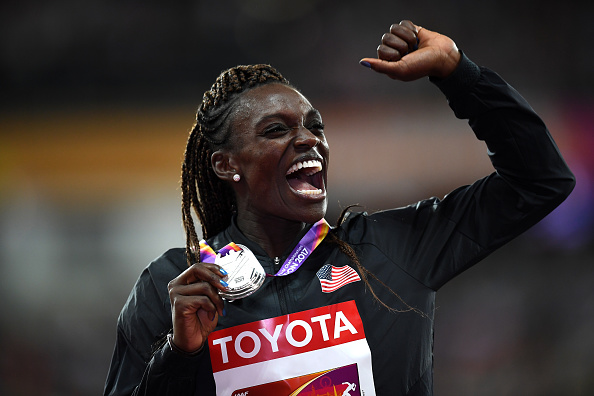
Dawn Harper is best known for her dominance in the 100-meter hurdles and for winning multiple Olympic medals across three consecutive Games. She emerged as one of the most consistent hurdlers of her era, combining elite speed with technical precision and remarkable longevity at the highest level of international competition. Harper reached the pinnacle of her sport at the 2008 Beijing Olympics, where she won the gold medal in the 100-meter hurdles, then followed that performance with a silver medal at the 2012 London Games and a bronze medal at the 2016 Rio Games. That three-medal Olympic run placed her among the most accomplished hurdlers in U.S. history.
Beyond the Olympics, Harper was a fixture on U.S. national teams and the global championship circuit for more than a decade. She earned medals at the World Championships, captured multiple U.S. national titles, and remained competitive well into her 30s, an uncommon feat in a sprint-hurdling discipline that often favors younger athletes. Her career was defined not just by peak success but by resilience, consistency, and an ability to adapt as the sport evolved.
Early Life
Dawn Harper was born on May 13, 1984, in East St. Louis, Illinois. She grew up in a challenging environment and has spoken openly about the obstacles she faced early in life. Track and field became both an outlet and an opportunity, offering structure and a pathway beyond her immediate surroundings.
She attended East St. Louis Senior High School, where she quickly established herself as a standout hurdler. Her performances at the high school level earned national attention and laid the foundation for a collegiate career at the highest level.
College Career At UCLA
Harper attended the University of California, Los Angeles, where she competed for the UCLA Bruins track and field program. At UCLA, she developed into one of the top collegiate hurdlers in the country, refining her technique and gaining experience against elite competition.
Her time in college was marked by steady progression rather than instant stardom. She improved year by year, building the technical consistency that would later define her professional success. By the time she graduated, Harper was well prepared for the transition to international competition.
Turning Professional
After college, Harper entered the professional track circuit and began competing regularly on the international stage. Early in her professional career, she showed promise but had not yet separated herself from a deep field of elite American hurdlers.
That changed in the lead-up to the 2008 Olympic Games, when Harper surged at precisely the right moment. Her performances at the U.S. Olympic Trials signaled that she was ready to contend for medals on the world’s biggest stage.
Getty Images
2008 Beijing Olympics
The defining moment of Harper’s career came at the 2008 Beijing Olympics. Entering the Games as a strong contender but not the overwhelming favorite, she delivered a flawless performance in the 100-meter hurdles final, winning the gold medal with a personal-best time.
The victory established Harper as the best hurdler in the world at that moment and marked a major breakthrough for an athlete whose rise had been steady rather than meteoric. The gold medal also made her one of the few American women to win Olympic gold in the event.
World Championships And Continued Success
Following her Olympic triumph, Harper remained a top competitor on the global circuit. She earned medals at the World Championships and continued to place at the highest levels in Diamond League and international meets.
Rather than fading after her Olympic success, she sustained elite performance through multiple championship cycles. Her consistency set her apart in a discipline where minor technical errors can derail even the most talented athletes.
2012 London Olympics
At the 2012 London Olympics, Harper returned as the defending Olympic champion. In a highly competitive final, she earned the silver medal, narrowly missing a second consecutive gold. The result confirmed that her Beijing victory was no fluke and that she remained among the very best hurdlers in the world.
The silver medal also highlighted her ability to perform under pressure across multiple Olympic cycles, an achievement that few track athletes manage.
2016 Rio Olympics
Harper’s third Olympic appearance came at the 2016 Rio Games. By that point, she was competing against a new generation of younger hurdlers, yet she again rose to the occasion, winning the bronze medal in the 100-meter hurdles.
With that result, Harper completed an extraordinary Olympic medal set, gold, silver, and bronze, across three Games. The accomplishment underscored both her longevity and her adaptability as an athlete.
Later Career And Retirement
After Rio, Harper gradually transitioned away from elite competition. She remained involved in track and field through mentorship, advocacy, and public speaking, often focusing on issues of athlete development, resilience, and life after sports.
She has been open about the importance of mental strength, preparation, and perseverance, using her platform to inspire younger athletes facing adversity similar to what she experienced growing up.
Personal Life
Dawn Harper is married to fellow track athlete LaShawn Merritt, an Olympic gold medalist in the 400 meters. Their relationship has made them one of the most accomplished couples in modern track and field, though both have maintained independent athletic identities.
Off the track, Harper has emphasized family, community engagement, and giving back. She has remained connected to her roots and frequently speaks about the role sports played in changing the trajectory of her life.
Career Honors
Over the course of her career, Harper earned three Olympic medals, multiple World Championship medals, and several U.S. national titles. She consistently ranked among the world’s top hurdlers for more than a decade, a level of sustained excellence achieved by very few athletes in the event.
All net worths are calculated using data drawn from public sources. When provided, we also incorporate private tips and feedback received from the celebrities or their representatives. While we work diligently to ensure that our numbers are as accurate as possible, unless otherwise indicated they are only estimates. We welcome all corrections and feedback using the button below.