

Financially speaking, Floyd Mayweather has had a very strange year.
The undefeated boxing legend has been surrounded by an increasingly bizarre pileup of lawsuits, liens, unpaid-bill allegations, tax issues, rent disputes, child support drama, and even felony charges tied to an alleged bad check for a $200,000 luxury watch. Back in January, we covered a lengthy investigation into Floyd Mayweather’s finances that raised questions about loans, liens, foreclosures, unpaid bills, and asset sales. A month later, Floyd went on offense by filing a $340 million lawsuit against Showtime, claiming a huge portion of his career earnings had been diverted into accounts he did not control. We later paid $19 to download the full complaint and broke down the specific allegations.
Then came the $330,000 unpaid rent lawsuit tied to a $100,000-per-month luxury Manhattan apartment. Then came a reported $7.3 million IRS lien. Then came Floyd’s own $175 million lawsuit against former business associates, involving claims about missing money, Manhattan real estate, a Gulfstream jet, and $100 million in jewelry.
Taken together, the picture is undeniably strange. This is Floyd “Money” Mayweather, after all. A man whose entire public identity has been built around extreme wealth: private jets, diamond watches, fleets of cars, Las Vegas mansions, bricks of cash, and the constant message that he was not just the best boxer of his generation, but the smartest businessman in the sport.
But even if every recent financial allegation and lawsuit eventually reveals a messier reality behind the “Money” persona, none of that erases what Floyd Mayweather accomplished as an earner.
Floyd Mayweather is still one of the highest-grossing athletes in history. He still generated more than $1.2 billion in career earnings. Even if Floyd now claims that hundreds of millions of dollars were never properly paid to him, and even if he claims another fortune was later diverted or mismanaged, the underlying achievement remains extraordinary. Because none of it happens without one wildly risky decision.
Twenty years ago, Floyd Mayweather looked at the boxing business, realized he was making other people far richer than he was making himself, and did something almost no fighter in his position would have dared to do.
He paid $750,000 to buy himself out of his promotional contract.
At the time, that was not a casual decision. It was not pocket change. It was not “Money” Mayweather lighting up Instagram with stacks of cash. It was a massive chunk of his liquid net worth. It was a real risk. If his next fight flopped, if he lost, if he got injured, if pay-per-view buyers did not show up, Floyd could have blown up the safest path of his career.
Instead, that $750,000 bet turned him from a highly paid boxer into a one-man financial machine.
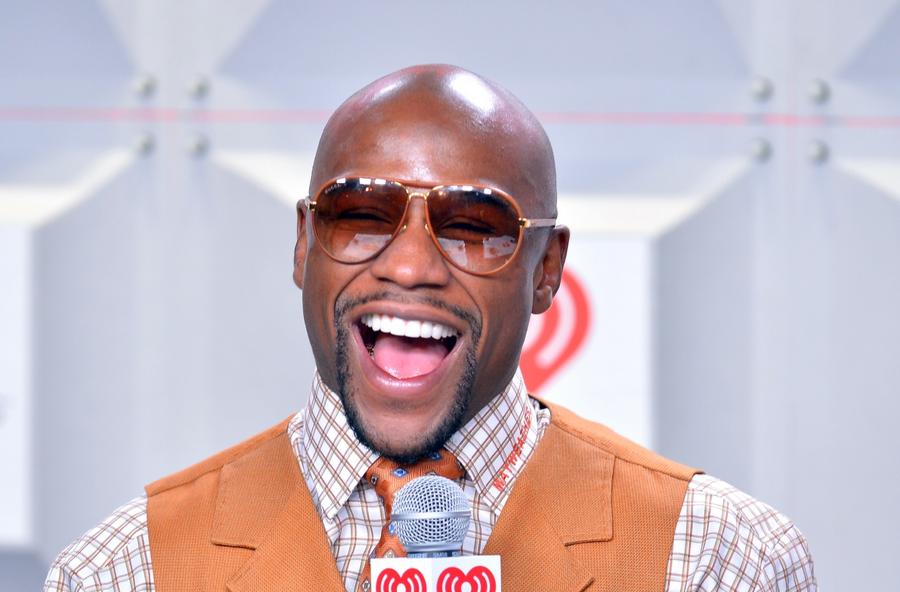
(Photo by Bryan Steffy/Getty Images for Clear Channel)
Backstory
Floyd Mayweather was born to be a professional boxer. The son of former welterweight contender Floyd Sr. and the nephew of Jeff and Roger Mayweather, two professional boxers who later became trainers. Floyd famously never considered any professional pursuit other than boxing.
Money was tight growing up. At one point in the 1980s, Floyd lived with family members in New Brunswick, New Jersey, sleeping in the same room as seven other people in a house whose electricity often did not work.
When not in school, Floyd trained in boxing.
In 1993, at the age of 16, he won the national Golden Gloves championships. He won again in 1994 and 1996.
Later in 1996, Floyd competed at the Olympics in Atlanta. He reached the semi-finals of the featherweight division and took home a bronze medal. The US team ultimately filed a protest over the match Floyd lost, claiming that the judges were unduly intimidated by the Bulgarian team to rule in favor of Floyd’s Bulgarian opponent.
Bob Arum
Bob Arum found his way to boxing through a bizarre path. In the 1960s, he was working as a lawyer for the United States Department of Justice. In 1962, Bob was assigned to confiscate the proceeds of a fight between Sonny Liston and Floyd Patterson over concerns of Sonny’s connections to organized crime.
This experience introduced Bob to the lucrative world of boxing promotions – where someone fronts a bunch of money for an event, in exchange for a huge profit windfall. It’s not complicated. The promoter guarantees the fighter purses and bonuses, pays for the event space, security, concessions, etc. Hopefully, he makes more than he spent.
Arum soon became the Vice President of Muhammad Ali’s promotion company, Main Bout. Bob went on to promote many of the sport’s most memorable fights, including Marvin Hagler vs. Roberto Durán and Hagler vs. Thomas Hearns. In 1989, he produced the famous rematch between Thomas Hearns and Sugar Ray Leonard.
In 1996, immediately after the Olympics ended, Floyd Mayweather decided to go pro. To make it real and official, Floyd signed a 10-year contract with Bob Arum’s company, Top Rank Boxing.
Floyd The Salaried Employee
In the boxing world, when you’re signed to a promoter, you’re basically a salaried employee. When it’s your turn, you are offered a set amount of money to fight an opponent.
On the one hand, it’s guaranteed money in the bank without an ounce of personal financial risk. All Floyd had to do was train and win. On the other hand, Floyd’s potential upside outside of the guaranteed purse was basically zero.
After just two years as a pro, Floyd won the WBC super featherweight championship. Along the way, Arum carefully chose each of Floyd’s opponents to craft a steady rise up the ranks.
Floyd’s paychecks rose as well.
Between 1996 and 2005, Floyd earned a combined total of $2 million from 15 fights.
In June 2005, Floyd earned $3.2 million when he defeated Arturo Gatti.
Betting On Himself
Two months before the Gatti fight, Bob Arum told Floyd Mayweather that if he won, his next offer would be $8 million to fight Antonio Margarito in the future. Floyd said he wasn’t interested in Margarito. Instead, he came back with a stunning request:
$20 million to fight Oscar De La Hoya.
Arum was flabbergasted. That amount would have been more than double what he would have offered a superstar boxer at the time. So Arum declined and continued trying to sell the Margarito fight.
Floyd wouldn’t budge.
Floyd also knew of a very important escape clause in his contract. The clause allowed Floyd to break his agreement with Top Rank and buy back his promotional rights as a free agent. The price?
$750,000
And whereas today Floyd probably drops $750,000 in a weekend gambling, back in 2006, this was a significant amount of money. Mayweather’s net worth at the time couldn’t have topped $3-4 million, and presumably a lot of that had already been invested in cars, houses, and training. Even if he had $3 million cash in the bank, $750k would have been exactly 25% of his liquid wealth.
On the other hand, Floyd crunched the numbers on his Gatti fight and realized the math was on his side. Remember, Floyd made $3.2 million fighting Gatti. The fight sold 400,000 pay-per-views at $49 a pop. That alone worked out to around $20 million. So if Gatti earned $2 million, and the production costs came to $4 million, there was still, conservatively, $10 million in additional profits being made on his back.
Even with these numbers, the contract buyout was still a HUGE risk for Floyd.
Had he lost his next match or gotten hurt, he would be done. Had no one bought the PPV, he would be personally on the hook for the production costs.
Floyd still decided to go with his gut and bet on himself.
How’d That Gamble Work Out?
In November 2006, Floyd fought Carlos Baldomir. He paid for all the production costs, including Carlos’ $1.6 million guarantee.
In the end, a somewhat disappointing 325,000 people bought the PPV. But even though that was 20% fewer buys than his previous match, Floyd’s math still worked. The PPV revenue worked out to $16.5 million. After Carlos’ purse and all other production costs, Floyd walked away with $8 million. More than double his previous career-high.
Striking Gold
Just six months after defeating Baldomir, Floyd faced off against Oscar De La Hoya. Because Floyd was now a free agent, he wasn’t just a hired gun showing up for a flat paycheck. He negotiated the bout as a co-promoter alongside Oscar’s Golden Boy Promotions. This meant Floyd secured an equity stake in the event itself, entitling him to a percentage of the lucrative back-end pay-per-view profits.
The fight took place on May 5, 2007. Approximately 2.4 million homes paid to watch Floyd beat Oscar, shattering the previous PPV record of 1.99 million held by Holyfield-Tyson II.
The event was a financial juggernaut, generating roughly $136 million in PPV revenue alone. Because Floyd had structured his deal to include a percentage of the gross profits—rather than just a guaranteed purse—his payout skyrocketed. In the end, Oscar took home $52 million, and Floyd walked away with $25 million. That was more than seven times what he had earned a year earlier fighting Arturo Gatti under his old Top Rank contract.
This was the exact moment the “Money Mayweather” business model was born. He proved that by acting as his own promoter and demanding a cut of the back-end revenue, the financial ceiling for a boxer was virtually limitless.
$1 Billion Career Earnings
The die was cast at that point, and there would be no looking back for Floyd, who now could rightfully claim the nickname “Money Mayweather.”
Floyd earned between $20 and $50 million from his next six fights. In September 2013, he earned $75 million fighting Saul Alvarez.
When he finally fought Manny Pacquiao in 2015, Floyd and Manny agreed to split all profits 60-40. The highly anticipated match was purchased by 5.773 million people, generating $500 million in gross revenue.
In the end, Floyd earned $250 million, and Manny earned $130 million.
In August 2017, Floyd fought Conor McGregor. Between sponsorships, ticket sales, and merchandise, the fight earned $700 million in total revenue.
In the end, Floyd earned $300 million, and Conor earned $100 million.
From June 2005 through today, Floyd Mayweather has earned…
$1.2 billion
All thanks to that very risky, $750,000 gamble 20 years ago.
The ending of the Floyd Mayweather financial story may be more complicated than the myth. The lawsuits, liens, and allegations have made sure of that.
But the beginning of the story is still incredible.
If you believe in yourself, bet on yourself.
Floyd Mayweather did.
And for a time, no athlete on earth did it better.