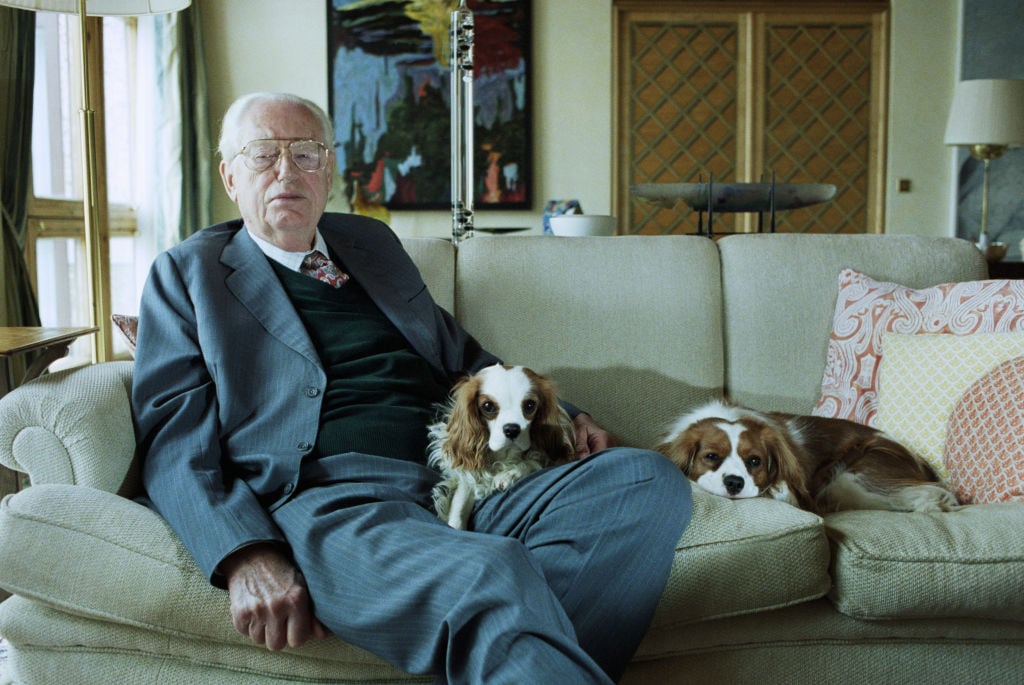
What was Hans Rausing’s net worth?
Hans Rausing was a Swedish businessman based out of the United Kingdom who had a net worth of $12.8 billion at the time of his death in 2019.
Hans Rausing was best known for transforming a clever packaging idea into one of the most dominant privately held companies in the global food and beverage industry. As the eldest son of Tetra Pak founder Ruben Rausing, Hans played a decisive role in turning his father’s invention, the aseptic carton, into a worldwide standard for packaging milk, juice, and liquid foods. While Ruben was the visionary inventor, Hans was the strategist and builder who scaled the business internationally, professionalized its operations, and defended its technological edge. Over several decades, he helped grow Tetra Pak into a near-ubiquitous presence in supermarkets around the world, supplying billions of cartons each year to food producers on every continent.
Despite presiding over an empire that generated enormous wealth, Hans Rausing maintained an unusually low public profile. He avoided celebrity, rarely gave interviews, and focused his energy on long-term ownership rather than public acclaim. Alongside his brother Gad and later his own children, Hans oversaw a tightly controlled corporate structure that allowed Tetra Pak to remain private, independent, and insulated from the short-term pressures of public markets. By the time of his death in 2019, Hans Rausing was widely regarded as one of Europe’s richest individuals and one of the most influential figures in modern packaging, even if his name was far less recognizable than the products his company helped deliver to billions of consumers every day.
Early Life and Education
Hans Anders Rausing was born on March 25, 1926, in Sweden. He was the eldest son of Ruben Rausing, an entrepreneur and inventor who would later revolutionize food packaging. Hans grew up closely exposed to his father’s business experiments and industrial ambitions, gaining an early appreciation for engineering, logistics, and the economics of manufacturing. He studied at Lund University and later continued his education in the United States, experiences that broadened his worldview and shaped his approach to building an international company.
From an early age, Hans showed a practical, analytical mindset rather than a flair for invention. Where his father excelled at ideas and concepts, Hans gravitated toward execution, organization, and scale. This complementary dynamic would later define their working relationship.
Building the Tetra Pak Empire
Hans Rausing joined the family business in the 1950s, as his father’s concept of aseptic packaging began moving from theory to commercial reality. The breakthrough behind Tetra Pak was the ability to package liquids in sterile cartons that did not require refrigeration, dramatically reducing costs and extending shelf life. Hans recognized that the technology’s true potential lay not just in invention, but in global standardization and relentless expansion.
As the company grew, Hans increasingly took charge of international operations. He helped establish manufacturing facilities, licensing agreements, and sales networks across Europe, the Americas, Asia, and Africa. Under his leadership, Tetra Pak emphasized vertical integration, producing not only cartons but also the specialized machinery required to fill and seal them. This strategy locked customers into long-term relationships and created formidable barriers to entry for competitors.
Hans also pushed for heavy investment in research and development, ensuring that Tetra Pak stayed technologically ahead of rivals. By the 1970s and 1980s, the company had become the dominant force in aseptic packaging, with its cartons used by nearly every major dairy and beverage producer in the world.
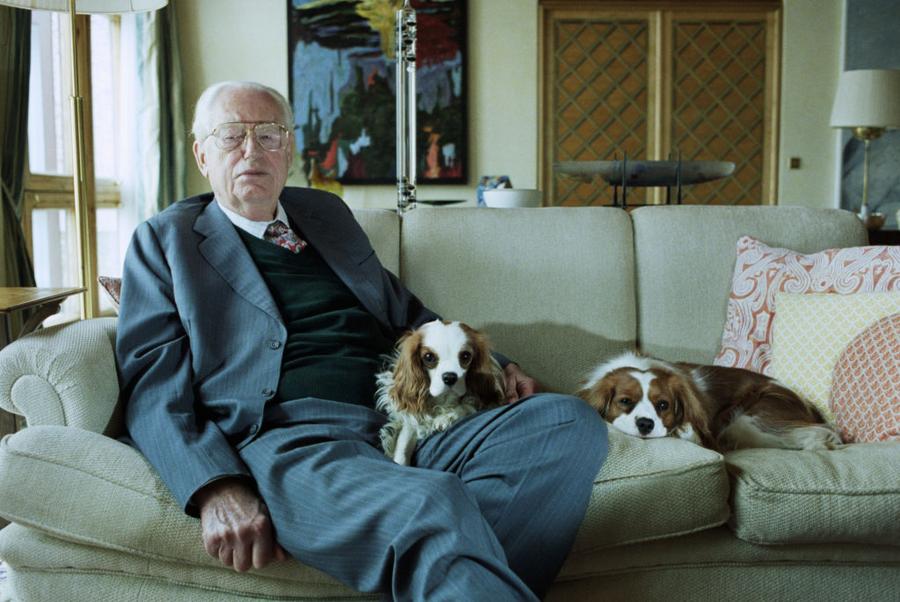
(Photo by Martin Godwin/Getty Images)
Private Ownership and Family Control
A defining feature of Hans Rausing’s career was his commitment to keeping Tetra Pak privately owned. Unlike many industrial dynasties that embraced public listings or sold to conglomerates, the Rausing family retained tight control. Hans believed that independence allowed the company to think in decades rather than quarters, reinvest profits aggressively, and avoid the distractions of public market scrutiny.
Ownership was shared among Hans, his brother Gad Rausing, and later their heirs, including Sigrid Rausing, Hans’s daughter. The family structure was complex and discreet, with holding companies based in Switzerland and other jurisdictions. This arrangement helped preserve continuity while minimizing public attention.
Wealth and Business Philosophy
Hans Rausing’s fortune grew alongside Tetra Pak’s expansion, ultimately placing him among the wealthiest individuals in Europe. His wealth was not the result of flashy deals or speculative investments, but of patient, compounding growth in a single industrial enterprise. Tetra Pak’s products were unglamorous but indispensable, and their steady demand translated into enormous, durable cash flows.
Philosophically, Hans favored long-term thinking, technical excellence, and operational discipline. He avoided diversification for its own sake and resisted trends that might compromise quality or independence. Colleagues often described him as reserved, meticulous, and intensely focused on the fundamentals of the business.
Philanthropy and Personal Life
While intensely private, Hans Rausing supported a range of philanthropic causes, particularly in education, culture, and environmental research. Much of this giving was conducted quietly, often through family foundations rather than public campaigns. His daughter Sigrid would later become more publicly associated with philanthropy and cultural patronage, especially in publishing and human rights.
Hans divided his time between Sweden, Switzerland, and the United Kingdom, maintaining a lifestyle that reflected wealth but avoided ostentation. He was known to value privacy above almost everything else, a trait that set him apart from many contemporaries of similar means.
All net worths are calculated using data drawn from public sources. When provided, we also incorporate private tips and feedback received from the celebrities or their representatives. While we work diligently to ensure that our numbers are as accurate as possible, unless otherwise indicated they are only estimates. We welcome all corrections and feedback using the button below.