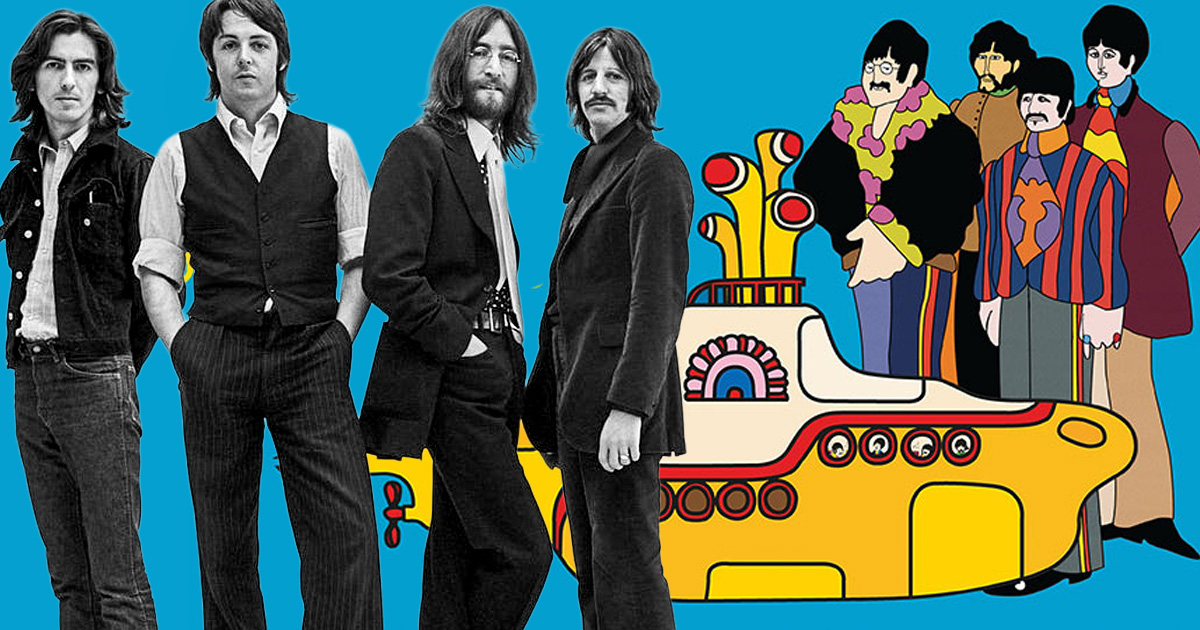

Few names carry as much weight in music history as The Beatles. Decades after their final album, the band have continued to inspire countless artists and fans alike. At their prime, The Beatles weren’t just a band; they were a cultural earthquake. From the moment John Lennon, Paul McCartney, George Harrison, and Ringo Starr took the stage, their infectious melodies and undeniable charisma became the voice of a generation seeking change.
Beyond the Beatlemania frenzy and their status as the best-selling music act of all time, The Beatles’ influence went far beyond music. They reshaped fashion, film, and even politics, inspiring countless artists and movements that followed. However, not many new-generation fans know the band starred in a few movies during their reign. Here are the only five movies The Beatles ever starred in together.
A Hard Day’s Night (1964)
When A Hard Day’s Night premiered in 1964, it wasn’t just another musical film. It became a cultural explosion that captured The Beatles at the height of Beatlemania. The 87-minute musical comedy offered a cheeky, fast-paced look at a “day in the life” of the Fab Four. The film presented John, Paul, George, and Ringo as witty, down-to-earth boys navigating fame, fan hysteria, and the pressures of stardom with effortless charm. Produced on a £189,000 budget, A Hard Day’s Night was a commercial hit, grossing $14 million at the Box Office alone. More than six decades later, A Hard Day’s Night remains one of the most influential rock films ever made. The film also received two Academy Award nominations, including Best Original Screenplay.
Help! (1965)
Following the massive critical and commercial success of A Hard Day’s Night, The Beatles return to the big screen with Help! They worked with director Richard Lester again on this 1965 colorful and chaotic musical comedy-adventure that also captured the height of Beatlemania. In Help!, John, Paul, George, and Ringo are caught in a farcical adventure involving a stolen ring, a fanatical cult, and a chase across multiple continents. While A Hard Day’s Night had grounded charm, Help! leaned into absurdity and spectacle. Like their first film, Help! was also a critical and commercial hit.
Magical Mystery Tour (1967)
The Beatles’ third film project was the British-made-for-television musical film Magical Mystery Tour. The film was The Beatles at their most experimental, both musically and visually. Conceived and directed by the band themselves, Magical Mystery Tour was an unfiltered dive into their imagination, following a whimsical bus trip filled with eccentric passengers. Unlike their earlier polished productions, Magical Mystery Tour embraced chaos, humor, and dreamlike absurdity, mirroring the psychedelic spirit of the late 1960s.
Unarguably, while it was less plot and more about feeling, the movie served as a colorful window into The Beatles’ creative minds at the height of their artistic freedom. It’s no surprise that when the film first aired on British television, it baffled critics and audiences alike. While it earned mixed reviews for its lack of structure, Magical Mystery Tour eventually gained a cult following.
Yellow Submarine (1968)
The 1968 Yellow Submarine was an animated psychedelic jukebox musical comedy-drama. It offered audiences a psychedelic journey unlike anything they had ever seen before. However, The Beatles only lent their likenesses and music to the project, with other actors voicing their characters. Yellow Submarine joins the list of movies the band starred in because they made a real cameo appearance at the end of the film. Besides its critical success, Yellow Submarine was a Box Office hit, grossing $1.2 million against its £250,000 budget.
Let It Be (1970)
The 1970 British documentary film Let It Be marked both the end and the unraveling of The Beatles as a band. Filmed during their final days together, the documentary captures the tension, exhaustion, and creative friction that defined their breakup era. What began as a project to showcase the band’s recording process became a raw and unfiltered portrait of four artists drifting apart.
The film’s closing rooftop concert stands as one of the most iconic scenes in music history. The spontaneous performance felt like a farewell letter to the world. While Let It Be was once criticized for its somber tone, later generations have come to appreciate it for its honesty and intimacy. The documentary film remains a bittersweet reminder of The Beatles’ final chapter, capturing their fragility and enduring brilliance that changed music forever.