For most of her adult life, Suzanne Kelleher started the day the same way. Before breakfast. Before emails. Before sitting down at her computer to begin another long day running her own design business.
She took painkillers.
‘I’d start the day with Panadol or Nurofen – sometimes both – as part of my breakfast routine,’ she told Daily Mail.
‘It was pre-emptive. I just assumed the headache was coming.’
Almost every day, it did. Suzanne is now 48. She was diagnosed with coeliac disease a decade ago, at 38. Before that, she lived with near-daily headaches and migraines for more than 20 years. Symptoms that were repeatedly dismissed as stress, eye strain, posture, or the unavoidable load of being a working mother.
No one ever suggested a coeliac blood test.
At their worst, Suzanne’s migraines stopped her working altogether.
‘When it was a full migraine, I couldn’t handle light,’ she said. ‘I’m a graphic designer. Sitting in front of a screen was impossible.’

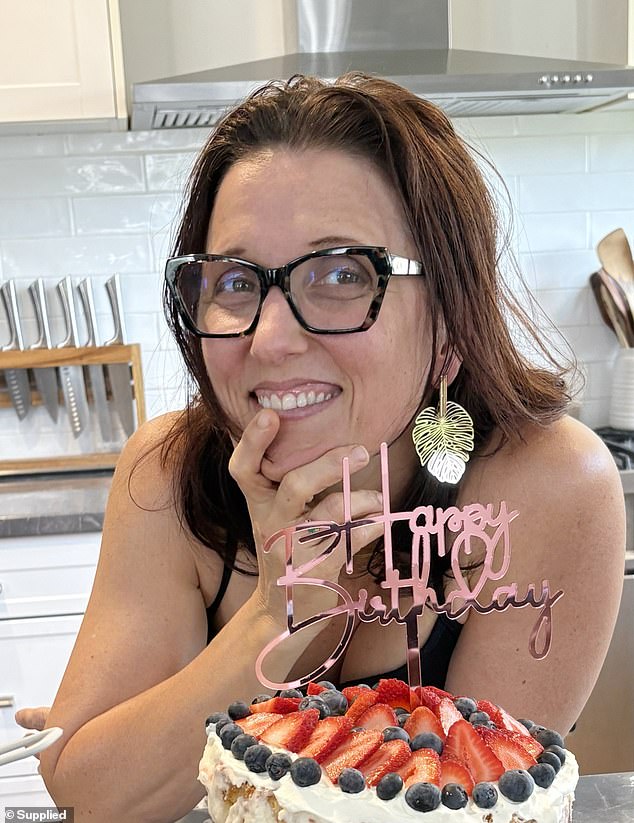
For 20 years, Suzanne (pictured) was told her migraines were caused by stress
But she kept going. She had to. Suzanne ran her own business and was the primary breadwinner while her husband stayed home with their children. Rest was not a realistic option.
‘I’d work through it,’ she said. ‘I’d take painkillers in the morning, then again in the afternoon when they wore off. That was just how I got through the day.’
The headaches were relentless. ‘It would have been almost daily, which sounds ridiculous when you say it out loud.’
At the time, it did not feel unusual. It felt like life. Suzanne grew up eating bread, cereal and sandwiches. Gluten was constant and unquestioned.
When headaches crept in during her late teens, she blamed alcohol or late nights. Later, it was stress, screens, work. Doctors agreed.
Over the years, Suzanne sought help many times. The explanations were always the same: eye strain, stress, sitting too long, working too hard.
‘Doctors would tell me, “You need to work less. Get up from your desk. Give your eyes a rest,”‘ she said.
She tried everything that was suggested: eye tests, wearing glasses, adjusting her workstation. Nothing helped.

Pain and medication were part of Suzanne’s routine until she finally got a proper diagnosis
‘It just seemed to be everything except gluten,’ she said.
Eventually, she stopped questioning it. ‘I thought, “Well, everyone’s stressed. I’ve got kids, a business, a mortgage. This must just be normal.”‘
So she adapted. Pain became part of her routine. So did medication. ‘I didn’t even realise how normalised it had become’ – but her children did.
‘They were about 10 or 11 when I stopped taking painkillers,’ she said. ‘They noticed straight away. They said, “You’re not popping pills anymore, Mum.”‘
That moment still stings.
‘I think now, “What damage did I do taking painkillers every day for 20 years?” If someone had just suggested the test earlier, maybe that could have been avoided.’
Coeliac disease is an autoimmune condition. It is not a food intolerance or a lifestyle choice. When someone with coeliac disease eats gluten, a protein found in wheat, barley and rye, their immune system attacks the lining of the small intestine. Over time, this damages the gut’s ability to absorb nutrients.
That damage does not stay confined to the digestive system. While coeliac disease is often associated with gut symptoms, many adults experience symptoms that appear unrelated: headaches, fatigue, iron deficiency, tingling in the hands and feet, brain fog. Some people have no obvious digestive symptoms at all – which is one reason why diagnosis is often delayed, particularly in women.
It wasn’t headaches alone that finally triggered further investigation. About a decade ago, Suzanne moved to Brisbane from tropical North Queensland. Suddenly, she could not get warm.
‘I was cold to the bone,’ she said. ‘That phrase suddenly made sense to me.’
She slept under multiple blankets beside her husband, who complained of the heat. Nothing helped.
‘I looked like the Michelin Man in my own house,’ she said. There were other signs too: ongoing fatigue, low iron levels, periods of anaemia, and tingling in her feet.
‘I started joining the dots myself,’ she said. ‘You start Googling. You think, “Hang on, could all of this be connected?”‘
Suzanne was eventually referred to a thyroid clinic. As part of that process, she was advised to remove gluten from her diet. Almost immediately, everything changed.
Suzanne remembers waking up a few days after cutting out gluten.
‘I woke up and thought, “Do I have a headache?” And I didn’t.’
The migraines did not return. Within weeks, the painkillers disappeared from her routine. Her energy lifted. Sitting at her desk no longer felt like a battle.
‘I worked better. I was a better mum, a better wife, a better friend. I wasn’t just dealing with pain all the time.’
Only then did she realise how unwell she had been. ‘I didn’t understand how bad it was until it wasn’t there anymore,’ she said. Further testing confirmed what no one had previously suggested. Coeliac disease. Suzanne was 38.
Diagnosis usually begins with a simple blood test that looks for antibodies linked to coeliac disease. If results are positive, further testing such as an endoscopy may be recommended.
Crucially, testing needs to be done while a person is still eating gluten. Removing gluten beforehand can lead to false-negative results and delay diagnosis. For Suzanne, that first blood test had never been suggested.
‘It’s not extra blood. It’s not extra money,’ she said. ‘If you’re already having blood tests, it’s just another box to tick.’
Relief came first. Then anger. ‘I felt robbed,’ Suzanne said. ‘I just wish someone had mentioned this test years earlier.’ Instead, she spent two decades managing symptoms rather than addressing the cause.
‘You go to doctors, you pay money, and you expect them to know,’ she said.
‘No one joined the dots.’
There is currently no medication that treats coeliac disease. The only effective management is a lifelong gluten-free diet. That means avoiding obvious sources of gluten like bread and pasta, but also hidden sources in sauces, processed foods and cross-contamination from shared cooking equipment.
Removing gluten allowed Suzanne’s gut to heal, but it was not simple.
‘I became anxious around food,’ she said. ‘Crumbs. Frying pans. Eating out.’
She bought a separate toaster and chopping board. She cooked almost everything from scratch.
‘I went very clean. Meat, vegetables. Nothing processed,’ she told me.
The restriction took a toll. In the early months, Suzanne became so anxious about what she could safely eat that her diet narrowed dramatically. Bread, cereals and baked goods disappeared. Meals became mostly meat and vegetables.
‘I lost a lot of weight,’ she says. ‘I’m about 56 kilos now, but back then I dropped down to 44.’
At the time, she did not immediately recognise how extreme that shift had been. ‘I just thought I was being careful,’ she recalled.
‘I didn’t realise how restrictive I’d become.’
Eventually, she sought help from a dietitian to understand how to eat safely while still meeting her nutritional needs.
‘That was really important,’ she said. ‘Learning how to manage coeliac disease without tipping into fear or deprivation.’
The cost was another adjustment.
‘Gluten-free food is expensive. You’re paying six dollars for half a loaf of bread, and you have to factor that into the family budget.’
Over time, things stabilised. But the experience left its mark.
Suzanne is also an artist. Today, she paints nostalgic foods on ceramic plates. Lamingtons. Lollies. Bakery treats she grew up with.
‘I realised I was painting all these things I can’t eat anymore,’ she said.
Those foods represent family, childhood and memory. Particularly nostalgic for someone who received a late diagnosis. ‘I grew up going to places like Beechworth Bakery,’ she says. ‘I took my kids there. Now I couldn’t walk in and eat most of it.’
There are gluten-free alternatives. They are not the same.
‘When you’re diagnosed later in life, you have already formed those associations,’ she says. ‘There is grief in that.’
A few years after Suzanne’s diagnosis, her teenage daughter became unusually fatigued.
‘She’d come home from school and go straight to bed,’ Suzanne said. ‘It wasn’t normal.’
Because of her experience, Suzanne pushed for comprehensive testing, including a coeliac screen. The doctor hesitated. Suzanne pushed again. Two days later, the phone rang. ‘They said, “You need to come back in. She’s off the Richter scale.”‘
Her daughter was diagnosed at 16.
‘It was hard timing,’ Suzanne said. ‘No birthday cake. No Christmas cake.’
But the difference was stark. ‘We recognised the signs early. We supported her properly. She didn’t have to spend 20 years wondering what was wrong [with her].’
Suzanne does not blame individual doctors. She understands how busy clinics are and how easily symptoms overlap. But she believes women are still being missed.
‘If you’re already getting blood tests for chronic symptoms, ask for the coeliac screen. It should be standard.’
She is particularly concerned about women in midlife.
‘You’re tired. You’ve got kids. You’re working. Perimenopause gets mentioned now. Everything gets written off as stress,’ she said.
Her advice is simple: ‘Don’t accept “just stress” if something doesn’t feel right. Ask the question.’