
Getty
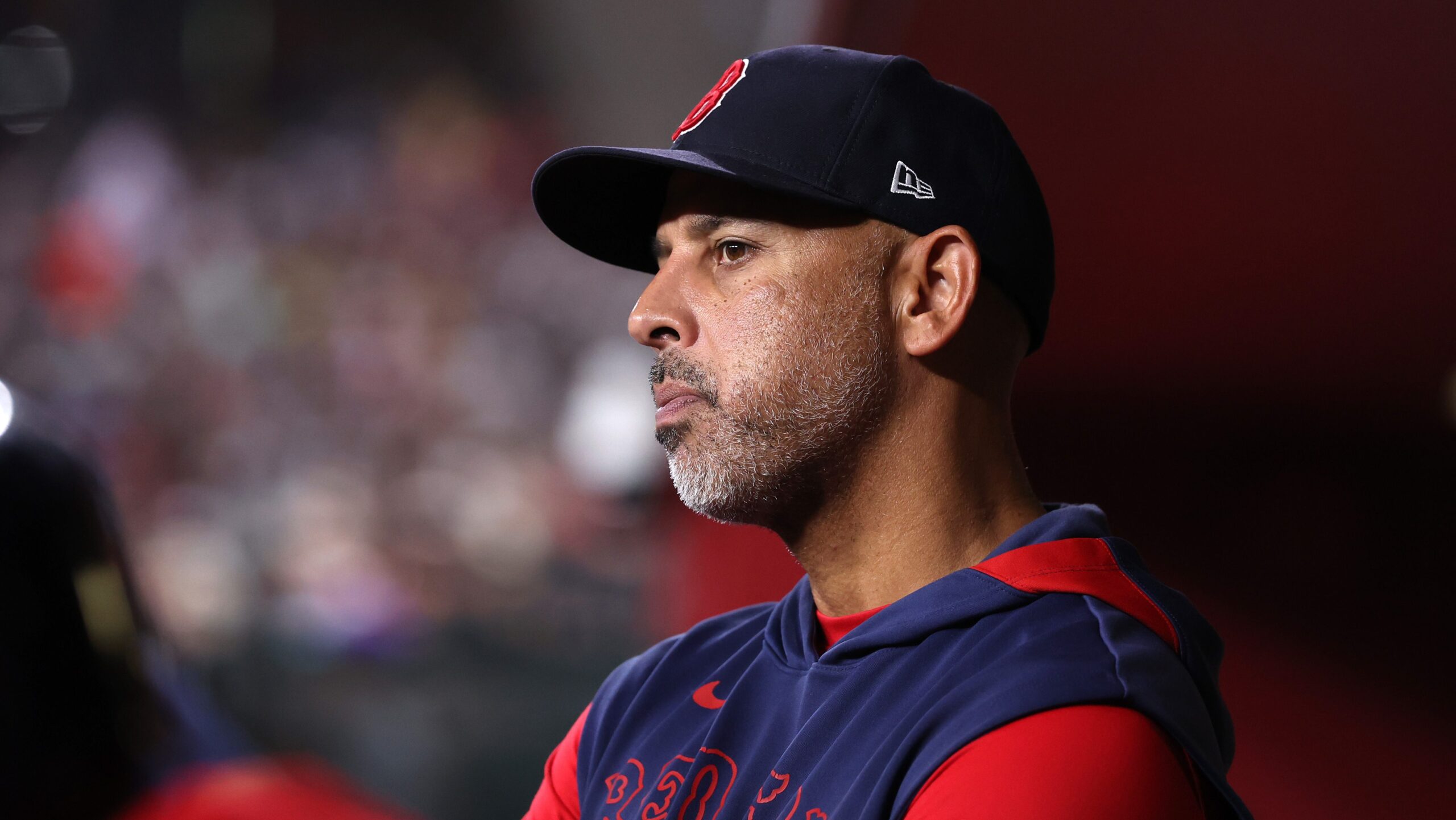
Red Sox manager Alex Cora looks on during Opening Day as MLB’s automated ball-strike system made its debut
Even in a win, Boston Red Sox Manager Alex Cora walked away thinking about one moment he would handle differently.
After the Boston Red Sox opened their season with a 3-0 victory over the Cincinnati Reds, Cora pointed to a fifth-inning at-bat involving Trevor Story as an early example of how Major League Baseball’s automated ball-strike challenge system is already shaping in-game decisions.
“There was one early where Trevor is in that situation again, he’d probably challenge,” Cora said.
The moment did not change the outcome of the game. The Red Sox controlled the pace throughout and secured the win. But Cora’s comment made clear that even in a clean result, the introduction of ABS is forcing teams to process decisions in real time and reconsider them just as quickly.
A New Decision Point in Every At-Bat
The ABS challenge system gives hitters, pitchers and catchers the ability to challenge certain pitch calls, adding a new strategic layer that did not previously exist.
Boston saw both sides of that dynamic on Opening Day.
In the ninth inning, Red Sox right fielder, Roman Anthony, successfully challenged a pitch that would have ended his at-bat. The call was overturned, and instead of a strikeout, Anthony reached base on a walk.
That sequence showed how impactful the system can be when used correctly. A single decision can immediately shift the outcome of an at-bat.
Cora acknowledged that reality postgame, noting that the margin for hesitation is small.
“You just have to make sure,” he said. “We thought the pitch was up. We don’t mind him challenging because it changes the whole thing.”
The contrast between Anthony’s successful challenge and Story’s earlier at-bat highlighted the learning curve that now exists within every game.
Early Reactions Across the Field
Cincinnati manager Terry Francona also addressed the system after the game, pointing to how it alters a pitcher’s rhythm.
“I think our pitchers are going to have to get used to thinking the inning might be over, and it’s not,” Francona said.
His perspective underscored a broader shift. Even when a pitcher believes an at-bat has ended, a challenge can immediately extend the inning and reset the situation.
A System Already Forcing Adjustments
For the Red Sox, the takeaway was not about a mistake or a missed opportunity that cost them the game. Instead, it was about how quickly the new system is demanding sharper awareness in every at-bat.
Cora’s reference to Story’s fifth-inning moment reflected that adjustment. It was a situation the team would likely approach differently moving forward, not because it changed the result, but because it revealed how precise decisions now need to be.
Opening Day offered a first look at that shift. Even in a win, the Red Sox left with a clearer understanding that the ABS system is not just a rule change. It is a new layer of the game that is already influencing how managers and players think in real time.
Maggie MacKenzie Maggie MacKenzie covers NASCAR for Heavy.com. She previously worked for NASCAR.com, where she reported, wrote, and edited race-weekend coverage and traveled to key events throughout the season. She has more than ten years of experience in sports media and is based in Boston, Massachusetts. More about Maggie MacKenzie
More Heavy on Red Sox
Loading more stories