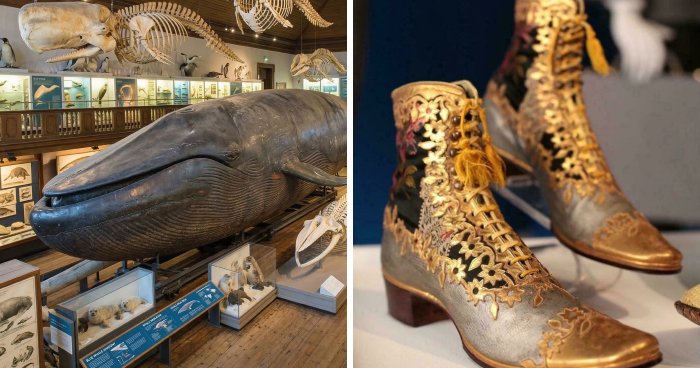
Archaeology is the discipline that keeps on giving. We might think that we know enough about history already, but every now and again another new and fun find pops up that reveals even more about the way people lived thousands of years ago.
Bored Panda has made a compilation of some interesting, well-preserved artifacts from history that you may not have seen before. Ever wondered what a true Viking longship looks like? Or maybe you’d like to see the hats Roman soldiers used during their campaign in Ancient Egypt?
Thanks to this list, you don’t have to blindly wonder anymore. You’ll find answers to these and more historical ponderings as you scroll through the most well-preserved historic items that we still have today!
#1 The Only Taxidermied Blue Whale In The World, 1865 CE, Now Housed At The Natural History Museum In Sweden
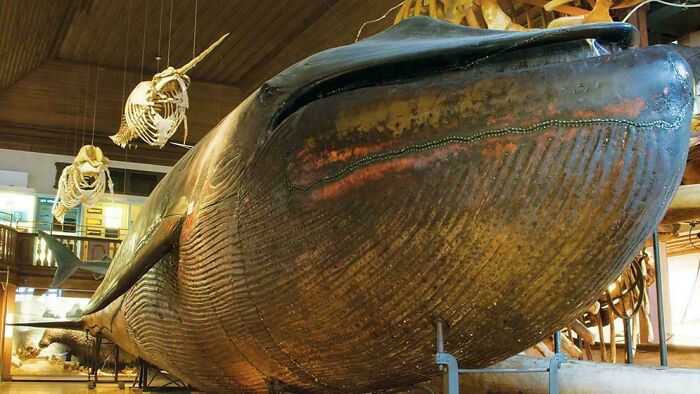
Image source: reddit.com
#2 The Oseberg Ship, A 9th Century Viking Ship Discovered Almost Perfectly Preserved In A Burial Mount In Norway
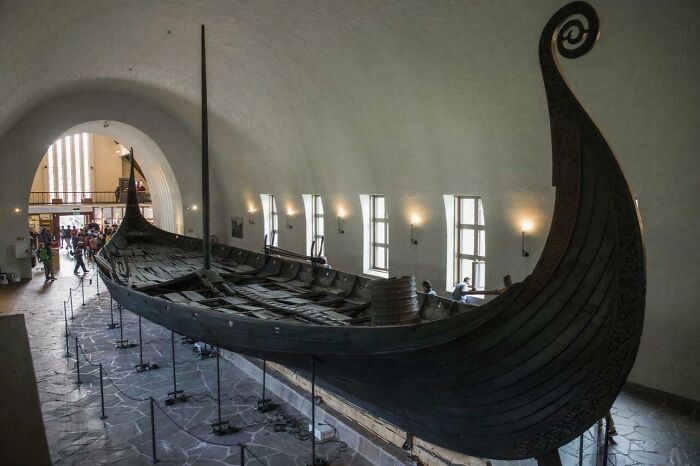
Image source: Haunting_Homework381, Petter Ulleland
#3 A Soapstone Container Containing Several Hundred Gold Coins From The Roman Empire Was Found In The Center Of The Italian City Of Como
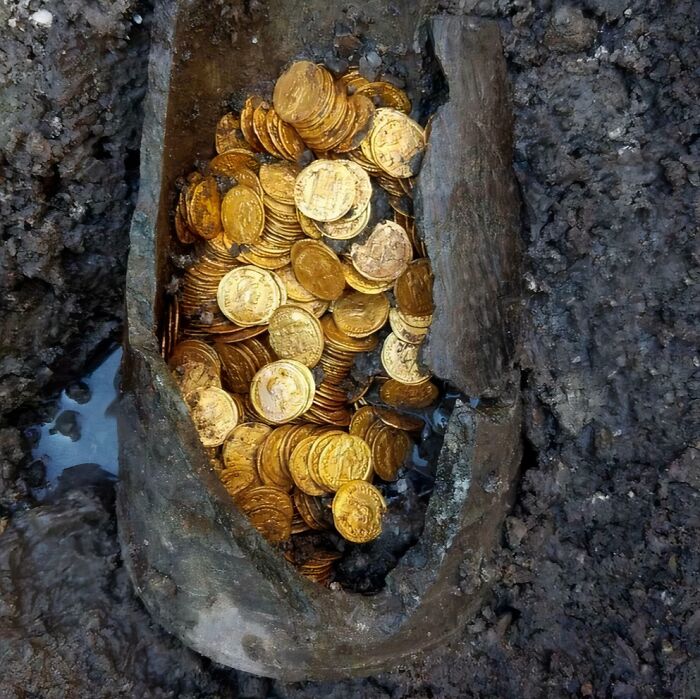
Image source: @MiC_Italia
The story of the only taxidermied blue whale in the world might be sadder than many of us think. The mammal was found on the beach of Askim Bay, close to the city of Göteborg. In the 19th century, the notion of “rescuing” animals that had washed ashore was still quite a foreign concept. Today, rescue and government organizations, volunteers, and marine life sanctuaries conduct rescue operations.
But, back in the day, the unlucky animals would get exterminated. Such was the destiny of the Malm whale. The process was quite inhumane, too: the fishermen who found it first poked its eyes out (so that it wouldn’t see them), then axed, speared, and shot the poor thing until it bled out.
#4 Archaeologists Unearthing A Remarkable 2,700-Year-Old Assyrian Lamassu At Ancient Dur-Sharrukin, In What Is Now Modern-Day Iraq
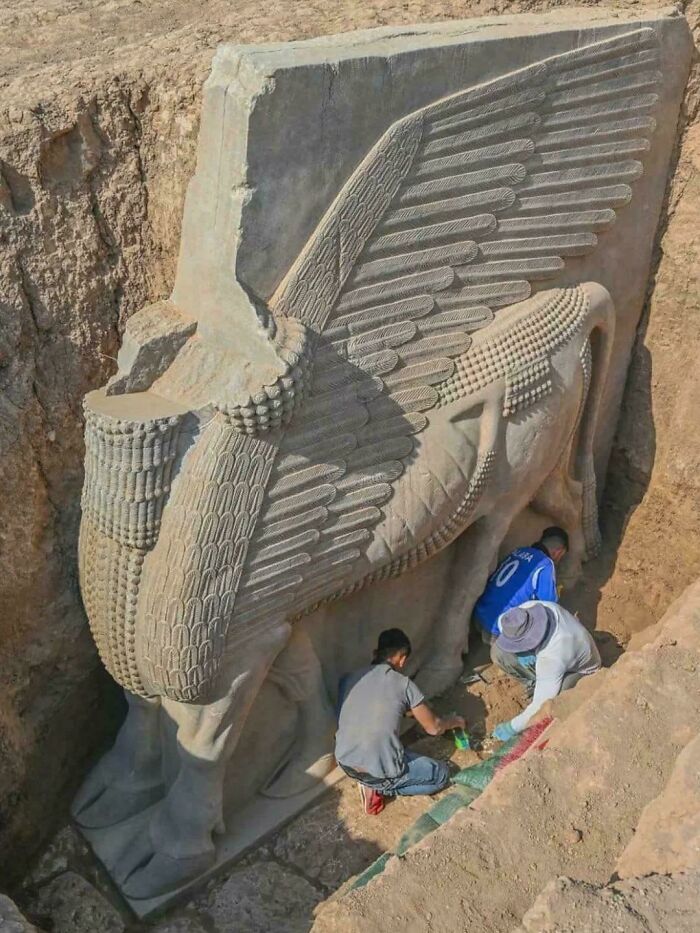
Image source: Party_Judgment5780, Nathan Steinmeyer
#5 Uniform That Belonged To King Charles XII Of Sweden, Worn On The Day He Passeed In Battle In 1718
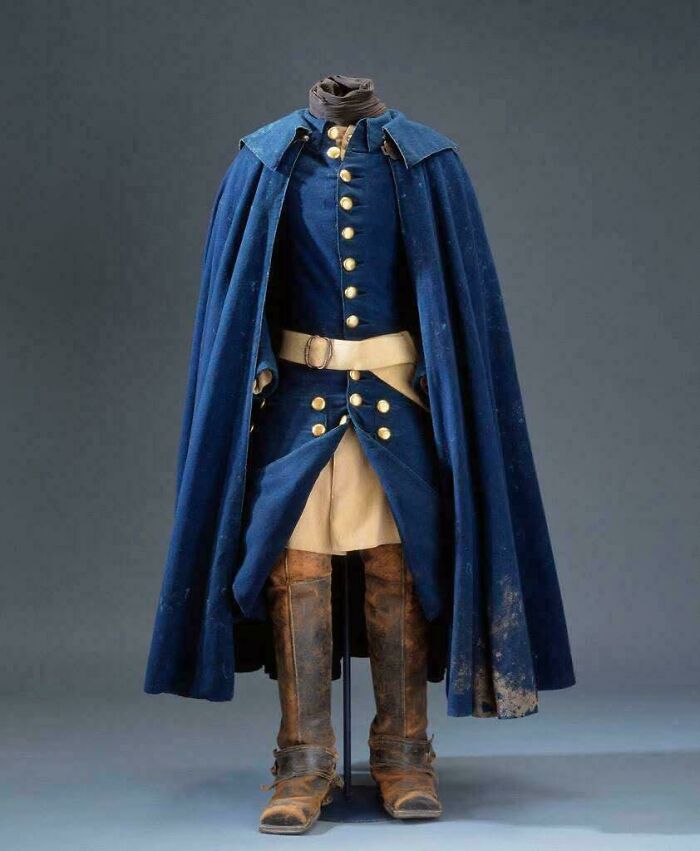
Image source: Haunting_Homework381, Livrustkammaren (The Royal Armoury) / CC BY-SA
#6 One Of The Oldest Legal Texts On Earth, Carved In Stone. Details Of The Code Of Hammurabi
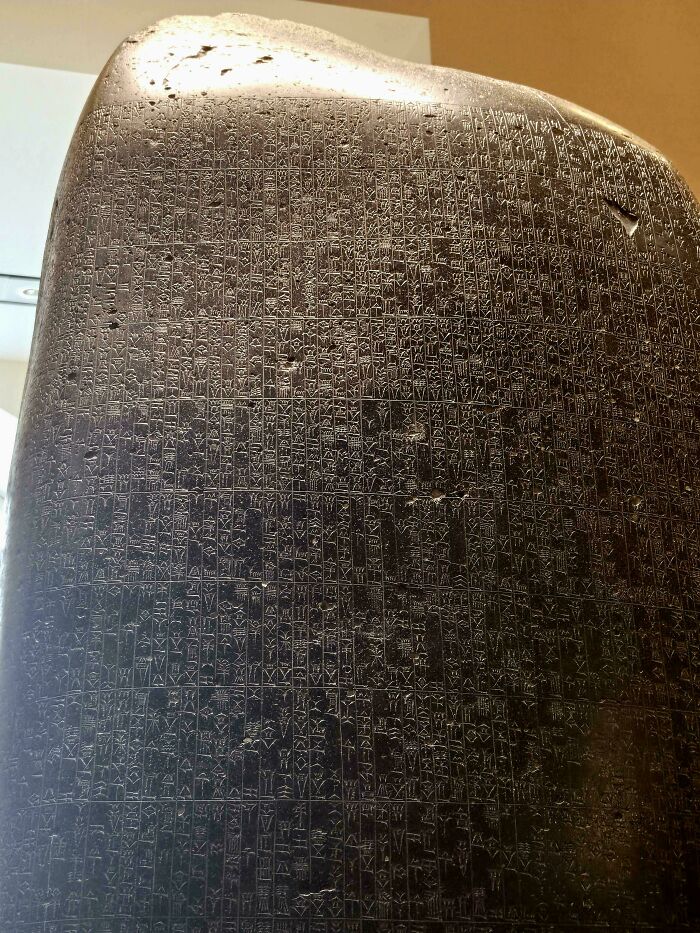
Image source: Extra_Ad_2733, Traveling Mama
The next day, the taxidermist and curator of the Gothenburg Museum, August Wilhelm Malm, bought the whale. Yet, he didn’t want it chopped and sent in parts. He concocted a plan on how to transport the animal whole. With the help of three steamboats and two coal barges, the whale was dragged to Gothenburg.
Until the 1930s, the stuffed whale was exhibited with its jaws open, and people could walk inside its belly. There were even benches, carpets, and wall hangings inside it. However, sometime in the 1930s, a couple was found inside “making love,” and the museum decided to open the whale’s jaws for special occasions only.
#7 A 2,000-Year-Old Roman Hat, Now Held At Bolton Museum, Is Believed To Be One Of Only 3 Similar Headpieces Remaining In The World
It was intended to keep Roman soldiers cool in the heat of the desert following their conquest of ancient Egypt has been painstakingly brought back to life.
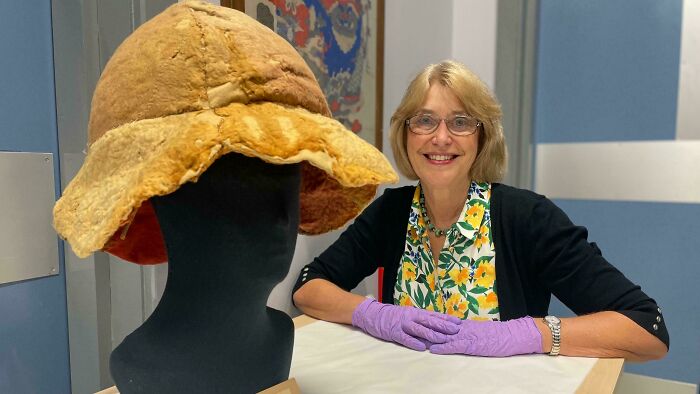
Image source: reddit.com, Ian Trumble / SWNS
#8 A Men’s Gilded Leather Shoes From Norfolk, Dating To 1890-1899 AD
With meticulous attention to detail, these ankle boots are a blend of silvered leather, black silk brocade, and gold gilded accents.
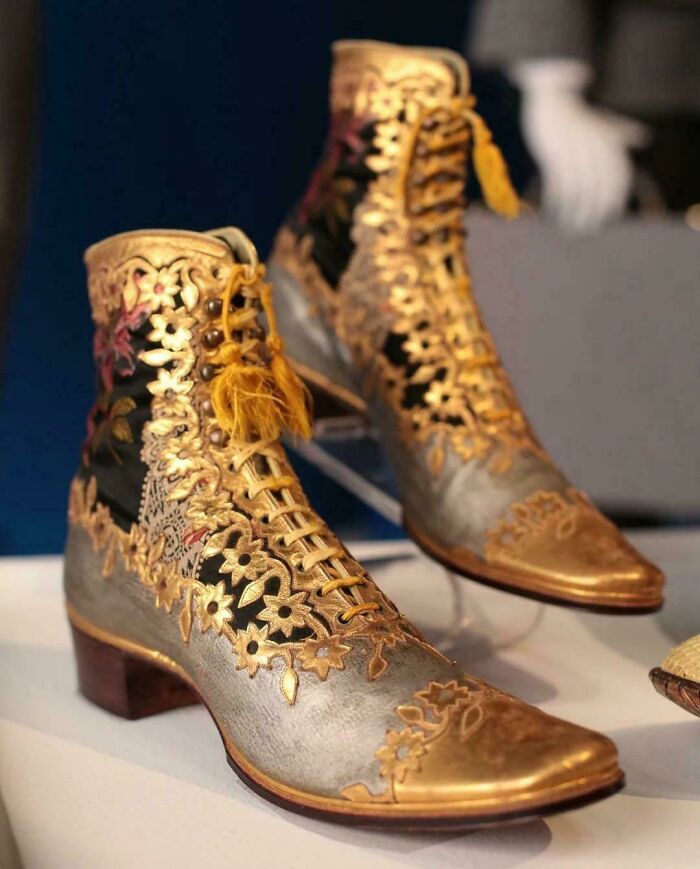
Image source: Party_Judgment5780, The archaeologist
#9 Mummified Cat Wrapped In Linen, With X-Ray Scan. Egypt, 400–200 BC
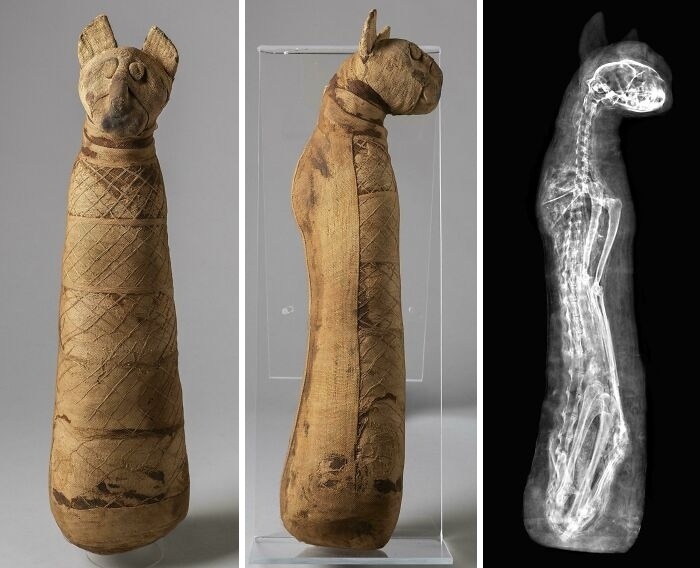
Image source: MunakataSennin, EGYPTIAN MUSEUM, Turin 2026
The 2,700-year-old Assyrian Lamassu sure looks majestic, but what exactly is a Lamassu, and why is it so significant? In Mesopotamia, Lamassus were protective deities in the form of winged bulls (or lions) with human heads. They were placed at the entrances and gates of significant sites and were symbols of the king’s power and their symbolic protectors.
Although they look like statues, they were actually “double-aspect” reliefs that one needed to look at either from the front or from the side. Lamassus could have four or five legs (the one on this list from Dur-Sharrukin has five), but you could only see the five if looking from the side.
#10 This Paperweight, Made Of Haematite Carved In The Shape Of A Grasshopper Was Hand-Carved Between 1800-1700 BC, In Ancient Babylonia (In Modern-Day Iraq) British Museum
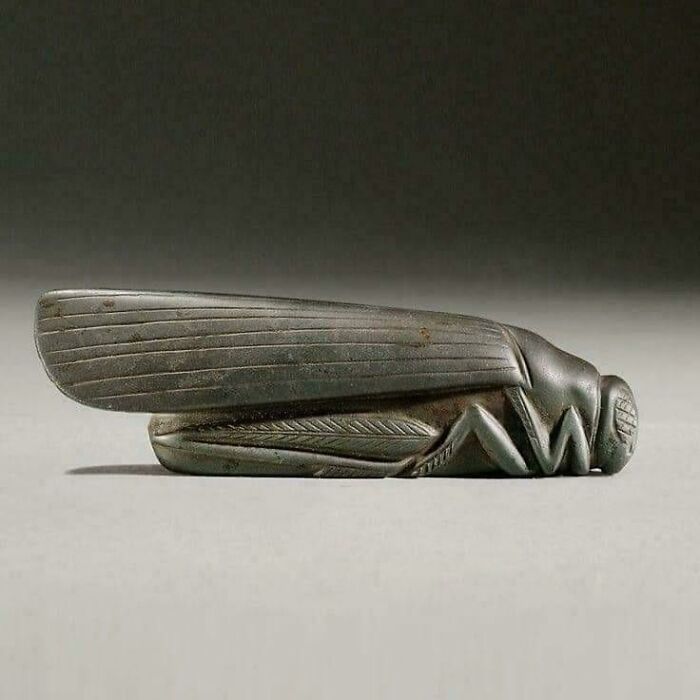
Image source: Handicapped-007
#11 Hellenistic Greek Cast Glass Pomegranate Vase, Tinted With Colloidal Gold To Achieve The Burgundy Shade, 2nd Century BCE
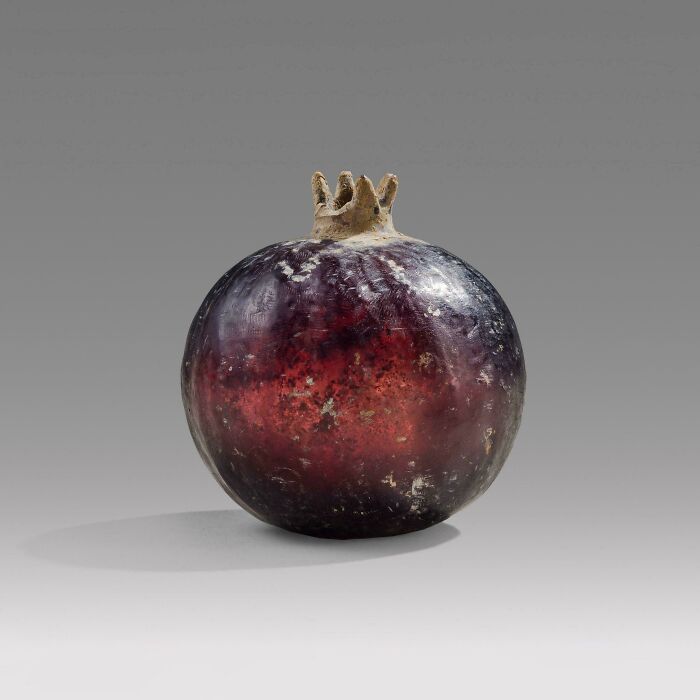
Image source: luis-mercado, phoenixancientart
#12 A Gold Necklace Discovered In Hepu Han Dynasty Cemetery. 206 BCE-220 CE, Now Housed At The Hepu Han Dynasty Cultural Museum In China
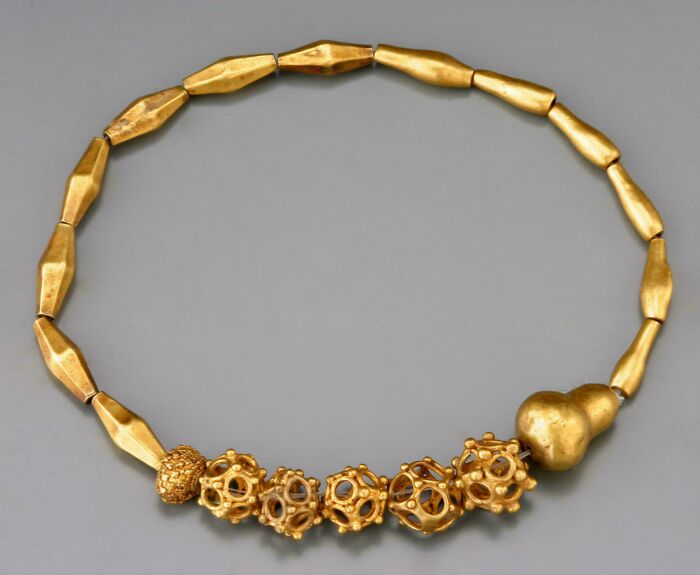
Image source: reddit.com
King Charles XII of Sweden passed 300 years ago, but the uniform he wore on the day he was shot still remains preserved immaculately. However, there have been some speculations from historians about the circumstances of his passing. Some suggest that the bullet that penetrated the king’s skull came from his own men, not his Danish enemies. This theory gained traction because none of his soldiers saw the king get hit; they only witnessed him slump forward in the trenches.
#13 Memorial To Maria Magdalena Langhans, Who Passed Away Giving Birth To A Still Born Child At The Age Of 28. This Is A Terracotta Copy Of The Gravestone, Switzerland, 1775 Ce
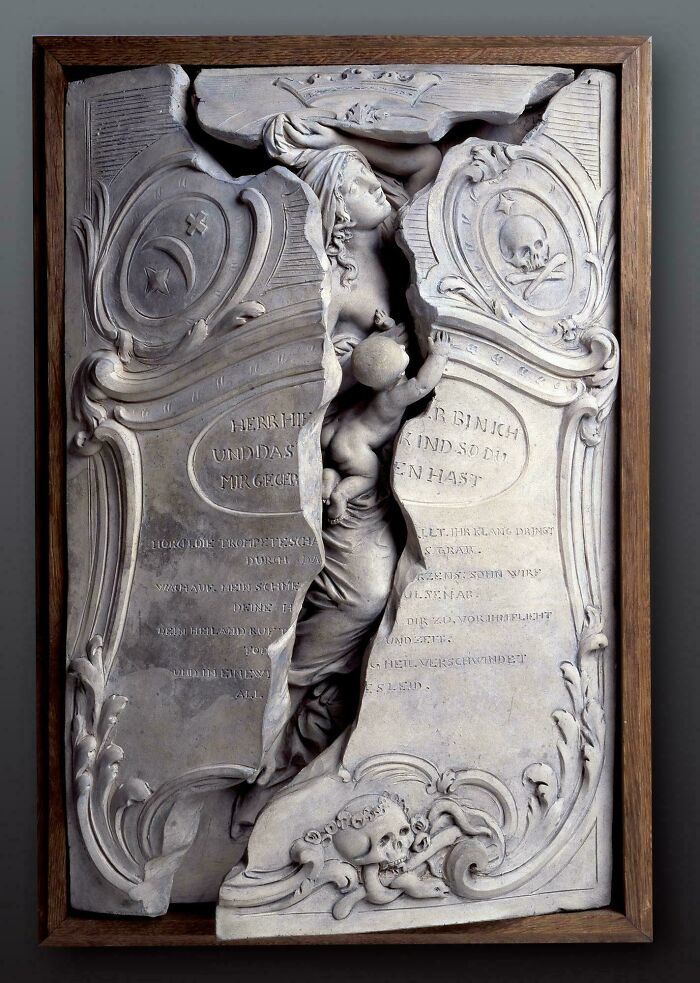
Image source: reddit.com, Nathan Smith
#14 An 8th-Century Quran Manuscript Which Is Considered One Of The Oldest Surviving Quran Manuscripts, Has 1087 Leaves Weighting Around 80kg, Each Made Of One Entire Animal’s Skin
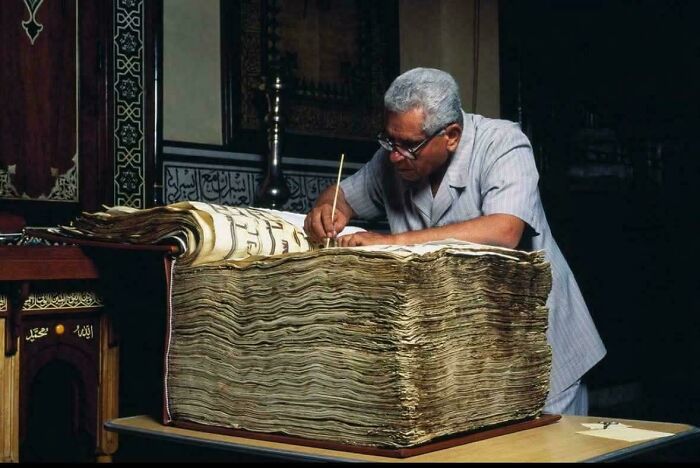
Image source: Party_Judgment5780
#15 Portrait Of Two Brothers From Roman Egypt, 140 AD
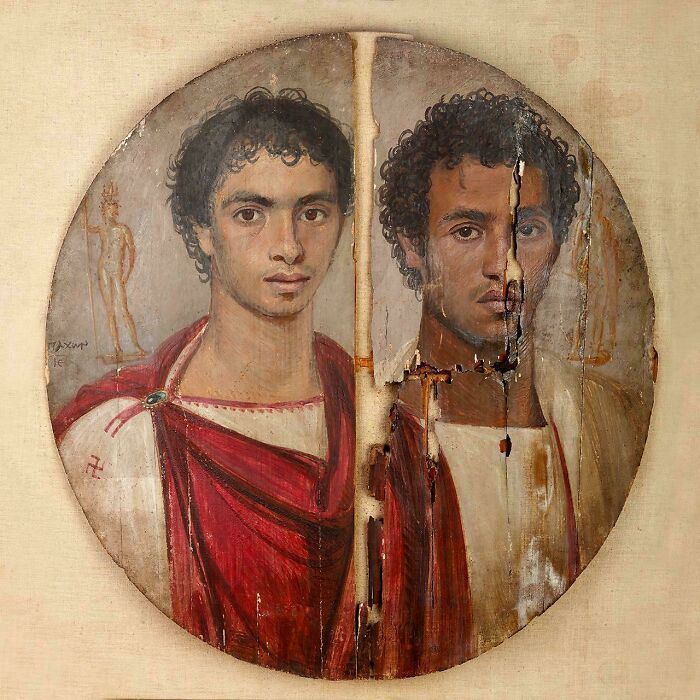
Image source: Party_Judgment5780, jfbradu
Some speculate that many people wanted King Charles XII to be gone. His successor, brother-in-law King Frederick I, reversed many of Charles’s decisions almost immediately after becoming king. He ended the Northern War, canceled the 17% tax on capital, and offed his right-hand man and chief minister, Baron Goertz.
#16 Necklace Of Princess Khenmet, 1932-1898 BCE
It was found on her mummy, and is formed of a series of amulets made of gold, and set with semiprecious stones, such as carnelian, turquoise and lapis lazuli.
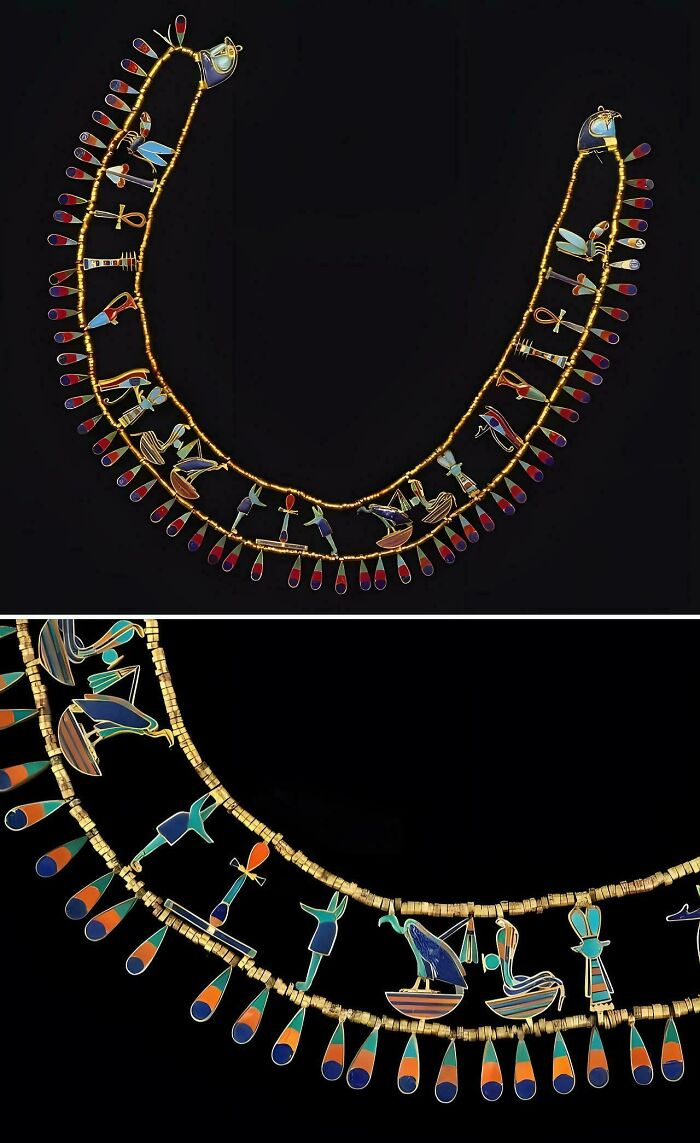
Image source: reddit.com, egypt-museum
#17 The Oldest Throne In Europe At The Heart Of The Bronze Age Palace Of Knossos, Crete, Circa 15th Century BC
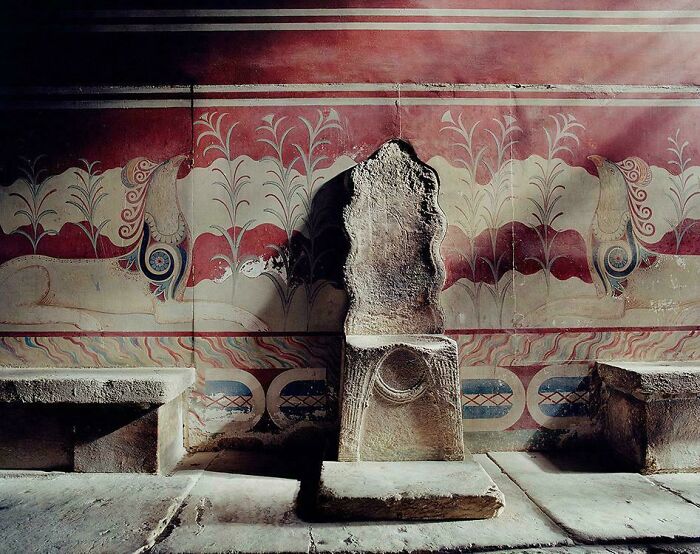
Image source: Haunting_Homework381
#18 Jadeite Cabbage, Qing Dynasty (1644-1911)
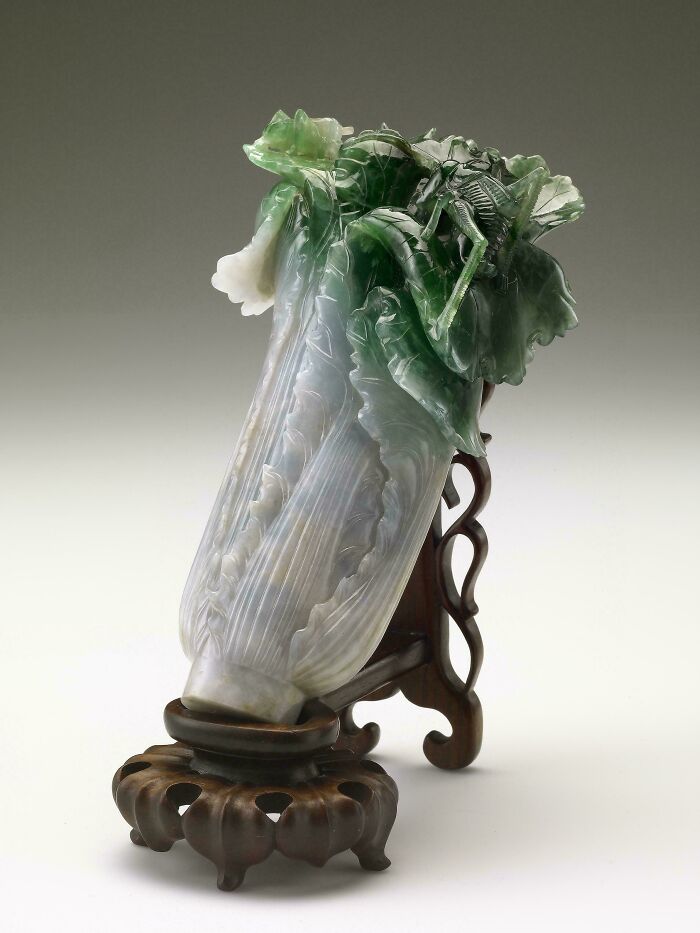
Image source: hazpoloin, National Palace Museum
There was also the case of the exit wound: historians speculated that because the hole was larger on the left side, he had to have been shot from the right – the opposite side of the enemy’s fortress. Still, in 2022, researchers revisited the case and concluded that it had been shot from the enemy’s lines.
#19 Bowl. Iran, Ilkhanid Dynasty, Late 13th-Mid 14th C. Stonepaste; Painted In Black-Under-Turquoise Glaze. Loaned To The Museum Of Fine Arts, Houston
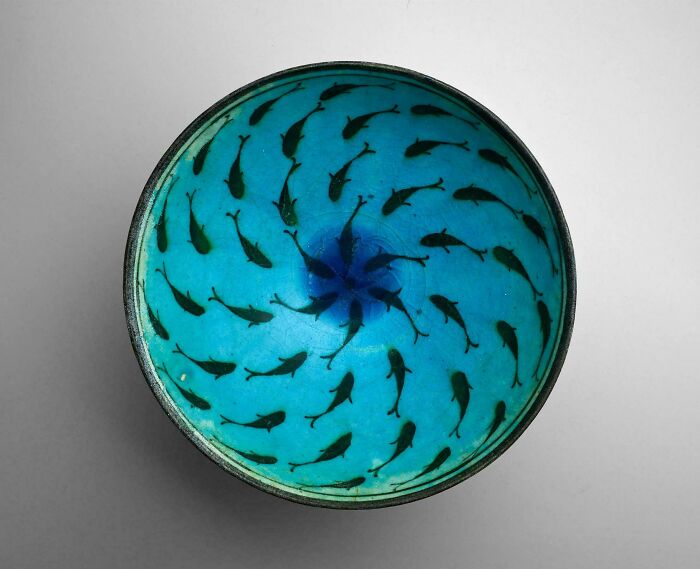
Image source: oldspice75, The Museum of Fine Arts
#20 When A Roman Mosaic Was Discovered In Modern-Day Turkey, It Was Found To Be So Well Made That It Preserved The Wave Of An Earthquake Without Breaking The Pattern
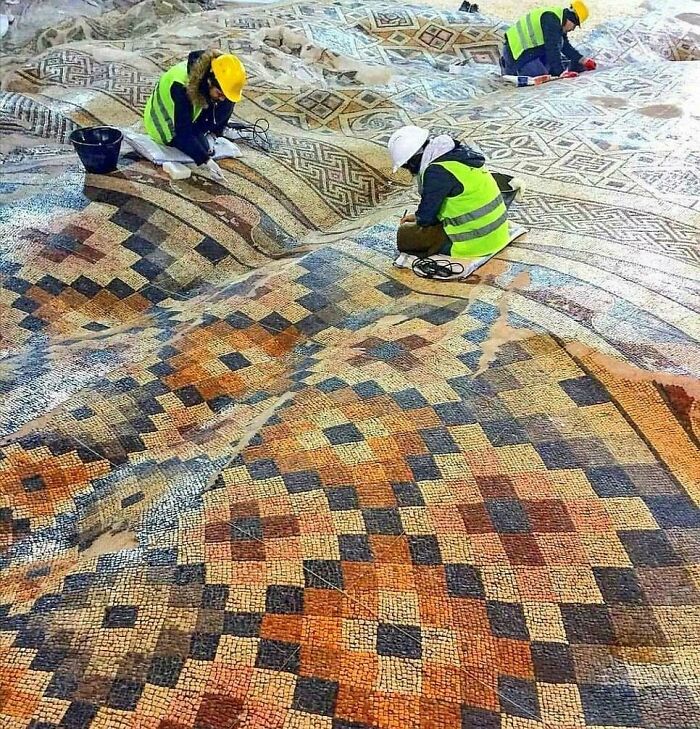
Image source: Party_Judgment5780, the-past.com
#21 Ancient Hand Grenade Found In The Sea, Which May Date Back To The Crusader, Ayyubid Or Mamluk Periods
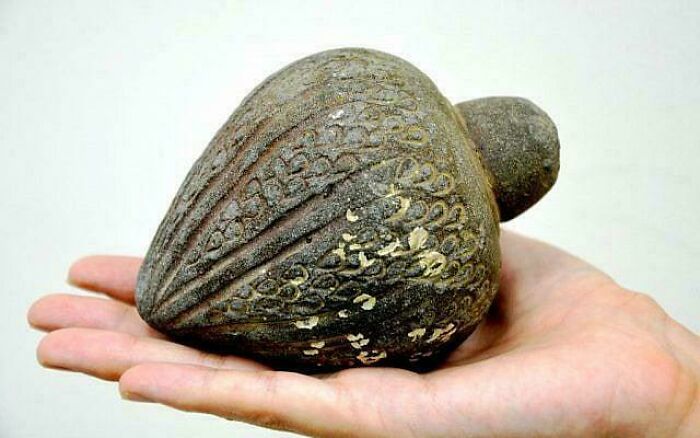
Image source: Amir Gorzalczany, Israel Antiquities Authority
What new things have you learned today, Pandas? Was it that Roman soldiers had to wear hats during their conquest of Ancient Egypt so that they didn’t overheat? Or was it how a mummified cat’s X-ray looks? Let us know in the comments which one of these well-preserved artifacts surprised you the most! And, in the meantime, check out some incredible facts about Ancient Egypt if this list has got you craving more historical stuff.
#22 Cloak Worn By Napoleon I During The Egyptian Campaign In The 1790s, Inspired By The Berber Burnous
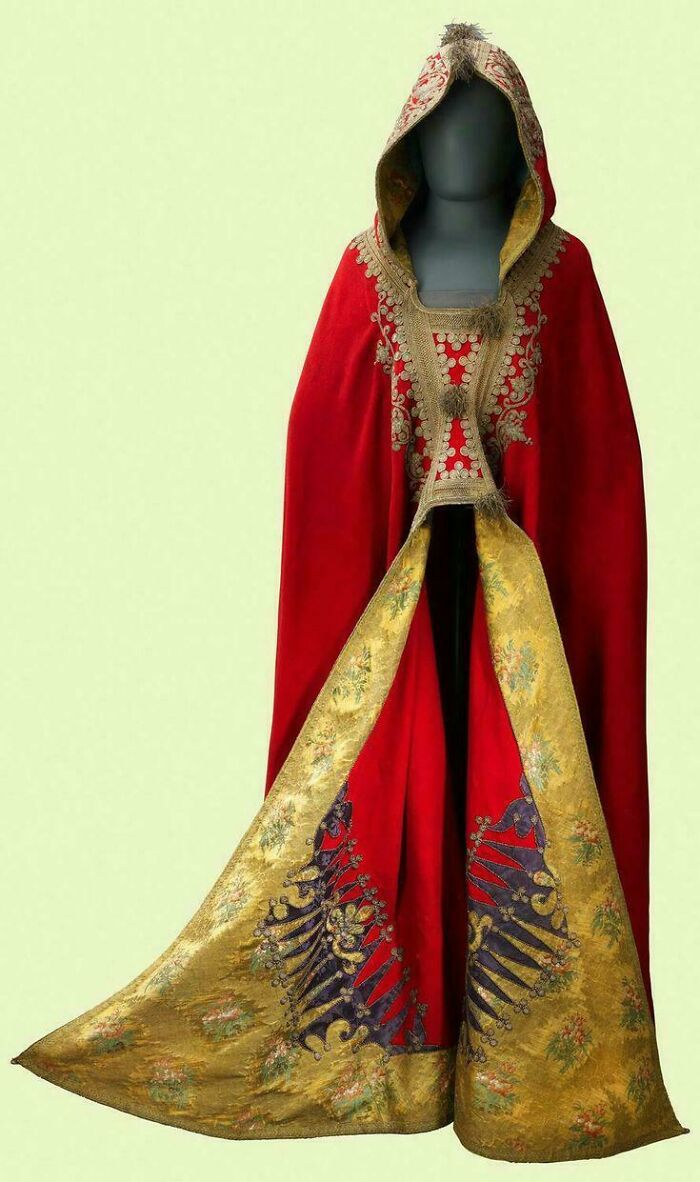
Image source: Haunting_Homework381, Royal Collection
#23 The Mold Gold Cape Is A Ceremonial Cape Of Solid Sheet-Gold From Wales Dating From About 1900–1600 BCE In The British Bronze Age
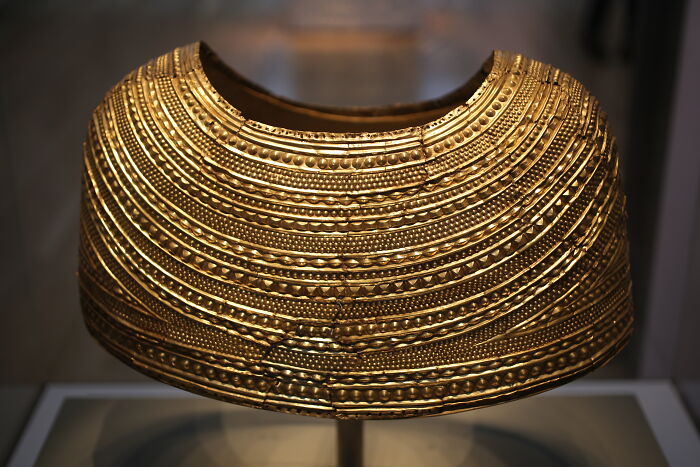
Image source: Geni
#24 This Exquisitely Enameled Silver Rapier, Dating To 1601, Is A Magnificent Example Of The Elaborate Craftsmanship Of German Swordsmiths During The Renaissance
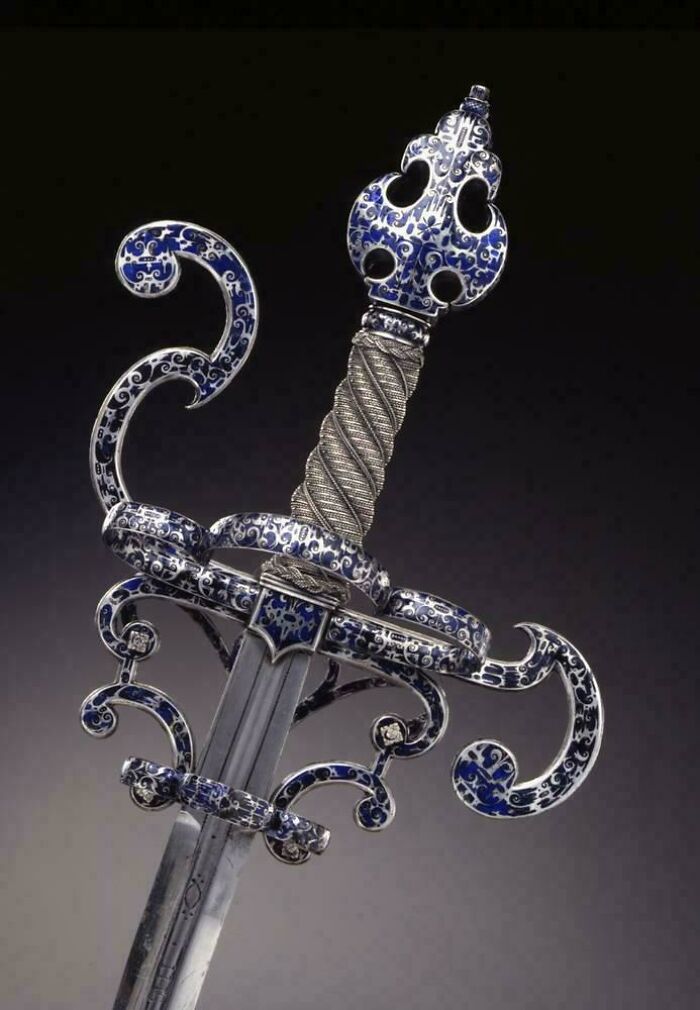
Image source: Party_Judgment5780, The Idle Woman
#25 A Viking Era Ring Inscribed With The Words ‘For Allah’, Found In The Grave Of A Woman Who Was Buried 1200 Years Ago In Birka
The ring constitutes a unique material evidence of direct contact between the vikings and the Abbasid Caliphate.
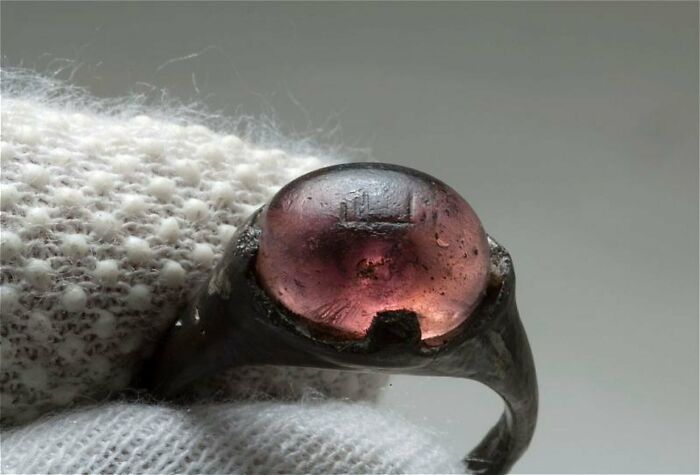
Image source: reddit.com, SCANNING
#26 The Footprint Of A Roman Baby In Red Clay, Which Was Left During Drying, Is About 2000 Years Old. Its Location Is Vaison-La-Romaine, France
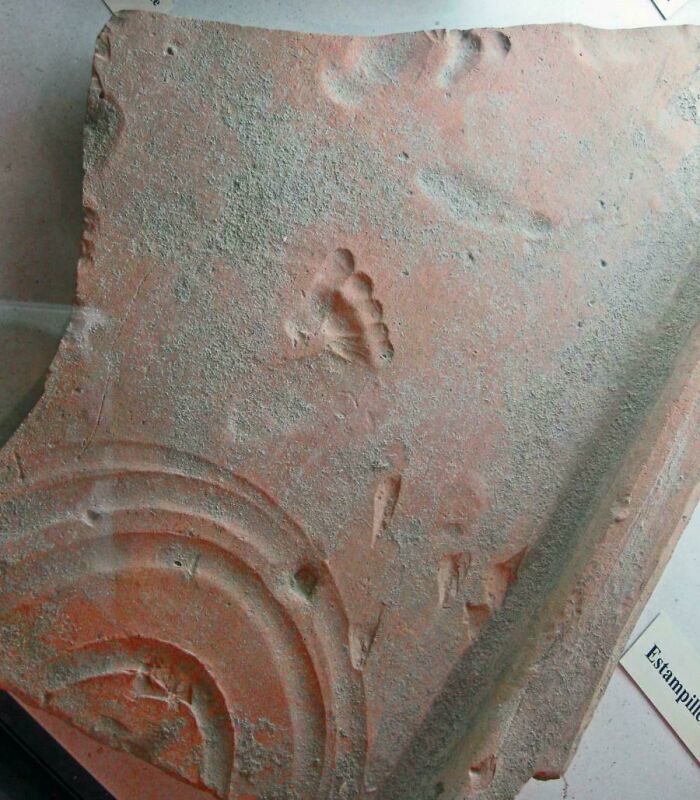
Image source: -_Redan_-
#27 The Spanish Archaeologist Manuel Esteve Posing With A Corinthian Helmet That He Had Found In 1938
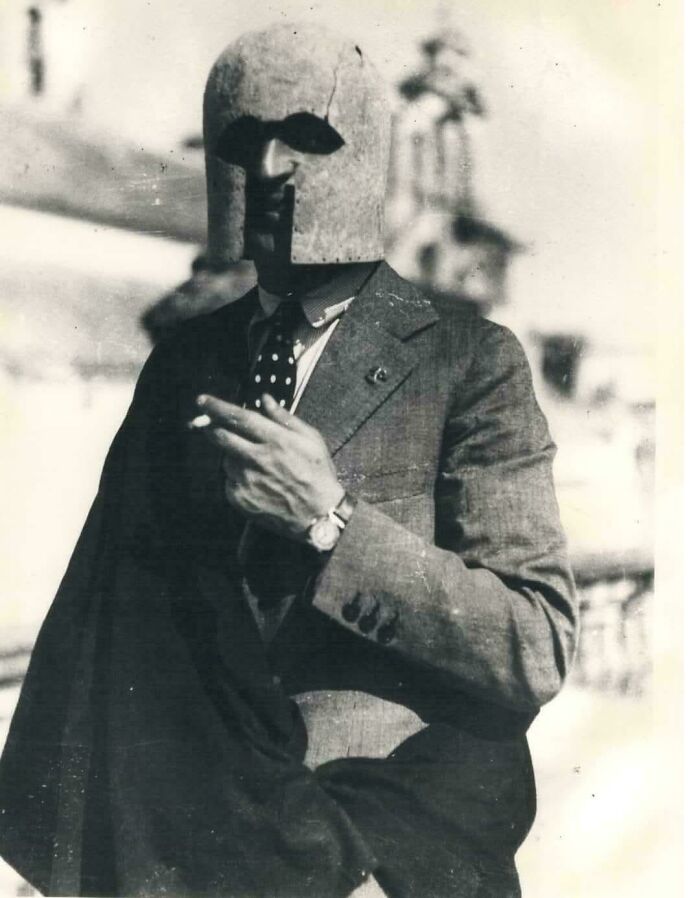
Image source: reddit.com, The Archaeologist
#28 Tomb Of Pharaoh Tutankhamun (1323 BC) — The Only Unlooted Royal Tomb Ever Found, With Over 5,000 Pristine Artifacts Sealed For 3,245 Years
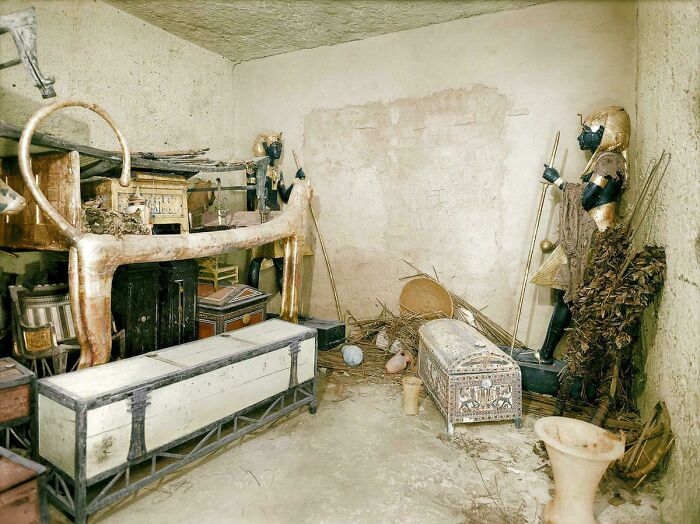
Image source: Vegetable_Bass_4885, Griffith Institute, University of Oxford
#29 Over 30 Film Reels From The Qajar Empire Have Been Discovered At Golestan Palace, Dated To 1896–1907
They contain some of the earliest footage in Iran’s history, featuring Persian celebrations during that period, government officials in royal palaces, and the dawn of the country’s cinema.
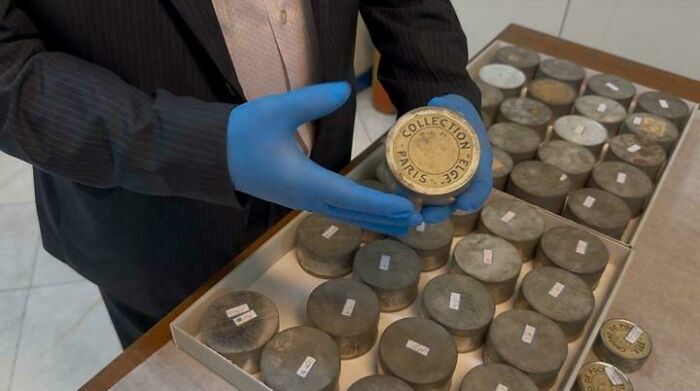
Image source: Party_Judgment5780
#30 The Scepter Of Darius The Great (522–486 BC). Crafted From Gold And Lapis Lazuli, It Was Discovered In 1959 At The Apadana Palace In Persepolis
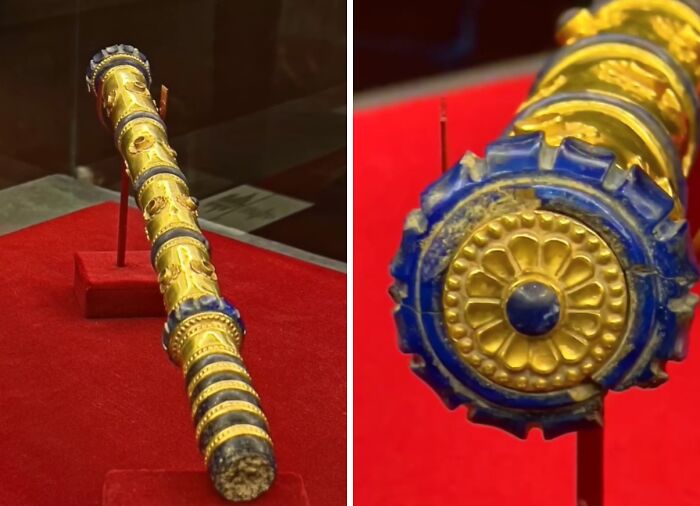
Image source: Party_Judgment5780
#31 A Woman Is Attacked By The Kamikiri (“Hair-Cutter”) On Her Way To The Toilet. Print By Utagawa Yoshifuji. Japan, 1868
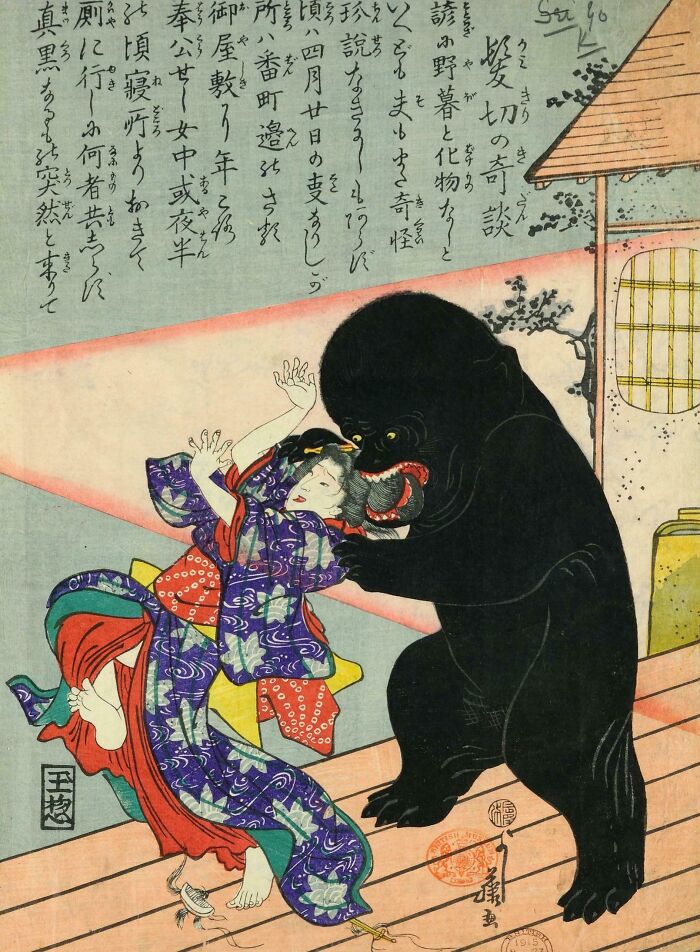
Image source: MunakataSennin, The Trustees of the British Museum
#32 Child’s Tunic With Integrated Hood, Egypt, 600-900 AD
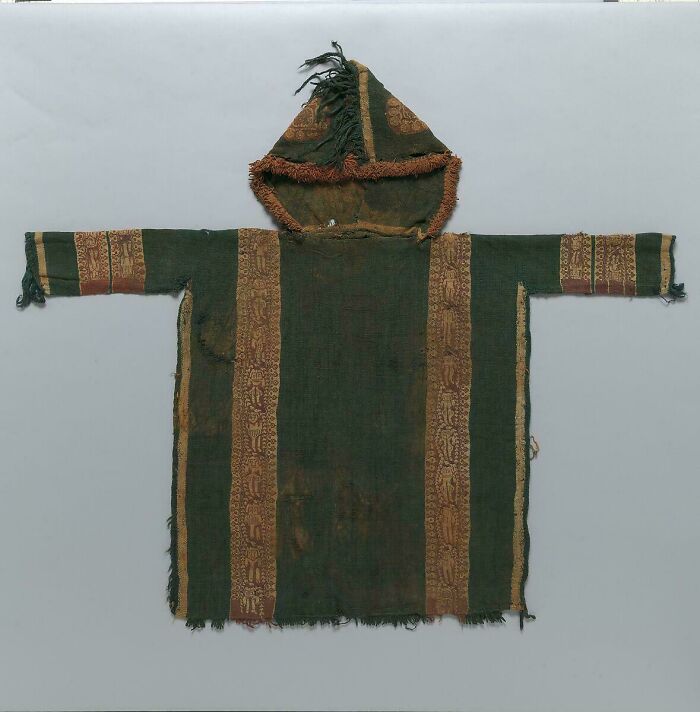
Image source: Haestein_the_Naughty, Gift of George D. Pratt, 1927
#33 Marie Antoinette’s Final Note, Written At 4.30am On The Morning Of Her Execution, 16th October 1793
Translation: ‘My lord, have pity on me! My eyes have no more tears to cry for you my poor children; farewell, farewell!’ It’s currently on display in the Marie Antoinette exhibition at the Victoria and Albert Museum.
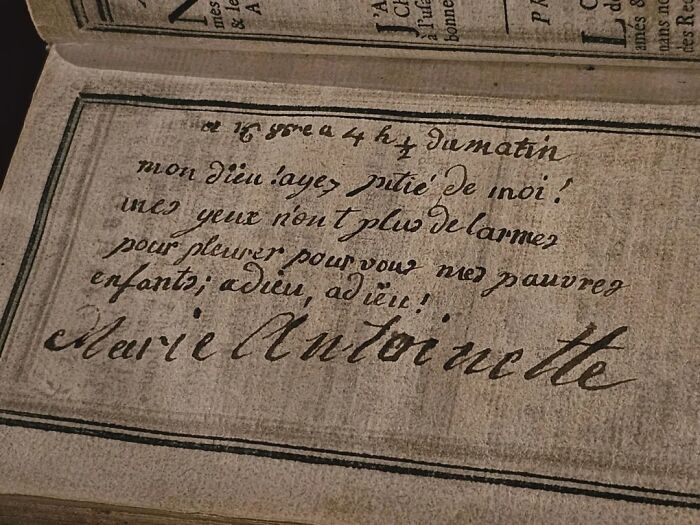
Image source: Haunting_Homework381
#34 The Golden Larnax (Chest With The Remains) And Crown Of Alexander’s Father, Philip II Of Macedon
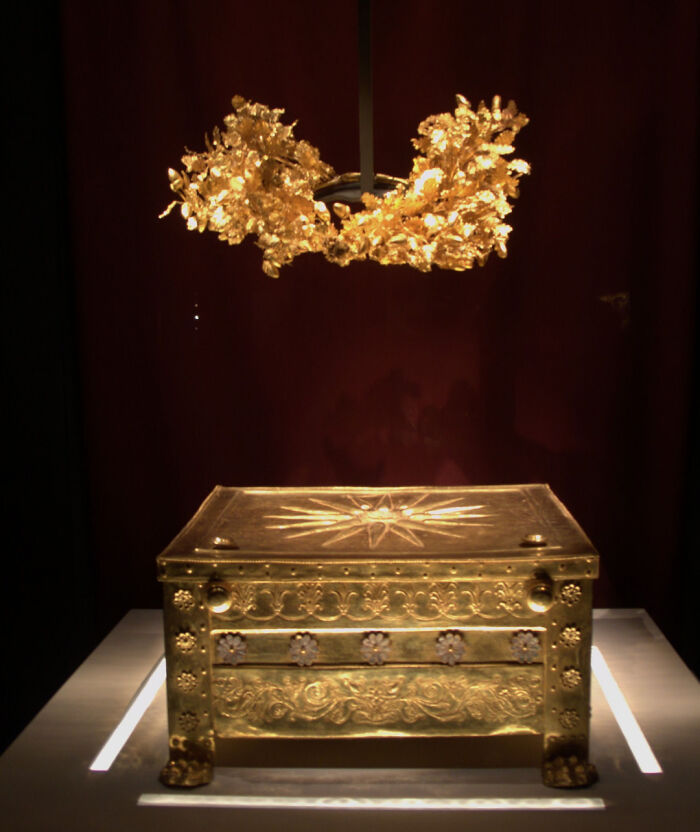
Image source: Haunting_Homework381, Visit-CentralMacedonia
#35 Tutankhamun’s Gold Mask, Solid Gold And Inlaid With Lapis Lazuli, Obsidian, And Quartz, 1323 BC
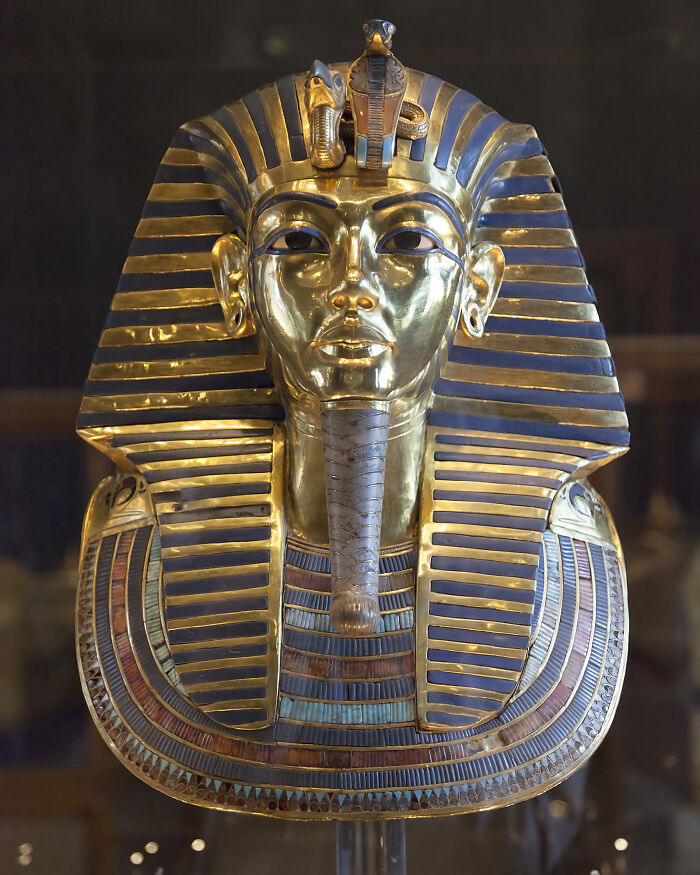
Image source: Roland Unger