
THE KITCHEN
Phase out plastic
Open your cupboards and you’re likely to find an army of plastic tubs, spatulas and mysterious spare lids that you never use. These items continuously shed invisible particles known as microplastics – tiny fragments that release harmful polymers and chemical additives such as BPA (Bisphenol A) and phthalates into our water, air and food. Over time, these particles can lead to liver and brain damage, as well as increasing the risk of cardiovascular disease. Where possible, replace plastic items with glass, stainless steel or wood. Peacewiththewild.co.uk sells a wide selection of stylish and plastic-free kitchenware.

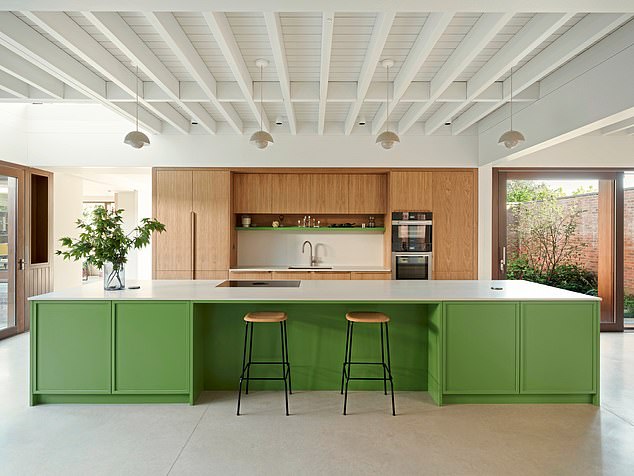
This Henley-on-Thames design project by sustainable kitchens.co.uk features recycled birch plywood and oak veneer cabinetry. Nkuku.com has a big range of bar stools. For a similar shade of climate-conscious paint, try Park Life, £30 for 1 litre, coatpaints.com.
Be picky with paints
Many conventional paint formulas contain volatile organic compounds (VOCs) – carbon-based chemicals that evaporate as paint dries and then linger in the air, contributing to headaches, dizziness and skin irritation.
Despite what some brands claim, ‘no paint can ever be truly “zero VOC”, as even regular tap water contains trace VOCs,’ says Anna Hill, brand director and colour consultant at natural paint company Fenwick & Tilbrook. ‘Instead, look for paints with a high concentration of pigments and binders. The higher the pigment, the lower the carbon emissions.’ Francescaspaints.com and edwardbulmerpaint.co.uk are also good options.
THE LIVING ROOM
Invest in ‘healthy’ furniture

Marohome.co.uk offers an antidote to fast interiors made using harmful chemicals. All its sofas are made with FSC-certified materials and fillings include plant polymers and duck feathers. All covers are removable for an easy clean.
Most sofas and armchairs made in the UK rely on polyurethane foam – a petrochemical-based plastic often chosen for its springy cushioning. However, as this foam flexes and degrades over time, it sheds microplastic particles that accumulate in household dust, exacerbating respiratory conditions such as asthma and bronchitis. These particles also encourage the circulation of bacteria throughout the home, increasing the risk of infections.
‘The disappointing elephant in the room is cost,’ says Meg Holloway, founder of sustainable furniture brand Maro Home. ‘Petrochemical foam is far cheaper than sustainable alternatives like wool wadding, natural latex and plant-based foams, so the big brands continue to use it.’
To reduce your home’s chemical load, seek out
FSC-certified furniture with solid wood frames and seating with fillings such as wool, natural latex or coconut coir, all of which offer comfort without compromising health. Upholstery made from organic cotton, linen or recycled fibres can further minimise exposure to unnecessary chemical treatments.

Plastic-free bedding from scooms.com is made with breathable, biodegradable cotton, goose down and wool fillings that regulate temperature while reducing microplastic pollution.
Bust the dust
Adults ingest an estimated 20 milligrams of household dust every day, which can affect the respiratory system. Children and pets are exposed to higher levels due to closer contact with surfaces. Rugs are one of the biggest culprits, capable of holding anywhere from one to 63 grams of dust per square metre before they begin to look dirty. This is the equivalent of several heaped tablespoons of dust in every square metre.
To minimise build-up, choose low-pile rugs with a tight weave made from cotton, which is less likely to trap dust particles. Regular vacuuming and the use of a damp microfibre cloth to capture dust in common hotspots such as shelving, beneath sofas and on top of cupboards, where particles tend to accumulate and recirculate into the air, will also make a difference.

Bathroom ventilation reduces the risk of mould and bacteria build-up. If you don’t have a window, you’ll need an extractor fan. Plants help purify the air (try patchplants.com). Walls here are painted in Tusk and Panama, £28 each for 1 litre, fenwickand tilbrook.com.
THE BEDROOM
Sleep clean
Conventional bedding undergoes extensive chemical processing before it reaches the mattress, including bleaching and dyeing. ‘Over time, these chemicals can disrupt hormones, damage organs [the liver, the brain and the heart] and heighten the risk of cardiovascular disease,’ says Emily Attwood, co-founder of sustainable bedding brand scooms.com (pictured opposite).
Look for naturally dyed or undyed sheets made from fibres such as organic cotton, hemp and bamboo. Naturalmat.co.uk and pandalondon.com sell a wide range of hypoallergenic and antibacterial bedding.
When it comes to mattresses, opt for those filled with 100 per cent natural latex foam, derived from rubber trees, rather than synthetic alternatives (try demko.co.uk). Prioritise toppers filled with wool or goose down (try soakandsleep.com), which help regulate temperature, reduce moisture and cut down on microplastic pollution.
THE BATHROOM
Clear the air
Bathrooms are one of the most moisture-prone rooms in the home. Every shower, bath or hot tap releases steam that lingers on surfaces, creating the perfect environment for black mould and bacteria to grow. If left unchecked, these microbes can release spores into the air, which can cause chest tightness and headaches.
Installing an extractor fan, such as the Envirovent Axial Extractor fan, £54.86 at diy.com, can dramatically reduce humidity and airborne pollutants. Just ensure you choose the right size for your bathroom and run the fan for at least 20-30 minutes after showers. Opening windows and drying surfaces after baths and showers also helps.