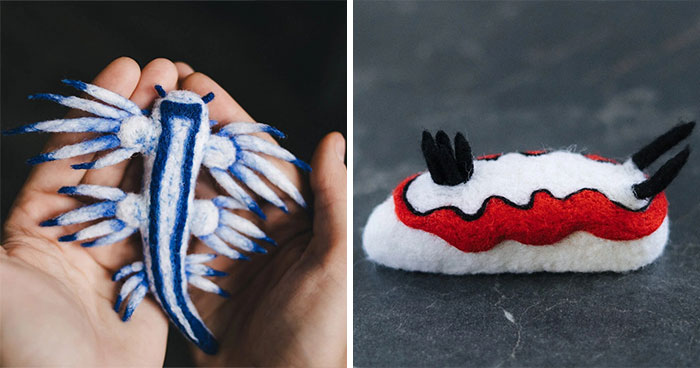
At first glance, Arina Borevich’s tiny felted sculptures look like fantasy creatures dreamed up for a storybook. But they’re actually based on real animals: nudibranchs, a group of sea slugs known for their extraordinary colors, ruffled forms, and almost unreal-looking patterns. Based in Tbilisi, Georgia, Borevich creates these handmade wool figurines through her project, ‘Wool Creature Lab,’ turning some of the ocean’s strangest and most mesmerizing creatures into soft, palm-sized works of art. Each one is inspired by an actual species, and with roughly 3,000 described nudibranchs in the world, the artist has set herself an ambitious goal: to felt every single one of them.
What makes Borevich’s work especially charming is the contrast between subject and technique. Needle felting is a slow, hands-on process in which loose wool is repeatedly shaped and compacted using a barbed needle, allowing artists to build texture, volume, and intricate detail by hand. In Borevich’s case, that careful process is what helps capture the delicate frills, vivid markings, and playful silhouettes that make nudibranchs so fascinating in the first place. Her sculptures sit somewhere between scientific appreciation and pure whimsy, introducing viewers to marine life they may never have heard of while also celebrating the tactile beauty of handmade craft.
Let us know which of these colorful sea creatures is your favorite, and, of course, check out Arina’s work on her Instagram page and website.
More info: Instagram | patreon.com | woolcreaturelab.com
#1 “Glaucus Atlanticus”
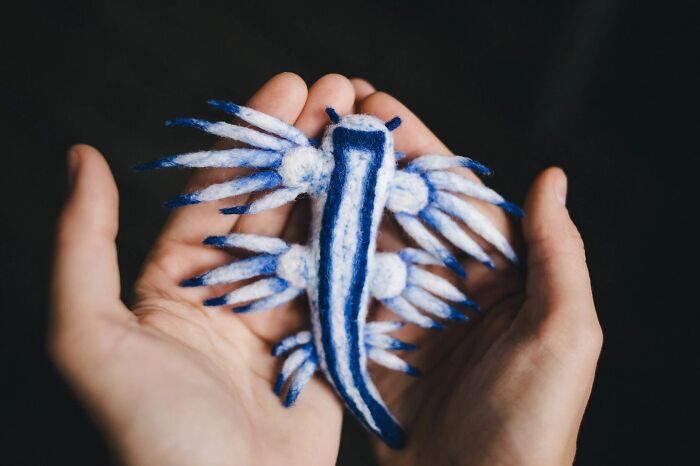
Image source: Wool Creature Lab
#2 “Cyerce Antillensis”
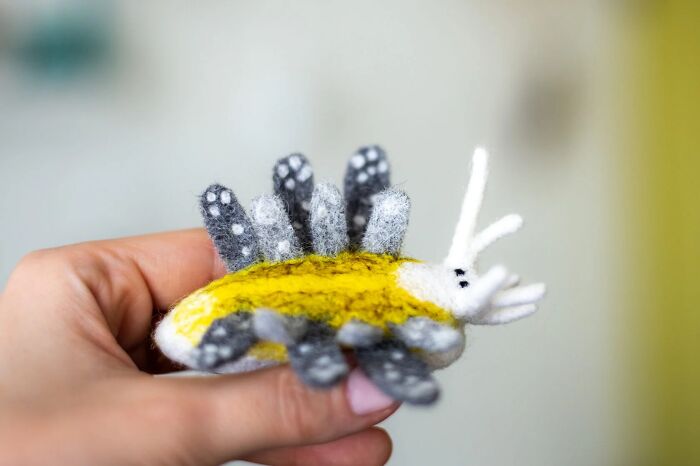
Image source: Wool Creature Lab
#3 “Goniobranchus Fidelis”
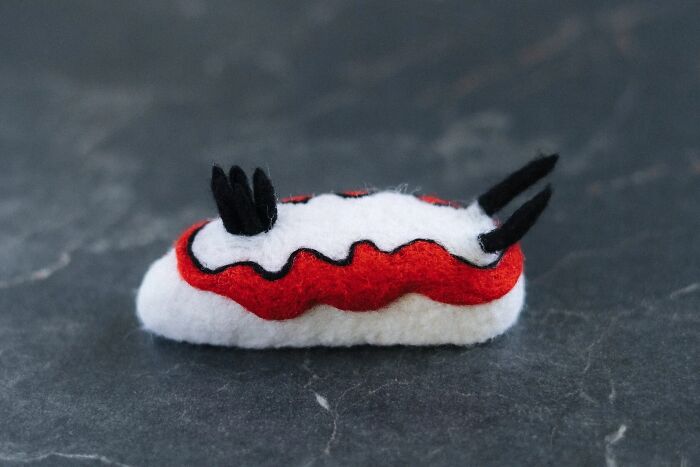
Image source: Wool Creature Lab
#4 “Phestilla Melanobrachia”
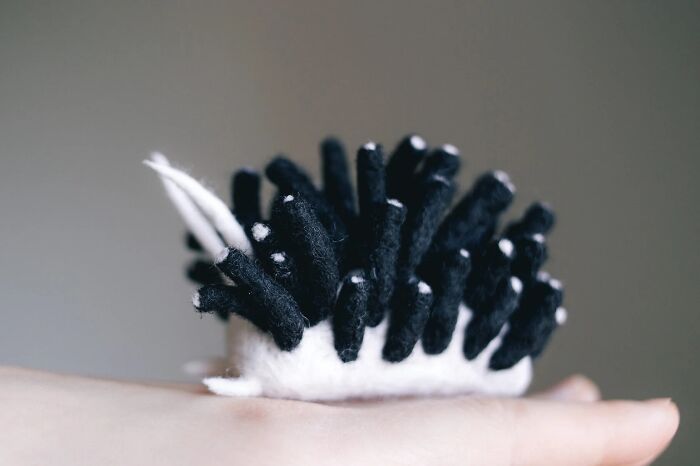
Image source: Wool Creature Lab
#5 “Okenia Rosacea”
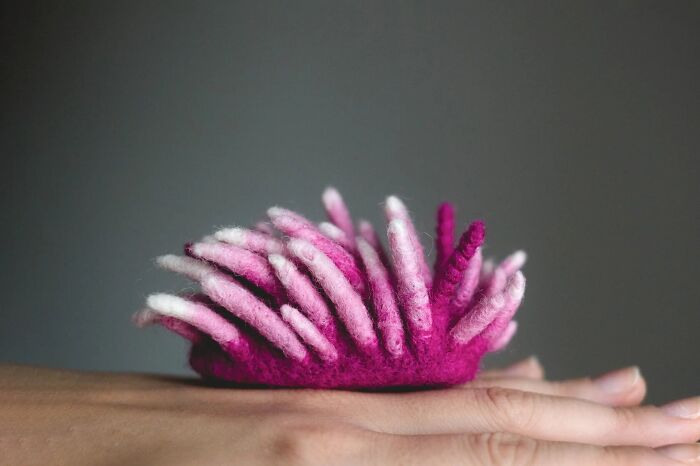
Image source: Wool Creature Lab
#6 “Thecacera Pacifica”
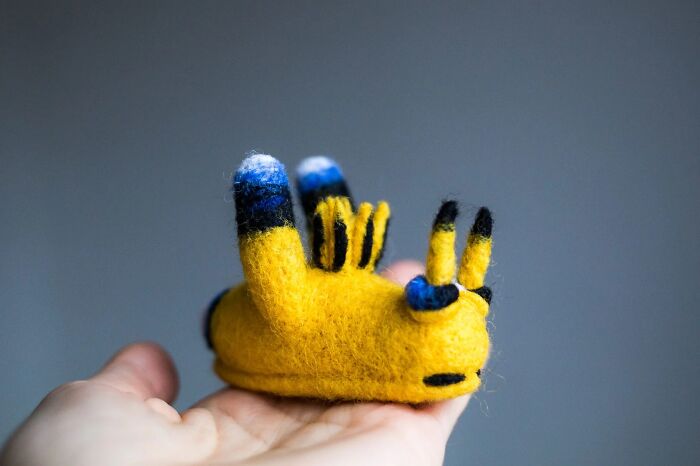
Image source: Wool Creature Lab
#7 “Hypselodoris Kaname”
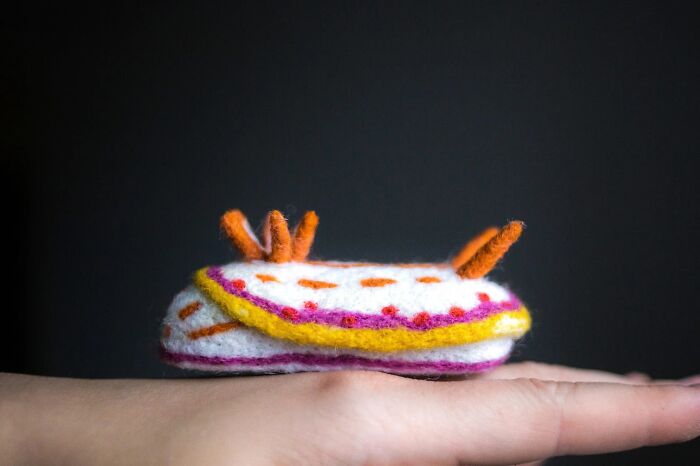
Image source: Wool Creature Lab
#8 “Nembrotha Yonowae”
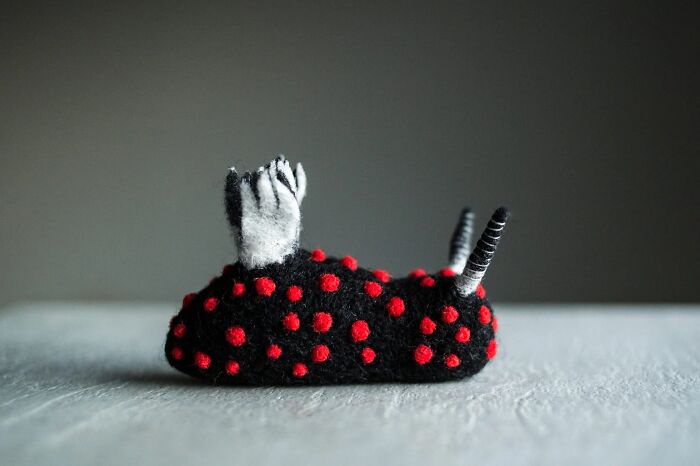
Image source: Wool Creature Lab
#9 “Flabellina Iodinea”
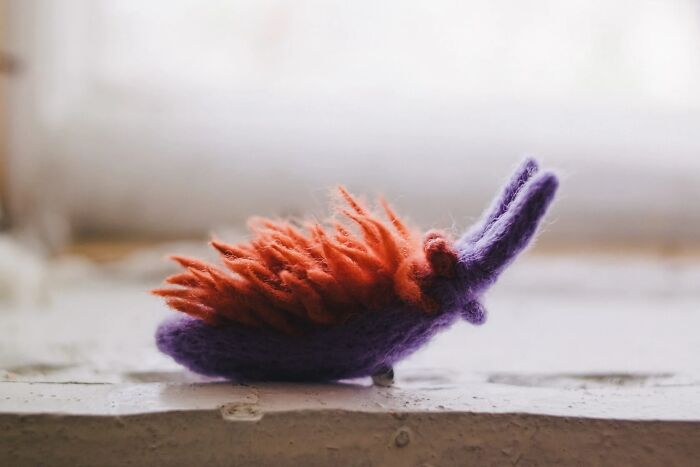
Image source: Wool Creature Lab
#10 “Plakobranchus Noctisstellatus”
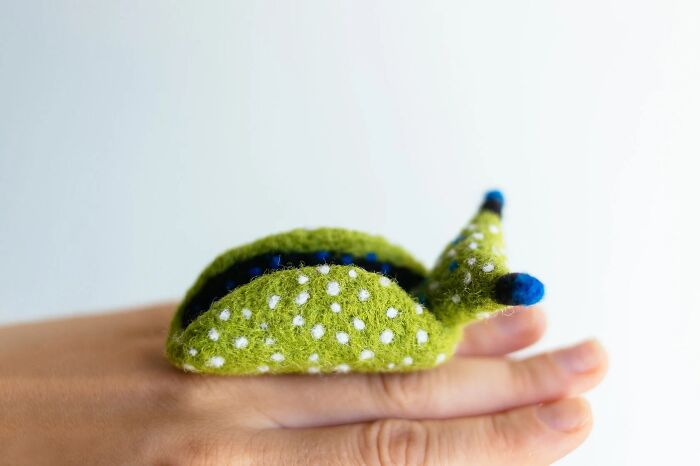
Image source: Wool Creature Lab
#11 “Felimare Kempfi”
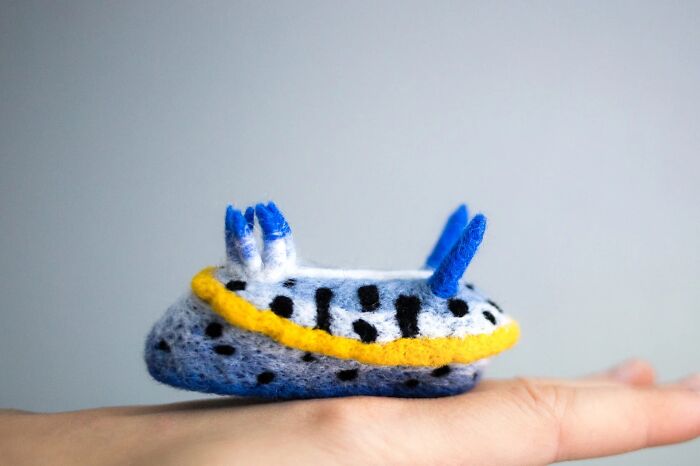
Image source: Wool Creature Lab
#12 “Felimida Luteorosea”
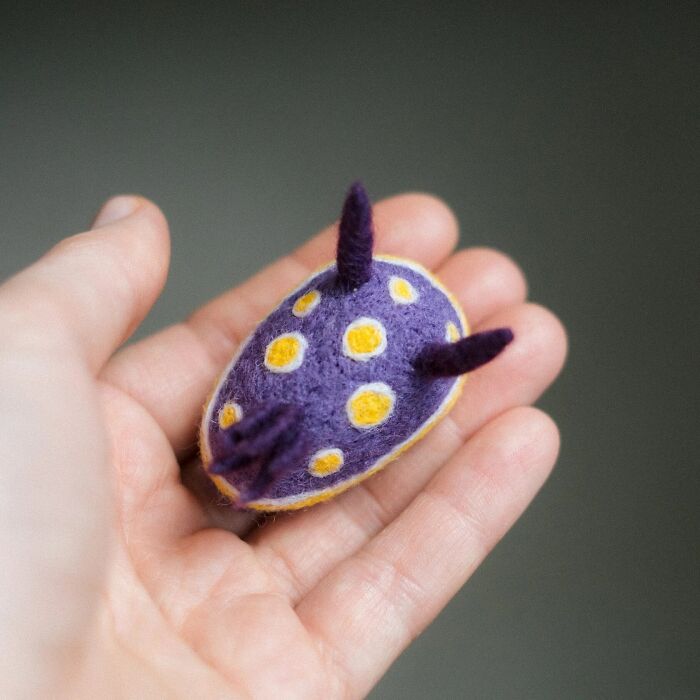
Image source: Wool Creature Lab
#13 “Costasiella Kuroshimae”
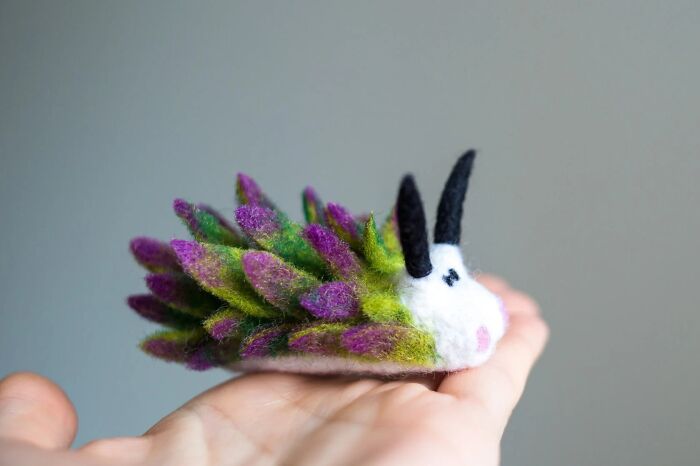
Image source: Wool Creature Lab
#14 “Hermissenda Crassicornis”
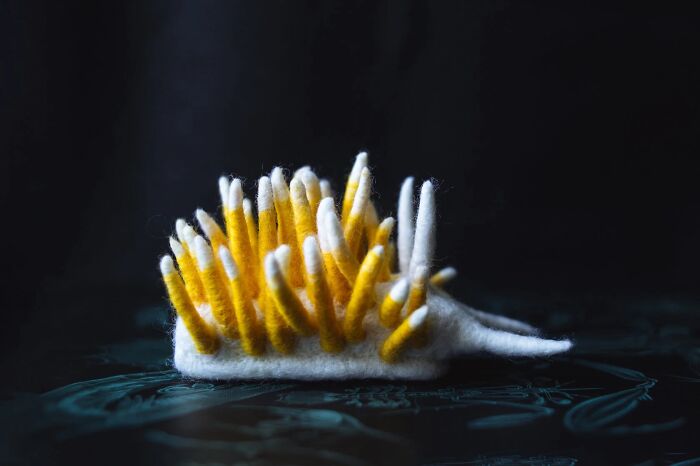
Image source: Wool Creature Lab
#15 “Siphopteron Michaeli”
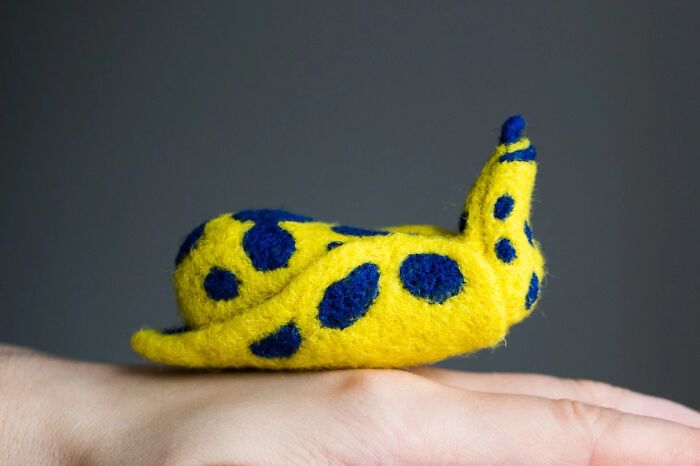
Image source: Wool Creature Lab
#16 “Cerberilla Potiguara”
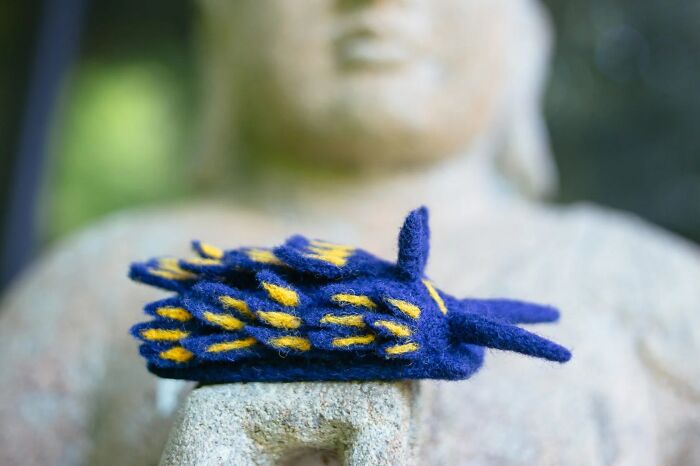
Image source: Wool Creature Lab
#17 “Coryphellina Rubrolineata”
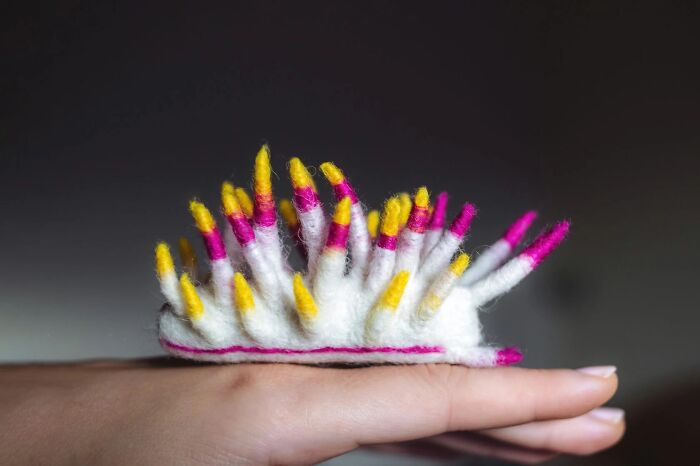
Image source: Wool Creature Lab
#18 “Elypsia Crispata (Blue)”
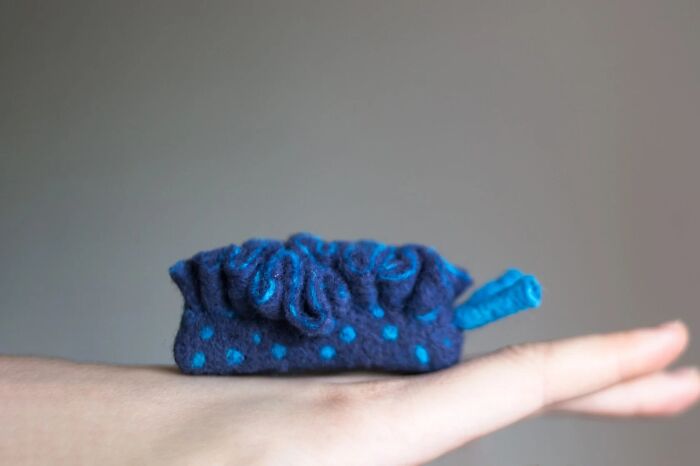
Image source: Wool Creature Lab
#19 “Doto Greenamyeri”
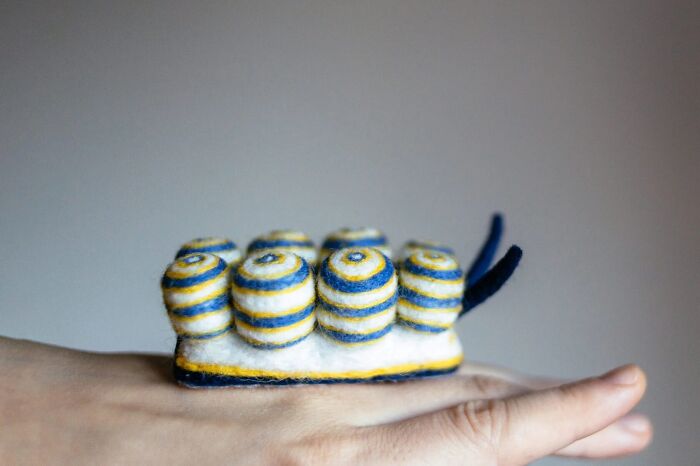
Image source: Wool Creature Lab
#20 “Elysia Chlorotica”
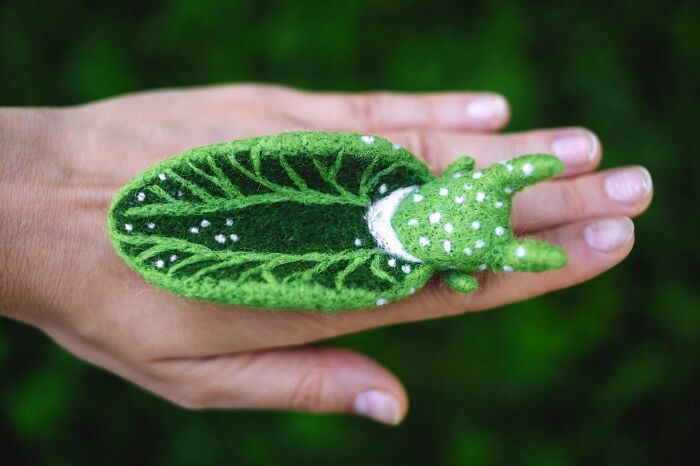
Image source: Wool Creature Lab
#21 “Halgerda Batangas”
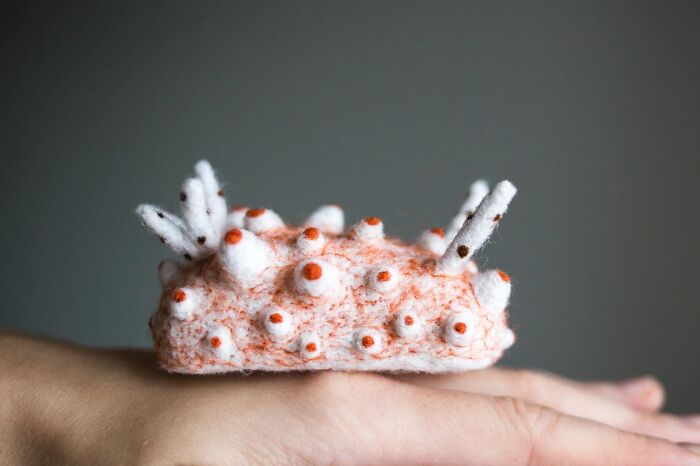
Image source: Wool Creature Lab
#22 “Jorunna Funebris”
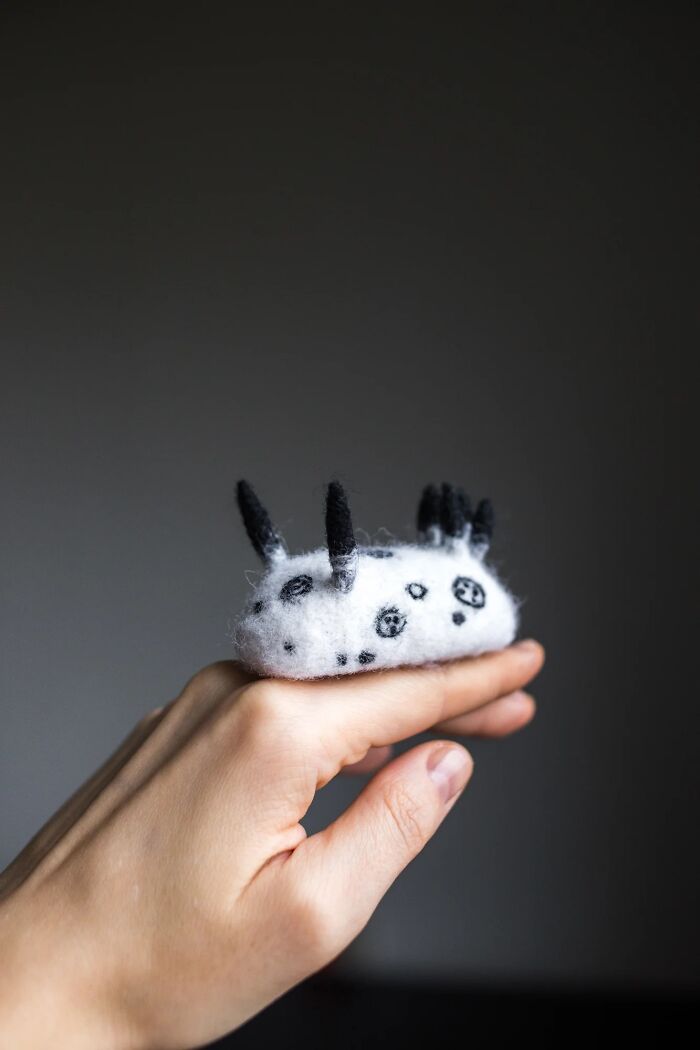
Image source: Wool Creature Lab
#23 “Hypselodoris Tryoni”
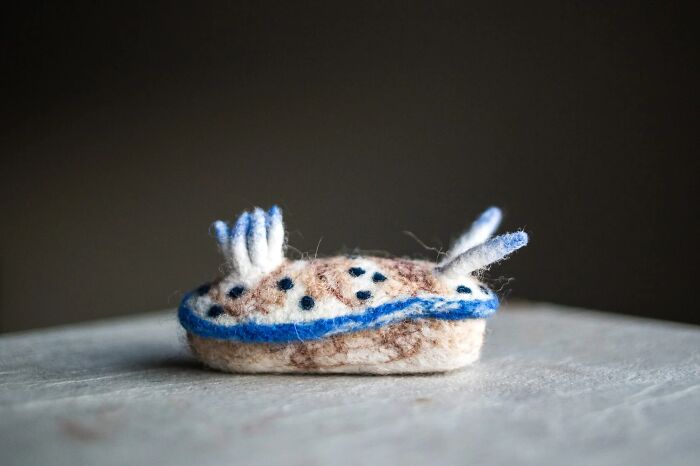
Image source: Wool Creature Lab
#24 “Chelidonura Hirundinina”
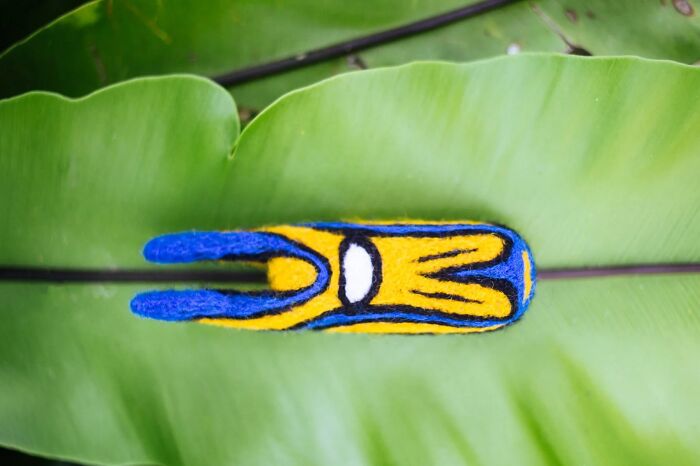
Image source: Wool Creature Lab
#25 “Tenellia Sobigae”
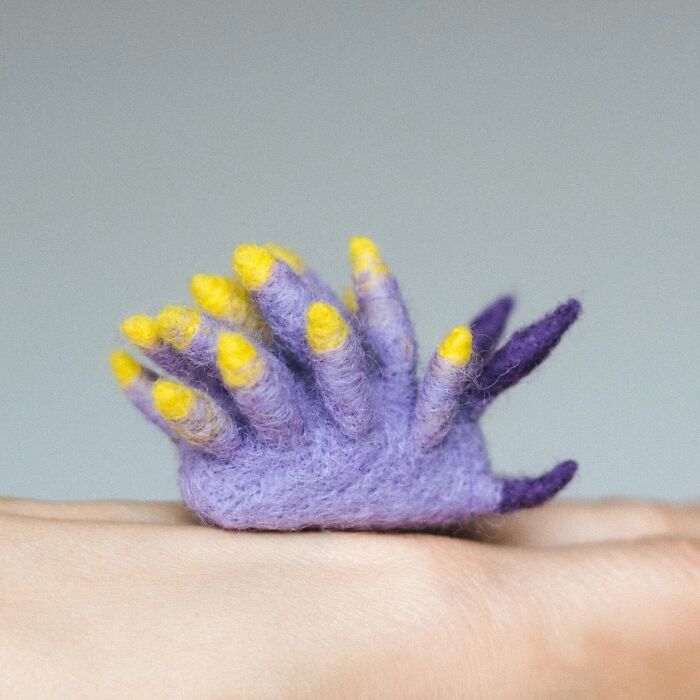
Image source: Wool Creature Lab
#26 “Phyllidia Varicosa”
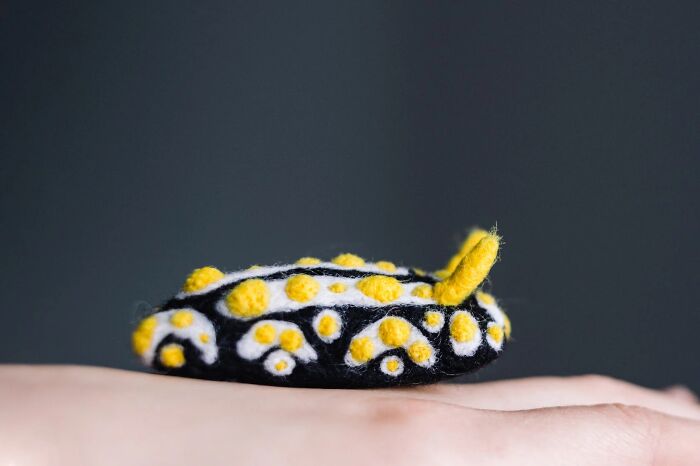
Image source: Wool Creature Lab
#27 “Hallaxa Hileenae”
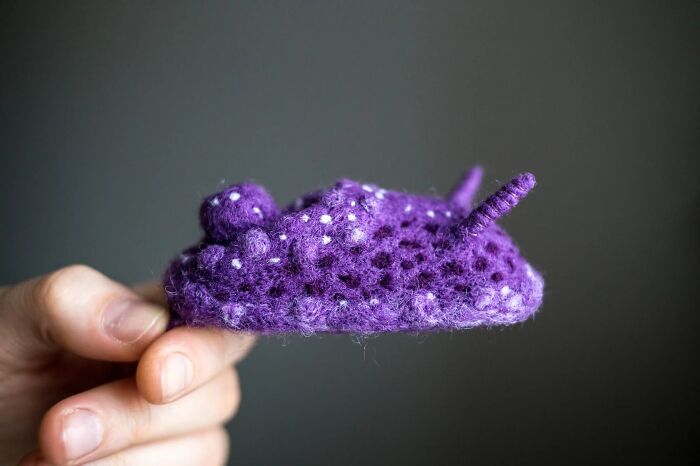
Image source: Wool Creature Lab
#28 “Hypselodoris Imperialis”
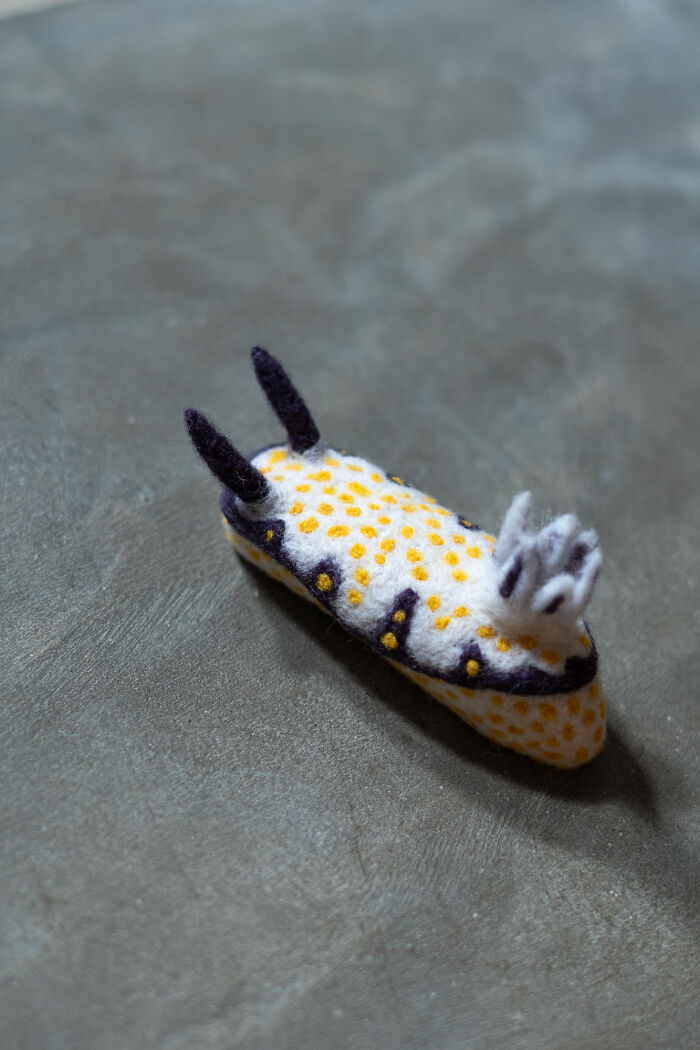
Image source: Wool Creature Lab
#29 “Felimare Picta”
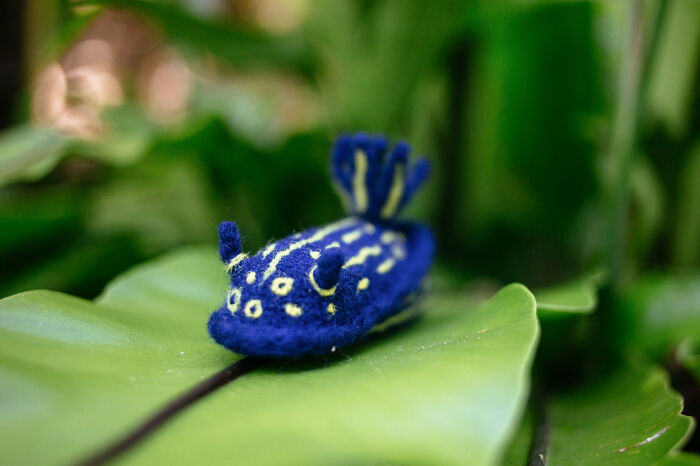
Image source: Wool Creature Lab
#30 “Acanthodoris Lutea”
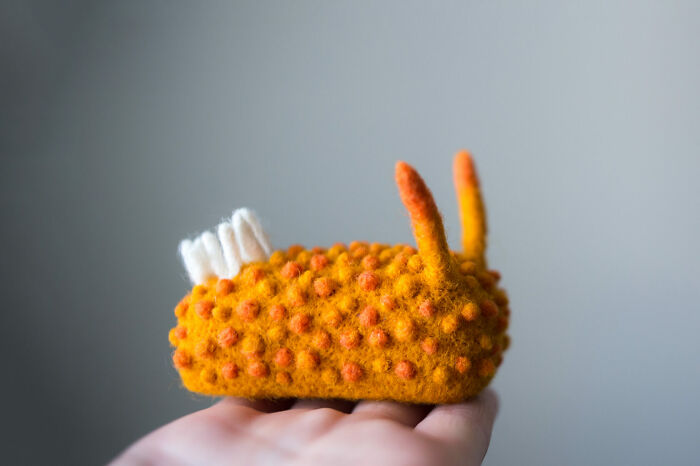
Image source: Wool Creature Lab
#31 “Chromodoris Lochi”
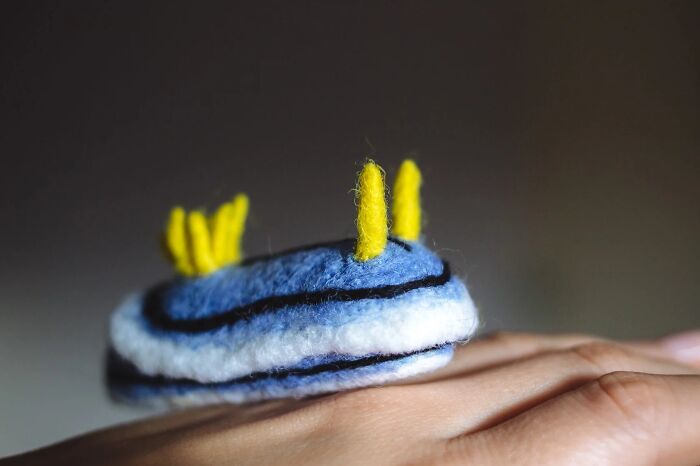
Image source: Wool Creature Lab
#32 “Cadlinella Ornatissima”
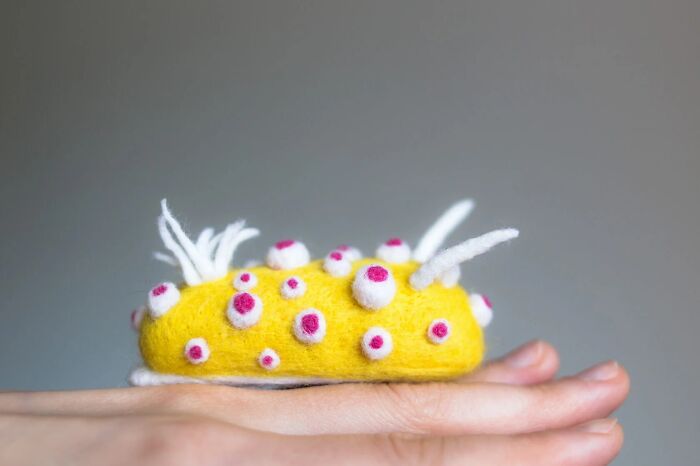
Image source: Wool Creature Lab
#33 “Elysia Clarki”
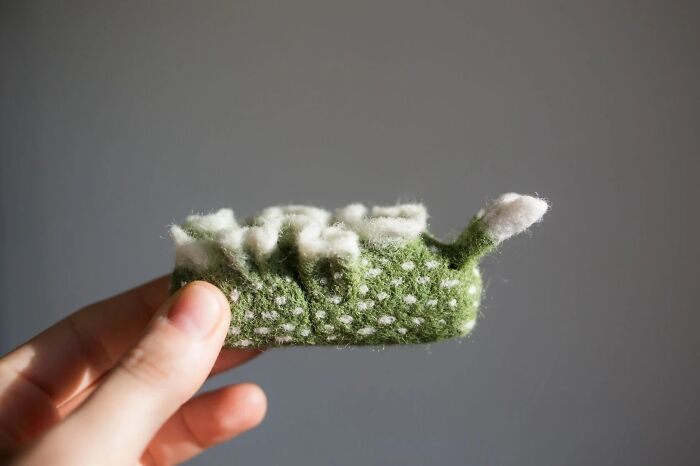
Image source: Wool Creature Lab
#34 “Nembrotha Cristata”
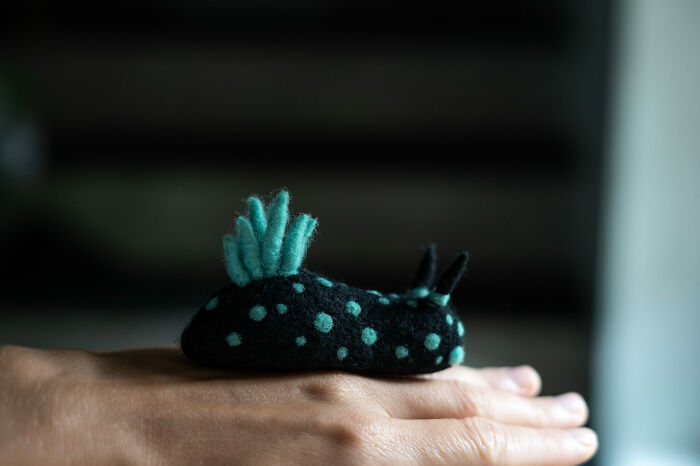
Image source: Wool Creature Lab