Daily Mail journalists select and curate the products that feature on our site. If you make a purchase via links on this page we will earn commission – learn more
From food storage and utensils, to frying pans and air fryers, the products we use in our kitchens come into close and repeated contact with what we eat.
As awareness grows around chemicals used in manufacturing and food preparation, many of us are looking more closely at so-called non-toxic kitchen products and what that label really means.
I am conscious about how my damaged cookware might be causing me to ingest things I don’t want – plastic particles, bits of non-stick coating and the like.
When used correctly, most cooking products sold today are considered non-toxic. However, many safe products can become less safe if damaged or scratched.

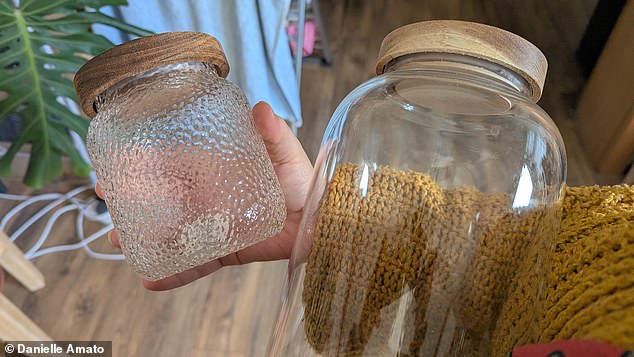
I’m in the process of switching many of my storage jars to glass.
What’s more, with so many alternatives to traditional non-stick and coated products now available, it’s easier than ever to reduce the amount of chemical-laden products in your kitchen
This guide aims to provide practical, tried and tested alternatives to classic non-stick and plastic items most commonly found in kitchens, allowing you to make an informed decision before investing in new cookware or accessories.
What we mean by non-toxic products
In everyday use, non-toxic kitchen products are generally understood to be items made from materials that do not release harmful substances into food during normal cooking, preparation or storage. This is particularly relevant when products are exposed to heat, acidic ingredients or prolonged contact with moisture.
There is no single legal definition of ‘non-toxic’ that applies across all kitchen products. Instead, the term is usually used to indicate that a product is free from substances that are known or suspected to pose risks to human health.

How ‘non-toxic’ are your cooking products? I’m on a mission to reduce the chemicals in mu kitchen for good.
These can include heavy metals such as lead and cadmium, certain plastic additives like bisphenol A (BPA) and phthalates, as well as some synthetic coatings used to create non-stick surfaces.
Because non-toxic is not a strictly regulated claim, our roundup instead focuses on what a product is made from, how it is intended to be used and whether it meets relevant UK food safety standards.
Best non-toxic kitchen products: Quick list
How we test
When testing non-toxic kitchen products we focus on the materials, safety standards and everyday usability.
We prioritise kitchen products made from materials that are less likely to leach into your food if damaged such as stainless steel, glass, cast iron, ceramic and food-grade silicone. This list also avoids chemical non-stick coatings unless they are clearly labelled as free from PFAS, PFOA, lead and cadmium.

I prioritise kitchen products made from materials that are less likely to leach into food if damaged such as stainless steel, glass and cast iron
Every product on this list has been tested by our reviewers and used in a kitchen for at least a week. We use them to cook and store our food as you would in a standard kitchen.
We’ve focused on products that are widely available from major UK retailers or well-established brands. We also consider practicality, including durability and ease of cleaning, to ensure our picks are suitable for everyday kitchens.
The best non-toxic cookware and kitchen products
1. Best non-toxic air fryer: Ninja Crispi
This is a great alternative to traditional air fryers that use a classic non-stick cooking basket. While the Crispi does come with a non-stick crisping tray, this can be removed and used without it.
Aside from being made from food-safe glass, the Crispi is a competent cooking appliance that’s easy to use for both younger and older people. In my tests, I cooked a variety of foods with the Crispi from homemade chips to mini casseroles, all of which turned out really well.
It can go in the dishwasher but it’s also very easy to clean by hand, which I’d recommend. Read my full Ninja Crispi review for more details.

Ninja Crispi
A classic, simple cast iron pan is one of the best non-toxic tools you can have in your kitchen arsenal. This one from John Lewis comes in three sizes, works on all hob types and is oven safe up to 200 degrees.
It’s made from 100% solid iron, nothing added and will need to be properly seasoned with oil to keep it in tip-top condition. While a lot of cast iron is the same, I particularly like this model because it’s affordable and has some good quality of life touches such as the double lip and sturdy handle.
Read more about all our favourite pans in our best frying pan roundup.

John Lewis cast iron frying pan
This is a fantastic uncoated, fully stainless steel pan. Its solid five ply design is made from stainless steel and aluminium, ensuring it works perfectly on induction hobs.
I mostly used this for high heat cooking but if you need to cook lower and slower, it works for that too. As this pan is uncoated, you might find things stick more but by preheating correctly, you can avoid the worst of this.
The 28cm version is ideal for two people and while it i on the expensive side, it’s a non-toxic option that will last you a lifetime – and the long guarantee proves this.

Kuhn Rikon Culinary Five Ply
Any home cook worth their salt should have at least one Pyrex baking dish in their cupboard. They’re oven-safe, easy to use, easy to clean, versatile and most importantly, made entirely from glass.
This means no risk of any nasties breaking loose and ending up in your food and you can also use them to store leftovers (if they’ll fit in your fridge). My favourite dishes are these XL lasagna-style ones. I use them for pasta bakes and casseroles. Pyrex also do a smaller set of dishes though, which are useful for solo meals and storage.

Pyrex Essentials baking dishes
Glass food storage isn’t particularly hard to come by but most tend to have fully plastic lids. Enter the Pyrex Zero Plastic range. While Zero plastic is a bit misleading – the seal is silicone plastic – these are 90% plastic free with a glass lid and base. The seal is technically optional too and can be removed entirely if prefered but this means they won’t shut fully.
These are, as you might expect, more expensive than standard glass containers but if you really are trying to cut the plastic down in your home to a minimum (like me) then these are a great replacement when your old ones eventually give up the ghost.

Pyrex Zero Plastic containers
Marks and Spencer do a beautiful range on non-toxic wood utensils including this affordable wooden spatula. I really love the colouring on these and if treated well, they will keep their colour and stay free from chips and burns for years.
I have other brands of wooden spoon in my home, they’re not particularly different to find but the ones from M&S look the part as well as getting the job done.

Marks and Spencer Wooden Spatula
FAQs
Can a product ever be fully non-toxic?
In strict terms, it’s difficult to say that any kitchen product is completely non-toxic in all circumstances. Most materials can interact with food or the environment to some degree, particularly under extreme conditions such as very high heat or prolonged wear.
That said, many kitchen products are considered low risk when made from stable, well-researched materials and used as intended. The concept of non-toxic in this context is best understood as relative, rather than an absolute fact.
Some materials are far less likely than others to introduce unwanted substances into food, making them a more practical choice for everyday cooking and storage.
What are the best non-toxic materials for kitchens?
Certain materials are regarded as ‘safer’ options for kitchen use because of their stability under heat/damage and longevity.
Stainless steel
High quality food-grade stainless steel is commonly used for saucepans, stockpots, and utensils. It does not require a chemical coating and is generally non-reactive, making it suitable for most cooking tasks.
Cast iron and carbon steel
These traditional materials are well known for durability and heat retention. When properly seasoned, they form a natural cooking surface without the need for synthetic non-stick coatings. Enamelled cast iron adds a smooth, glass-like layer that can be suitable for a wide range of dishes when manufactured to food safety standards.
Glass
It is non-reactive and does not leach chemicals, which makes it a popular choice for food storage containers and oven-safe dishes. Borosilicate glass is particularly good for heat-sensitive cooking.

Glass does not leach chemicals into your food, making it a great alternative to plastic
Ceramic
Solid ceramic cookware and high quality ceramic-coated products can be suitable non-toxic options when the glaze or coating is free from heavy metals and other harmful additives. Just be sure to go with a reputable brand with good manufacturing standards, such as GreenPan.
Wood
Untreated wood or wood finished with food-safe oils is commonly used for utensils and boards.
Materials that you might want to approach with more caution include low quality plastics (particularly when heated) and non-stick coatings that rely on synthetic chemicals.
What is Teflon?
Teflon is a brand name commonly used to describe non-stick coatings made from a chemical called polytetrafluoroethylene, often referred to as PTFE. This type of coating is designed to create a smooth surface that reduces sticking and makes cookware easier to clean.
PTFE-based coatings are most often found on non-stick frying pans, baking trays, and some kitchen appliances. In the past, a different chemical called PFOA was used during the manufacturing process of some non-stick coatings. PFOA has since been restricted in the UK and Eu due to concerns about its persistence in the environment and potential health effects.
New non-stick cookware sold in the UK is typically labelled as PFOA-free. However, it may still contain PTFE or related substances that fall under a broader group of chemicals known as PFAS. These chemicals are known for their durability and heat resistance, but they are also the subject of ongoing regulatory reviews.
When used according to manufacturer instructions, PTFE-coated cookware is generally considered safe for domestic cooking. Problems are more likely if pans are overheated well beyond normal cooking temperatures, which can cause the coating to degrade and eventually, flake off into food.