Up next

Access Restricted

Getty Images
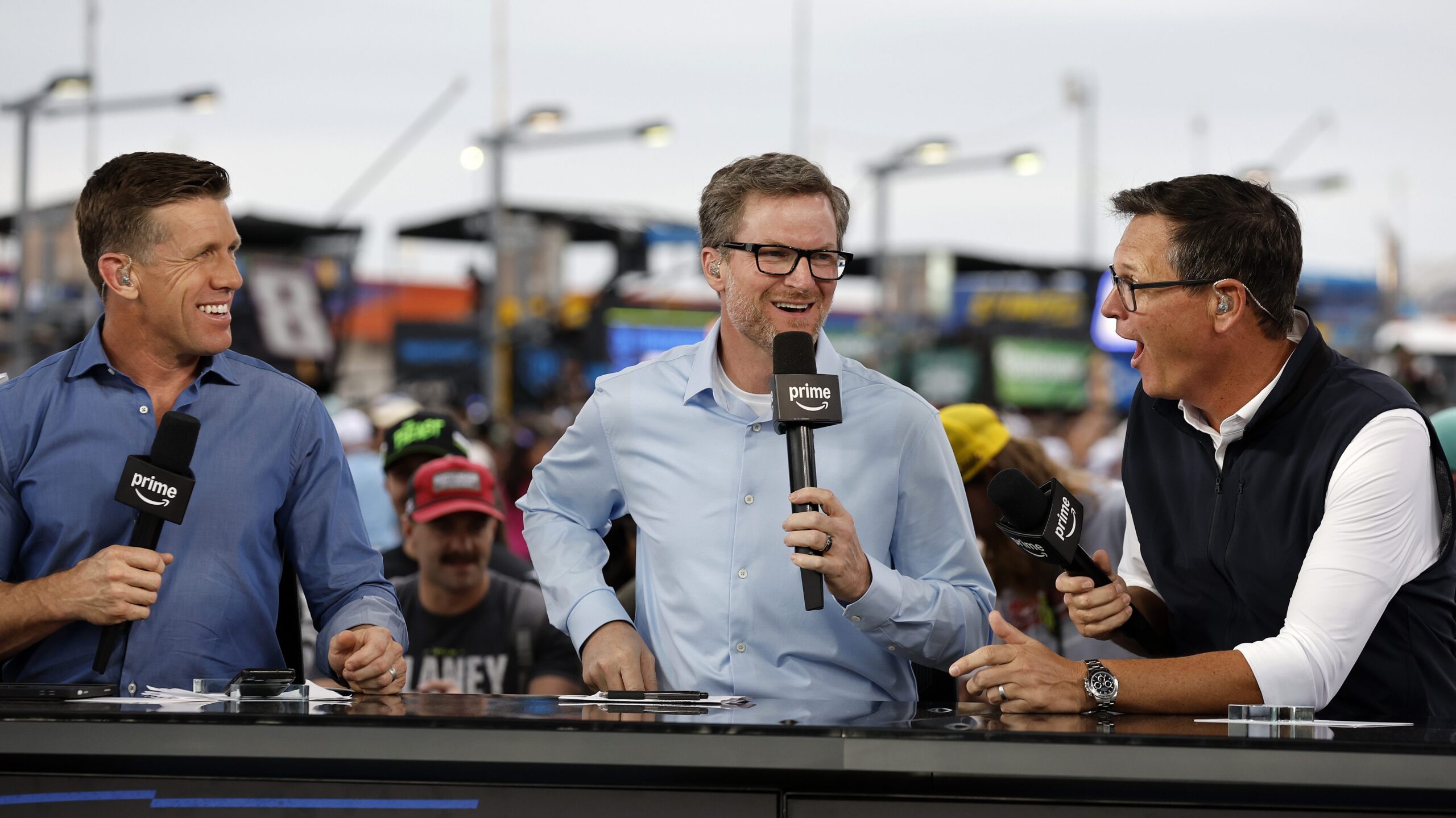
Dale Earnhardt, Jr. doing some race analyst for Prime Video.
Dale Earnhardt Jr. says he was shocked to learn NASCAR executives viewed the Superstar Racing Experience as a threat. The comments came during a recent episode of the Dale Jr. Download podcast, following details revealed during the now-settled antitrust lawsuit involving NASCAR and teams including 23XI Racing.
Court testimony and internal text messages showed concern from NASCAR leadership about SRX drawing drivers, sponsors, and tracks. Earnhardt Jr., a NASCAR Hall of Famer and longtime industry voice, said the reaction made little sense given SRX’s size, scope, and financial limits.
He explained how the series was designed, why it struggled to survive, and why he never believed it posed any real risk to NASCAR’s business or future.
Dale Earnhardt Jr. explains his view of SRX
Dale Jr. explained that SRX co-founder Ray Evernham originally wanted to bring back something similar to the old IROC series.
“When he started talking about SRX and what he wanted to do, in his mind, he wanted to re-create IROC, Earnhardt said.” “The initial idea of SRX as a series that would go into these local markets, and you would bring out these retired guys and some unique personalities, different forms of racing, and offer up a car to the local hero.”
Earnhardt said he respected the idea but had little personal interest. “I will say, though, I wasn’t interested in it, personally. Out of the gate, I just didn’t have the bandwidth to get into it. I wasn’t a fan; I didn’t really watch too much of it, he said.”
He stressed that his lack of interest was not meant as criticism. “No offense to anybody out there that was SRX fans or anybody that worked in the series… but I wasn’t into it.”
Why NASCAR’s reaction surprised him
Earnhardt said the lawsuit revelations showed NASCAR leaders were worried about SRX pulling Cup drivers, sponsors, and even tracks. That concern surprised him.
“To hear that they were even remotely the least bit threatened is so surprising to me because they’re this giant that’s NASCAR, and SRX is just this little thing, Earnhardt said.” “They were like 12 cars just barely getting by financially.”
He pointed to SRX’s operating costs and TV struggles as proof the series was not sustainable. “They’re tearing up so much shit, they had no idea they were gonna tear up so much shit,he said.” “In the end, they couldn’t make the money work.”
Earnhardt added that ratings curiosity did not equal long-term danger. “SRX went away because it’s expensive to operate and the viewership numbers didn’t justify the TV contract,he said.”
Dale Earnhardt Jr. said he was surprised by internal NASCAR comments suggesting the sport needed to act against SRX, questioning why executives felt threatened by the small series. “I am surprised by the some of the comments I read from O’Donnell and a couple people of, ‘Man, we gotta put an end to this or we gotta go take a look at this,’ Earnhardt said.” “Why are we worried?”
North Wilkesboro and missed chances
Earnhardt also addressed NASCAR’s move to secure North Wilkesboro Speedway, which SRX had explored using. He said the track’s revival did not come from NASCAR leadership.
“I’ll tell you what I do know, is that North Wilkesboro came back because of Marcus Smith, Earnhardt said.” “NASCAR, you know, they didn’t play any role.”
He credited state funding, local government, and longtime volunteers. “The government, our local government, and the town, a lot of volunteers, he said.” “20 years of volunteers, people just like even keeping the grass mowed for 20 years.”
Earnhardt said NASCAR could have studied SRX instead of reacting defensively. “I would’ve looked at what they were doing… why do people like it, and can we work together? he said.”
He noted that drivers like Chase Elliott, Ryan Blaney, and Denny Hamlin raced mainly for fun. “Chase goes over there to race with his dad, Earnhardt said.” “They were getting paid to go out there and do it for a little bit of money.”
The comments offered rare insight into how NASCAR viewed even small outside ventures during a period of legal and business pressure.
Dogli Wilberforce is a sports writer who covers NASCAR, Formula 1 and IndyCar Series for Heavy Sports. With bylines at Total Apex Sports and Last Word on Sports, Wilberforce has built a reputation for delivering timely, engaging coverage that blends sharp analysis with accessible storytelling. Wilberforce has covered everything from major football transfers to fight-night drama, bringing readers the insight and context behind the headlines. More about Dogli Wilberforce
More Heavy on NASCAR
Loading more stories