

Getty
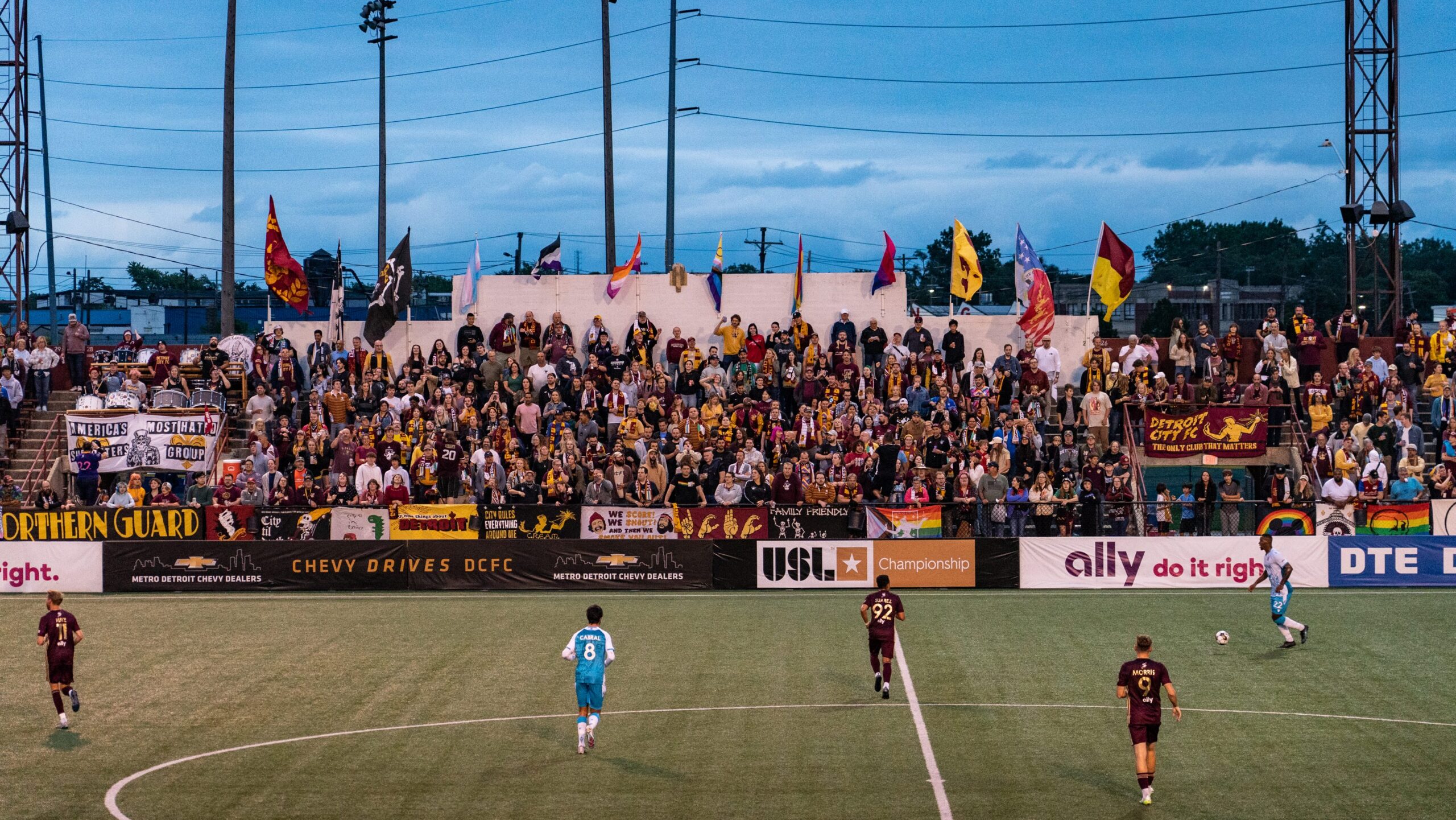
Pride flags are on display around the Keyworth Stadium during Detroit City FC, the area local soccer team, league game in Hamtramck, Michigan, Saturday, September 9, 2023.
A major chapter in Detroit’s sports and community redevelopment story officially began this week as demolition crews started tearing down the long-abandoned Southwest Detroit Hospital to make way for a new 15,000-seat soccer stadium and mixed-use development in the Corktown area. The site, once a derelict fixture in the neighborhood, will soon be transformed into AlumniFi Field, the future home of Detroit City Football Club and a year-round destination for sports fans and residents alike.
The demolition kickoff represents a significant milestone in a project years in the making. The development will include not only the soccer stadium but also supportive infrastructure like a 421-space parking garage and a 76-unit residential building with affordable housing.
The Hospital Site’s Next Chapter
For nearly two decades, the Southwest Detroit Hospital stood vacant at the corner of Michigan Avenue and 20th Street, looming over the neighborhood as an eyesore and symbol of economic decline. Originally shuttered in the early 1990s and gutted years ago, the structure had been a permanent fixture of disrepair, until now.
City officials, developers, and DCFC representatives gathered to mark the start of demolition, which is expected to continue into early 2026 before full construction of the $200 million stadium and mixed-use elements begins. The former hospital’s removal clears the way for AlumniFi Field, which is slated to open in time for Detroit City FC’s 2027 season.
“As DCFC’s financial partner and naming rights sponsor, we’re honored to be part of the progress taking shape at AlumniFi Field,” April Clobes, President and CEO of AlumniFi, said. “This project reflects the strength of our partnership with DCFC and our shared commitment to Detroit’s long-term growth. We’re proud to support a vibrant, world-class destination that fosters connection and uplifts the surrounding communities.”
Detroit Mayor Mike Duggan spoke at the event, noting the transformation of a long-blighted property into a vibrant new focal point for the community.
“For decades, this vacant hospital has been the first thing people coming across the Ambassador Bridge into Detroit or up I-75 have seen as they enter this area of southwest Detroit,” Mayor Duggan said.
“Now, thanks to the vision of Sean Mann and DCFC and the support of neighbors and City Council, this site soon will be home to a spectacular new sports and entertainment venue with retail and new housing.”
City Backing and Community Commitments
The project received a major boost after the Detroit City Council approved development incentives tied to the redevelopment of the former hospital site. Those incentives include a $74.2 million brownfield tax capture over 30 years, which will help fund demolition of the abandoned building, environmental cleanup, and construction of the parking deck and residential housing.
As part of the approval, Detroit City FC committed $2.27 million in financial contributions and other obligations over the next 12 years through a Community Benefits Agreement. The agreement prioritizes stadium jobs for nearby residents, support for local small businesses, and improvements to the 20th Street viaduct.
DCFC CEO Sean Mann called the City Council’s unanimous vote a “major milestone,” noting that the club views the project as both an opportunity to grow soccer in Detroit and a civic effort to give back to the surrounding community.
“As longtime residents of the city and impact area, the leaders and founders of the Club view this project not only as an opportunity to grow our organization and sport, but as a civic endeavor to give back to the city we love,” Mann said. “The Community Benefits Ordinance process allowed us to connect with our supporters, city residents and community leaders to ensure that we address the needs of the surrounding neighbors.”
Economic Impact and Neighborhood Connectivity
Beyond the stadium itself, developers estimate the project will generate around $25 million in annual economic impact, driven by game-day activity, year-round entertainment options, and increased visits to Corktown’s growing business district.
Local business owners have already expressed optimism about the project’s potential to draw foot traffic and support new enterprise. One business owner near the site noted that the stadium’s construction and eventual operation will likely bring increased visibility and commerce to the neighborhood.
The project is also expected to strengthen physical and cultural ties between Corktown and adjacent areas of Southwest Detroit, creating a more cohesive entertainment and residential corridor just west of Michigan Central Station.
“Tackling one hurdle after another, we’ll have another milestone this spring of a groundbreaking, all working towards an opening of ’27,” Mann said. “We are working tirelessly to move this as aggressively as possible to bring this into fruition.”
Alyssa Polczynski Alyssa Polczynski is a multimedia journalist covering Major League Baseball for Heavy.com. She has experience as an editorial producer for MLB.com and contributed to the Society for American Baseball Research (SABR). More about Alyssa Polczynski
More Sports
Loading more stories