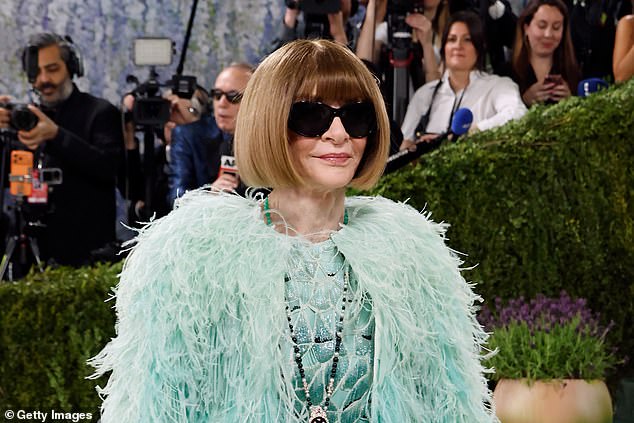
Three former Vogue employees have anonymously revealed what it was like being Anna Wintour’s assistant at the fashion bible, adding that the 76-year-old ‘can sense fear’.
Speaking to Amy Odell, a journalist and biographer, these women also shared how much of The Devil Wears Prada was inspired by the sunglasses-clad magazine editor, who currently serves as the Global Editorial Director of Vogue.
It has long been speculated that Anna inspired Meryl Streep’s fictional fashion editor character, Miranda Priestly, in the 2006 movie, because it was based on a novel written by one of Anna’s former assistants, Lauren Weisberger.
Working for Anna was ‘very much like in The Devil Wears Prada’, one assistant told Amy in an article published on the former Cosmopolitan editor’s Substack, Back Row.
From judging their outfits to the unspoken rule that you ‘could not ask Anna for clarification or help’, the three ex-assistants broke down their ‘highly ritualised’ jobs at Vogue HQ in New York.
The ex-Vogue staffers said being Anna’s assistant meant receiving a ‘constant’ stream of emails ‘day and night’ with requests like ‘Get me on the phone with this person,’ ‘I need to see that person,’ or simply ‘Coffee please’.
In her emails on the weekend, Anna would ask them to remind her to do ‘various tasks the following week’ or send them urgent errands to be completed.
This could be ‘finding hard copies of old newspaper articles or fetching a book left in the Vogue offices that she needed to have in London immediately,’ wrote Amy, adding that some felt these requests were Anna’s way of ‘hazing’ new assistants.
Others clarified her behaviour ‘is not about testing people’ but that ‘her needs dominated their lives’.
The Daily Mail has reached out to Conde Nast for comment.

Three former Vogue employees have anonymously revealed what it was like being Anna Wintour’s assistant at the fashion bible
According to Amy’s book, Anna: The Biography, Vogue’s former editor-in-chief always had two or three assistants, and each one was ‘responsible for their own set of things’.
Just like in the movie, her first assistant – portrayed by Emily Blunt – is responsible for her schedule while the second assistant ‘liaised with the caretakers and chefs at her homes in Manhattan and Long Island, coordinated her film screenings and took care of her dogs’.
When a new second assistant started, she was given a 21-page manual containing specific information on everything from managing Anna’s expenses to details on maintaining her homes.
It was the third assistant’s job to run errands and alternated ‘being on call on weekends’ with the second assistant.
The book was published in 2022 and revealed how Anna’s assistants were expected to reach the office between 7am and 7.30am every morning.
The second assistant was expected to meet Anna with her breakfast order – a whole-milk Starbucks latte and blueberry muffin – before accompanying her upstairs.
‘If her coffee wasn’t there when she arrived, Anna would seem “testy”,’ Amy quoted one assistant in the book.
The second assistant was also expected to carry her monogrammed LL Bean canvas tote bag ‘containing the book, papers she had brought home to look at the night before and her burgundy crocodile planner,’ according to the book.
Anna’s arrival sparked a flurry of activity as Vogue employees rushed to ensure everything was in order for their boss.
‘It was very much like in The Devil Wears Prada when they’re all like, “She’s coming!” I was always scrambling to get ready,’ one assistant, who asked not to be identified, said. ‘You’re literally putting things away, making sure everything looks great.’
Assistants would ‘pull up a blank Word document or email draft to furiously type everything she said once she walked in’, the book described.
Her assistants tried to avoid riding the elevator with Anna so they wouldn’t be caught without a pen and paper if she started ‘issuing to-dos without periods or pause’.
Most assistants Amy spoke to agreed that the ‘hardest’ part of the job was fielding requests from Anna with little to no background information, as depicted in the movie.
They said it was an unspoken rule that you ‘could not ask Anna for clarification or help’ even if instructions were ‘written in her illegible scrawl’.
According to her biography, Anna would sometimes address the second assistant by the first assistant’s name, just like Miranda Priestly’s character would in the movie.
‘Not learning the second assistant’s name seemed to fly in the face of Anna’s high executive functioning – of course, she could make an effort to remember their names – however, the assistants who lasted had to accept this: either as a forgivable eccentricity or as normal behaviour.
‘But some in the office saw it as just one of many demeaning aspects of the job.’
One of the movie’s most memorable scenes is Miranda’s searing criticism of Andrea’s frumpy ‘cerulean blue’ sweater as assistants told Amy that Anna also noticed what her assistants were wearing.

It has long been speculated that Anna inspired Meryl Streep’s fictional fashion editor character, Miranda Priestly, in the 2006 film, The Devil Wears Prada
Heels were a non-negotiable as one former second assistant, Meredith Asplundh, separately recalled being ‘glared at’ during her two-year stint at the fashion magazine.
Meredith, whose annual salary was $25,000 (£18,567), added: ‘It wasn’t a glare like approval. It was sort of, What the hell is that? You could definitely tell when she was like, “Why would you put those pants with that top?”’
Anna’s assistants told the author that they were only allowed to communicate with the Vogue boss ‘primarily through notes’ and even the way ‘Anna was supposed to be addressed was specified’.
‘They had to write: “Note; please advise” and then the question – “please advise that we are able to go to Sullivan today.” They never wrote: “Can we go to Sullivan Street today?” The process was so inefficient that it was eventually done away with.’
Being Anna’s assistant still means being ‘her personal assistant’ or doing everything that isn’t her job at Vogue so that she ‘can spend all her waking seconds on the job that does need doing’, Amy added.
Ahead of the release of The Devil Wears Prada 2, Anna and Meryl graced the cover of Vogue’s May issue in what was widely interpreted as support for the movie after the first instalment in 2006 was shunned by the industry.
The spread – shot by acclaimed photographer Annie Leibovitz – captures the two legends, fittingly dressed in Prada, as they prepared for the sequel, which saw all the original cast members – including Anne Hathaway – reprise their roles.
However, the long-awaited follow-up, which hit cinemas in May, was panned by critics.
Writing in the Daily Mail, Jane Tippett said the ‘searingly silly’ sequel is a ‘complete disgrace to fashion’ while IndieWire critic Kate Erbland added that the ‘basic plot is pretty thin’ and that the original film’s ‘punch and pop is missing this time around’.
Deadline’s Damon Wise was blunt in his assessment, writing that The Devil Wears Prada 2 ‘doesn’t really have a story,’ though he did single out Tucci for praise, noting he’s ‘stealing his scenes with a lot more of what worked so well’ in the original.
Over at The Hollywood Reporter, David Rooney struck a slightly softer tone, saying the sequel is ‘best when it sticks to fluffy, fun nostalgia.’
Meanwhile, TheWrap’s William Bibbiani suggested the bar for sequels should be simple – that they ‘justify its own existence’ – but argued this installment falls short.
‘The Devil Wears Prada 2 doesn’t have a coherent theme, so its vibes have nothing to stick to,’ he wrote.