

With a career spanning three decades, Guy Ritchie has built a reputation for slick British gangster comedy films. He has etched his name in cinema history with his love for fast cuts, witty banter, and stylized violence. Destined to make movies, Ritchie dropped out of school at age 15 and began working in the film industry. Few filmmakers like Guy Ritchie have found commercial success with their directorial debut and avoided the sophomore slump.
However, Guy Ritchie’s third feature film was not only panned but a commercial failure by every standard. Ritchie’s surprising detour into romantic comedy in 2002 has remained a major career misstep for the director. Swept Away (2002), a remake of Lina Wertmüller’s 1974 Italian film, failed to find an audience or win over critics.
What was Swept Away About?
Swept Away centered on two people from opposite social worlds. Amber Leighton (played by Madonna) is a rich, outspoken woman used to privilege and control. Giuseppe Esposito (Adriano Giannini) is a working-class deckhand employed on a luxury yacht. Their mutual dislike is immediate and intense.
When an accident leaves them isolated on a deserted island, society’s rules disappear. Money, status, and comfort no longer matter. Survival depends on skill and cooperation. As their situation grows more desperate, their hostile relationship begins to change in unsettling ways. The film focuses on shifting power, emotional dependence, and the tension between attraction and control.
Swept Away was a Departure from Guy Ritchie’s Wheelhouse
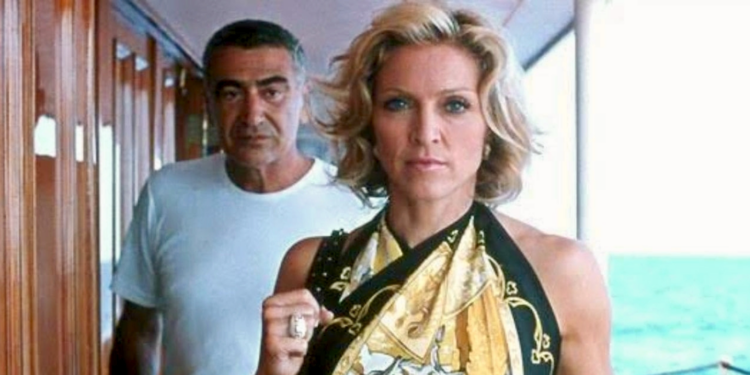
Although it was still early in his career, Guy Ritchie had already laid the foundation for crime/gangster comedy. His Lock, Stock and Two Smoking Barrels (1998) and Snatch (2000) were energetic, fast-paced action comedies. Swept Away simply switched tone. It tried to be romantic and comic, with elements of adventure.
Admittedly, the change surprised many critics and Ritchie’s young, growing fans. His pacing and visual style felt mismatched to the material. Swept Away’s plot and direction left viewers unsure what the movie wanted to be, especially for audiences who had never watched the original film.
How Guy Ritchie’s Remake Differed from the 1974 Original Film
Lina Wertmüller’s 1974 film was critically acclaimed. Wertmüller’s version blended romance with sharp political satire. It used the island setting to critique class inequality, capitalism, and gender roles. While the power struggle between the characters was uncomfortable, it was intentionally included.
Guy Ritchie’s remake removed much of that political edge. Ritchie’s film placed greater emphasis on glossy visuals and surface-level romance. Critics felt the remake softened the original’s social commentary. As a result, the relationship dynamics seemed more confusing than provocative. Many critics and audiences believed the film misunderstood what made the original meaningful.
Why Swept Away was so Poorly Received

One major issue with Guy Ritchie’s Swept Away was its tone. The film could not decide whether it was satire, romance, or drama. This lack of clarity made the central relationship hard to accept. Scenes meant to be intense or ironic often felt awkward instead. Casting also played a role. Madonna, cast as Amber, drew heavy criticism for her performance. Critics felt she lacked emotional range and credibility in the role. Madonna’s real-life marriage to Ritchie at the time also added skepticism.
Many critics accused the film of being a vanity project rather than a thoughtful remake. The movie also struggled commercially. Despite a modest $10 million budget, Ritchie’s Swept Away earned very little at the box office. It only managed to rake in $1 million after its theatrical run. Poor reviews discouraged audiences, and negative buzz spread quickly. The film later received several Golden Raspberry Awards, cementing its reputation as a high-profile failure.
The Golden Raspberry Awards singled out Swept Away in 2003. The film received several Razzie nominations, including Worst Picture, Worst Actress, Worst Remake or Sequel, and Worst Screen Couple, as well as Worst Director. While Razzies are largely satirical, their headlines echo. For a mainstream film, public shaming shapes memory. The awards helped turn a box-office failure into a lasting punchline. As if that wasn’t enough, Ritchie’s Swept Away also received almost similar nominations at the 2002 Stinkers Bad Movie Awards.
Swept Away’s Legacy Remains a Cautionary Tale for Auteurs
Today, Swept Away is a footnote in both Guy Ritchie’s and Madonna’s careers. It serves as a perfect example of genre mismatch. While versatility is always encouraged, directors who shift tone risk alienating core audiences, especially when it’s poorly executed. Since the start of cinema, it has been proven that big names and modest budgets do not guarantee success. Thankfully, lessons were learned, and Ritchie returned to his strengths and rebuilt his box-office credibility. For students of film, Swept Away remains a study in adaptation, casting, and the limits of star power.