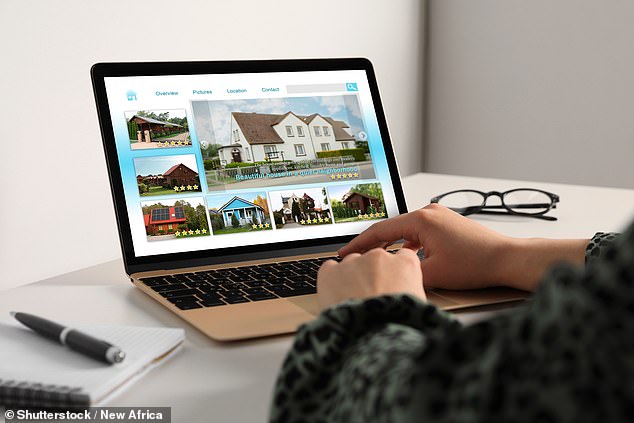

Recent reports of an organised crime gang that looted luxury homes across the UK by studying their floorplans on Rightmove is a stark reminder that the traditional image of a burglar is outdated.
Their secret weapon was not a sophisticated lockpick but rather data that was freely available online, meaning criminals no longer need to spend days monitoring cars or posing as delivery drivers.
‘Instead, homeowners are unwittingly broadcasting their layouts, security vulnerabilities, and exact daily movements from the comfort of their sofas, making them easy targets for sophisticated robbers,’ security expert Nick Jordan told the Daily Mail.
The co-founder of Stratford-upon-Avon-based firm Detectnology, alongside Mia Moles, Nick added: ‘As security professionals, we see how easily people fall into these information traps.
‘True security is no longer about strong locks; it requires managing the digital and physical information you project into the world.’
Former police officer Dave Lewis added that most burglaries are not random.
‘They are often based on opportunity and information people share without even realising it.’
So is your home at risk? We asked experts to reveal the common digital habits that make you an easy target – and how you can protect yourself.

Recent reports of an organised crime gang that looted luxury homes across the UK by studying their floorplans on Rightmove is a stark reminder that the traditional image of a burglar is outdated (stock image)
Old property listings
Sites like Rightmove and Zoopla are great for providing in-depth information about a prospective property, but leaving the listing online post-sale is ill-advised.
To protect your property from being targeted, ask your estate agent to remove old listings, including interior images, posted on property search websites.
Social media posts
Holiday countdowns, airport selfies, or even a casual ‘weekend getaway’ post can signal that your home is empty so Dave advises being mindful of giving away too much online.
‘It’s not just what you post, it’s when you post it. Sharing pictures is a great way of showing everyone what you’re up to, but consider who might see them, and what you may have previously inadvertently disclosed about where you live,’ he said.
Postpone sharing any holiday photos until you return home and, if you can, keep your social accounts private, Dave suggested.
He also warned of a ‘lesser-known danger’ to posting pictures taken at home.
‘Smartphones embed location data (known as metadata) into every photo,’ he said. ‘If you share interior shots or garden pics publicly, that data can pinpoint your exact address.’
Don’t forget to check for any details that make your home easily identifiable.
Wi-fi weaknesses
Security experts from Detectnology, Nick Jordan and Mia Moles, added that while smart technology offers incredible convenience, it can also create an invisible map of your security infrastructure.
‘Many homeowners leave their home Wi-Fi network name on its default setting (such as “BT-Hub-XYZ”) or name their smart devices based on their location,’ they said.
‘High-value burglars frequently scout targeted neighbourhoods using basic Wi-Fi scanning applications on mobile devices.
‘If your router broadcasts its specific model or provider, it becomes significantly easier to target with signal-jamming equipment.
‘Furthermore, if your smart devices are named “Kitchen Ring Camera,” “Side Gate Sensor,” or “Master Bedroom Echo,” you are broadcasting the precise layout of your security hardware and room locations to anyone parked in a vehicle outside,’ they warned.
They advise changing your Wi-Fi network name (SSID) to a generic phrase that gives no indication of your surname, house number, or router brand.
Moreover, when setting up smart home cameras and sensors, use abstract or non-descriptive names within the app so their location and purpose remain hidden if your network is ever scanned.
Think twice before showing off your renovation
Posting ‘our new kitchen is finally done!’ or sharing a bathroom reveal on Facebook or Instagram is incredibly common – but it also means that you are broadcasting the layout of your new home and what’s inside.
‘We all love a before and after, but remember, you’re showing strangers exactly where to find your lovely new coffee machine, your art, and your expensive jewellery,’ Dave said.
Instead of sharing them publicly, save renovation posts for close friends and private groups – but ensure you never tag the location, he suggested.
When renovating, consider installing some high security door and window locks, he added.
‘These are not as exciting as a new kitchen, but vitally important,’ Dave said.
Vehicle and key fobs
For many organised gangs, luxury vehicles are the primary target, and access to the home is simply a means to acquire the keys.
Nick said that leaving keyless entry fobs on a hook near the front door or in a hallway jacket pocket leaves the vehicle highly vulnerable to relay attacks.
Criminals can use inexpensive technology to remotely unlock and start the car silently, he added.
Furthermore, leaving physical paperwork, vehicle logbooks, or service receipts inside the glove box poses a significant secondary risk and is a strict no-no.
‘If your car is left with a valet or at an airport parking facility, an untrustworthy individual has immediate access to your home address alongside the knowledge that you are currently away,’ Nick continued.
Nick and Mia recommend storing all keyless entry fobs in a dedicated, signal-blocking pouch or a lined metal box immediately upon entering the house.
Taking out the bins
While digital security is paramount, traditional physical waste remains a critical vulnerability, Mia cautioned.
‘Many households routinely discard letters, utility bills, and courier packaging directly into external recycling bins without a second thought,’ she explained.
‘An unsecured external bin is an information goldmine.’
For instance, a single intact utility bill or bank statement confirms the names of the residents, their financial profile, and banking providers.
More critically, discarding intact cardboard boxes from high-end electronics, luxury brands, or designer goods tells anyone walking past the property exactly what new assets are sitting inside the house.
She suggests investing in a quality cross-cut shredder and destroying all correspondence, receipts, and delivery labels before disposal.
When discarding boxes for expensive items, break them down completely and turn them inside out.
Predictable routines
Burglars often observe homes to identify patterns, whether that’s the same car leaving at 8am, bins always left out on a Tuesday, curtains unchanged for days.
‘The more predictable your home looks, the easier it is to target,’ according to Dave. ‘If someone knows when you’re out every day, they’ve got a perfect window.’
Consider installing smart plugs or timers on lights and radios to signal activity, he continued, adding: ‘Vary your routine where possible.’
Crucially, try not to leave curtains ‘half closed or half open’ when on holiday as criminals particularly look out for this, Dave told the Daily Mail.
The pitfalls of smart doorbells
Smart doorbells are excellent deterrents, but their automated features can inadvertently confirm an empty house, Nick said.
Organised networks frequently use scouts, often dressed as legitimate delivery couriers, to test whether a property is occupied.
‘If they ring the bell and an automated, robotic voice immediately replies with a preset message like, “We cannot come to the door right now, please leave the parcel in the safe place,” it provides immediate confirmation that the house is empty.
‘Similarly, leaving a high-definition doorbell camera pointing directly at a growing stack of uncollected delivery boxes on the porch signals that no one has crossed the threshold in days,’ he continued.
If you are travelling, do not rely on automated doorbell responses.
Nick said: ‘Always answer the notification manually via your smartphone app and speak naturally, implying that you are simply occupied in another room or busy in the garden.
‘Ensure your camera’s motion sensitivity zones are calibrated precisely to your property boundary to avoid constant false alerts from passing street traffic, which often leads to homeowners turning off notifications altogether out of frustration.
An unlocked shed can be a burglar’s toolkit
Dave said that your shed likely contains everything needed to break into your own home: ladders, crowbars, and tools can all be used to gain entry.
‘You may even hide the front door key in the shed, giving full access to unwanted opportunists,’ he said. ‘A secure shed is as important as a secure front door.’
Some of his best tips for keeping intruders out include installing alarms and anchors for valuable tools, and securing ladders with chains and locks.
‘Be careful using “key boxes” containing your door keys,’ he added. #If they are necessary try to hide them and use approved makes, preferably from Secured by Design approved companies rather than the cheapest available.’
Don’t skip SmartWater
SmartWater forensic marking is one of the most effective deterrents available and makes stolen property traceable back to original owners, according to Dave.
‘Research shows 74 per cent of criminals actively avoid properties displaying SmartWater signage, due to the increased likelihood of being traced and prosecuted,’ the ex-police officer added.
‘It’s been used by the public, police forces, and commercial companies as a deterrent for nearly 30 years.’
Getting visible signage is half the battle won, as criminals are naturally risk-averse, he told this newspaper.
‘SmartWater has a proven 100 per cent conviction rate in contested court cases when used as evidence by Police, so to criminals, it’s not worth the risk,’ Dave said.
He also advises marking valuables with SmartWater forensic marking solution and putting the signage up where it can be clearly seen as the SmartWater logo is widely recognised in the criminal community.
Don’t forget to register items to aid recovery if they are stolen.
![Team GB stars were continuing to get back to normal this week as they reunited with pets and hit the hair salons after returning to British soil - but one Olympian had an extra special homecoming [Hannah Scoot pictured]](https://citigist.com/wp-content/uploads/2024/08/Team-GB-stars-reunite-with-their-pets-and-hit-the-380x200.jpg)