
As a child, I loved flying – the excitement of the take-off, the promise of a great holiday ahead.
We travelled a lot as a family, and getting on a plane was something I did as happily as getting on the bus.
Then one day, when I was 15 and boarding a flight with my mother and two siblings to the Canary Islands, I was struck by an overwhelming feeling that I needed to disembark the plane.
Sat in my seat, I felt a rising terror. Despite my family, the cabin crew and even the pilot trying to calm me down, I insisted I needed to get off.
My mum was utterly distraught, my siblings baffled. I insisted that they stay on the plane and enjoy their Tenerife break, and eventually it was agreed my grandparents would pick me up from the airport.
After that, for two decades flying became an almost torturous affair. Over the years, my fear has taken so much from me.
I’d estimate that I’ve had 20 failed flight attempts, keeping me from holidays and special occasions.
Once, I even left my partner and young daughter on a plane as we were due to go to Spain, when I simply couldn’t go through with the journey.

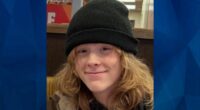
Matthew Barton has had a fear of flying (known as aerophobia) since he was 15, which has stopped him from enjoying many holidays and special occasions
And I can’t tell you how embarrassing it is, with everyone seated and ready to go, for you to be standing at the front as cabin crew confirm with ground staff that you can get off the plane last minute.
I know I’m not alone. Known as aerophobia, it affects up to 25 per cent of us, making it one of the most common fears.
But I’d like to reassure those struggling like I once did that it is possible to beat a fear of flying. It’s something I’ve now done myself – even though it once seemed impossible.
Following that failed teenage flight to Tenerife, I didn’t fly for another four years. After that, whenever I did it was only a combination of adrenalin and grit that got me through.
Rock bottom came in 2014, when I was 26. I had moved to Barcelona for work that summer, and had returned to the UK to see my family for Christmas, white-knuckling my way through both flights.
Yet, Christmas complete, it would take me seven attempts over three tortured weeks to get back to Spain.
My successful seventh attempt was thanks to the prayers of my family, my own Christian faith – and a prescription for emergency anti-anxiety medication.

Matthew’s failed flying attempts became so frequent that he once left his daughter (pictured) and partner behind on the plane before a family trip to Spain
So over the years, I’ve worked on strategies to help me cope.
Now 37, I still can’t claim to love the experience. But I’ve got my fear under control, and have completed numerous successful flights.
So, if you’re still struggling, here are the tips that get me through each time I have to board a plane.
I hope others facing the same debilitating fear can benefit from my experience.
UNDERSTAND YOUR FEAR IS IRRATIONAL
My fear of flying wasn’t always rational. It was just there.
Accepting that there wasn’t logic to it, and therefore I couldn’t control it, gave me a break from pressuring myself and causing further anxiety – which was more likely to stop me flying.
START WITH SMALL EXPOSURE
Science dictates that the most effective way to get over a fear is to be exposed to it. This involves a great deal of bravery, but it’s a necessary step if you are ever going to get close to tackling this debilitating fear.
Book shorter flights to get going, and gradually build up the hours. Usually, once you are in the air the fear is subdued, and there is a high from achieving a successful flight.
Keeping up momentum is key. Often after a successful flight, I wouldn’t go anywhere again for a long time.
A few years ago, I realised I needed to train my mind and fly as often as possible until it became natural to me.
GET HELP AT THE AIRPORT
Throughout my troubles with flying, pretty much all the air staff I spoke to could not have been more accommodating. Many a time, were it not for their kindness and help, I would not have made it.
As you start to tackle your fear, tell the air staff when you get on the plane that you are nervous or fearful. They will usually ask where you are seated and then be extremely attentive to help you. You might be able to seek special assistance before boarding, too.

From experience, Matthew says, asking the staff on your airline for help when boarding can help to calm the nerves of anxious fliers
DISTRACTION CHECKLIST
It’s extremely important to distract the irrational, primitive part of the mind. In my case, I would do this by downloading films or series to watch, music to listen to or books to read.
Sometimes it will feel like the book you are reading or the film you are watching isn’t sinking in at all. But little by little, you are training your mind to overcome this irrational fear – or at least distracting yourself from it.
Try having a checklist for the flight: tick off a book you’ll read, or a snack you’ll eat.
By doing so you are breaking this mountain of a task into manageable small chunks.
VISUALISATION
On the plane, I write down what I am looking forward to doing once I reach my destination, such as eating at a certain restaurant or visiting a particular location.
The writing part is important because if you just visualise in your mind, fight-or-flight thoughts can quickly override it. Writing it down distracts those thoughts while also passing the time.
All the time you are doing this visualisation work, you are consuming those all-important minutes of the journey.
Before you know it, you are mid-flight, relaxed and unrecognisable from your initial fearful state.
DETACH FROM THE OUTCOME
You have to take the pressure off yourself. If you get to your destination, great, and if you don’t, that’s also fine.
The minute you start berating yourself for not making it, you are placing more pressure on yourself than anyone else is doing, and this is extremely counterproductive. This is what used to cause me to escalate from not being able to get on a plane to not being able to leave the house.
PRACTICAL ADJUSTMENTS
At the height of fear, perhaps none of these mental distraction techniques work. So think of small, practical adjustments to make it more bearable.
Fly with someone who can distract and calm you.
Travel as lightly as possible, so you don’t have huge bags to haul around and cause you more stress at check-in.
Get noise-cancelling headphones to block out other people’s stress. Work out which seat – aisle, window, middle – is best for you, and book it in advance, even if it costs a bit more.
This comes from the idea of marginal gains. It was former coach Sir Dave Brailsford’s approach with British Cycling, improving everything by just 1 per cent.
You’d be surprised how these tiny adjustments add up.
SEEK MEDICAL HELP
I took too long to do this.
Too often, I thought: ‘I shouldn’t need medicine; I can do it without it’.
But every time I mustered the strength to see a doctor, I was always met with a helping hand and prescribed anti-anxiety medicine.
It doesn’t solve the issue, but it does take the edge off and might make the difference between making it to your destination and not.