
There was a great deal of rock music released throughout the 1960s, possibly more in the 1970s, and then a tad less in the 1980s (maybe?), but still a sizable amount. And these decades are being singled out because they mostly represent the era of classic rock. If something sounded traditionally rock, or was a little more experimental but released by an artist known for their rock music, then that music can probably be labeled classic rock.
The definition is broad here because it’s challenging to find albums that are good overall, and also overlooked. There are tons of good albums that are well-praised, and probably many bad ones that have been mostly forgotten, but good albums that have either been forgotten or weren’t properly appreciated upon release? They’re a bit harder to find. To be clear: not all of these have been forgotten, by any means. Some just deserve a little more love, or get overshadowed by the other more acclaimed albums put out by their artists. Sometimes, this was because such albums were a little ahead of their time, too.
10
‘Presence’ (1976)
Led Zeppelin
Saying that an album only has two very good songs on it might not make the album sound all that great, but Presence is an album made of only seven tracks. Two out of three ain’t bad, and two out of seven ain’t the worst thing in the world. Also, “Tea for One” is an alright closer, even if it’s the two songs that open each side of the album – “Achilles Last Stand” (especially) and “Nobody’s Fault but Mine” – that stand out the most.
You add up the length of all three of those songs, and you’ve got 26 minutes, which is more than half of this 44-minute album. Of course, the best Led Zeppelin albums are very consistent and have more than a couple of great songs. It’s clear to see, if you’re familiar with the band’s first six albums. Still, as their seventh, Presence isn’t terrible. It’s a step-down, and the quality dropped further for albums #8 and #9 (the last two), yet Presence isn’t a total fall from grace, and it’s still worth a listen if you like this classic kind of hard rock sound.
9
‘Diamond Dogs’ (1974)
David Bowie
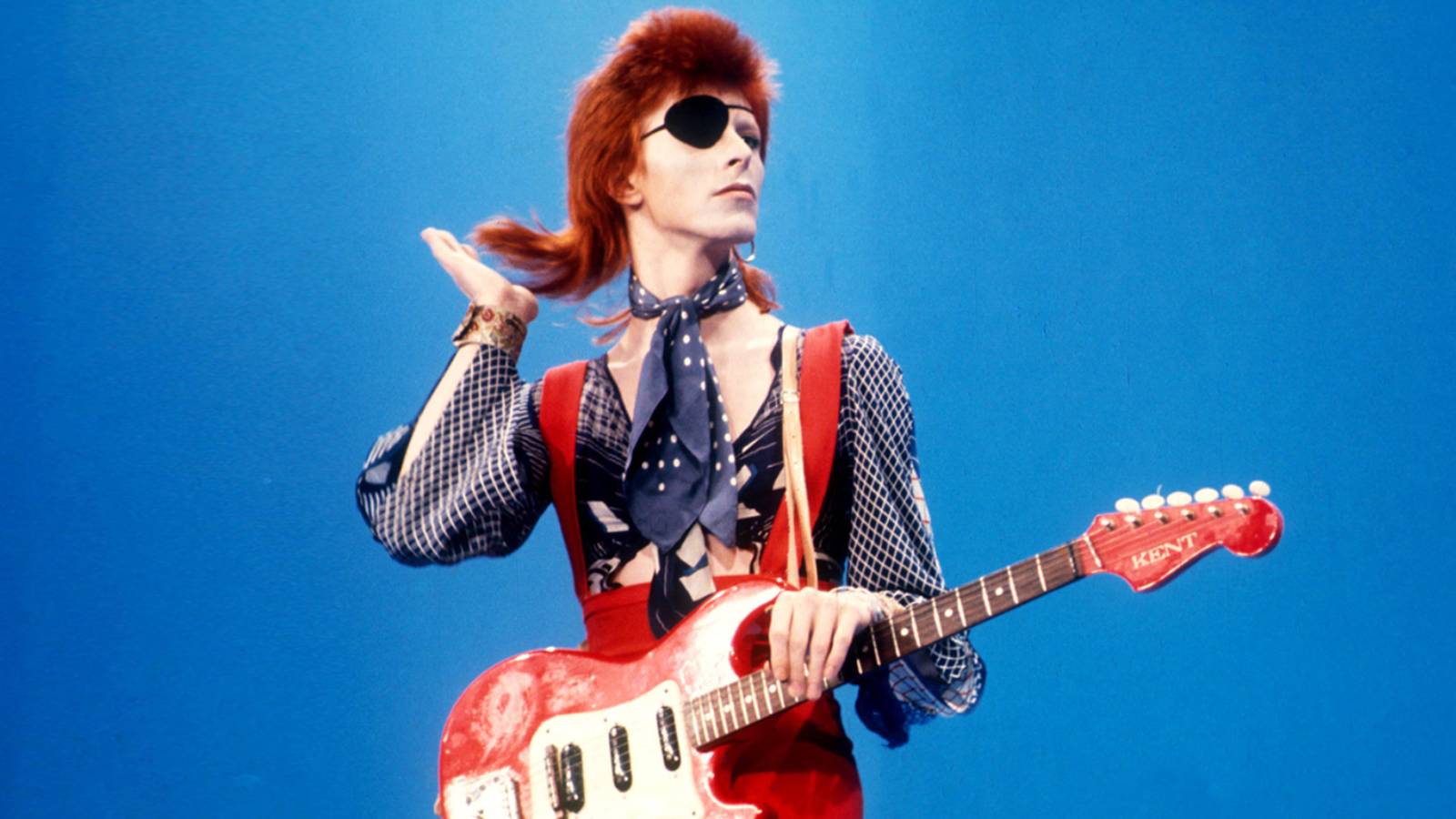
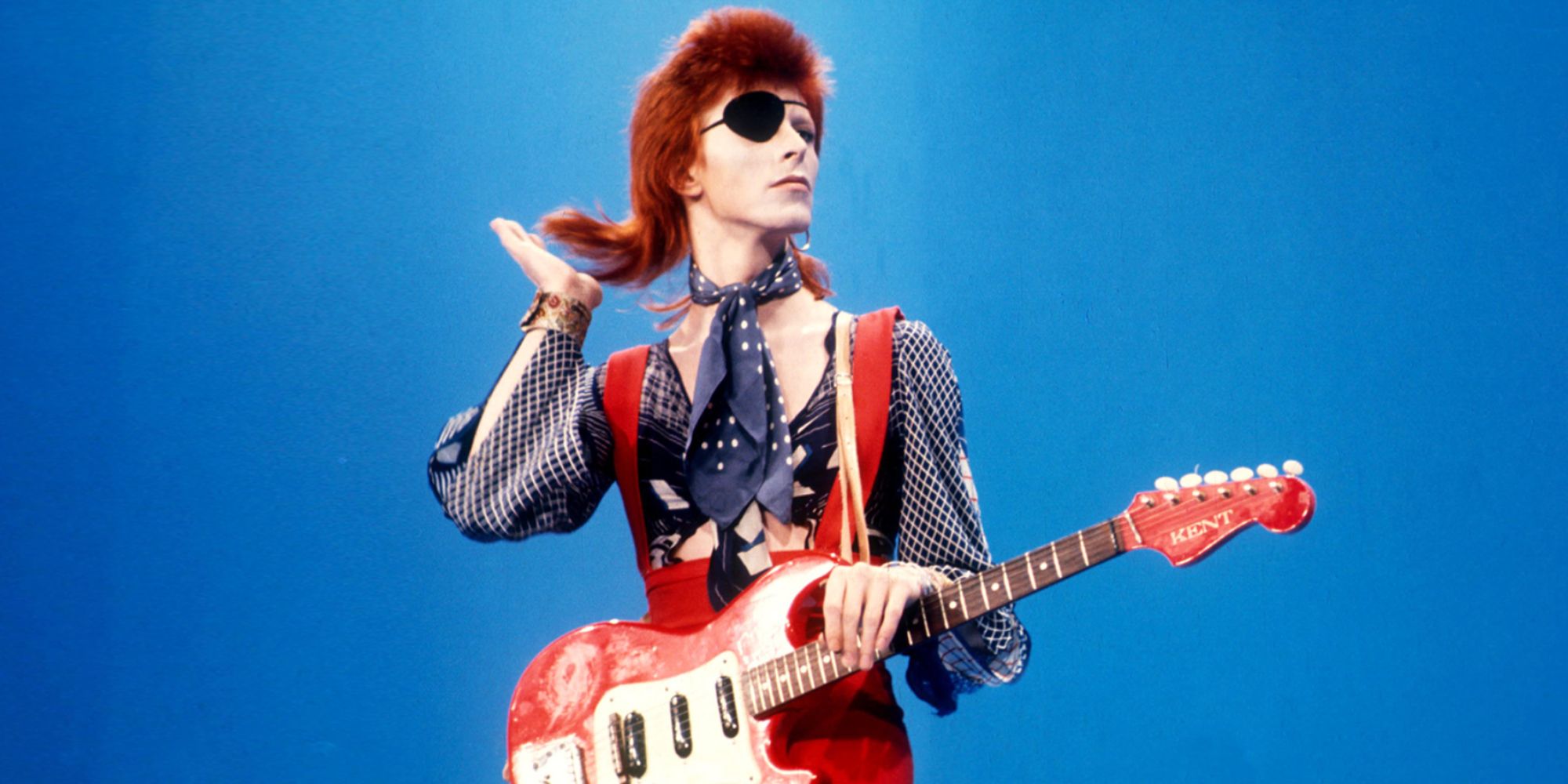
Not only did David Bowie keep shaking up his sound and style every album or two, but if you look at all the albums he released, they vary a fair bit in quality, too. The ones that are amazing are more than enough to demonstrate why he’s considered one of the all-time greats, but he didn’t release great albums 100% of the time. If you look at Diamond Dogs, for instance, it’s… well, it’s still good. It wasn’t a total miss.
If you’re looking for Bowie misses, you won’t find many in the 1970s. Maybe Pinups, but that was a cover album, so harder to compare to his studio albums. Diamond Dogs has him doing his glam rock thing, but with some diminishing returns compared to The Rise and Fall of Ziggy Stardust and the Spiders from Mars and Aladdin Sane. Still, “Rebel Rebel” is one of his very best songs, and there are a bunch of other more than solid tracks sprinkled throughout this album.
8
‘Trans’ (1983)
Neil Young
Venturing outside the 1970s, if you’re a Neil Young fan, is wild. You don’t really know what you’re going to get. Some of the albums he made post-1979 live up to the best of his heyday efforts, while at other points, he made something like Trans. This one is harder to defend than most of the albums here, because it’s hard to define much of it as rock, and also, it’s not difficult to see why some people might find it a challenging listen.
It’s kind of Neil Young doing a Kraftwerk impression, with some rock thrown in for good measure, albeit occasionally. It’s the opinion of this writer that Neil Young somehow makes it work, and that Trans fluctuates between being genuinely catchy at times, and absorbing the way car crashes are to some people at other points. Whether that makes it “good” is another matter, but the gutsiness of the whole album is very much admirable.
7
‘Little Creatures’ (1985)
Talking Heads
Little Creatures is to the discography of Talking Heads what Presence was to the discography of Led Zeppelin. The only difference is that Little Creatures was album #6, compared to Presence being album #7. But the run of albums before, in both cases, was noticeably much stronger. Also, both bands released two albums after the two aforementioned ones, and both those pairs of albums were weaker than Little Creatures and Presence respectively.
One more point of comparison: both albums have two great songs, and then a few decent but not necessarily amazing ones. With Little Creatures, you get “And She Was,” which is a great opener, and then “Road to Nowhere,” which is a perfect closer. Maybe the drop in quality was a sign that the writing was on the wall for Talking Heads, but at least the highlights here help justify the album’s existence while making it an overall solid listen.
6
‘Kiss Me Kiss Me Kiss Me’ (1987)
The Cure
With Kiss Me Kiss Me Kiss Me, The Cure tried to do their White Album, or maybe their London Calling, but didn’t do so quite as well as either The Beatles or The Clash, respectively. It’s a double album with something of a quantity over quality approach, with close to 75 minutes of music all up, and a total of 18 songs that vary a fair amount genre-wise, with poppier songs, moodier ones, unsettling ones, and unapologetically romantic ones.
And one of the ones is “Just Like Heaven,” which is an all-time great The Cure song, and the one track here that sort of makes everything else look bad by comparison. No, that’s not entirely fair. Lots of songs here are still good, and it’s a mostly interesting album to get lost in, not to mention admire because of its size and for demonstrating The Cure trying to stretch their sound considerably all within the one album.
5
‘Meat Is Murder’ (1985)
The Smiths
You can probably talk about influential and important classic rock albums without mentioning The Smiths, since even if you wanted to call them rock, they’re more alternative/indie rock; the kind that ultimately influenced quite a bit of 1990s and then 2000s indie rock, too. But they were active during the classic rock era, and Meat Is Murder is probably their rawest and most passionate album, so it’s sneaking in here.
It’s also the one that it feels many fans of the band would rank last, of the four albums by The Smiths, just because parts of it aren’t exactly easy to listen to, and there is a real intensity here, especially on the title track, which closes the album in a rather (intentionally) horrifying one. It feels like its reputation deserves to be a bit better, though, with Meat Is Murder being an inevitably essential piece of the small but influential discography of The Smiths.
4
‘Their Satanic Majesties Request’ (1967)
The Rolling Stones
A slightly tricky one, since this is probably more psychedelic pop than rock, but you’ve got a bit by way of rock stuff on the rather bizarre Their Satanic Majesties Request, which is an oddity among early albums by The Rolling Stones, to say the least. With this one, it’s easy to assume The Rolling Stones were just trying to scratch the same itch as other bands who made psychedelic and/or quirky pop music, like The Beatles, The Kinks, or The Zombies (though with the last of those, their biggest album did admittedly come out after Their Satanic Majesties Request).
When all else fails, though, at least you do still have “She’s a Rainbow” on here.
But being correct in assuming that doesn’t mean The Rolling Stones failed, necessarily. It’s not as strong an album as some of those other ones that sound like it, but plenty of it’s interesting, including that over 8-minute-long “song” called “Sing This All Together (See What Happens).” When all else fails, though, you do have “She’s a Rainbow” here, and even if you can’t really get on board with the rest of the album, that particular song’s hard to resist.
3
‘Let It Be’ (1970)
The Beatles
Speaking of The Beatles, it’s difficult to call anything they made truly over-hated, since their albums generally ranged from good to great in quality, and they are also easily one of the most famous bands of the 20th century. Maybe the most famous band of their century. And they did it all while existing for only about a decade, to the extent that only one of their albums was released outside the 1960s: Let It Be.
You have to compare it to other Beatles albums, and the way they were received, to make the argument that Let It Be is “unpopular” in any way. From Rubber Soul to Abbey Road, basically every album was perfect, or very close to it. It’s nothing but albums that could be considered among the best of all time. And then Let It Be, though the penultimate album The Beatles recorded, did end up being their final release. It’s not as grand a finish as Abbey Road, and there are some incredibly questionable and annoying short tracks included here (“Dig It” and “Maggie Mae” are two pieces of moldy bread, one on either side of the title track, which, to continue the food metaphor, is some incredible sandwich filling), but most of Let It Be is excellent. It’s a step-down from that aforementioned legendary run quality-wise, but not by too much.
2
‘Tunnel of Love’ (1987)
Bruce Springsteen
With Tunnel of Love, Bruce Springsteen had to try and make a follow-up to his most successful and popular album, Born in the U.S.A., have it resonate, and seemed focused on doing it without the whole thing feeling like the album equivalent of a rushed sequel. It’s true that Tunnel of Love fell short of Born in the U.S.A. by at least a little, though it’s not an album that deserves to be entirely overlooked.
With Born in the U.S.A., Springsteen made something largely energetic, fitting with the mood of about half the songs on The River (a double album), while with Tunnel of Love, he made something that mostly matched the energy of all the other (more downbeat and usually slower) songs from The River. As for his other 1980s album, Nebraska, that’s its own beast entirely. But The River, Born in the U.S.A., and Tunnel of Love make for their own trilogy of sorts, and a pretty great one, Tunnel of Love included.
1
‘Pleased to Meet Me’ (1987)
The Replacements
Since they’re one of the more overlooked rock bands overall, it’s more than worth including The Replacements here. Yes, in the #1 spot. Specifically, it’s Pleased to Meet Me, which saw the band going a little more pop than they had on their previous two albums, but still retaining that rock sound the band’s modestly-sized (to put it generously) fanbase had liked on those two previous albums, Let It Be and Tim.
And Let It Be and Tim are better, but not by a ton, because Pleased to Meet Me is still great, only the pop sound didn’t really attract a bigger audience, and those who might’ve liked how raw something like Let It Be sounded could’ve been put off by the extra polish here. As a good album that might well be the most underrated within an already underrated band’s discography, it feels right to put Pleased to Meet Me at #1.