
Fantasy gets misunderstood whenever people talk about it like it is mainly an escape genre. Escape is the shallow version. The great fantasy films do not help you leave reality. They drag reality into stranger shapes so you can finally look at it properly. Death becomes a chess opponent. A yellow road becomes spiritual weather. You might not even know but London station could have a platform that leads to Hogwarts.
And that is why this category is so dangerous. The best fantasy film of all time could be the one that built the dream best, or the one that hurt most, or the one that gave childhood its most permanent visual language. These ten all, in particular, have a live claim. On the right day, depending on what you need fantasy to do to you, any one of them could take the crown.
10
‘La Belle et la Bête’ (1946)

Image via Alternate Ending
If someone wants the greatest fantasy film to feel like a dream wandered in from another century and never quite left, this is their answer. Jean Cocteau does not build fantasy the way modern films do, with world rules and momentum and explanatory scaffolding. He builds it like enchantment is everywhere. Hands come out of candelabras. Corridors breathe. It lets you see that sometimes, going bizarre with it makes the unreal feel intimate rather than large.
And the thing that keeps the film from becoming decorative is that the erotic charge is not hiding. Belle (Josette Day) is frightened, fascinated, repelled, softened. The Beast (Jean Marais) is terrifying and courtly and unbearably sad. That combination is the whole movie. You are watching a woman decide whether monstrosity is always the opposite of love, and the film is smart enough to make the answer emotionally messy. That gives it a serious claim here. Few fantasy films make enchantment feel this tactile and loneliness feel this mythic.
9
‘The Seventh Seal’ (1957)

This is the entry for people who think fantasy should not soothe you. It should stare back. It takes one of the oldest imaginable fantasy premises, a knight playing chess with Death, and instead of turning it into gothic pageantry or folklore comfort, he makes it a crisis of silence. Antonius Block (Max von Sydow) comes back from the Crusades to a plague-ridden world and finds no stable meaning waiting for him. So the supernatural appears more like terrible clarity. Death (Bengt Ekerot) has a face. He has time for conversation. He is patient. That is enough to make the whole film tremble.
What gives it a real claim in this argument is that it uses fantasy to dramatize metaphysical panic without thinning either side. The strawberries and milk sequence feels better because The Seventh Seal has Death in it. The actors matter more because the void is in the film.
8
‘The Thief of Bagdad’ (1940)

This is the case for fantasy as pure cinematic intoxication. Not irony. Not revision. Not moody seriousness wearing fantasy clothing. Real old-fashioned wonder, giant genies, flying carpets, impossible cities, stolen thrones, dangerous sorcery, movement from dungeon to palace to sky with almost shameless confidence. The Thief of Bagdad still has a generosity in its bloodstream.
But what makes it more than a fascinating museum piece is the speed of invention. It keeps handing you another image before the last one has even cooled. A towering genie. A blinding prophecy. A mechanical horse. A city that feels like it was born from bedtime exaggeration. That kind of generosity matters.
7
‘The Princess Bride’ (1987)

This movie’s claim is that fantasy does not have to choose between intelligence and innocence. It can be both, and not in alternating scenes, but in the same breath. The Princess Bride never curdles into spoof. Westley (Cary Elwes) saying “As you wish” works because the movie knows that repetition can be romantic instead of clever-clever. Inigo (Mandy Patinkin)’s revenge works because the movie honors the pain under the ritual. Even the frame story matters because it tells you exactly what kind of fantasy experience this is supposed to be: one that can pass through wit on its way to belief.
And that layered tone is why it belongs on a list like this. The Cliffs of Insanity sword fight is one of the greatest fantasy scenes because it is funny, elegant, competitive, and emotionally alive all at once. The Fire Swamp is absurd and still dangerous. Miracle Max (Billy Crystal) is comic relief and also part of the film’s larger generosity of spirit. If someone says the best fantasy film is the one that makes adventure, romance, comedy, and myth feel effortlessly compatible, they are standing on solid ground with The Princess Bride.
6
‘The Wizard of Oz’ (1939)

This movie has one of the strongest claims. It follows Dorothy (Judy Garland) who is irritated, confined, and overwhelmed with emotional overflow. Then the tornado hits and the whole grammar of the movie changes. Kansas gets spiritually detonated into color, music, danger, and archetype. That transition is one of the foundational moments in fantasy cinema because it gives you the exact sensation the genre exists to provide: the world tearing open and revealing that reality had hidden chambers all along.
But the film’s greatness is not just in entering Oz. It is in what Oz does with need. The Scarecrow (Ray Bolger), the Tin Man (Jack Haley), and the Cowardly Lion (Bert Lahr) are the oldest human insufficiencies, intelligence, love, courage, carried as jokes and then slowly deepened into feeling. Dorothy keeps giving those qualities to them before any wizard validates them. That is beautiful fantasy thinking. All of it then culminates into this huge emotional blow by making home less about geography than recognition. Very few films have given fantasy such a complete emotional shape so early, and so cleanly. It’s a great watch for kids too.
5
‘Beauty and the Beast’ (1991)

This one has a giant case because it may be the most emotionally legible fairy-tale adaptation ever put on screen. Not the most complex. Not the strangest. The most exact. The opening curse is enough. Vanity, punishment, time running out, a castle frozen in theatrical misery. Then with Belle (Paige O’Hara), the film understands something crucial about fantasy romance: the enchantment only works if the woman at the center has an inner life strong enough to challenge the fantasy rather than just decorate it. This is actually what separates this adaptation from others.
And the Beast (Robby Benson) is why the film rises so high. He is not smooth. Thank God. He is angry, frightened, humiliatingly wounded, and emotionally underdeveloped in ways that make his gradual softening feel earned instead of packaged. And the movie’s real strength is the dinner table awkwardness before the ballroom scene, the library, the snow, the tiny humiliations and recoveries through which affection starts becoming possible. If the best fantasy film is the one that most completely turns a fairy tale into emotional architecture, this one has a monstrous amount going for it.
4
‘Spirited Away’ (2001)

If your number one standard is that a fantasy world must feel inexhaustible without becoming shapeless, this is nearly impossible to beat. Hayao Miyazaki’s bathhouse is one of cinema’s greatest creations, period. It’s bizarre and weird, yes. But it is a complete moral ecosystem. Labor matters there. Names matter there. Appetite matters there. Pollution, greed, memory, service, all of it has a spiritual body. It’s a place for both adults and kids to learn from. Chihiro (Rumi Hiiragi) enters as a frightened child with no fantasy-hero polish whatsoever, and Miyazaki is wise enough not to flatter her immediately. She has to become useful before she becomes brave. That makes the whole world feel more real.
And that is the key to its greatness as fantasy. The strange things are never random. No-Face (Akio Nakamura) means more every time you see him. Haku (Miyu Irino) means more. Yubaba (Mari Natsuki) and Zeniba (Mari Natsuki) mean more. The train ride deepens the film because it is not there to explain anything. It is there to let melancholy itself become part of the world’s weather. If someone argues that the best fantasy film should feel like stepping into another reality that somehow knows more about work, fear, and growing up than the real one does, Spirited Away is almost unbeatable.
3
‘Pan’s Labyrinth’ (2006)

Guillermo del Toro’s Pan’s Labyrinth uses the fairy-tale material to protect Ofelia (Ivana Baquero), to sharpen that reality, to make brutality, obedience, and innocence more legible by placing them beside monsters, tests, forbidden meals, and impossible choices. The political image-making of The Pale Man scene is brilliant. It is horrifying on its own terms, yes, but it is also part of the movie’s larger logic: power devours innocence with ritual politeness before it devours it with open force.
And the heartbreaking strength of Pan’s Labyrinth? It never fully relaxes into either reading. Is this kingdom real? Is Ofelia making a spiritual counterworld to survive horrors no child should have to metabolize? The film stays powerful because it does not need to collapse that question. It keeps the fantasy material alive as possibility while making the human cruelty around her unbearably concrete. There’s also Captain Vidal (Sergi López), a non-fantastical monster, who is smart. That contrast is why the movie gets so good.
2
‘The Lord of the Rings: The Fellowship of the Ring’ (2001)

The Fellowship of the Ring is hands down the best single entry point into a secondary world anyone has ever filmed. That is not a small thing. The Shire is one of the most important pieces of groundwork. The film knows that you cannot ask people to care about Middle-earth unless you first let them feel what is being threatened. And it does make you feel that. Then the movie keeps widening, Bree, Rivendell, Moria, Lothlórien, the breaking of the Fellowship, and every expansion feels justified.
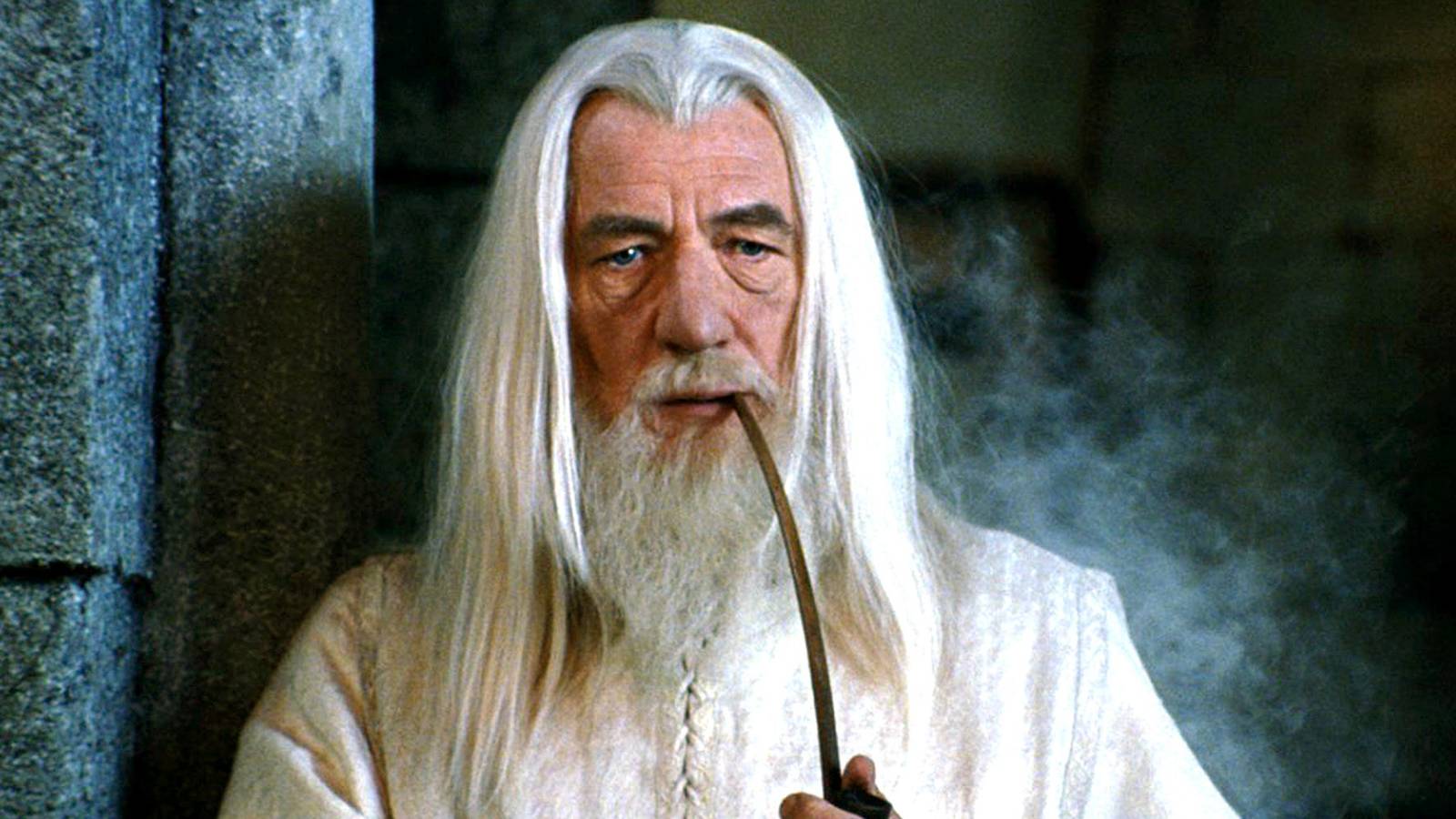
Plus, while the film has its fair share of mythology, there’s a beautiful emotional balance that comes from its character. Frodo (Elijah Wood) is the main guy who is not even a conquering hero. He is far from it. A small person beginning to understand that the burden meant for legends has chosen him anyway. Aragorn (Viggo Mortensen) is not yet the king-story payoff and is uncertain about his competence. Gandalf (Ian McKellen) carries ancient authority and still feels mortal when it matters most. And Sam (Sean Astin), by the end, becomes the movie’s quiet emotional proof that fantasy greatness is not only crowns and prophecy. Sometimes it is just devotion refusing to stay behind on the shore.
1
‘The Lord of the Rings: The Return of the King’ (2003)

The Return of the King is better than Fellowship of the Ring for me because it does the hardest thing fantasy can do: it pays everything off without shrinking any of it. That sounds obvious until you look at how often fantasy endings fail. They either bloat into noise or they tidy the myth into something smaller than the longing that built it. The Lord of the Rings: The Return of the King does neither. It gets bigger and sadder at the same time. Théoden (Bernard Hill) riding to war, Aragorn finally accepting his shape, Éowyn (Miranda Otto) refusing erasure, Sam carrying Frodo up the mountain, Gollum (Andy Serkis) remaining both curse and necessity, none of it feels like checkbox fulfillment. It feels like the world collecting every emotional debt it has been building since the Shire.
And that is why I put it first. The film understands that victory in fantasy must not be cheap if evil was made to feel truly large. While Frodo does not win in some clean heroic way, Middle-earth is still saved and still changed forever. The movie teaches you that a deepest fantasy series culmination doesn’t have to be about triumph alone. And if the best fantasy film is the one that makes scale, sorrow, courage, friendship, kingship, war, temptation, and farewell all feel equally real, then this is the one.