
Cinema was the defining art form of the 20th century, meaning that it gave us countless fantastic, memorable movie characters. Through these timeless figures, filmmakers explored the full range of the human experience: love, power, alienation, ambition, moral compromise, fantasy, and despair.
With that in mind, this list attempts to rank some of the greatest characters from the medium’s first century. Across decades of shifting styles, cultures, and technologies, certain characters stepped off the screen and into the collective imagination. These are figures who linger long after the credits roll: the dreamers and tyrants, the romantics and outcasts, the heroes who rose to the moment and the flawed souls who couldn’t escape themselves.
10
Annie Hall (Diane Keaton) – ‘Annie Hall’ (1977)

“La-di-da, la-di-da.” Annie Hall charts the course of the relationship between a neurotic comedian (Woody Allen) and an eccentric, emotionally open woman (Diane Keaton). While the plot zeroes in on the couple’s courtship, miscommunications, and eventual separation, Annie is never reduced to a romantic function. She is allowed interiority, ambition, and growth that does not depend on male approval. Rather than being a grand archetype, she is someone slightly unsure of who she is becoming.
Annie begins as insecure, shaped by other people’s expectations, and gradually grows into her own voice, independence, and sense of self. Keaton sells that character development perfectly. Her idiosyncrasies also make her unforgettable. The nervous laugh, the halting speech patterns, the eclectic fashion (especially the famous menswear-inspired outfits) all signal a personality that feels spontaneous rather than constructed. As a result, even now, the character and the movie as a whole feel surprisingly modern.
9
Rick Blaine (Humphrey Bogart) – ‘Casablanca’ (1942)

“Here’s looking at you, kid.” In Casablanca, Humphrey Bogart turns in perhaps his most iconic performance as Rick Blaine, a cynical nightclub owner in wartime Morocco who insists on neutrality while history presses in on him. He faces a moral reckoning after he reunites with a former lover (Ingrid Bergman) and finds himself asked to help resistance fighters escape the Nazis. He’s the quintessential reluctant hero, a man who pretends not to care until caring becomes unavoidable.
What makes Rick so compelling is the tension between who he pretends to be and who he actually is. His sharp wit, weary charm, and emotional restraint create an aura of mystery, while hints of his past (like fighting on the anti-fascist side in Spain and helping refugees) reveal a conscience he can’t fully suppress. This duality gives the character psychological depth: he’s not simply heroic or cynical, but both at once. At heart, like most of us, he’s a wounded idealist.
8
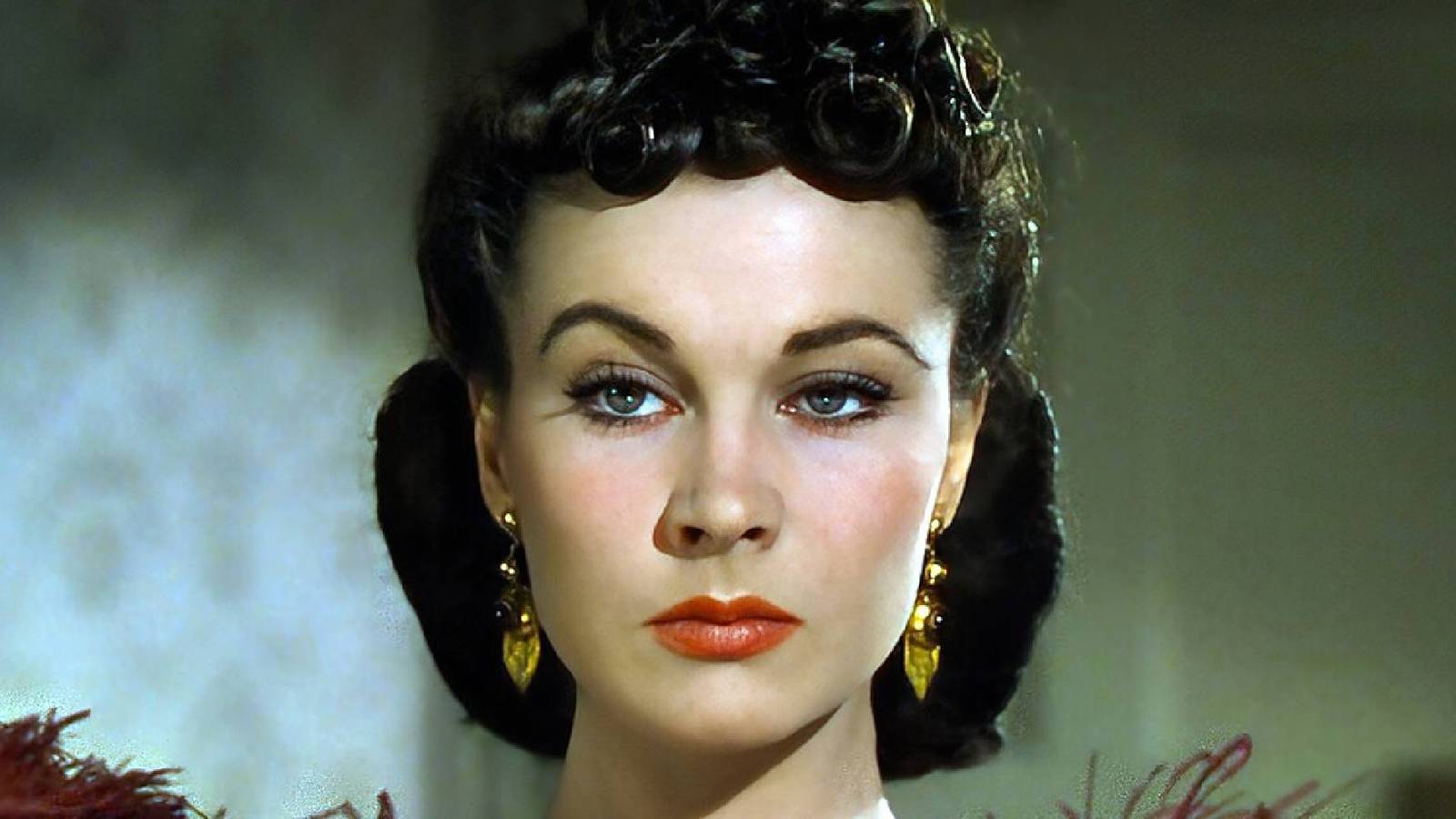
Scarlett O’Hara (Vivien Leigh) – ‘Gone with the Wind’, 1939)

“As God is my witness, I’ll never be hungry again.” Gone with the Wind was a sensation on release, in no small part thanks to the towering, fiery lead performance by Vivien Leigh. Her Scarlett O’Hara is selfish, manipulative, resilient, and astonishingly alive. She refuses to conform to expectations and survives not through virtue, but through will. The plot charts her romantic obsessions, financial desperation, and relentless drive to preserve herself and her home at any cost, all set against the collapse of Southern aristocracy during and after the American Civil War.
Another key element is her defiance of gender expectations. Scarlett runs businesses, schemes for money, and refuses to accept helplessness even in the direst circumstances. In many ways, she behaves more like a pragmatic modern protagonist than a traditional romantic heroine, which gives the character a surprising contemporary edge (even if other aspects of the movie have not aged well).
7
Dorothy Gale (Judy Garland) – ‘The Wizard of Oz’ (1939)

“Toto, I’ve a feeling we’re not in Kansas anymore.” The Wizard of Oz is a movie so archetypal that it’s become a kind of modern myth or shared dream. At its heart is the compelling, likable performance from Judy Garland as Dorothy Gale, a young girl swept from rural Kansas into the fantastical land of Oz. The plot is structured as a journey home, but Dorothy’s greatness lies in how she moves through wonder without losing moral clarity. She is curious, compassionate, and quietly determined. Unlike many fantasy protagonists, Dorothy doesn’t seek power or conquest, only belonging.
Dorothy’s defining trait is her empathy. She befriends the Scarecrow (Ray Bolger), Tin Man (Jack Haley), and Cowardly Lion (Bert Lahr) because she instinctively recognizes their loneliness and worth. She brings out the best in others, helping them discover qualities they already possess and showing a subtle kind of courage. Dorothy isn’t fearless; she’s often scared or overwhelmed, but she keeps moving forward anyway, confronting witches, uncertainty, and homesickness with determination.
6
James Bond (Sean Connery) – ‘Dr. No’ (1962)

“Bond. James Bond.” James Bond has undergone countless reinterpretations over the decades, all of it adding up to one of the most compelling blockbuster protagonists of the last half-century. Across massive cultural shifts, Bond remained recognizable while absorbing changing attitudes toward masculinity, power, and empire. That said, his most important incarnation is the very first one. Dr. No introduces Bond (Sean Connery) as a suave, unflappable spy tasked with stopping a megalomaniacal villain. Here, the character is pure confidence: competent, stylish, emotionally contained.
At the same time, Bond feels human rather than superhuman: he gets bruised, captured, and forced to improvise. Unlike later, more gadget-heavy entries, Dr. No presents him as a resourceful field agent relying on instinct, observation, and nerve. Finally, he’s morally ambiguous, capable of generosity one moment and cold efficiency the next. Rather than being a shining knight, he’s a pragmatic defender in a complicated Cold War world.
5
Phyllis Dietrichson (Barbara Stanwyck) – ‘Double Indemnity’ (1944)

“I wonder if I know what you mean.” Double Indemnity is one of the foundational noir movies, and Phyllis Dietrichson (Barbara Stanwyck) is one of the genre’s most memorable femmes fatales. She’s the seductive presence who draws the insurance salesman protagonist (Fred MacMurray) into a murderous scheme. The pair of them conspires to kill Phyllis’ husband for money, naturally leading to unforeseen consequences. Yet Phyllis is no mere plot device or stereotype, and her opacity is a big part of what makes her brilliant.
Phyllis isn’t explained or softened; her motives remain partially unreadable throughout. Is she driven by greed, resentment, thrill-seeking, or something darker? That uncertainty keeps both the characters and the audience off balance. Plus, while she wields sexuality as a strategy, the film never suggests it is her only tool. Phyllis exerts control through suggestion: a glance, a tone, a carefully chosen word. She understands how to read people, especially Walter, and subtly steers them toward choices they believe are their own.
4
Michael Corleone (Al Pacino) – ‘The Godfather Part II'(1974)
“Fredo, you’re my older brother, and I love you.” The Godfather Part II completes Michael Corleone’s (Al Pacino) transformation from reluctant heir to isolated tyrant. The plot alternates between him consolidating power as head of the family and flashbacks to his father’s (Robert De Niro) rise, together making for a tragic dual portrait of power gained and humanity lost. By the end of Part II, Michael is powerful but spiritually empty, having sacrificed love, trust, and kinship.
It’s to the star and Francis Ford Coppola‘s credit that this trajectory feels believable. They ensure that Michael’s evolution is slow, deliberate, and devastating. He projects absolute authority with his calm voice, measured gestures, and icy patience, yet you can feel the paranoia tightening around him, a fundamental insecurity that drives his behavior. Crucially, the character never sees himself as evil, only necessary. He represents corruption by way of rationalization, with self-justification conjured up to excuse the most heinous of acts.
3
Vito Corleone (Marlon Brando) – ‘The Godfather’ (1972)

“I’m gonna make him an offer he can’t refuse.” While Michael’s character development is more striking, Vito Corleone (Marlon Brando) remains the most striking character overall. He’s the patriarch of the Corleone family whose authority is rooted in personal loyalty rather than brute force. While he manages a modern criminal empire, Vito’s power feels almost feudal, based on favors, respect, and memory. He stands apart from most mob bosses with his restraint. Vito speaks softly, listens carefully, and understands violence as a last resort.
He is also fascinating because of his moral framework. Vito sees himself as a protector and provider, someone who offers justice where formal institutions fail. Moments like playing with his grandson in the garden reveal a man capable of genuine affection, too. These scenes humanize him and deepen the tragedy of his life. Rather than simply pursuing power, he’s trying to build a legacy he believes will keep his family safe. However, in the process, he dooms them.
2
Charles Foster Kane (Orson Welles) – ‘Citizen Kane’ (1941)

“Rosebud.” While Citizen Kane is most often valorized for its technical innovations, it also delivers in terms of complex characterization. Through fragmented recollections, the movie slowly acquaints us with Charles Foster Kane (Orson Welles), all of it an attempt to uncover the meaning behind his final word. Yet even as we dig deeper, Kane remains stubbornly elusive. What makes Charles Foster Kane one of the greatest characters in cinema is his elusiveness. The plot assembles him from perspectives that never quite align, emphasizing how power fractures identity.
The information we do get paints a deeply contradictory picture. Kane is ambitious, generous, petty, and lonely, often simultaneously. He starts as an idealist who believes he can champion the common man, but over time, that idealism curdles into control and isolation. His relationships deteriorate, and his palace becomes a monument to emptiness. All the achievement in the world still fails to satisfy his deeper emotional needs.
1
Travis Bickle (Robert De Niro) – ‘Taxi Driver’ (1976)

“You talkin’ to me?” Travis Bickle (De Niro) is a lonely Vietnam veteran working as a cab driver in New York City who slowly descends into paranoia and violence. The plot tracks his isolation, fixation, and eventual eruption, but Travis’ true greatness lies in discomfort. He is not a hero, and the film refuses to fully condemn or absolve him. His inner monologue reveals longing for purity and connection, warped by resentment and delusion. In this sense, the movie pulls off an impressive balancing act between being a deeply personal character study of one individual and a broader exploration of an entire psychological profile.
Travis endures because he feels disturbingly plausible: there are many people like him around the world even now. He represents the failure of community, empathy, and mental health. As a character, he forces audiences to confront how easily despair can masquerade as purpose. In the end, Travis captures a universal fear: what happens when a person becomes completely cut off from connection and meaning?