
I used to think I didn’t like musicals. I thought they were loud, fake, and a little embarrassing, especially when characters broke into song instead of talking like normal people. Then I started actually paying attention to the good ones. I noticed how some musical films use songs the same way other movies use arguments or breakdowns. A character sings because they cannot say the thing plainly anymore. That’s when the music steps in, when the story needs emotional honesty.
The movies on this list are exactly that. These are some of the best musical movies that you can find; the ones that will take you along on a joyous journey. If you want to spend a good, cozy weekend, tune into one of these ten. Even if you don’t like musicals, you might just begin to understand why people enjoy these.
10
‘Cabaret’ (1972)

Image via Allied Artists
Cabaret is set in Berlin during the early 1930s, at a time when everyday life continues as usual while something darker keeps creeping closer in the background. The story follows Sally Bowles (Liza Minnelli), a carefree American performer who sings at the Kit Kat Klub and treats life like an ongoing performance she can always dance her way through. Alongside her is Brian Roberts (Michael York), a reserved British academic who slowly gets pulled into Sally’s world and begins to see how unstable it really is.
As their relationship develops, the political situation around them starts to become impossible to ignore. You see Nazi influence creeping into everyday life, sometimes quietly and sometimes in genuinely unsettling ways. People are not breaking into music on the street or in their homes. The performances feel like commentary on what is happening outside, even when the characters refuse to talk about it directly.
9
‘Chicago’ (2002)

Chicago is set in 1920s Chicago and follows Roxie Hart (Renée Zellweger), a woman who wants fame more than anything else. She kills her lover during an argument and ends up in jail, where she realizes that attention can be more powerful than innocence. While awaiting trial, she watches how other women turn their crimes into headlines and applause. The story stays focused on how public image starts to matter more than the actual truth.
At the center of the story is Roxie’s rivalry with Velma Kelly (Catherine Zeta-Jones), another performer whose murder case has already made her famous. Their lawyer, Billy Flynn (Richard Gere), understands how to control the press and shape public opinion. As the trial moves forward, the film shows how justice becomes a performance and how the courtroom starts to resemble a stage.
8
‘Singin’ in the Rain’ (1952)

Singin’ in the Rain takes place in Hollywood during the late 1920s, when silent films are being replaced by sound films. Don Lockwood (Gene Kelly), a popular silent movie star, suddenly faces uncertainty when studios begin demanding talking pictures. His carefully built career now depends on whether he can adapt to a completely new way of acting. The film uses this industry shift as the backbone of its story.
Don’s biggest problem is his screen partner, Lina Lamont (Jean Hagen), whose voice does not work for sound films. To solve this, Don and his friend Cosmo Brown (Donald O’Connor) bring in Kathy Selden (Debbie Reynolds), a talented singer and actress. Kathy secretly provides Lina’s voice while remaining uncredited. The story follows how careers are saved, identities are hidden, and Hollywood quietly rewrites its own history to survive change.
7
‘The Umbrellas of Cherbourg’ (1964)

The Umbrellas of Cherbourg is set in a small French town and follows Geneviève (Catherine Deneuve), a young woman who works at her mother’s umbrella shop. She falls in love with Guy (Nino Castelnuovo), a local mechanic, and their relationship feels intense and sincere. When Guy is drafted to fight in the Algerian War, their lives are suddenly split apart. The film focuses on how separation and time change people in quiet ways.
While Guy is away, Geneviève becomes pregnant and faces pressure to secure her future. She eventually marries another man who can offer stability and safety. Years later, Guy returns, and the two meet again under very different circumstances. The story does not chase reunion or fantasy. Instead, it shows how love can be real and still end, and how life continues even when feelings remain unresolved.
6
‘West Side Story’ (1961)

West Side Story is set in New York City and follows Tony (Richard Beymer), a former gang member who wants a quieter life. He meets Maria (Natalie Wood), the sister of a rival gang leader, and the two fall in love almost immediately. Their relationship begins while tension between the Jets and the Sharks keeps growing across the neighborhood. Every choice they make becomes shaped by loyalty, territory, and fear.
As the conflict escalates, violence begins to replace dialogue. Tony believes love can stop the fighting, but events move faster than his hopes. Death and retaliation begin to define the streets where these characters live. The story shows how young people inherit hatred they did not create and struggle to escape it. By the end, love survives only as a reminder of what could have been.
5
‘The Sound of Music’ (1965)

The Sound of Music follows Maria (Julie Andrews), a young woman who leaves a convent to work as a governess for the von Trapp family. She arrives at the home of Captain Georg von Trapp (Christopher Plummer), a strict widower raising seven children. Maria introduces warmth and music into a household ruled by discipline and routine. Her presence slowly changes how the family interacts with each other.
As Maria grows closer to the children, she also develops feelings for the Captain. At the same time, political pressure builds as Austria faces Nazi control. The Captain must decide whether to submit or leave his homeland. The story balances personal change with moral responsibility. Music becomes a way for the family to stay united while facing real danger.
4
‘La La Land’ (2016)

La La Land centers on Mia (Emma Stone), an aspiring actress, and Sebastian (Ryan Gosling), a jazz musician who dreams of owning his own club. They meet while struggling to build careers in Los Angeles. Their relationship begins as both encouragement and escape from constant rejection. Each success brings excitement, but it also creates distance.
As their careers start moving in different directions, time and ambition begin to strain the relationship. Sebastian accepts work that conflicts with his artistic values. Mia questions whether love can survive alongside personal goals. The film follows how small compromises slowly reshape their lives. It ends by showing how choices can lead to fulfillment even when they lead people apart.
3
‘All That Jazz’ (1979)

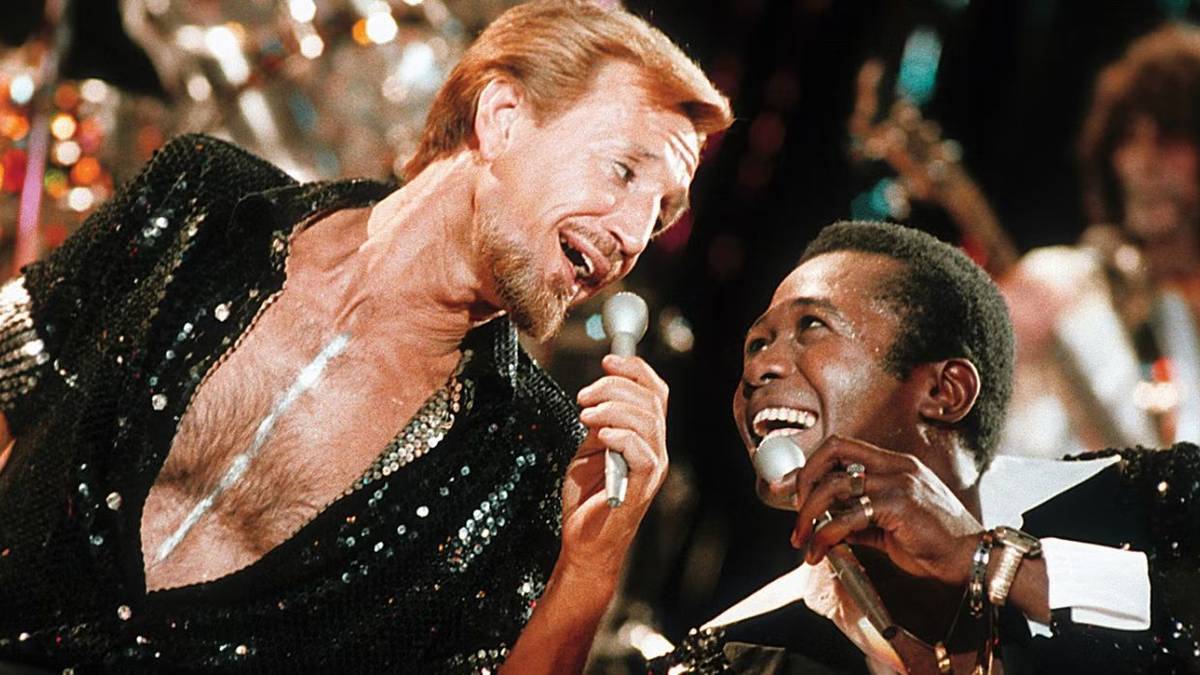
All That Jazz follows Joe Gideon(Roy Scheider), a choreographer and director, who begins every morning with pills, cigarettes, and a mirror check before throwing himself back into rehearsals and editing rooms. He works on a Broadway show during the day and cuts a feature film at night, while his body and personal life quietly fall apart. The film never pretends this lifestyle is admirable. Instead, it shows the cost of constant movement and constant approval chasing, scene by scene, without rushing past the damage.
As Joe keeps pushing forward, he starts getting hallucinated and starts having conversations with a glamorous figure (Jessica Lange). Instead of slowing down, he uses imagined musical numbers to avoid facing his condition. The story stays close to his perspective, which makes his denial feel immediate and personal. By the end, the film shows what happens when ambition keeps moving forward while the body refuses to follow.
2
‘The Wizard of Oz’ (1939)

The Wizard of Oz begins with Dorothy Gale (Judy Garland), a young girl living on a Kansas farm who feels trapped by her surroundings. A tornado carries her and her dog Toto into the magical land of Oz. There, she is told that the only way home is to follow the Yellow Brick Road and meet the Wizard. Along the way, she meets the Scarecrow (Ray Bolger), the Tin Man (Jack Haley), and the Cowardly Lion (Bert Lahr).
Each companion believes they lack something essential. Dorothy believes home is somewhere better than where she started. As they move forward, their actions reveal courage, empathy, and intelligence long before the Wizard speaks to them. When Dorothy finally returns home, the story reframes her journey as one of recognition, as the film explains its lesson through multiple events.
1
‘The Young Girls of Rochefort’ (1967)

Image via Madeleine Films
The Young Girls of Rochefort centers on twin sisters Delphine (Catherine Deneuve) and Solange (Françoise Dorléac) who live in a quiet coastal town. Both dream of leaving to pursue art and music in Paris. Their days are filled with dance classes, piano lessons, and chance encounters with strangers who are passing through Rochefort.
As the town prepares for a weekend fair, different visitors arrive. A composer named Maxence (Jacques Perrin) searches for a woman he once saw and cannot forget. An American musician named Andy (Gene Kelly) comes through town looking for work and connection. At the same time, Delphine and Solange keep missing the very people who would change their lives, often by minutes or a single wrong turn. The film builds its movement around these near encounters where people talk, dance, leave, and return. By the end, the sisters finally choose to leave Rochefort, believing that love and purpose exist elsewhere, even if they have not found them yet.

The Young Girls of Rochefort
- Release Date
-
March 8, 1967
- Runtime
-
126 minutes
-

Catherine Deneuve
Delphine Garnier
-
Françoise Dorléac
Solange Garnier