
If you read Stephen King, fear is probably the emotion you’re going to feel most often, since he tends to write horror stories or sometimes thrillers, sci-fi books, or fantasy novels that are themselves intense and capable of inspiring unease, if not outright fear. He’s not the funniest of writers, and hasn’t tackled an all-out comedy book yet, but as for other emotions not related to feeling scared? Some Stephen King books are able to make one feel more than a little sad.
He sometimes pushes this really far, like in Blaze, and then at other times, the intention might be to inspire sadness, but the execution left something to be desired (cough Lisey’s Story cough). To stay positive about not feeling positive, though, here are some of the saddest Stephen King novels that do prove moving either in parts, or overall, focusing just on his novels rather than any short stories or novellas.
10
‘Carrie’ (1974)

The horror side of Carrie is memorable for sure, especially because there are telekinetic powers here that eventually go out of control, leading to a great deal of death and destruction. Also, it’s a story about a teenage girl (the one with those powers) facing abuse at home and relentless bullying at school, and so those are realistic kinds of horrors that could, unfortunately, prove relatable for some readers.
And with that realistic sort of horror comes undeniable sadness, too. Carrie is the character who does the most by way of physical destruction, sure, but she’s also a tragic figure, and thereby not a villain in the way most destructive and/or deadly characters might be. King tapped into something pretty raw here, for his first published novel, and the emotional side of Carrie does still hit surprisingly hard 50+ years later.
9
‘The Long Walk’ (1979)

While The Long Walk is technically a Richard Bachman book, it’s been well-known for decades now that Richard Bachman was a Stephen King pseudonym, so it can be counted alongside the other emotional stories that actually have always had King’s name on their covers. “Bleak” is the word of the day when it comes to this one, because this is about a death-heavy competition that’s held annually in a dystopian America.
The competition involves young men walking for as long as they can, with anyone who can’t keep going getting executed on the spot, and the last man standing/walking being declared the winner. The Long Walk gives you quite a few reasons to care about a fair few of the characters, and then, reading the book, you do inevitably have to experience the majority of them brutally dying. The 2025 movie captures the horror and sadness inherent in the book pretty well too, for what that’s worth.
8
‘The Stand’ (1978)

Okay, The Long Walk was about literally walking, but The Stand is not literally about standing around. Stephen King probably could make 1200 pages of people standing around interesting, but it’s more of a “last stand” thing, with a deadly flu outbreak killing most of the population, and survivors having to “make a stand” by siding with one of two main factions, with those two factions eventually clashing toward the novel’s end.
It takes a while to get to said end, owing to how long The Stand is, but it’s the good kind of long, and just as fitting to listen to while doing cardio as The Long Walk, since The Stand has quite a bit of journeying in it. Also, it’s not always a sad book, but bad things happen to some good people, and the opening third of The Stand, which is about death happening everywhere and life falling apart for everyone, has some emotionally brutal moments that stick with you long after you’ve finished reading the whole book.
7
‘It’ (1986)

Like The Stand, It isn’t concerned with being sad all the time, but it’s long enough – and spans enough time – to be emotional in parts. The whole narrative here plays out in two main timelines, with a group of kids (who unfortunately live in Derry) banding together to defeat a horrifying evil entity, and then doing the same when they regroup as adults, but the original novel of It goes back and forward in time between the two points.
And there are some other diversions, and bits of backstory sprinkled in, enough to lead to the formation of a prequel series (beyond the 2010s film adaptations) called It: Welcome to Derry. But to just focus on the novel, this book has a bit of everything, and as a result, quite a bit of It is very sad, looking at the struggles of growing up, losing people, a loss of innocence, and then an honest unpacking of certain difficulties involved with being a grown-up, too.
6
‘The Dark Tower IV: Wizard and Glass’ (1997)

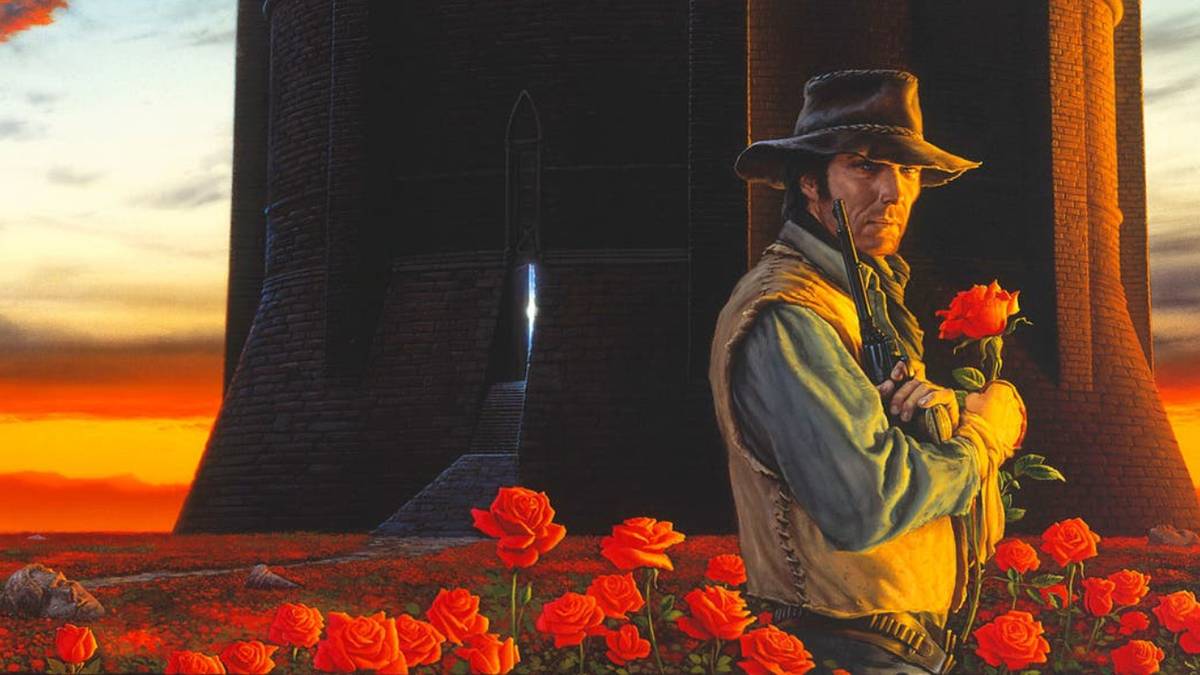
Since there are seven main books in The Dark Tower series, The Dark Tower IV: Wizard and Glass is the one that ends up sitting right in the middle of the whole saga, for better or worse. It doesn’t really function the way you’d think a directly central chapter would, since much of Wizard and Glass is a long series of flashbacks with Roland telling his companions (or ka-tet) about his past life and some tragedies that made him the jaded, older man he currently is.
Wizard and Glass does a good deal by way of character development for Roland, and the bulk of the novel is quite moving because of the events it covers.
Emphasis on the “long” part of “a long series of flashbacks,” since Roland ends up telling a story much as Stephen King does: in an engrossing but not exactly succinct manner. Still, it does a good deal by way of character development for Roland, and the bulk of Wizard and Glass is quite moving because of the events it covers. Even if you had a pretty good idea about what happened to Roland earlier in his life, having it all laid out with so much clarity does work at making him feel like an even more tragic protagonist for the overall series.
5
‘The Dark Tower VII: The Dark Tower’ (2004)
The (genuinely great yet somewhat divisive) final book in The Dark Tower series really makes the most out of it being the ending. No one is safe here, and the stakes get heightened to a rather distressing degree. You feel the desperation of the last push to make it to that titular tower, and it leads to some pretty alarming and inevitably moving things happening. If you know, you know, and if you don’t, maybe you don’t want to.
Parts of the ending here are infamous, and even though Stephen King wasn’t shy before 2004 about having bad things happen to likable characters, he really pushes things in that regard with The Dark Tower VII. There is still catharsis here, though, and it’s better to have at least some difficult things happen near the end of a journey that plays out over the course of about 4000 pages, rather than having it be a walk of the most cakey variety.
4
‘Cujo’ (1981)

Cujo never really lets you relax, which isn’t too surprising when you read about how Stephen King was in such an, uh, unusual state when he wrote it that he was able to read it afterward without knowing what was going to happen. He didn’t have a memory of writing it, but once you’ve read it, parts of Cujo do prove hard to forget, even if a certain movie adaptation (specifically, its ending) might try and mislead you.
This is a book about a dog that gets rabies, and then terrorizes a bunch of people, but he’s a tragic sort of “monster;” destructive but sympathetic, not dissimilar to Carrie’s titular character. It’s a simultaneously challenging and absorbing read, and since Cujo feels so grounded compared to various other horror stories King’s written, there’s something about the violence and devastation here that feels a bit more real than what’s found in some of those other books.
3
’11/22/63′ (2011)

The assassination of John F. Kennedy is an endlessly fascinating historical event to think about, even if you don’t lean into conspiracies. Lee Harvey Oswald, deemed responsible for the murder, is also a fascinating figure, explored by Don DeLillo in Libra and Stephen Sondheim in parts of Assassins, and King also has him play a supporting role in 11/22/63, though he’s not the focus, necessarily.
Instead, 11/22/63 is mostly about an English teacher who finds himself with an opportunity to go back in time to 1958, observe the lead-up to the fateful/titular day, and then try and stop the assassination in an attempt to make the rest of the 20th century (and beyond) play out better. It sounds silly, but the execution makes it work, and 11/22/63 also ends up being far more emotional than you might expect, largely thanks to it having one of the better love stories (feels wrong to call it a sub-plot when it’s so central) found in any Stephen King novel to date.
2
‘The Green Mile’ (1996)

There is a supernatural element to The Green Mile, and parts of it are quite horrific, but it would be a stretch to label the whole thing as a work of horror. Instead, it’s more of a dark fantasy story with a heaping of drama and tragedy thrown in for good measure, with most of the narrative being set in and around death row, with one prisoner there not only being (most probably) innocent, but also equipped with magical healing powers.
Like with 11/22/63, breaking it down in a sentence or two might make The Green Mile sound goofy, but it’s really not. It has villains who aren’t necessarily monsters in the fantastical sense, but more just monstrously flawed people, and then it also has some bad people who you come to feel a certain amount of sympathy for. The Green Mile is often upsetting, and not just because it has a lot of death, but if you’re after one of King’s more successfully moving works, it’s got your back.
1
‘Pet Sematary’ (1983)

It’s an easy one to pick, for present purposes, but Pet Sematary really is about as dark and emotionally upsetting as horror novels get. This one revolves around a family who have to deal with the death of a pet and some other unfortunate events while living near a cemetery that seems like it might well be capable of bringing dead things back to life.
So, Pet Sematary is about grief, dying, and the way that moving on from such difficult things can feel impossible. Some will point to it as King’s scariest novel because so much of the horror is tied up with intense sadness, and so you feel the weight of it all, even with the supernatural/otherworldly elements. It’s the kind of book where finishing it might well ruin your day, but that does also speak to how powerful it is.

Pet Sematary
- Release Date
-
April 21, 1989
- Runtime
-
102 minutes