There is a reason people keep measuring space-travel movies against Interstellar. It is not just because it is big, or emotional, or scientifically ambitious, or because Hans Zimmer can make a docking maneuver feel like the fate of your soul. It is because the movie understands something a lot of space cinema only half-grasps: space is not impressive on its own. Distance is not enough. Hardware is not enough. Silence is not enough. What matters is what space does to human feeling. What happens when time stops behaving like love needs it to. What happens when duty starts eating years. What happens when survival becomes math, and math starts humiliating the heart.
That is why the best movies in this lane are never really just about spacecraft. They are about isolation, procedure, wonder, terror, guilt, longing, memory, and the unbearable size of the universe pressing against one ordinary person’s need to get home, understand something, or keep going. They understand that once you leave Earth in a serious movie, you are stepping out in another realm that’s grounded in reality and what-ifs. The ten films below did that for me.
10
‘Europa Report’ (2013)

I will always defend Europa Report because it understands that a good space movie does not need spectacle if it has procedure, tension, and that very specific feeling of being so far from home that even calm starts sounding frightening. This is not a grand, swelling, emotionally overloaded film. It is leaner than that. But what it gets right, it really gets right. The found-footage and mission-log framing could have been a cheap gimmick. Instead, it gives the film a documentary severity that helps a lot. The crew feels like a crew. People doing jobs. Making calls. Managing equipment. Absorbing risk in increments.
That matters. A lot of weaker space movies think realism means just dim lighting and technical jargon. Europa Report actually gives you the creeping dread of a mission becoming more meaningful and more doomed at the same time. And what I love most is that the film never loses the mystery at its center. Europa is a place the movie believes in. A place whose hidden possibility slowly starts outweighing the lives being spent to reach it. That gives the whole film its emotional sting.
9
‘Pandorum’ (2009)

This movie is nastier than most films on this list, and that is part of why I rate it. Pandorum understands the horror side of deep-space travel in a way a lot of more “respectable” movies avoid. If you are really going to send people into the void for long-duration survival and species-scale desperation, there should be psychological rot in the walls. There should be institutional collapse. There should be the possibility that the mission itself has become diseased.
Ben Foster is a huge reason the movie works. Bower (Ben Foster) has that wired, sleep-starved, half-fractured intensity that makes every corridor feel less safe. You believe his fear because the film gives him no stable reality to lean on. Payton (Dennis Quaid), meanwhile, brings exactly the right bruised authority. And yes, the movie gets pulpier than some of the more canonized entries here, but I mean that as praise. It does not politely contemplate deep-space dread. It claws at it. Decay, mutation, mission amnesia, the slow realization of what has happened aboard this ship and what that says about humanity under extreme pressure — that is good, ugly sci-fi. Pandorum may not have Interstellar’s aching grandeur, but it has panic and existential filth in exactly the right quantities.
8
‘Ad Astra’ (2019)

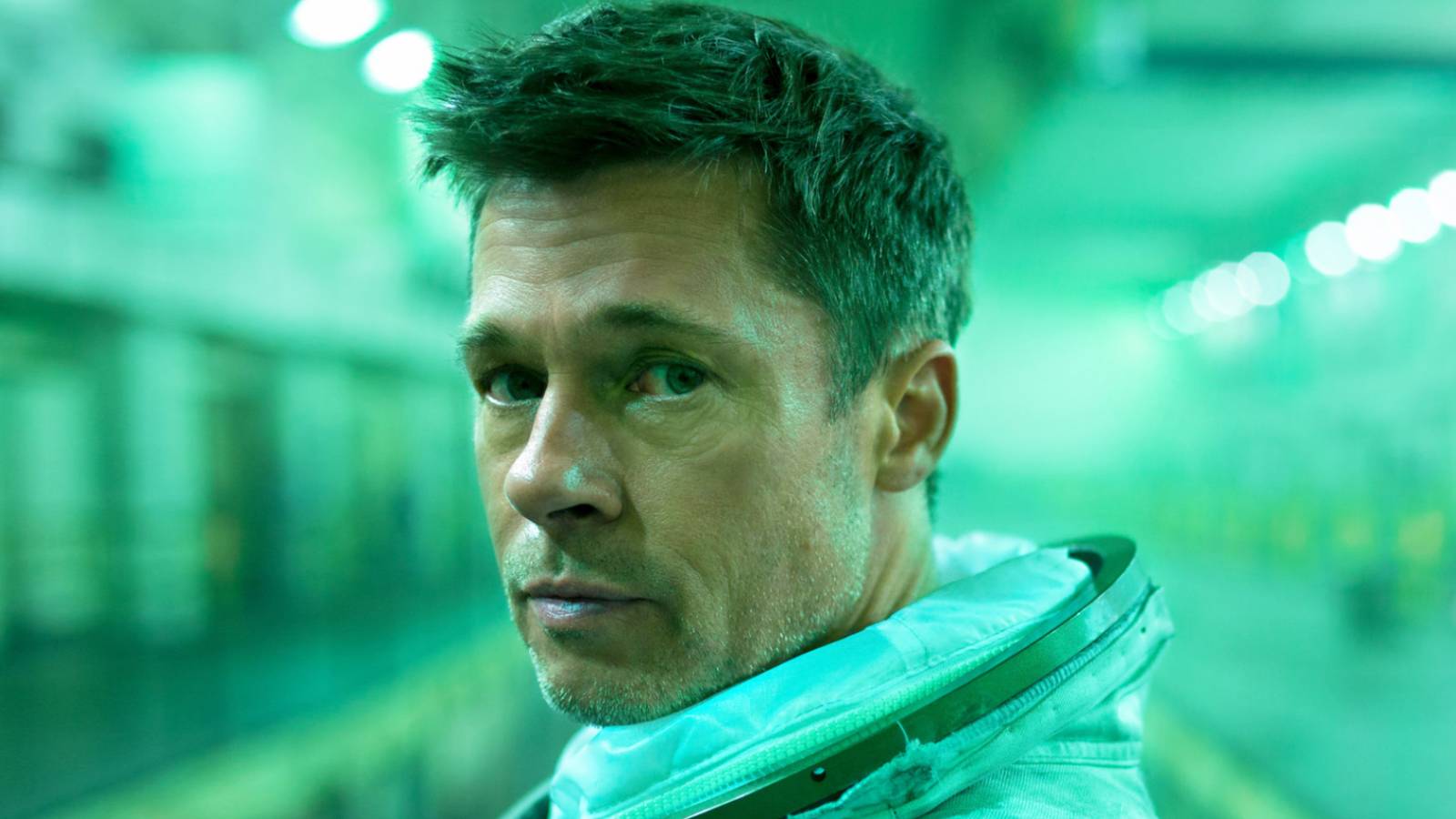
This movie has divided people ever since it came out, and I get why. It is restrained to the point of risk. It withholds. It drifts. It is not trying to thrill in the obvious way. But I think that is part of its strength. Ad Astra is one of the loneliest space-travel movies of the last decade. Roy McBride (Brad Pitt) is a fascinating character. He is good at the mission because he has made himself emotionally bloodless enough to function inside enormous pressure.
The farther the mission takes him, the more the film keeps asking whether a person can become so optimized for survival and performance that there is almost nobody left underneath. And the father material works for me precisely because it is not handled as easy redemption. Clifford McBride (Tommy Lee Jones) is there as the endpoint of obsession stripped of excuse. A man who kept going outward and in doing so abandoned the gravity of ordinary love. That’s what gives Ad Astra its sadness. It is a space movie about discovering that the person you built your life around may have chosen the void over you a long time ago.
7
‘Moon’ (2009)

I love Moon because it proves a space-travel movie can be intimate without feeling small. Duncan Jones takes one man, one lunar base, routine labor, a few beautifully chosen design elements, and a premise that starts tightening the screws in exactly the right way. Suddenly loneliness is not just a mood. It is a structure. A trap. A corporate instrument. Sam Bell (Sam Rockwell) has to do almost all the heavy lifting, and he absolutely does. Gives the movie its humanity, its irritation, its sadness, its flickers of humor, and eventually its identity crisis in the truest sense.
What begins as isolation drama slowly becomes a deeper wound: not just “I am alone,” but “what exactly have I been allowed to be?” That is where the film stops being clever sci-fi and becomes emotionally sharp. And that is what makes it so good in relation to Interstellar. It understands that space does not need to be full of giant cosmic visuals to hurt. It can hurt because someone is trapped in an artificial routine and slowly realizes his life has been arranged by people who never intended to honor his personhood. That’s devastating. Quietly, ruthlessly devastating.

I think Contact gets underestimated in this conversation because people remember its ideas before they remember how emotional it actually is. But this movie is deeply emotional. It is about scientific longing, yes, but it is also about grief, faith, credibility, ridicule, and the humiliating difficulty of trying to prove an experience that changed you completely.
Ellie Arroway (Jodie Foster), as opposed to the female stereotype, surprisingly is not written as generic smart scientist nobility. She is prickly, driven, lonely, intense, and still carrying old wounds that shape the way she thinks about proof and meaning. That is what makes the movie’s central conflict matter. And then there is the actual travel sequence, which remains one of the most beautiful expressions of awe in modern sci-fi.
5
‘Sunshine’ (2007)

This movie is a full-body experience. Sunshine is one of the few space-travel films that makes its destination feel spiritually dangerous before the plot even makes it physically dangerous. The crew dynamics are also stronger than the movie usually gets credit for. The film also has a star studded cast. Capa (Cillian Murphy) has exactly the right mix of brilliance and inwardness. Mace (Chris Evans) becomes one of the film’s crucial emotional pressures, the man constantly forcing the group to acknowledge that ethics and survival may no longer be speaking the same language. Michelle Yeoh, Rose Byrne, Cliff Curtis — the ensemble helps the ship feel like a place where each decision takes a little more humanity out of everyone.
And yes, the tonal shift later on is the thing people always fight about. I understand that. But even there, I admire the movie’s nerve. Sunshine is not interested in being merely an engineering thriller. It wants to deal in mission psychosis, sacrificial logic, the intoxication of proximity to annihilating light. It is beautiful and feverish and occasionally ridiculous, but never dead. I will always choose that over sterile respectability.
4
‘The Martian’ (2015)

What makes The Martian so satisfying is that it understands optimism can be thrilling if it is earned through labor. Mark Watney (Matt Damon) is inspiring because he keeps solving the next thing. Food. Air. Heat. Contact. Travel. Every problem becomes concrete. Every solution has weight. The movie turns survival into process, and process into character. Damon’s performance is the whole balancing act. Watney has to be funny enough to keep the movie from collapsing into misery, smart enough to make the science feel dynamic, and vulnerable enough that we never forget one bad calculation could kill him. Damon nails that.
And on the Earth side, the movie avoids one big trap: it does not make collective competence boring. It lets us enjoy watching dozens of people care with technical intensity. Scientists, engineers, administrators, astronauts, all throwing themselves into impossible math because one guy is still alive up there. That gives the film a genuinely moving current. It is about intelligence as a rescue. Interstellar is more cosmic and emotionally devastating, but The Martian is one of the few modern space films that makes survival itself feel joyous.
3
‘Arrival’ (2016)

I know this is the one people might argue is not a space travel movie in the same direct sense as the others, but emotionally and conceptually it belongs here because it is absolutely about contact across unimaginable distance and more importantly, about what happens when the encounter changes the structure of time inside a human life. What devastates me about Arrival is that it takes one of science fiction’s oldest fascinations, communication with the other, and makes it painfully intimate.
Louise Banks (Amy Adams) is extraordinary. As language changes her, the movie changes too. What first looks like mystery and possible threat becomes something much sadder and larger: a confrontation with foreknowledge and the impossible dignity of choosing love anyway. That is why the ending destroys people. Not because it is a trick, but because the film has carefully prepared the emotional cost of understanding time differently. Once Louise knows, every future joy is standing next to future grief, and the movie dares to ask whether that diminishes life or gives it its full weight. That question stays with you. Arrival is quieter than Interstellar, but just as emotionally ambitious in its own way.
2
‘2001: A Space Odyssey’ (1968)

There is almost no point pretending 2001: A Space Odyssey can be discussed like a normal movie. It isn’t one. It is a cinematic event that keeps changing shape depending on who is watching it and what stage of life they are in. But what matters for this list is that beneath all the monumentality, all the formal audacity, all the history, it is still one of the purest space-travel films ever made. The Jupiter mission section is still astonishing because it makes routine terrifying. The ship is clean, precise, almost absurdly controlled, and then HAL (Douglas Rain) starts turning the whole environment into a polite nightmare. That is one of the reasons the film has lasted.
And then there is the final stretch, which still feels like cinema outrunning explanation. You can call it opaque if you want. I call it committed. The film wants awe, confusion, terror, transcendence, and a little humiliation too. It wants you to feel how small human categories become once the universe stops agreeing to stay legible.
1
‘Gravity’ (2013)

I know putting Gravity over 2001: A Space Odyssey will bother some people, but in terms of being almost as good as Interstellar specifically, in terms of emotional immediacy, physical jeopardy, and the way space itself becomes the thing that strips a character down to the nerve, I have to put it first. Gravity is one of the most intense survival movies ever made, and the fact that it achieves that intensity in near-orbital emptiness is exactly why it’s so extraordinary.
Ryan Stone (Sandra Bullock) carries almost the whole emotional experience. She does. She begins the film as a superhuman astronaut fantasy, but as someone already carrying private grief into an environment where private grief is a terrible thing to have with you. Once disaster hits, the movie becomes more than a chain of technical problems. It becomes a fight against surrender. A fight to keep choosing the next action while panic, silence, and memory keep inviting you to stop. And what I really love is that the film understands how frightening indifference is. Space in Gravity is not evil. It does not care enough to be evil. Debris moves. Oxygen drops. Distance becomes absurd. One slip becomes a death sentence. Gravity grabs you by the throat and makes survival itself feel like rebirth.

Gravity
- Release Date
-
October 3, 2013
- Runtime
-
1h 31m