
Thanks to the universality and proliferation of cinema, even the most keen-eyed cinephile cannot boast that they have seen all the highly-renowned films, let alone the countless works that exist beyond the mainstream. One of the best places to go hunting for these overlooked gems is Letterboxd.
Unlike Metacritic and Rotten Tomatoes’ critics-based scores, Letterboxd’s rankings are a more democratic assessment of what constitutes “great” cinema. Any movie lover can log in, review, and rank films of their choosing.
Among the films fans around the world have rated highly are many non-Hollywood and non-21st-century entries that may surprise casual viewers. But it will certainly not be news to those with deeper film knowledge, for they understand that cinema transcends both time, place, language, and even the agreed meaning of spectacle. And many films prove this.
Autumn Sonata (1978)

Ingmar Bergman’s 1978 family drama Autumn Sonata is highly rated among critics for two reasons. First, for pitting two of mankind’s obsessions — love and art — against each other with no obvious winner, and second, for doing so with devastating emotional precision.
This is not to mention the towering Oscar-winning performance by Ingrid Bergman as the famous absent-mother pianist, alongside Liv Ullmann as her estranged daughter. Bergman already has a record seven films in Letterboxd’s Top 250, and Autumn Sonata is the highest of the bunch with a 4.5 score out of 5. Interestingly, the inspiration behind his script comes from personal experiences with his parents.
I’m Still Here (2024)

Many wondered why an unknown Brazilian production was garnering so much buzz as the 2024 slash 2025 Awards season drew near. Some even doubted the veracity of the Portuguese-language political drama getting a Best Picture nod. Such doubt clears upon sitting through two hours of family resilience in the midst of a brutal military dictatorship that happens in Walter Salles’s I’m Still Here.
Adapted from a book based on real events, the film centers on a woman whose husband is taken for good in the wake of Brazil’s military regime. Viewers are forced to confront the scale of destruction external societal factors can wreak on an institution as intimate and sacred as the family.
But it is the sacrifices required to preserve this institution of five (now irrevocably reduced to four), even post-devastation, that truly made I’m Still Here a Best Picture contender. Violence and brutality are wisely stashed in the background; emotions brought forth by Eunice Pavia’s stunning display are not.
Ran (1985)

Akira Kurosawa, the same mind behind Seven Samurai and Yojimbo, never thought his pet project, Ran, would be granted the financial backing needed to make it a reality. He had to make do with a decade of sketching his dream on paper.
Thanks to French producer Serge Silberman, his dream became reality, though at the cost of making it the most expensive Japanese film ever. Thus, cinema was blessed with one of the greatest films ever made.
Kurosawa bases Ran on William Shakespeare’s play King Lear, in which a civil war in feudal Japan unfolds after a warlord’s decision to abdicate his throne to his three sons (daughters in Shakespeare’s play) goes awry. Action scenes no doubt take a leaf from Steven Spielberg’s Saving Private Ryan and Kurosawa’s own Kagemusha, with blood rendered unsentimental, swift, and merciless.
City of God (2004)

Fernando Meirelles and Kátia Lund’s Brazilian crime drama takes its title from the Cidade de Deus (City of God) neighborhood in one of Rio de Janeiro’s many favelas (slums), which provides the film’s vivid setting. Poverty, systemic neglect, and, of course, organized crime are experienced through the eyes of a young wannabe photographer, Rocket (Buscapé), while the audience observes two decades’ worth of youths and their ambition trapped in cycles of violence.
City of God is the highest-rated international gangster film on Letterboxd and earned four Academy Award nominations in 2004, including Best Director and Best Adapted Screenplay. With this, it paved the way for future Brazilian feature films, such as I’m Still Here, to gain global recognition.
Oldboy (2003)

Directed by Park Chan-wook, Oldboy’s protagonist, Dae-su (Choi Min-sik), is kidnapped and subsequently subjected to psychological and physical torment in solitary confinement without ever being told his crime. When he is abruptly released after 15 long years, vengeance takes the better of him, and he tracks his captor in a story that unfolds into what can rightly be termed the father of all plot twists.
If that sounds morbidly intoxicating, that’s because it is. Enough, apparently, to even overly excite a filmmaker as austere as Quentin Tarantino, who was the jury president during its Grand Prix win at the 2004 Cannes Film Festival.
Oldboy is rife with everything from a now-iconic scene of Dae-su gobbling a live octopus whole to a famous one-take corridor fight. It’s all harrowing imagery and an action wrapped in a Korean-language film.
The Fifth Seal (1976)

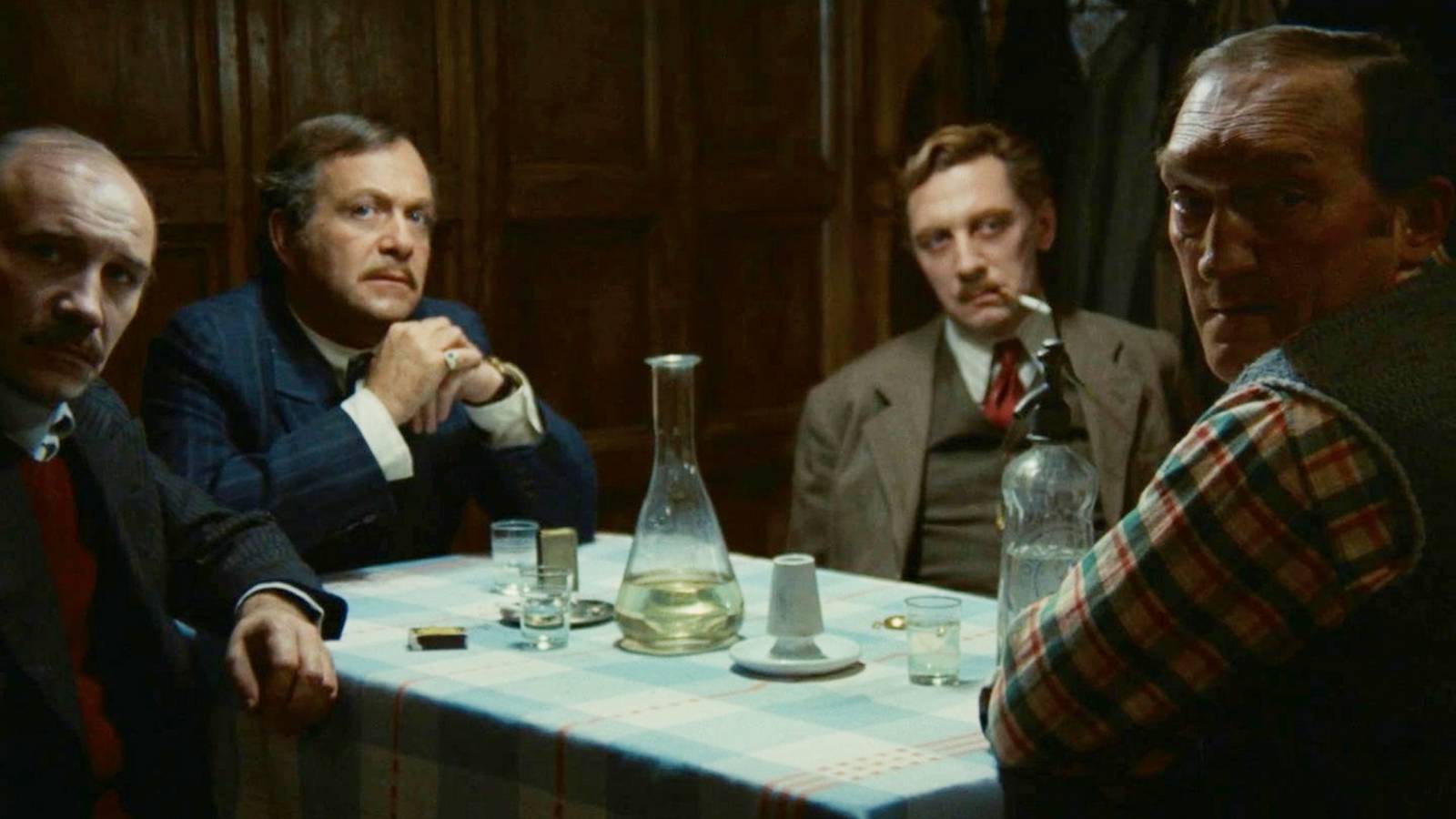
Undisputedly the greatest output of Hungarian cinema, The Fifth Seal is no Dunkirk or All Quiet on the Western Front. But the adaptation of Ferenc Sánta’s novel is no less a contender for one of the most profound war dramas ever made. Like Darkest Hour, The Fifth Seal ditches the spectacled violence of the Second World War — almost the entire film takes place in a pub.
Instead, it boils the conflict down to a simple question posed by a bartender: “Would you rather live as a powerful but cruel tyrant, or as a powerless but morally upright victim of that tyrant?” It’s a moral conundrum that pits survival against moral integrity, especially during the fascist authoritarian pressure that gripped Hungary towards the end of the war.
Audiences familiar with the Bible would recognize the film’s very title as a reference to the Book of Revelation’s Fifth Seal, which symbolizes moral reckoning and judgment. That an Eastern Bloc film could win the Cannes Film Festival Jury Prize at the height of the Cold War speaks volumes about the universality of the question Zoltán Fábri’s The Fifth Seal dares ask.
Eternal Sunshine of the Spotless Mind (2004)

Everyone loves a happy ending to a romantic journey, whether in real life or on screen. However, Eternal Sunshine of the Spotless Mind offers something far more unsettling and enduring.
In it, the couple Joel (Jim Carrey) and Kate (Clementine Kruczynski) erase each other’s memories after their separation. The process proves anything but painless for Joel, who gradually realizes that love and failure are inseparable. In other words, the very pain he wants erased is what gave the relationship meaning in the first place.
Eternal Sunshine of the Spotless Mind’s bittersweet ending, immense rewatch value, and the creative alchemy between Michel Gondry and Charlie Kaufman — one of the most potent writer-director pairings — explain why this film is widely regarded as one of 21st-century cinema’s most celebrated love stories. It also explains its cult-classic status and its high standing on Letterboxd.
Cinema Paradiso (1988)

Penned and directed by Giuseppe Tornatore with a BAFTA-winning score from Ennio and Andrea Morricone, Cinema Paradiso is regarded as one of the best coming-of-age films ever made. Among Italian films on Letterboxd, only 1966’s The Good, the Bad and the Ugly ranks higher.
As the title suggests (“New Paradise Cinema” in English), the film sold the magic of cinema itself alongside love, connection, and nostalgia to the Italian audience when it debuted in 1988. It portrays cinema as a space of escape and imagination for young Salvatore Di Vita (Salvatore Cascio) from the reality of his war-scarred Sicilian village.
Cinema Paradiso is the story of a prophet who is not appreciated in his hometown. The domestic audience wasn’t really interested in the film at the box office, not until after the film’s 1989 Academy Award win for Best Foreign Language Film and a Grand Prix du Jury win at Cannes that same year.
Come and See (1985)

There’s a reason why Emil Klimov’s 1985 war epic, Come and See, is one of only a handful of films rated 4.6 and above out of 5 on Letterboxd. That’s because few films in the cinema confront the viewer with such unrelenting honesty of a desensitized topic.
The sight of teenage Flyora eagerly joining the Soviet resistance, only to be greeted by the realities of Nazi occupation of his Belarusian village in the Second World War and the suffering and moral collapse that accompany it, doesn’t just go away. Simply put, it’s arguably the greatest anti-war film in cinema history.
Come and See‘s refusal to soften the war’s psychological toll ironically works to its disadvantage: it rarely ranks high on anyone’s list of easy recommendations. The Soviet authorities themselves frustrated Klimov’s efforts to bring the project to light because it de-glorified war to an extent that was deemed incompatible with Soviet society.
Seven Samurai (1954)

Another one of Akira Kurosawa’s many masterpieces, Seven Samurai, is a classic tale of teamwork’s dividends and the divides between social classes. Set in 16th-century Sengoku Japan, the titular seven samurai (ronin) are hired by poor farmers to protect their village and, most importantly, produce from marauding bandits that return every harvest season to steal their crops.
Every part of Seven Samurai is meticulously crafted: from the lead Samurai Kambei’s recruitment of the six remaining samurai, each with his own skill set, personality, and motive, to the painstaking collaboration between the villagers and the samurai as they prepare for battle. These storytelling elements are present in films as distant as A Bug’s Life and Three Amigos.
Kurosawa’s bold three and a half hour runtime might have unnerved studios back then, but modern viewers know better than to shun a three-hour epic. Especially not one tag that consistently ranks among critics’ favorite films of all time.