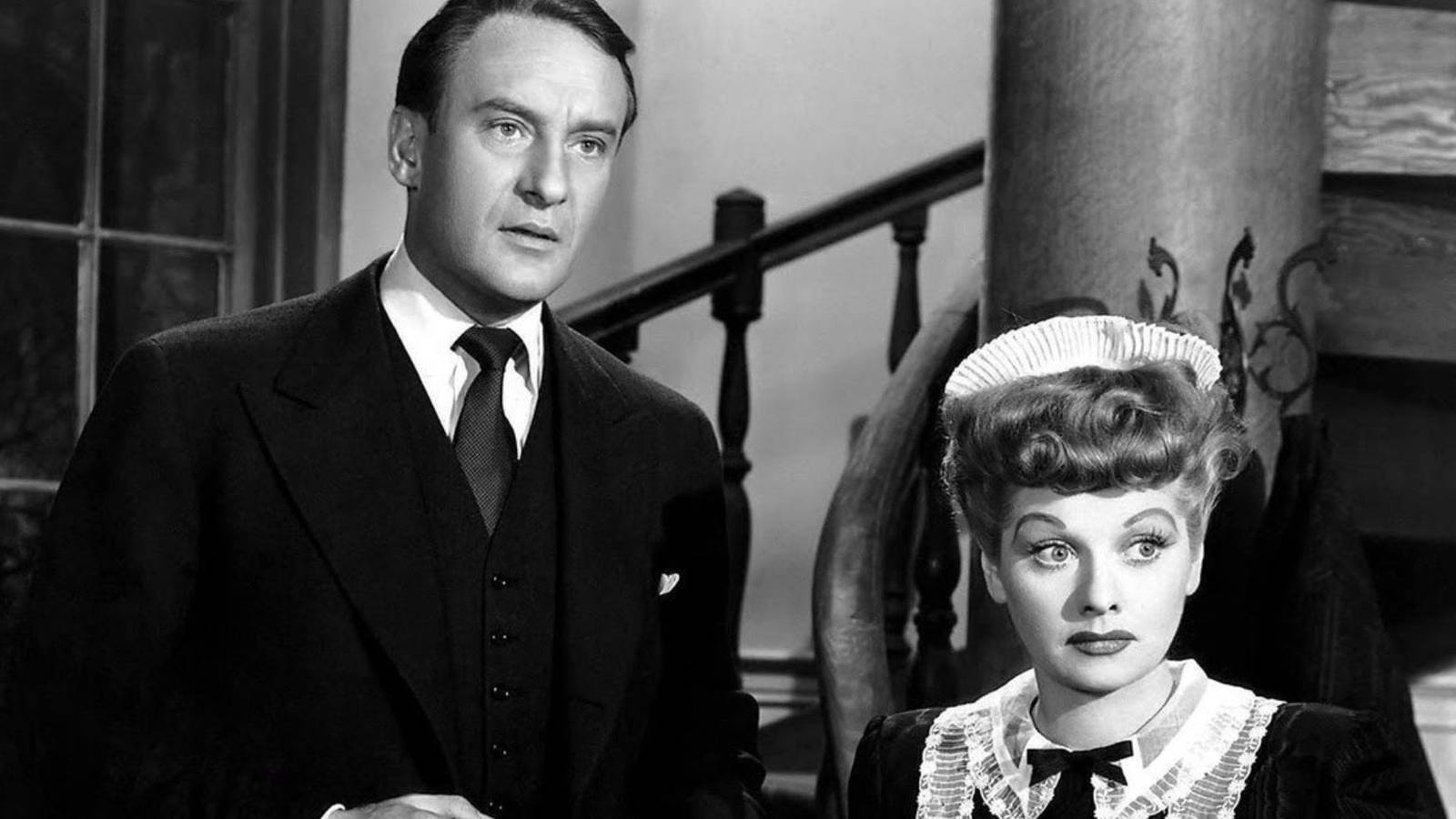

When it comes to classic cinema, film noir has always been one of the most beloved genres and is celebrated for its gritty stories of crime, corruption, and deadly dames. While a handful of titles, such as The Maltese Falcon, Sunset Boulevard, and Double Indemnity, are endlessly cited as cornerstones of the genre, many of its most daring and emotionally complex works, including Lured, The Big Combo, and New York Confidential, unfortunately remain widely overlooked.
Contrary to popular belief, the majority of underrated noir films, such as The Unsuspected starring Claude Rains and Ida Lupino‘s The Hitch-Hiker, are not minor curiosities or second-tier efforts. They are fully realized masterpieces that are marked by sharp dialogue, morally ambiguous characters, and a deep sense of existential unease. From the marginalized 1945 noir, Fallen Angel, starring Dana Andrews and Linda Darnell, to the underappreciated film noir classic, The Locket, these are ten underrated classic film noir movies that can be called masterpieces today.
10
‘Fallen Angel’ (1945)

Dana Andrews stars in Otto Preminger‘s Fallen Angel as Eric Stanton, a drifter and con artist who arrives in a small California town where he meets and falls for a waitress, Stella (Linda Darnell). Since Stella is only interested in a man with money, Stanton comes up with a scam that involves the help of a wealthy, well-to-do woman, June (Alice Faye), ultimately creating a dangerous love triangle that eventually leads to cold-blooded murder.
Fallen Angel is an underrated noir classic that refuses to fit neatly into the expectations of the genre, but that defiance is what makes the film quietly brilliant. At first, Fallen Angel appears to be a familiar murder mystery, but as the film progresses, the crime itself is almost secondary to the story. Preminger is far more interested in obsession, self-delusion, and moral rot than in procedural thrills, which makes the film feel psychologically richer and less immediately exciting than other plot-driven noirs.
9
‘The Narrow Margin’ (1952)

Richard Fleischer‘s The Narrow Margin is an intense noir that follows a Los Angeles detective, Walter Brown (Charles McGraw), who is assigned to transport and protect the widow of a murdered mobster, Frankie Neall (Marie Windsor), who is planning to testify before a grand jury in Chicago. When Brown encounters a string of gangsters who have been hired to stop Neall before she can take the stand, the detective finds himself entangled in a heated game of cat and mouse.
The Narrow Margin is one of the most overlooked noir classics and is perfect for those who prefer a noir that feels like a clenched fist rather than a smoky seduction. Unlike flashier noir movies, The Narrow Margin isn’t as sexy or glamorous, but its lack of showmanship is the main reason why the film feels incredibly authentic and even entirely plausible. Another unique element of The Narrow Margin is Fleischer’s choice to film on actual trains and stations, which gives the film a raw, almost semi-procedural feel and makes the danger feel organic and physical rather than stylized.
8
‘New York Confidential’ (1955)

New York Confidential is a unique contribution to the world of noir, starring Broderick Crawford as a New York gangster, Charlie Lupo, who sends his bodyguard and former Chicago hitman, Nick Magellan (Richard Conte), to eliminate three of the mobster’s men who botched a job that has since put their boss in hot water. When one of the gangsters manages to escape, he cuts a deal with the police in exchange for testifying against Lupo, making Magellan’s job far more complicated than he initially expected.
New York Confidential flips the genre’s usual perspective of a hard-boiled private eye on a cryptic case and delivers a cold, procedural look at organized crime that is a must-see for any film noir fan. Compared to similar noir films, New York Confidential takes it a step further with an authentic depiction of the mob, outlining how power is built, maintained, and inevitably destroyed, ultimately refusing to downplay the reality of being a gangster. The film’s bleak, unsentimental tone, sharp ensemble performances, and focus on corruption as a systemic force give New York Confidential a tougher, meaner, and more modern feel than the majority of other classic noir films.
7
‘Human Desire’ (1954)
Fritz Lang‘s 1954 film noir drama, Human Desire, follows a Korean War veteran, Jeff Warren (Glenn Ford), who returns home and resumes his job as a railroad engineer as well as his affair with Vicki Buckley (Gloria Grahame), who is married to Warren’s co-worker, Carl Buckley (Broderick Crawford). When Carl murders a man whom he believes was having an affair with his wife, Vicki becomes an unwilling accomplice in her husband’s crime. Now trapped by her abusive husband, Vicki starts to fear for her life and eventually asks Warren to kill him before he has the chance to kill her.
Human Desire was initially dismissed as a mediocre noir, but in hindsight, it is an unsung masterpiece that strips the genre down to its emotional core with its cold realism and psychological depth. Lang directs with icy precision and chooses to let the tension seep out through silences, glances, and doomed choices rather than melodrama. Human Desire also moves away from the genre’s traditional character archetypes, especially Ford and Grahame. Ford conveys a passive, morally drifting man who is undone by his own inertia, while Grahame lacks the power of a traditional femme fatale, all of which gives the film a distinct quality of uncertainty and curiosity.
6
‘The Big Clock’ (1948)

Ray Milland stars in John Farrow‘s film noir thriller The Big Clock as an editor-in-chief, George Stroud, who is fired by his abusive boss, Earl Janoth (Charles Laughton), after he refuses to skip his already postponed honeymoon to travel for an assignment. When Stroud goes to a local bar to drown his sorrows, he runs into Janoth’s mistress (Rita Johnson), who proposes that they blackmail Janoth, but things take an unexpectedly dark turn when one of them winds up murdered.
Initially, The Big Clock was dismissed as too clever and too polished for a noir, but, in retrospect, its structural brilliance, biting cynicism, and relentless tension make it one of the smartest and most finely engineered film noirs ever made. What makes The Big Clock a masterpiece is its audacious narrative design: a man is ordered to investigate a murder, without realizing he himself is the prime suspect. As the net tightens, every clue points closer to him, turning the familiar noir theme of fate into something almost playful yet terrifying, solidifying The Big Clock as a quiet masterpiece hiding in plain sight.
5
‘The Big Combo’ (1955)

Cornel Wilde stars in The Big Combo as a police lieutenant, Leonard Diamond, who is on a personal crusade to put a ruthless gangster, Mr. Brown (Richard Conte), behind bars for good. Despite the numerous verbal and violent threats from Brown, Diamond continues to try to build a case against the tough guy and eventually realizes that the key to his potential demise lies in figuring out the identity of a mysterious woman known as Alicia (Helen Walker), who is somehow connected to Brown.
The Big Combo is an underrated noir masterpiece largely because it arrived at the tail end of classic noir, but the unfortunate timing is exactly why the film feels so extreme and uncompromising today. The film pushes noir aesthetics to their limits with brutal violence, undertones of sadomasochism, and some of the most iconic high-contrast lighting in the genre, and is one of the few classic noir films that visualize moral corruption so powerfully. The Big Combo reduces the noir genre to its rawest elements, making it not just a classic but one of the purest and most visually daring film noir masterpieces ever made.
4
‘Lured’ (1947)

Lucille Ball stars in Douglas Sirk‘s Lured as an American dancer, Sandra Carpenter, who, after the sudden disappearance of her friend, is approached by an Inspector, Harley Temple (Charles Coburn), who believes that her friend has been murdered by a serial killer who chooses his victims from the personal ads. Using Carpenter as bait, Temple hatches a plan to catch the killer before he has a chance to strike again, but things become complicated when Carpenter meets a nightclub revue producer, Robert Fleming (George Sanders).
Lured blends serial-killer noir, police procedural, and psychological thriller with unusual elegance and is often overlooked because it doesn’t check just a single noir box. Ball delivers a gripping performance that showcases her underappreciated range and talent as a dramatic actress. Sanders’ performance adds cynical polish and forward sophistication to Lured, which, today, is considered to be one of the Oscar-winner’s best films of all time. While it lacks the hard-boiled swagger or iconic fatalism seen in better-known noirs, Lured is still an elegant, unsettling noir that rewards close attention and deserves recognition as an understated noir masterpiece.
3
‘The Hitch-Hiker’ (1953)

Ida Lupino’s The Hitch-Hiker is one of the best classic movies that no one has ever seen, starring Edmond O’Brien and Frank Lovejoy as friends, Roy and Gilbert, who, while driving from California to Mexico for a fishing trip, stop and pick up a hitchhiker, Emmett Myers (William Talman) who turns out to be a murderous sociopath on the run from the law. When Myers informs them that he’ll dispose of them when they’re no longer useful to him, the friends try to come up with an escape plan, but their captor’s physical ailment, an eye that never closes, makes it incredibly difficult to make any sudden moves.
The Hitch-Hiker is one of the grittiest and stark classic noir films that trades in the genre’s usual city backdrop, seductive femme fatale, and witty dialogue for an endless stretch of desert, an unpredictable madman, and drawn-out moments of unbearable silence that make it one of the most intense noirs ever made. The story’s terror comes from how easily ordinary men can fall into a nightmare with no logic or escape, while the tight frame enhances the audience’s overall sense of feeling confined in the nightmarish road trip. Over the years, The Hitch-Hiker has gained more recognition, and its psychological realism, female perspective on male vulnerability, and merciless sense of dread deem it to be an innovative noir classic.
2
‘The Unsuspected’ (1947)

Claude Rains stars in Michael Curtiz‘s The Unsuspected as Victor Grandison, a radio host who is known for his murder mystery series and has been living off the estate of his niece, who tragically died in a shipwreck. When Grandison’s secretary is found murdered in his home, he’s quickly ruled out as a suspect, but when a man (Michael North) arrives claiming to be his niece’s husband, Grandison soon becomes the main character in his own case of whodunit.
The Unsuspected reverses the expectations of a noir by disguising one of the darkest, most cold-blooded noir visions inside what first appears to be a polished, upper-crust mystery. Rains gives one of his most unsettling performances as the cultured and soft-spoken Grandison, whose intellect and charm mask a profoundly vicious worldview. While the plot is quite intricate and requires attention to detail, the film’s chilling tone, daring point of view, and horrifying portrait of respectable evil make The Unsuspected one of the most sophisticated and psychologically radical noirs from the era of classic film noir.
1
‘The Locket’ (1946)

The Locket is one of the greatest classic film noir movies that few have ever seen, and is known for its unique nesting-doll story structure and intense psychological depth. The story follows a psychiatrist, Dr. Harry Blair (Brian Aherne), who pays an unexpected visit to a soon-to-be husband, John Willis (Gene Raymond), to warn him about his future bride, Nancy (Laraine Day), whom Blair was once engaged to as well. Through a series of flashbacks, Blair reveals that Nancy is a compulsive liar, a kleptomaniac, and a murderer who has never been punished for her series of crimes.
The greatest achievement in The Locket is its fractured narrative, which peels away lie after lie through flashbacks within flashbacks and is one of the few noirs that are this formally bold or this interested in subjective psychology rather than crime mechanics. Visually, The Locket is elegant and claustrophobic, using mirrors, shadows, and confined spaces to suggest broken identity and moral entrapment. Because of its lack of sensational violence or toughness, it’s easy to understand why The Locket was initially overlooked, but today, its narrative sophistication, emotional cruelty, and psychological insight place The Locket among the riskiest and underrated film noir masterpieces of the 1940s.