Here are some fantastic Westerns that even fans of the genre may have missed the first time out. The Searchers and Unforgiven will come in first in many best Westerns ever made lists – as they should. Westerns used to be one of the most popular genres with audiences, but largely died out during the 1960s and 1970s thanks to overexposure.
There’s no shortage of Western classics to recommend though, including the various John Ford/John Wayne collaborations. That said, these lists get fairly samey, since the same films tend to get recommended time and again. If devotees of “Oaters” are looking for something different, there are plenty of underseen gems to seek out.
11
The Great Silence (1968)

This beautiful-looking Spaghetti Western is one that real movie lovers adore, but it’s also one of the bleakest entries in the genre. It follows “Silence” (Jean-Louis Trintignant), a mute gunslinger who rides into a snowy frontier town and faces off against Klaus Kinski’s cruel bounty hunter.
Clint Eastwood once considered an American remake of The Great Silence, but while this didn’t happen, he borrowed the title character’s look for his 1972 Western Joe Kidd.
Director Sergio Corbucci was known for stylish, pulpy Westerns like Django, but with The Great Silence, he wanted to comment on the deaths of important figures like Malcolm X. The movie is fantastic throughout, but is best remembered for its uncompromising downer of an ending, which proves that good doesn’t always triumph over evil.
10
The Proposition (2005)

The Proposition is a gritty, sweaty nightmare, and is notable for being an Australian Western. It casts Guy Pearce as an outlaw who is tasked by Ray Winstone’s lawman to track down his brother (played by Danny Huston) and kill him. If he fulfills this bargain, his younger brother will be spared from execution.
The film is a strange one, as it’s both savagely violent and disturbing, while being oddly beautiful and ethereal. It’s got an incredible cast (including Emily Watson and the late, great John Hurt), and almost feels like a deconstruction of the genre in the same way Unforgiven was.
9
Big Jake (1971)

The John Wayne Westerns of the 1970s were a mixed bag, ranging from the greatness of The Shootist to the recycled mediocrity of Rio Lobo. One of Wayne’s most undersung outings from this period is Big Jake, where he plays the titular, gruff rancher tracking down the men who kidnapped his grandson.
The film is easily Wayne’s most violent, setting the stage early with a raid where men, women and children are gunned down in gory detail. This gives it an intensity lacking in most of Wayne’s Westerns, and while it’s let down by ill-fitting slapstick scenes, it’s a very entertaining offering.
8
The Missing (2003)

Despite coming from a name director like Ron Howard and having a cast fronted by Cate Blanchett and Tommy Lee Jones, The Missing came and went with little fanfare. It’s aged quite nicely, with this dark adventure playing like a loose remake of The Searchers.
When her daughter is kidnapped, Blanchett’s frontier woman is forced to work with her estranged father (Jones) to get her back. The Missing feels unlike most of Howard’s work, being a stripped-back, character-based action thriller with nasty bouts of action. It’s relatively obscure now, but it’s absolutely worth a revisit.
7
Last Train from Gun Hill (1958)

This Kirk Douglas “Oater” casts him as a Marshal tracking down the men responsible for assaulting and murdering his Native American wife. Complicating matters is that one of these cowards is the son of the Marshal’s friend Craig (Anthony Quinn), a cattle baron who refuses to turn his son over to face justice.
Last Train to Gun Hill has a simple setup, and it’s both a tense siege story and a complex drama. Douglas is superb as the uncompromising Marshal, but this isn’t a simplistic shoot-em-up; there’s a murky darkness to this 1958 outing, where even the “happy” ending is a downer, since it’s impossible for any of the characters to actually win.
6
Young Guns 2 (1990)

The pitch for Young Guns was basically “The Brat Pack Western,” and it was followed only two years later with an even better sequel. The follow-up has all the action and energy of the original, but as the gang of outlaws gets picked off one by one, it moves into more dramatic terrority.
Emilio Estevez remains the best onscreen Billy the Kid, and is supported by a cast that includes Kiefer Sutherland and Christian Slater. It feels like Young Guns 2 is somewhat forgotten now, possibly down to feeling like a product of its time. With its epic score, excellent action and melancholy ending, it deserves reappraisal.
5
Extreme Prejudice (1987)

The only Neo-Western on this list is Walter Hill’s Extreme Prejudice, where Nick Nolte’s Texas Ranger has to take down a drug lord who used to be his friend. Unbeknownst to either man is the presence of a covert Black Ops unit looking to pull off a heist, which leads them all to a Wild Bunch-inspired final shootout.
Hill’s muscular thriller really does feel like an old-fashioned Western in modern clothing. Nolte is perfectly cast in the lead, who on one hand is a classic man of few words who is nonetheless forced to confront his emotional hangups. The merging of the various plot trends isn’t always elegant, but Extreme Prejudice is still a Neo-Western essential.
4
Death Hunt (1981)

The sight of two grouchy legends like Lee Marvin and Charles Bronson chasing each other across a snowy landscape should be enough to recommend Death Hunt. There’s more to it than that though, with the film being loosely inspired by the real-life manhunt of a trapper in 1931 by the Royal Canadian Mounted Police.
Death Hunt feels like a prototype for First Blood, which arrived the following year. It’s more of a survival adventure than a straight-ahead Western, and has a unique dynamic between the leads. The manhunt is shown to be unjust and Marvin’s lawman knows this, but he is still duty-bound to pursue Bronson’s trapper regardless.
3
Quigley Down Under (1990)

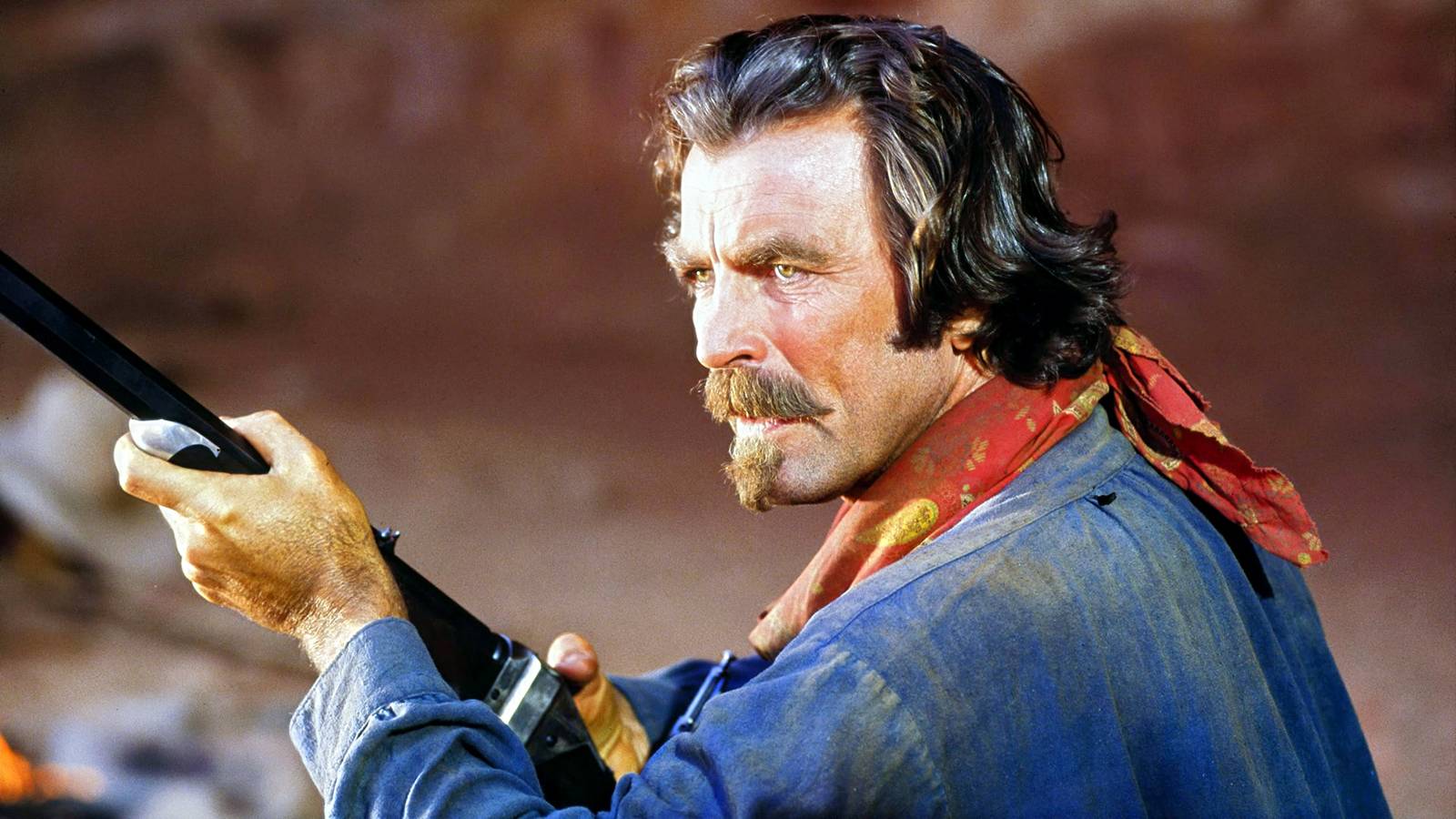
Despite scoring a huge hit with Three Men and a Baby, Tom Selleck didn’t have much luck with movies. One of his best outings from this era is Quigley Down Under, playing a sharpshooter who heads to Australia to work for Alan Rickman’s rancher. Upon learning that Rickman’s villain wants him to shoot aborigines, they soon become enemies.
Quigley Down Under underperformed, but thanks to TV reruns and VHS and DVD, it quietly gained an audience. Selleck is charisma personified in the lead role, Rickman is an excellent (and detestable) bad guy, the action is well mounted and the scenery is gorgeous.
2
El Dorado (1966)

El Dorado is the middle chapter in John Wayne’s Rio Bravo trilogy. While Rio Bravo is regarded as a classic and the final outing, Rio Lobo is a dud, El Dorado gets somewhat forgotten. It’s a real treat, though, and marked the only onscreen pairing of Wayne and Robert Mitchum.
It also gave a young James Caan an early lead role. Like Rio Bravo, there’s a hangout vibe to this Western, where the characters sit around getting to know each other in between the occasional shootout. It’s certainly not up there with The Searchers, but it’s also very hard not to enjoy El Dorado.