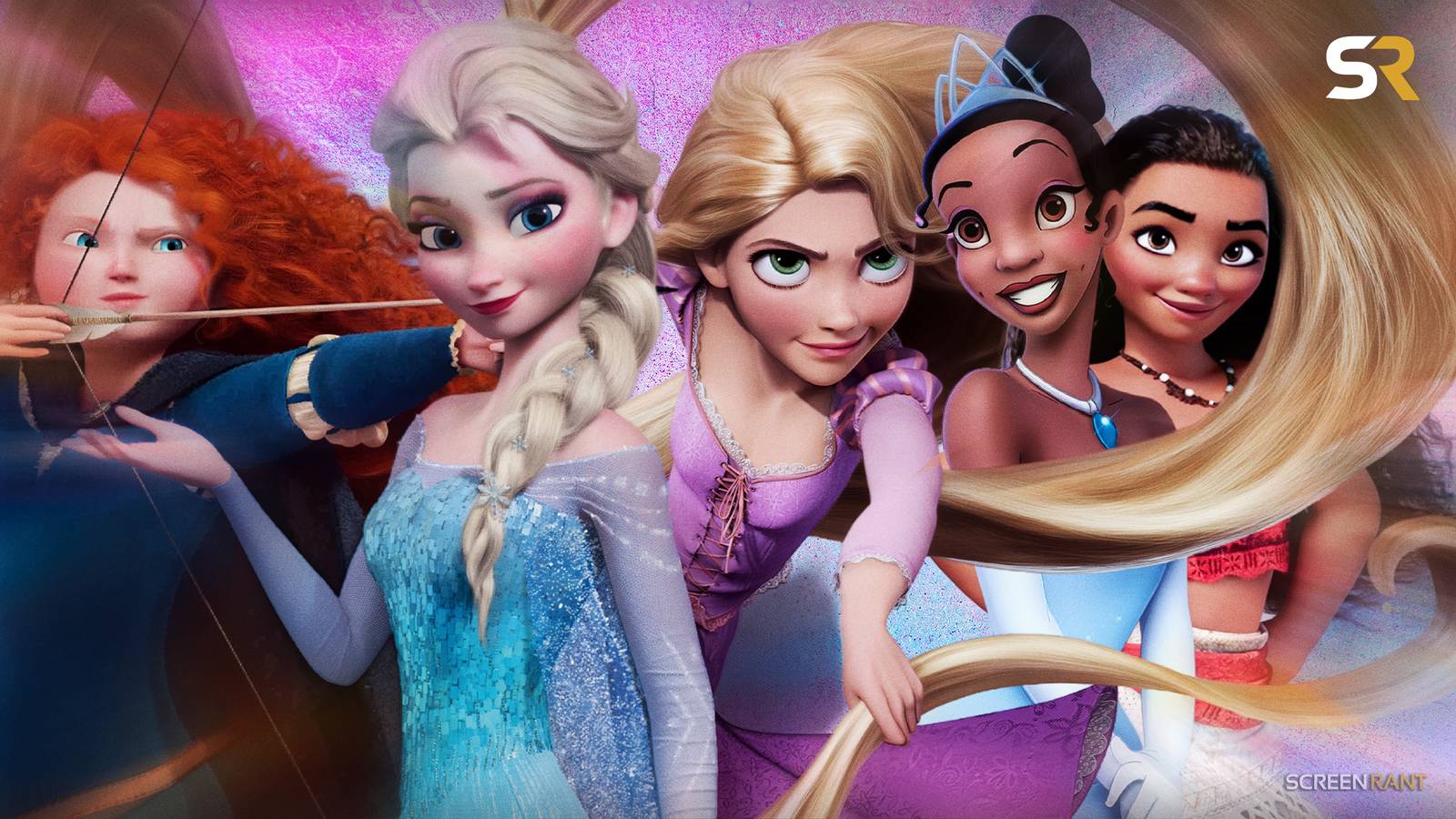

Disney princesses have spent nearly 90 years evolving alongside changing audiences, shifting expectations, and Disney’s own fight for survival as a company.
Sure, some were rescued by princes, and honestly, I’m completely cool with that. Call me old-fashioned, but I consider letting someone else slay the dragon a highly effective form of self-care. But others rescued entire eras of animation, and a select few completely rewrote the blueprint for female protagonists on screen. This ranking evaluates pure influence.
Whether people realize it or not, these characters shaped generations—normalizing the idea that kindness is a strength, curiosity is a weapon, ambition is necessary, and wanting more from life requires zero apologies.
To build this list, Screen Rant looked strictly at historical impact, cultural footprint, and how significantly each character forced Disney storytelling to pivot. So, which princesses permanently changed animation history?
15
Aurora
Sleeping Beauty (1959)

Aurora often ranks near the bottom of modern Disney conversations because, compared to later heroines, she spends much of Sleeping Beauty reacting rather than driving events herself. Fair criticism. (Though to be fair, anyone would be sidelined if they were up against one of the most iconic Disney villains of all time.) She is arguably the most passive protagonist in the classic canon, spending the entire climax of her own movie asleep.
But her influence isn’t about agency; it is entirely about aesthetic. Sleeping Beauty remains one of the most visually ambitious, breathtakingly expensive animated features the studio ever produced. Its striking, medieval-inspired design and widescreen presentation influenced fantasy animation for decades. Aurora is vital because her film permanently defined what a fairy tale was supposed to look like, cementing a visual standard the studio relied on for half a century.
14
Merida
Brave (2012)

Brave marked a massive structural shift for the company, largely because Merida was Pixar’s first official entry into the princess canon. Arriving during a period when the studio was actively experimenting with how to modernize female protagonists, Merida explicitly rejected the marriage plot. Her central conflict wasn’t about finding a suitor or escaping a tower; it was entirely focused on repairing a fractured, complicated mother-daughter relationship.
That might sound ordinary now, but for decades, princess stories revolved almost exclusively around romantic destinations. Merida demonstrated that messy, realistic family dynamics could serve as the emotional anchor of a massive animated blockbuster. She expanded the narrative boundaries of the genre, showing executives that audiences would turn up for a heroine whose primary goal was simply understanding her own mother.
13
Raya
Raya and the Last Dragon (2021)

Raya’s lower placement on this list reflects the reality of timing rather than a lack of quality. Released in 2021, Raya and the Last Dragon simply hasn’t had the necessary decades to build the kind of inescapable cultural footprint that older heroines possess. However, she serves as the perfect avatar for the modern era of Disney protagonists—characters defined entirely by survival, martial arts, and heavy geopolitical responsibility.
What makes Raya important is how far she pulls the princess label away from its musical theater roots and pushes it directly into high-fantasy action. Her film operates more like a post-apocalyptic road movie than a traditional fairy tale. Raya makes it clear that the studio is willing to abandon the tiaras and ballgowns entirely, signaling a massive evolution in what they believe audiences actually want from female leads today.
Every Live-Action Disney Princess Movie, Ranked Worst To Best
Disney is expanding its list of live-action remakes of acclaimed Disney Princess movies, and there’s a definitive ranking of the films thus far.
12
Pocahontas
Pocahontas (1995)

Few characters in the Disney vault remain as intensely debated as Pocahontas. The 1995 film’s highly sanitized handling of actual history continues to generate justified criticism, making it one of the studio’s most complicated legacy projects. But evaluating pure influence means acknowledging that impact isn’t always universally positive or perfectly executed.
Pocahontas represented a massive, calculated risk for Disney’s animation department following the runaway success of The Lion King. The studio actively attempted to tackle incredibly mature, heavy themes involving racial prejudice, colonialism, and environmental stewardship. While the execution remains highly contested today, Pocahontas forced the studio to attempt serious historical drama, permanently raising the ambition of what an animated feature could try to say.
11
Jasmine
Aladdin (1992)

Jasmine arrived right in the middle of the Disney Renaissance and fundamentally rejected the idea that a princess existed primarily as a political bargaining chip or a reward waiting at the end of a male hero’s journey. By actively fighting against forced marriage and calling out the men trying to control her future, she introduced a level of fierce, outspoken defiance that previous heroines lacked.
While she is technically a supporting character in Aladdin named after its male lead, Jasmine steadily created space for the fiercely independent heroines who would follow a few years later. She completely shattered the studio’s old mold of the polite, agreeable royal. By making rebellion aspirational, Jasmine laid the crucial groundwork for characters like Mulan and Moana to eventually take the lead.
10
Rapunzel
Tangled (2010)

Tangled carried an immense amount of historical pressure when it premiered in 2010. Disney was struggling to figure out how to transition its iconic fairy-tale formula into the modern, 3D-animated CGI era without losing the classic magic. Rapunzel was the critical bridge character. She successfully maintained the earnest optimism and romance of the 1990s Renaissance while becoming noticeably more active, funny, and physically capable.
That delicate balance is exactly why she is so important to the company’s survival. If Rapunzel had failed to connect, Disney might have abandoned classic fairy tales entirely. Instead, she confirmed that the studio could successfully modernize its oldest tropes. She represents the exact moment Disney figured out how to update the princess brand for a 21st-century audience, paving the way for the massive hits that defined the 2010s.
9
Moana
Moana (2016)

Moana effectively killed the traditional Disney romance plot, and the brand is stronger for it. Her story rejected the search for a partner entirely, focusing instead on physical endurance, honoring ancestry, and stepping into the heavy burden of political leadership. Her greatest internal challenge wasn’t finding love—it was accepting the terrifying responsibility of saving her dying island.
That narrative shift perfectly mirrored rapidly changing audience expectations. Moana definitively showed the industry that a female-led animated film could gross hundreds of millions of dollars and dominate streaming charts for years without a single romantic subplot. She cemented the idea that leadership and self-actualization had permanently replaced marriage as the ultimate emotional destination for a Disney heroine.
Disney’s Live-Action Formula Is About To Face Its Biggest Test Yet
Bringing Lin-Manuel Miranda and Mark Mancina back isn’t enough—Disney must translate the film’s DNA into live action without losing what made it iconic.
8
Tiana
The Princess and the Frog (2009)

Tiana’s defining dream isn’t escaping her current life; it is aggressive, tangible entrepreneurship. Long before relentless ambition became standard among Disney heroines, Tiana worked multiple shifts to save capital for her own restaurant. The studio built an entire princess narrative around the realities of financial independence, discipline, and uncompromising work ethic.
As Disney’s first Black princess, her cultural footprint was guaranteed to be massive, but her influence on the studio’s storytelling evolution is equally vital. The Princess and the Frog completely grounded the fairy-tale genre in real-world stakes. By shifting the ultimate goal from simply wearing a crown to successfully owning commercial real estate and running a business, she gave a generation of audiences a radically different definition of what a happily ever after actually looks like.
7
Anna
Frozen (2013)

Yes, Anna is technically unofficial, but excluding the protagonists of a billion-dollar juggernaut from an impact ranking is journalistic malpractice. Frozen actively weaponized Disney’s own history against the audience, using Anna to deliberately deconstruct the love at first sight trope that the studio spent decades profiting from. By having her rush into a disastrous engagement, the film openly mocked the exact fairy tales it was built upon.
Anna is technically unofficial, but excluding the protagonists of a billion-dollar juggernaut from an impact ranking is journalistic malpractice.
But Anna’s true industry impact lies in the film’s climax. By framing the ultimate act of true love as a sisterly sacrifice rather than a romantic kiss, Anna permanently altered Disney’s storytelling priorities. She established that familial devotion could carry the emotional weight of a blockbuster finale, changing how the studio approached emotional resolutions for the next decade.
6
Elsa
Frozen (2013)

Like her sister, Elsa may lack the official coronation from Disney’s consumer products division, but her actual influence eclipses almost every other character in the company’s history. Frozen was not just a movie; it was a completely inescapable cultural era. Elsa single-handedly drove billions of dollars in merchandising, dominated global music charts, and essentially became the animated equivalent of a blockbuster superhero.
By focusing her arc on trauma, isolation, and dangerous, uncontrollable power, Elsa tapped into a level of raw emotional angst that previous princesses rarely touched. She made it clear that an animated heroine could be deeply flawed, intensely guarded, and still become a global phenomenon. Her success fundamentally reshaped modern expectations, ensuring that future Disney protagonists would be allowed to carry much darker, more complex psychological weight.