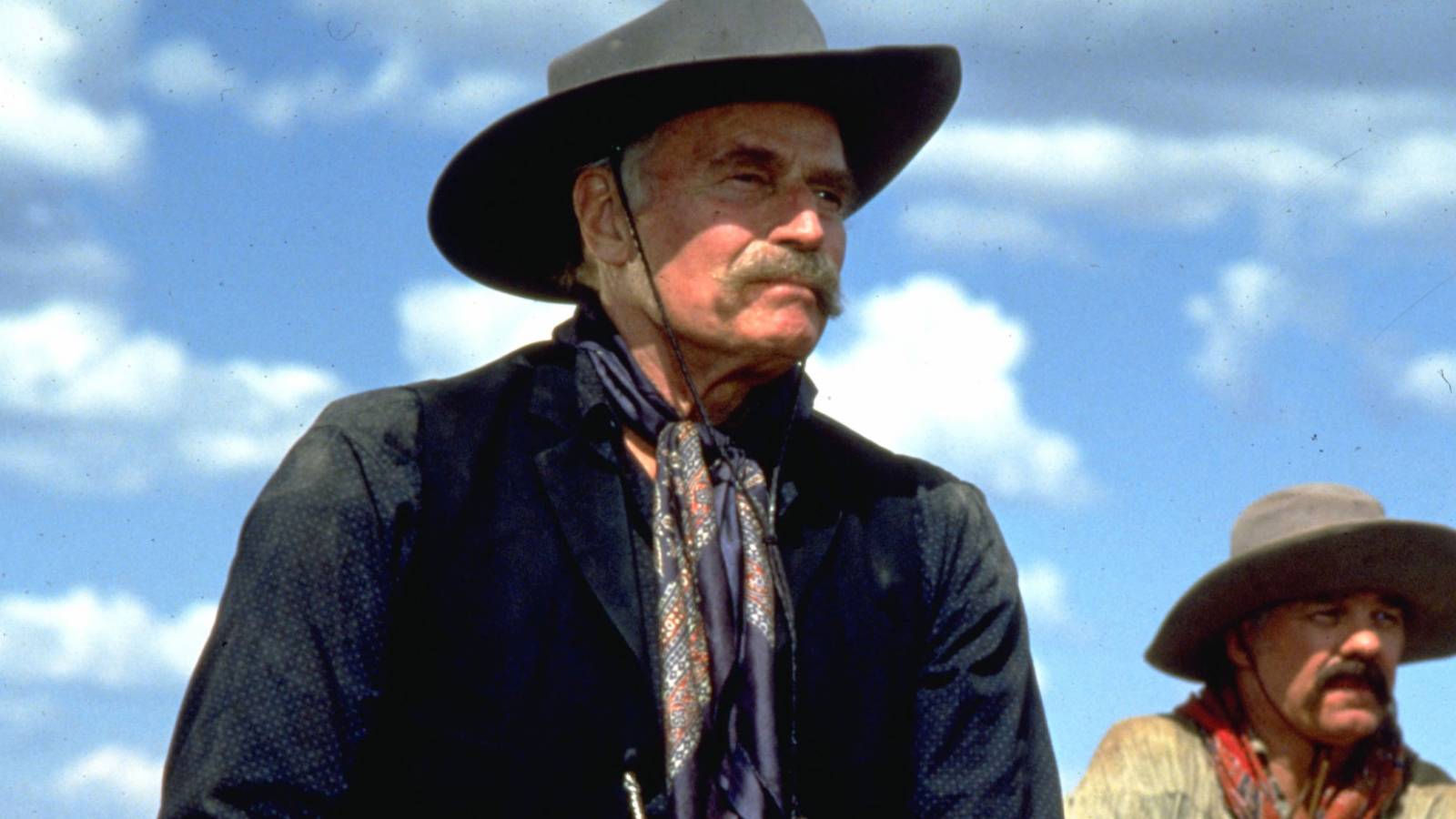

Westerns have been a big part of American cinema for about as long as cinema’s been a thing. Even before sound movies were a thing, you had something like The Great Train Robbery (1903), which is neat to watch and consider how many people who might’ve seen it, upon release, would’ve been able to personally remember actual Wild West times (that film was set in the 1870s… so it’s a bit like a 2026 release taking place in 1996 or something). And beyond America, the Western genre has been popular, because you only need to look at The Good, the Bad and the Ugly and all the spaghetti Westerns to realize as much. That doesn’t make Tombstone a spaghetti Western, but its director, George P. Cosmatos, was born in Italy to Greek parents, so…
No, that’s still a stretch. But Cosmatos did make one of the best Westerns of the second half of the 20th century when he directed Tombstone, which has really endured a great deal, well into the 21st century now. And there is something to be said about the Western genre being appealing outside the U.S., even if America is where the vast majority of Westerns take place, not to mention plenty of American actors having become associated with the genre. A bunch of them show up in Tombstone, with the cast being one reason why it’s still such a classic, but it’s also the way it’s written, the events it dramatizes, and the genuinely cinematic way it’s all put together… all these things help it feel nowhere near as old as you might expect a 33-year-old Western to feel.
What Is ‘Tombstone’ About?

While Tombstone is not a remake, the events of the film might feel familiar to you if you’ve seen a fair few classic Westerns before. It takes place in the titular town of Tombstone, and a good chunk of the runtime is dedicated to the lead-up to the gunfight at the O.K. Corral, which had been previously dramatized in films like My Darling Clementine (1946) and, not so surprisingly, Gunfight at the O.K. Corral (1957). Tombstone goes a little further, too, exploring the aftermath of the gunfight, particularly the way it led to a cycle of revenge.
Doc Holliday (Val Kilmer) is also a prominent character throughout Tombstone, with Kilmer arguably giving the most memorable performance of anyone who’s ever played that real-life figure.
Much of it’s about Wyatt Earp (Kurt Russell) and his family, which makes sense, given Earp’s status as a well-known reputation for the sorts of things he did as a lawman before retiring. He is technically retired at the start of Tombstone, but events transpire to pull him back in, which is a little Unforgiven-esque (but in a good way… it’s good to be reminiscent of Unforgiven). Doc Holliday (Val Kilmer) is also a prominent character throughout Tombstone, with Kilmer arguably giving the most memorable performance of anyone who’s ever played that real-life figure. Speaking of great actors giving memorable performances…
The Impressive Cast of ‘Tombstone’
The ensemble cast assembled for Tombstone is stacked, to the point where even the narrator of the film is a big name: Robert Mitchum. He’s not even seen on screen, but his voice is there, so that’s cool. There is, as already mentioned, Russell and Kilmer in the lead roles, plus… well, it feels lazy to just rattle off all the names here, but it really is the quickest way to establish what an all-star cast this is. So, you’ve got Sam Elliott, Bill Paxton, Powers Boothe, Michael Biehn, Charlton Heston, Stephen Lang, Thomas Haden Church, and Michael Rooker.
Oh, and some actors who became more well-known post-Tombstone, with just small roles here that are more noticeable now that the actors are a little more recognizable, like Billy Bob Thornton, Billy Zane, and Terry O’Quinn. There’s a big cast here, so that’s not even everyone. The only other observation that can be made is that there are three actors here who have appeared in more than three James Cameron movies: Bill Paxton (admittedly, often in supporting/minor roles), Michael Biehn (The Terminator, Aliens, and The Abyss), and Stephen Lang (the three Avatar movies so far). Oh, and Billy Zane was memorably evil in Titanic. As to what James Cameron specifically thinks about Tombstone, it can’t be said for sure, but you’d have to guess he digs it at least a little, right?
Why ‘Tombstone’ Endures After More Than 30 Years

Tombstone is not an outright comedy by any means, nor an action movie in the traditional sense, but part of what makes it great is the fact that it’s quite funny at times, or at least some of the dialogue is, and then when it does want to deliver action, it’s all punchy and satisfying. Cosmatos did seem most at home in the action genre, so that makes sense, since he also directed Rambo: First Blood Part II (1985). Oh, and that one had a screenplay that was co-written by James Cameron, so there’s another Cameron connection. Anyway, Tombstone has particularly good shootouts and showdowns, even if it’s also concerned with doing a little more than just offering action.
There’s a sense of making the Old West feel epic here, and though the characters are made likely broader/simpler than they were in real life, it works with the style of the film and the sense of bombast. It’s one way to depict a Western setting, making it feel kind of mythological, which a lot of Westerns do, in all honesty, and that’s okay. There are other ways that Tombstone aims to reflect reality, with an attention to detail regarding certain historical things that can definitely be admired. It’s largely just entertaining, though, at the end of the day. That feels like the main thing, with lots of individual qualities that can all be admired, you know, individually, but then they also all coalesce to make something big, beefy, and wholly satisfying, as far as Westerns go.

Tombstone
- Release Date
-
December 25, 1993
- Runtime
-
130 minutes